Best White Noise Machines 2026: Five Sound Styles Compared
Quick answer
For straightforward digital masking, start with LectroFan Classic. Choose Yogasleep Dohm Classic for a real fan motor, Rohm+ for rechargeable travel, Hatch Restore 3 for a sunrise-light routine, or Sound+Sleep SE for recorded environments with optional adaptive volume. None should be placed close to an infant or run loudly: the AAP advises the lowest useful volume, as much distance as practical, and limited duration for baby sleep machines.
Compare the five sound styles
| Machine | Sound approach | Main tradeoff |
|---|---|---|
| LectroFan Classic | Digital fan and noise palette | No nature recordings or sunrise light |
| Hatch Restore 3 | Sunrise alarm and sound routine | Initial setup requires the Hatch app and Wi-Fi |
| Yogasleep Dohm Classic | Real mechanical fan sound | Only fan-based sound; no nature or pink/brown options |
| Yogasleep Rohm+ | Rechargeable travel sound | Battery requires charging and USB power adapter is not included |
| Sound+Sleep SE | Adaptive nature-sound machine | Adaptive volume changes can be distracting if you prefer a steady level |
Our recommendation
Choose the sound source you tolerate for hours, then check power and controls. LectroFan Classic is the simple digital palette; Dohm Classic is real fan timbre; Rohm+ is for travel; Restore 3 earns its place only if light and sunrise routines matter; and Sound+Sleep SE is for layered recordings and optional room-responsive output. More sounds do not prove better sleep. Start at a low volume and move the unit rather than escalating loudness to mask every interruption.
LectroFan Classic: Digital fan and noise palette

Best for: A listener who wants a simple non-looping digital sound without an app or light.
Pros
- Maker lists 10 fan sounds and 10 noise variations
- Digital synthesis avoids a short repeating audio loop
- Sleep timer and precise volume control
Cons and trade-offs
- No nature recordings or sunrise light
- Requires a power source rather than built-in travel battery
- Sound selection uses sequential buttons rather than a labeled list on screen
Our recommendation
LectroFan Classic supplies ten digitally synthesized fan sounds and ten white/pink/brown-noise variations. It has no moving fan and no app setup, which keeps the routine simple. The 20 options are a sound palette, not evidence that it blocks more noise at a safer volume than alternatives. Check the exact Classic model rather than substituting Evo.
Choose another if: You prefer real mechanical airflow or nature recordings.
Hatch Restore 3: Sunrise alarm and sound routine
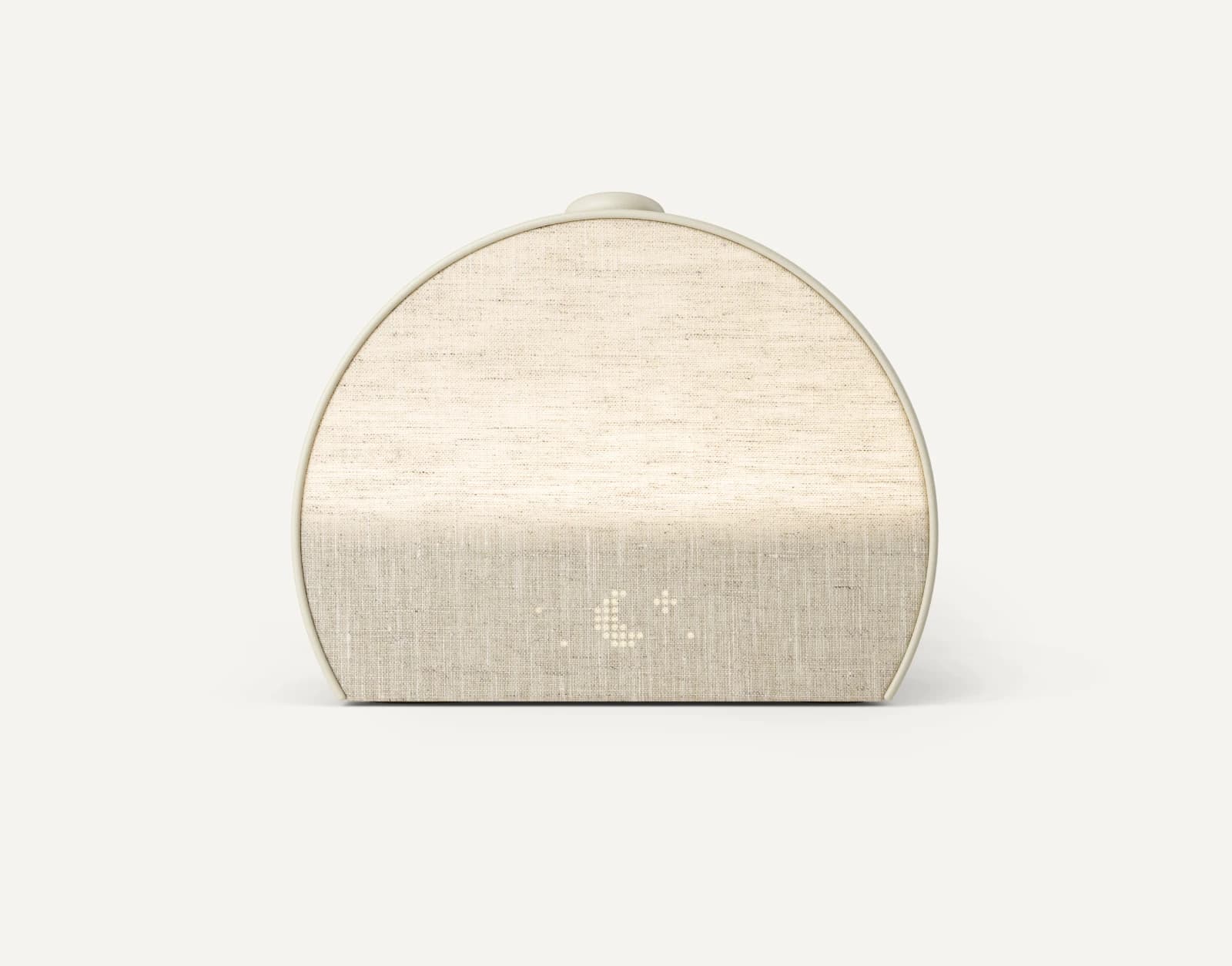
Best for: An adult who wants light-led wind-down and wake-up routines on the bedside table.
Pros
- Current Restore 3 combines sound, adjustable light and sunrise alarm
- Physical bedtime controls after initial app setup
- Basic sound and light routines work without a paid Hatch+ library
Cons and trade-offs
- Initial setup requires the Hatch app and Wi-Fi
- Hatch+ expands content and creates an ongoing optional cost
- Larger clock/light concept may be unnecessary for sound masking alone
Our recommendation
Restore 3 is the current model, not the older Restore 2. Its value lies in a light-and-sound routine, not the largest noise library. Hatch requires app and Wi-Fi for setup; the expanded Hatch+ audio library is optional, so read what remains available without membership before relying on a particular track. This is an adult bedside clock, not a child sleep monitor or a treatment for insomnia.
Choose another if: You want a no-app, no-Wi-Fi sound machine or no optional subscription.
Yogasleep Dohm Classic: Real mechanical fan sound
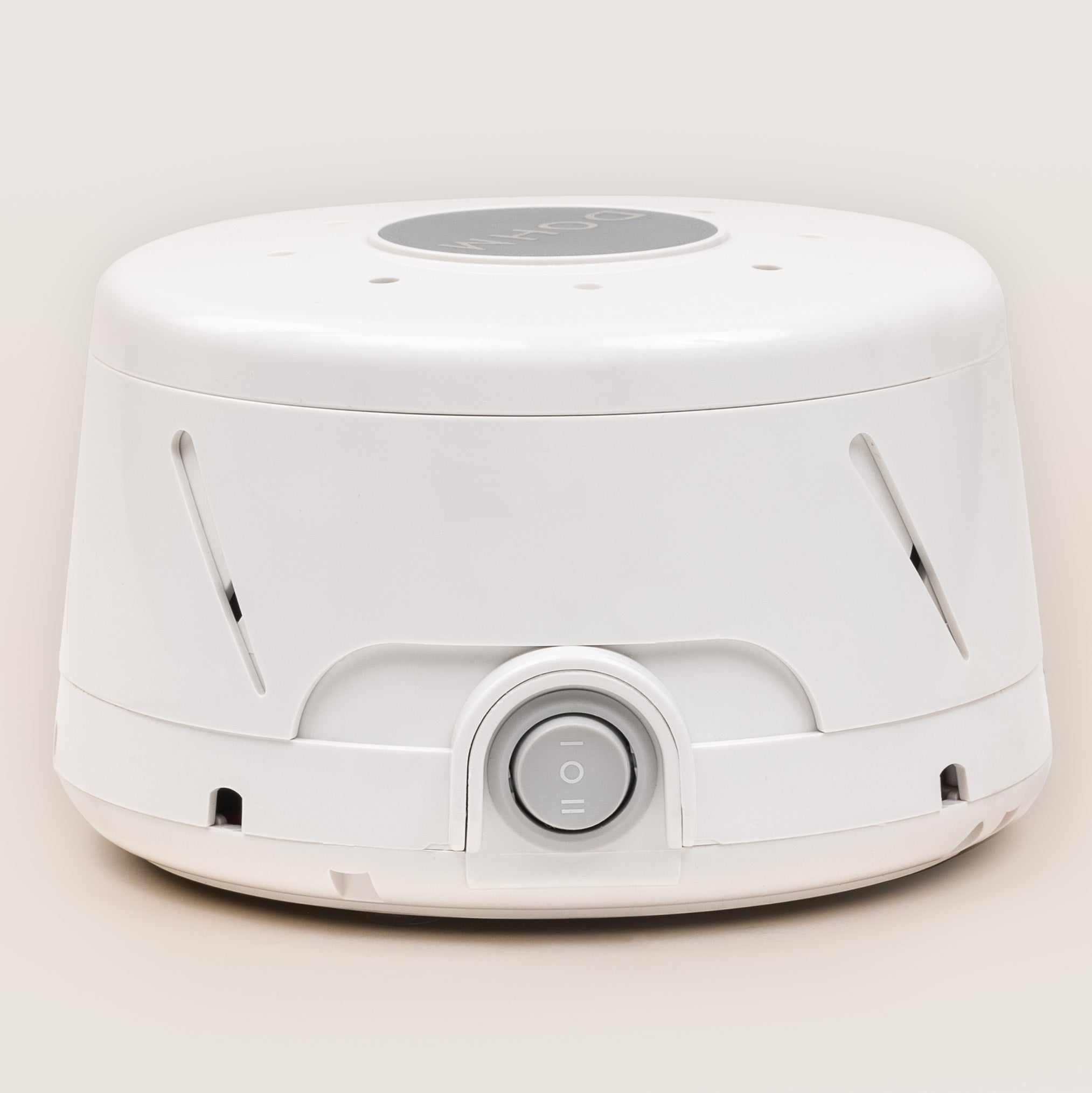
Best for: Someone who wants one natural fan-like sound and tactile controls.
Pros
- Actual fan motor generates non-looping sound
- Two speeds plus rotating cap and collar to tune tone
- No app, wireless setup or audio library
Cons and trade-offs
- Only fan-based sound; no nature or pink/brown options
- Corded 120V US/Canada model, unsuitable for direct international voltage
- Mechanical motor adds moving parts and its own tonal character
Our recommendation
Dohm Classic is the mechanically generated alternative to digital white noise. The maker lists two speeds and a twist-adjusted tone; that simplicity is the reason to buy it, provided its fan timbre suits you. It is corded and listed for US/Canada voltage, so it is a poor fit for a carry-on travel routine abroad. Place it where the sound is helpful without turning it up excessively.
Choose another if: You need many sound types, a timer or a battery for travel.
Yogasleep Rohm+: Rechargeable travel sound
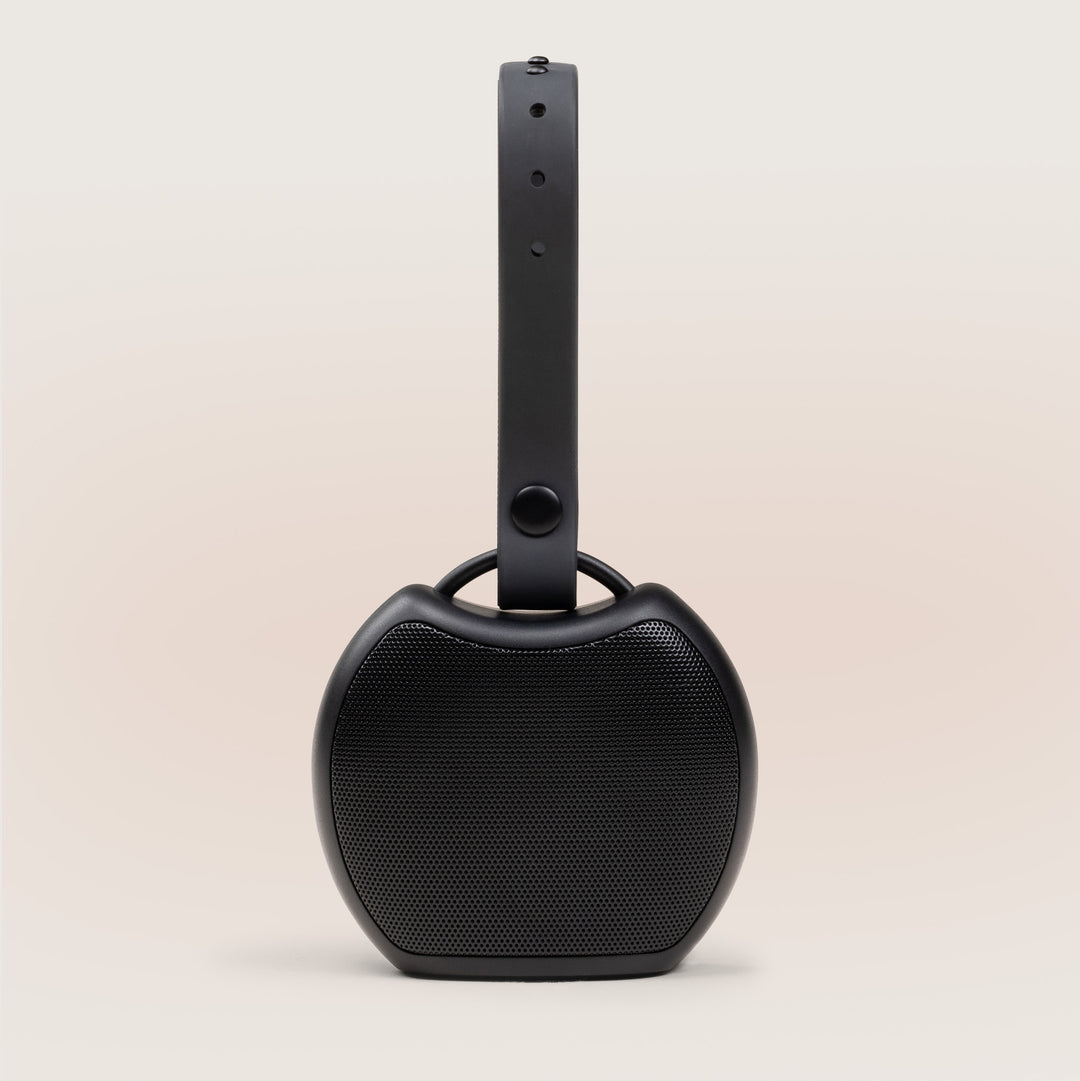
Best for: A traveler needing a small sound machine and USB-C recharge.
Pros
- Twenty built-in sounds plus Bluetooth audio streaming
- USB-C rechargeable and 6-oz listed weight
- Integrated lanyard helps position it while traveling
Cons and trade-offs
- Battery requires charging and USB power adapter is not included
- Small portable speaker cannot be assumed to fill a large room
- Bluetooth playback depends on a phone and its own battery
Our recommendation
The Rohm+ is the current portable model, distinct from the older Rohm. Yogasleep lists twenty built-in sounds, Bluetooth streaming, USB-C charging and a six-ounce body. For an overnight trip, use a built-in sound rather than depending on phone streaming, and check charging before travel. The lanyard helps placement, but keep any cord or strap away from a baby’s sleep space.
Choose another if: You want a bedside sunrise light or a fan motor.
Sound+Sleep SE: Adaptive nature-sound machine
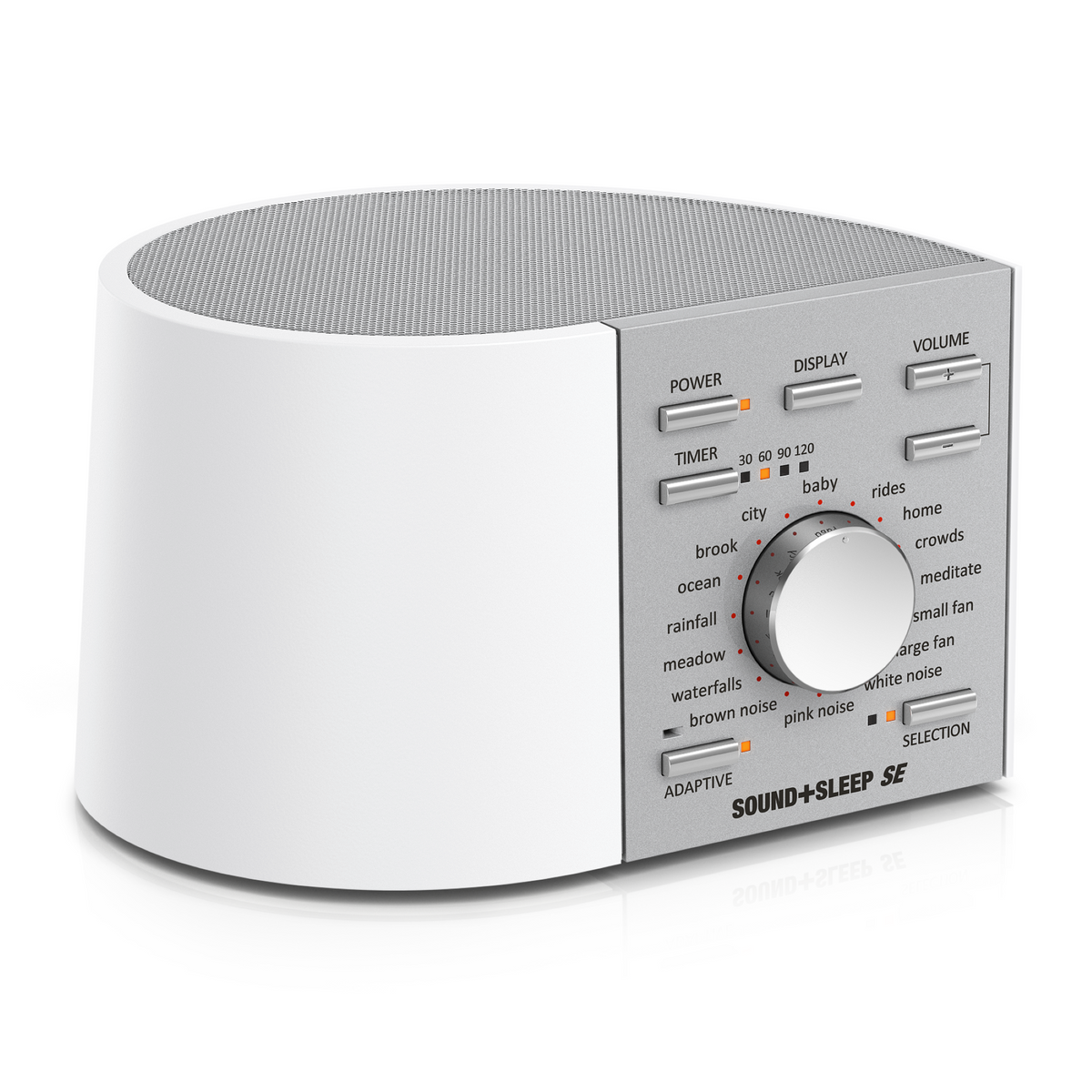
Best for: A listener wanting recorded environments whose output can adapt to room noise.
Pros
- Maker lists 16 categories with four variations each
- Adaptive mode senses ambient sound and adjusts output
- Recorded, dynamically varied sounds and a timer
Cons and trade-offs
- Adaptive volume changes can be distracting if you prefer a steady level
- 2.6-lb, 110V AC unit is less travel-friendly than Rohm+
- Many controls and sound choices add setup time
Our recommendation
Sound+Sleep SE uses layered recordings and an optional Adaptive Sound mode that raises its output as background noise increases. That can help in a changing room, but someone sensitive to volume changes may prefer fixed output. The maker lists 64 profiles as 16 categories times four richness settings—not 64 independently recorded environments. It is a larger corded unit with audio input/output, so it suits a permanent bedside spot.
Choose another if: You prefer a fixed volume, smaller size or straightforward white noise only.
White-noise machine buying guide
A sound machine changes the room environment, not the bed’s support; compare our mattress guide if surface comfort is the actual problem. In a nursery, our baby-monitor guide covers listening and viewing separately from sound masking.
Choose sound before sound count
Fan-like broadband noise, pink/brown variations and natural recordings can feel different. A steady fan sound may be easier to ignore, while recordings are more engaging. A non-looping claim describes playback design, not proven sleep quality. Try samples at a low level before buying.
Keep volume and placement sensible
Noise masking does not require the highest setting. For infant rooms, the American Academy of Pediatrics advises placing the machine as far from the child as practical, setting volume as low as possible and limiting duration. Keep cords and straps out of the crib and follow safe-sleep guidance. For adults, avoid prolonged unnecessarily loud sound as well.
Decide on power, timer and phone dependence
A plug-in machine suits a permanent bedroom but may not travel on different voltages. A rechargeable model needs a charging plan. App-driven clocks can add routines and content yet bring Wi-Fi setup and optional subscriptions. Check what works offline and what requires a membership before purchase.
Understand adaptive sound
Adaptive modes can raise output as a room gets noisier. That may mask transient traffic, but a changing volume itself can draw attention. If that happens, turn adaptive mode off or choose a fixed-volume model rather than increasing the baseline level.
Frequently asked questions
Is white noise safe for a baby?
Use conservative placement and volume. The AAP advises the lowest useful volume, greatest practical distance from the infant and limited duration; keep cords out of the sleep area.
Does non-looping sound make a machine better?
It removes short audible repetitions, which some people notice. It does not by itself prove better sleep or safer volume.
What is the difference between LectroFan Classic and Dohm Classic?
LectroFan synthesizes a range of digital fan/noise sounds; Dohm uses a real fan motor with two speeds and a twistable housing.
Do I need Hatch+ for Restore 3?
Hatch offers basic device functions without the optional expanded Hatch+ library, but an app and Wi-Fi are needed for initial setup. Confirm current content terms.
Can I use Dohm Classic overseas?
The US/Canada Dohm Classic is listed for 120V AC. Do not plug it into a different-voltage outlet without a suitable arrangement approved by the maker.
Can sound machines block snoring completely?
No. They can mask some environmental sound but cannot eliminate the source. Loud masking can create its own hearing risk.
Research method and primary sources
We checked maker pages and manuals for current sound sets, controls, power and generation. We have no original loudness, sound-quality or sleep-outcome tests. The recommendations are use-case judgments, not clinical claims or measured noise rankings.
Primary sources: LectroFan Classic manufacturer page; Hatch Restore 3 manufacturer page; Yogasleep Dohm Classic manufacturer page; Yogasleep Rohm+ manufacturer page; Sound+Sleep SE manufacturer page; AAP excessive-noise guidance; Hatch Restore 3 setup. Our methodology.
Affiliate disclosure
As an Amazon Associate, The Gear Audit earns from qualifying purchases. We may earn an affiliate commission when you buy through our links, at no extra cost to you. Full affiliate disclosure.