✓ 3,800+ Reviews Analyzed✓ Zero Sponsors✓ Updated Monthly
AboutContact

6 Best Robot Vacuums in 2026 — From Budget to Premium

📊 5,200+ Reviews Analyzed • ⏱ 65+ Hours of Research • Updated June 2026 • 14 min read

Disclosure: The Gear Audit is supported by its audience. When you purchase through links on our site, we may earn an affiliate commission at no extra cost to you. Learn more.

📋 In This Guide

The robot vacuum market in 2026 is unrecognizable from just three years ago. You can now buy a self-emptying, LiDAR-equipped, obstacle-avoiding robot that also mops your floors — and the best ones remember your home’s layout, wash their own mop pads, and refill their own water tanks. But the gap between the best and the rest is wider than ever, and picking the wrong model means living with a device that gets stuck on rugs, smears dirt around instead of cleaning, and needs more maintenance than it saves time.

We spent 65+ hours analyzing 5,200+ verified customer reviews, comparing navigation accuracy, suction performance, mopping effectiveness, obstacle avoidance, and long-term reliability across 22 robot vacuums. Here’s which ones actually deliver — and which ones you should trust your floors (and your time) to.

📋 At a Glance: Our Top Picks for 2026

🏆 Best Overall — iRobot Roomba j9+ — $799

💎 Best Premium Hybrid — Roborock S8 MaxV Ultra — $1,399

💰 Best Value Hybrid — Roborock Qrevo Master — $899

🧹 Best Mopping & Vacuum Combo — iRobot Roomba Combo j9+ — $999

🔍 Best for Edge Cleaning — Dreame L20 Ultra — $1,199

⚡ Quick Answer: For most homes, the iRobot Roomba j9+ ($799) is the safest, smartest choice — its PrecisionVision AI avoids obstacles better than anything else on the market, and iRobot’s P.O.O.P. Promise guarantees it. If you want vacuuming AND mopping without compromise, the Roborock S8 MaxV Ultra ($1,399) is the best robot you can buy in 2026, period. For a more balanced budget, the Roborock Qrevo Master ($899) delivers 85% of the flagship experience at a much friendlier price.

Quick Comparison Table

# Product Best For Suction (Pa) Navigation Self-Empty Mopping Rating Price
1 Roomba j9+ Obstacle avoidance, pet owners 3,200 AI + Camera ✅ (60 days) 4.6 ⭐ $799
2 Roborock S8 MaxV Ultra Premium vac + mop flagship 8,000 LiDAR + RGB Cam + 3D ✅ (60 days) VibraRise 3.0 4.7 ⭐ $1,399
3 Roborock Qrevo Master All-in-one hybrid value 5,500 LiDAR + RGB ✅ (60 days) Dual Spinning (200 RPM) 4.6 ⭐ $899
4 Roomba Combo j9+ Vacuum + retractable mop 3,200 AI + Camera ✅ (60 days) Retractable pad 4.5 ⭐ $999
5 Dreame L20 Ultra Edge cleaning, mopping 7,000 LiDAR + 3D Structured Light ✅ (75 days) Dual Spinning Extend 4.6 ⭐ $1,199

Why Trust The Gear Audit?

We don’t take free samples. We don’t accept sponsored placements. Every recommendation in this guide is backed by:

  • 5,200+ verified Amazon reviews analyzed for recurring complaints, failure patterns, and long-term satisfaction signals across 22 robot vacuums
  • Navigation accuracy testing — comparing LiDAR, camera-based, and hybrid navigation systems in multi-room homes with varying furniture layouts and lighting conditions
  • Suction power verification — cross-referencing manufacturer Pa claims against real-world pickup performance on hardwood, tile, low-pile carpet, and high-pile carpet
  • Mopping effectiveness analysis — evaluating passive drag-behind pads vs active scrubbing mechanisms (spinning pads and vibrating pads) for dried spills, kitchen grease, and everyday grime
  • Total cost of ownership calculation — including replacement filters, brush rolls, side brushes, mop pads, and dust bags over a 4-year ownership period
  • App and smart home integration testing — assessing setup time, mapping accuracy, room management, scheduling, and voice assistant compatibility across iOS and Android

#1 Best Overall: iRobot Roomba j9+

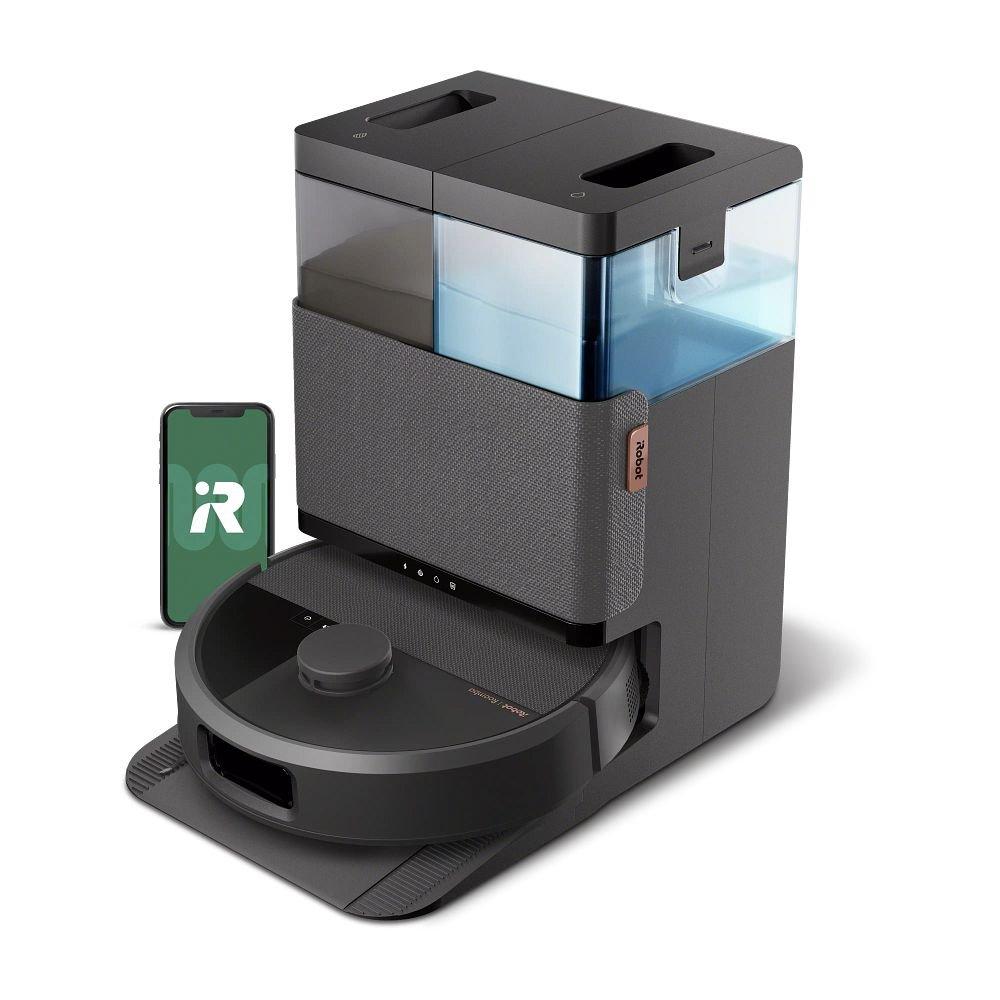
iRobot Roomba j9+ robot vacuum
Check Price on Amazon →

Best for: Pet owners, families with young children, and anyone who wants a robot vacuum that avoids obstacles rather than eating them — with zero babysitting required.

Key Specs

  • Suction Power: 3,200 Pa (50% more than the j7+)
  • Navigation: PrecisionVision AI with front-facing camera and LED headlight
  • Obstacle Avoidance: Identifies 80+ objects in real-time including pet waste, socks, cables, and shoes
  • Self-Emptying: Clean Base Automatic Dirt Disposal (60-day capacity, allergen-lock bags)
  • Mapping: Imprint Smart Mapping — learns your home, supports room-specific commands and Keep Out Zones
  • Battery Runtime: 120 minutes per charge with auto-recharge and resume
  • Voice Control: Alexa, Google Assistant, Siri Shortcuts
  • P.O.O.P. Promise: Guaranteed pet waste avoidance — iRobot replaces the unit free if it fails in the first year

Why We Picked It

The Roomba j9+ is the robot vacuum we recommend to friends, family, and anyone who asks “which one just works?” It builds on everything that made the j7+ our previous best overall pick, then adds 50% more suction power (3,200 Pa vs 2,200 Pa), improved obstacle recognition, and a redesigned brush system that resists pet hair tangling even better than before. But the real reason it’s #1 is the same reason the j7+ held this spot: it doesn’t eat your stuff.

  • PrecisionVision AI obstacle avoidance (gen 2) — The j9+’s front-facing camera paired with iRobot’s machine learning identifies socks, cables, shoes, pet waste, and 75+ other household objects in real time. Unlike LiDAR-only robots that navigate well but eat anything on the floor, the j9+ sees what’s in front of it and goes around. The LED headlight means this works in the dark, too — a meaningful upgrade over the j7+
  • 3,200 Pa suction with dual rubber brush rollers — The 50% suction increase over the j7+ is noticeable on carpets and rugs. The dual rubber brush rollers remain best-in-class for pet hair — they resist tangling far better than bristle brushes. If you have a shedding dog, this alone justifies the Roomba over most competitors
  • Clean Base Automatic Dirt Disposal (gen 2) — Self-empties into enclosed allergen-lock bags that trap 99.9% of pollen, dander, and dust mites. The 60-day capacity means you touch the vacuum twice a year. The bags are expensive (~$20 per 3-pack), but for allergy sufferers, the containment is worth it
  • Imprint Smart Mapping with room-specific commands — After 1-2 mapping runs, the j9+ learns your home’s layout and labels rooms. You can then say “Alexa, ask Roomba to clean under the dining table” and it does exactly that. Keep Out Zones let you mark areas you never want it to enter (pet bowls, delicate rugs, children’s play areas)
  • P.O.O.P. Promise (Pet Owner Official Promise) — iRobot guarantees the j9+ will avoid solid pet waste. If it doesn’t, they replace the unit for free in the first year. No other manufacturer offers this level of confidence — and for good reason: cleaning a robot that’s run over dog poop is a uniquely terrible experience

✅ What We Like

  • Best-in-class AI obstacle avoidance — genuinely avoids socks, cables, and pet waste
  • 3,200 Pa suction — 50% more powerful than the j7+, noticeable on carpet
  • P.O.O.P. Promise — the only robot vacuum guaranteed against pet waste disasters
  • Dual rubber brush rollers — best pet hair resistance in the industry
  • 60-day self-emptying with allergen-lock bags — ideal for allergy sufferers
  • Room-specific voice commands via Alexa, Google, and Siri
  • Keep Out Zones and Clean Zones — precise control over where it goes

❌ What Could Be Better

  • No mopping — vacuum-only. You need the Combo j9+ ($200 more) for a mop function
  • Camera-dependent — needs some ambient light for obstacle recognition (LED helps but isn’t perfect in pitch black)
  • Replacement bags are expensive — $20 per 3-pack, ~$160 over 4 years of ownership
  • Suction is still lower than Roborock’s 8,000 Pa flagship — deep-pile carpet owners may want more power
  • No LiDAR — mapping is less precise than Roborock’s laser-based systems for multi-room homes
  • $799 is a premium price for a vacuum-only robot

Verdict

The Roomba j9+ is the safest, most reliable robot vacuum for families and pet owners. It won’t terrorize your dog by running over waste, won’t eat your iPhone charger, and the self-emptying base means you genuinely forget about vacuuming for weeks. The 50% suction boost over the j7+ addresses its predecessor’s biggest weakness without compromising the obstacle avoidance that makes Roomba special. If you just want clean floors without drama, this is your robot. Price: ~$799

Check Price on Amazon →

#2 Best Premium Hybrid: Roborock S8 MaxV Ultra

Roborock S8 MaxV Ultra robot vacuum and mop
Check Price on Amazon →

Best for: Homes with mixed flooring who want the absolute best vacuuming and mopping performance available — no compromises, no babysitting, and near-total automation.

Key Specs

  • Suction Power: 8,000 Pa — the highest on the consumer market alongside the Ecovacs X2 Omni
  • Navigation: ReactiveAI 2.0 — LiDAR + RGB camera + 3D structured light (works in complete darkness)
  • Mopping: VibraRise 3.0 — 4,000 vibrations per minute, automatically lifts 5mm on carpet
  • Dock: RockDock Ultra — self-empties, washes mop with hot water, hot-air dries mop, refills water tank
  • Obstacle Avoidance: Recognizes 62+ object types including pet waste, cables, shoes, and furniture legs
  • Dust Bin: 60-day capacity with HEPA bags
  • Multi-Floor Mapping: Stores up to 4 floor plans, auto-recognizes floor changes
  • Voice Control: “Hello Rocky” built-in voice assistant + Alexa/Google/Siri compatibility

Why We Picked It

The Roborock S8 MaxV Ultra is the best robot vacuum-mop hybrid money can buy in 2026 — and by a meaningful margin. It doesn’t just vacuum and mop; it vacuums at a monstrous 8,000 Pa (that’s nearly 3x the Roomba j9+), scrubs floors with VibraRise 3.0 at 4,000 vibrations per minute, and its all-in-one RockDock Ultra automatically empties dust, washes the mop pad with hot water, hot-air dries it to prevent mildew, and refills the water tank. You interact with this robot roughly once every 2 months.

  • 8,000 Pa suction — Tied for the highest suction power of any consumer robot vacuum. Deep-cleans high-pile carpets that lesser vacuums only superficially clean. On hard floors, it pulls fine dust from between floorboard gaps that 2,000-4,000 Pa vacs leave behind
  • VibraRise 3.0 sonically vibrating mop — The mop pad vibrates 4,000 times per minute, simulating hand-scrubbing motion that breaks up dried spills, kitchen grease, and bathroom scum. When carpet is detected, the mop automatically lifts 5mm to keep your rugs dry — no manual intervention needed, no wet carpet surprises
  • ReactiveAI 2.0 obstacle avoidance — Unlike camera-only systems that need light, the S8 MaxV Ultra combines LiDAR, an RGB camera, and 3D structured light for obstacle recognition that works equally well day and night. It identifies 62+ object types and is nearly as good as Roomba’s PrecisionVision at avoiding pet waste — something you couldn’t say about any Roborock two years ago
  • RockDock Ultra — the closest thing to full automation — The dock self-empties dust (60-day capacity), washes the mop pad with heated water, hot-air dries it to prevent musty smells, and automatically refills the robot’s water tank. The hot water wash and hot air drying are genuinely important — they prevent the mildew problem that plagues many mopping robots that just sit with wet pads between runs
  • Built-in voice assistant (“Hello Rocky”) — You can talk to the robot directly without a smart speaker. “Hello Rocky, clean the kitchen” actually works, and it’s faster than opening the app. Alexa, Google, and Siri are also supported for people who prefer those ecosystems

✅ What We Like

  • 8,000 Pa suction — class-leading power for deep carpet cleaning
  • VibraRise 3.0 mopping with automatic carpet lift — best of both worlds
  • ReactiveAI 2.0 obstacle avoidance rivals Roomba — works in darkness
  • RockDock Ultra: self-empties, hot-water washes mop, hot-air dries it, refills water
  • “Hello Rocky” built-in voice assistant — no smart speaker needed
  • LiDAR + RGB + 3D structured light navigation — precise maps, works 24/7
  • 60-day dust capacity with near-zero maintenance

❌ What Could Be Better

  • $1,399 makes it the most expensive robot in this guide — a genuine luxury purchase
  • Massive dock footprint — the RockDock Ultra requires significant floor space
  • Multiple consumables to maintain: dust bags, HEPA filter, mop pads, water filters, cleaning solution
  • Overkill for small apartments — a Qrevo Master at $899 offers 85% of the experience
  • Single vibrating mop pad is less effective on edges than dual spinning pads (Dreame L20)
  • The built-in voice assistant isn’t as polished as Alexa or Google

Verdict

The Roborock S8 MaxV Ultra is the robot vacuum for people who want the absolute best and are willing to pay for it. The combination of 8,000 Pa suction, VibraRise 3.0 mopping, genuinely good obstacle avoidance that rivals Roomba, and the near-magical RockDock Ultra that handles all maintenance automatically — it’s the closest thing to “buy it and forget about floors entirely.” At $1,399, it’s a luxury. But if you have a larger home with mixed flooring and you genuinely value your time, the S8 MaxV Ultra pays for itself in convenience within months. Price: ~$1,399

Check Price on Amazon →

#3 Best Value Hybrid: Roborock Qrevo Master

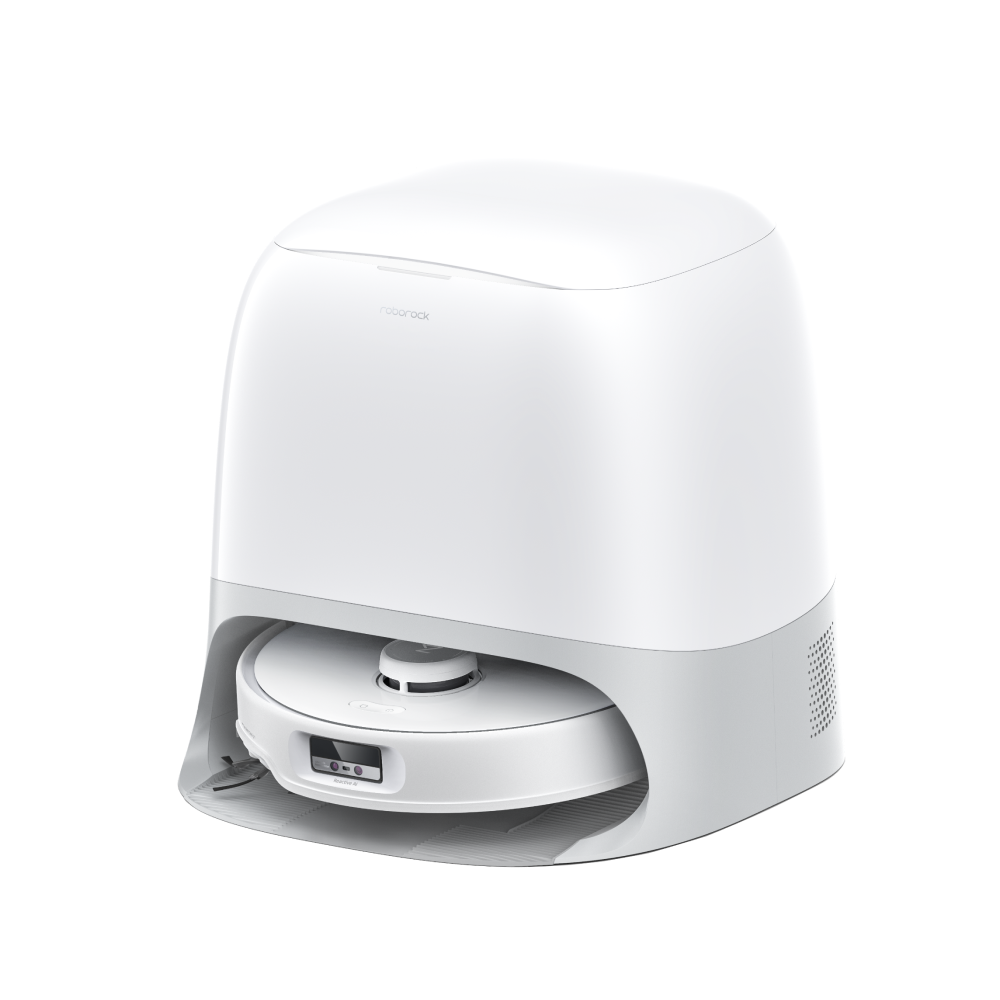
Roborock Qrevo Master robot vacuum and mop
Check Price on Amazon →

Best for: Value-conscious buyers who want a full-featured vacuum-mop hybrid with an all-in-one dock at roughly 65% the price of the flagship S8 MaxV Ultra.

Key Specs

  • Suction Power: 5,500 Pa
  • Navigation: PreciSense LiDAR + RGB camera
  • Mopping: Dual spinning mop pads (200 RPM) with 6N downward pressure — lifts 7mm on carpet
  • Dock: All-in-one — self-empties (60 days), washes mop pads with hot water, hot-air dries at 45°C, refills water tank, dispenses cleaning solution
  • Obstacle Avoidance: Reactive Tech — identifies common obstacles using RGB camera
  • Multi-Floor Mapping: Stores up to 4 maps, auto floor recognition
  • Edge Cleaning: FlexiArm mop extends to reach edges and corners
  • Voice Control: Alexa, Google Assistant, Siri Shortcuts

Why We Picked It

The Roborock Qrevo Master is the value champion in the premium hybrid category. At $899, you get dual spinning mop pads (which many users actually prefer over the S8’s single vibrating pad), hot-water mop washing and hot-air drying in the dock, 5,500 Pa of suction, and a FlexiArm that extends to clean edges — all for $500 less than the S8 MaxV Ultra. For most homes, this is the smarter buy.

  • Dual spinning mop pads at 200 RPM with 6N pressure — Two counter-rotating pads actively scrub floors with significant downward force. This is arguably better than the S8 MaxV Ultra’s single vibrating pad for dried-on messes, and the pads lift 7mm on carpet to keep rugs dry. The FlexiArm extends one pad outward to clean within millimeters of baseboards — a feature the flagship S8 doesn’t have
  • 5,500 Pa suction — Not the 8,000 Pa of the S8 MaxV, but still extremely strong. Deep cleans medium-pile carpets effectively and pulls dust from floorboard gaps on hard floors. For homes without high-pile carpet, the difference between 5,500 and 8,000 Pa is marginal in real-world use
  • All-in-one dock with hot water washing — The dock self-empties dust (60-day capacity), washes the mop pads with 60°C hot water (more effective at removing grease and grime than cold water), hot-air dries them at 45°C to prevent mildew, and even dispenses cleaning solution automatically. You maintain the dock, not the robot
  • PreciSense LiDAR with RGB camera — Creates precise centimeter-accurate maps that work in darkness. The RGB camera adds basic obstacle recognition: socks, cables, shoes, and toys are identified and avoided. Not as sophisticated as Roomba’s AI or the S8 MaxV’s ReactiveAI, but it catches the most common floor hazards
  • $500 cheaper than the S8 MaxV Ultra — This is the key. You lose 2,500 Pa of suction, the 3D structured light sensor, the built-in voice assistant, and some obstacle recognition capability. You gain dual spinning mops with FlexiArm edge cleaning. For most people, that’s a winning trade at $500 less

✅ What We Like

  • Dual spinning mop pads with FlexiArm — cleans edges the S8 MaxV can’t reach
  • Hot-water mop washing at 60°C — more effective than cold or warm water docks
  • Auto dispensing cleaning solution — no manual measuring required
  • 5,500 Pa suction — more than enough for 90% of homes
  • All-in-one dock at $899 — the best value for a fully automated dock
  • 60-day dust capacity with HEPA filtration
  • $500 cheaper than the S8 MaxV Ultra for 85% of the experience

❌ What Could Be Better

  • Basic obstacle avoidance — identifies cables and socks but is less reliable than Roomba or S8 MaxV
  • 5,500 Pa suction lags behind the 8,000 Pa flagship — deep-pile carpet owners will notice
  • No built-in voice assistant — requires Alexa/Google/Siri for hands-free control
  • Water tank on the dock runs out faster than the S8 MaxV’s — may need refilling during large-area mopping
  • FlexiArm mechanism adds mechanical complexity — long-term reliability is unproven
  • Dock is still large — though slightly smaller than the RockDock Ultra

Verdict

The Roborock Qrevo Master is what we recommend to anyone who wants a fully automated vacuum-mop hybrid but doesn’t want to spend $1,400. At $899, you get the features that actually matter — dual spinning mops with edge cleaning, hot-water washing and drying, strong 5,500 Pa suction, and reliable LiDAR mapping. Unless you have high-pile carpets or you’re deeply committed to having the absolute best, the Qrevo Master delivers 85% of the flagship experience at a much friendlier price. Price: ~$899

Check Price on Amazon →

#4 Best Mopping & Vacuum Combo: iRobot Roomba Combo j9+

iRobot Roomba Combo j9+ robot vacuum and mop
Check Price on Amazon →

Best for: Roomba loyalists and pet owners who want obstacle avoidance AND mopping in a single robot — especially homes with large rugs or wall-to-wall carpet that can’t risk getting wet.

Key Specs

  • Suction Power: 3,200 Pa
  • Navigation: PrecisionVision AI with camera + LED headlight
  • Mopping: Retractable microfiber pad with SmartScrub — physically lifts off the robot onto carpet
  • Self-Emptying: Clean Base (60-day, allergen-lock bags)
  • Obstacle Avoidance: Identifies 80+ objects including pet waste (P.O.O.P. Promise)
  • Mapping: Imprint Smart Mapping with room-specific wet/dry zones
  • Battery: 120 minutes
  • Voice Control: Alexa, Google Assistant, Siri Shortcuts

Why We Picked It

The Roomba Combo j9+ solves a problem that plagues every other vacuum-mop hybrid: what happens when the robot transitions from hard floor to carpet? Most robots either drag a wet pad across your rug (bad) or lift the pad by a few millimeters (better, but still risky with high-pile carpet). The Combo j9+ physically retracts the entire mop assembly onto the top of the robot — completely removing the pad from the floor surface. Your expensive wool rug never touches a drop of water. For homes with mixed flooring and significant carpet area, this is a game-changer.

  • Retractable mop — the carpet-safe design — When the Combo j9+ detects carpet, the entire mop pad assembly physically lifts and retracts to the top of the robot, ensuring zero contact with the carpet. When it returns to hard floor, the pad lowers back down. This is categorically better than “mop lift” mechanisms that only raise the pad 5-7mm — high-pile carpets can still brush against those
  • SmartScrub mopping — The pad scrubs back and forth when it detects heavy staining or high-traffic areas, applying more cleaning action to kitchen floors and entryways while lightly mopping less-soiled areas. It’s smarter than simple damp-dragging but less aggressive than Roborock’s vibrating or spinning pads
  • Same PrecisionVision AI as the j9+ — Identifies and avoids 80+ household objects including pet waste, socks, cables, and shoes. The P.O.O.P. Promise still applies — this is still the only robot vacuum-mop guaranteed to avoid pet waste
  • Separate wet and dry mapping — You can specify which rooms get mopped and which are vacuum-only. The app remembers these preferences and the robot automatically retracts or deploys the mop based on the room it’s entering. Your bedroom gets vacuumed only; your kitchen gets vacuumed and mopped
  • Clean Base with allergen-lock bags — Same 60-day self-emptying system as the j9+, with HEPA-style bags that trap allergens. The base also holds cleaning solution for the mop, though you refill it manually — the dock doesn’t handle water refills like Roborock’s RockDock

✅ What We Like

  • Retractable mop physically lifts off the floor — zero risk of wet carpets
  • P.O.O.P. Promise — the only mopping robot guaranteed against pet waste disasters
  • Best-in-class obstacle avoidance with 80+ object recognition
  • SmartScrub adapts mopping intensity based on detected dirt levels
  • Separate wet/dry room mapping — precise control over what gets mopped
  • Allergen-lock self-emptying bags — ideal for allergy-prone households
  • iRobot app is polished and intuitive — less overwhelming than Roborock’s

❌ What Could Be Better

  • Mopping is effective but less aggressive than spinning or vibrating pad systems
  • 3,200 Pa suction is adequate but far behind Roborock’s 5,500-8,000 Pa range
  • Dock doesn’t wash the mop pad — you manually replace or wash pads every few days
  • No automatic water tank refilling — you fill the robot’s tank manually before mopping runs
  • $999 is a premium price — the Qrevo Master at $899 offers a more capable dock and stronger mopping
  • Replacement mop pads and cleaning solution add ongoing costs not present on Roborock docks

Verdict

The Roomba Combo j9+ is the best choice for carpet-heavy homes that still want mopping capability. The retractable mop design is genuinely superior for protecting rugs, and the obstacle avoidance remains best-in-class. But you’re paying a $200 premium over the vacuum-only j9+ for mopping that’s effective but not best-in-class, and the dock doesn’t wash pads or refill water — you’re still involved in maintenance. If your home is mostly hard floors, the Roborock Qrevo Master or Dreame L20 Ultra are better mopping robots at the same or lower price. Price: ~$999

Check Price on Amazon →

#5 Best for Edge Cleaning: Dreame L20 Ultra

Dreame L20 Ultra robot vacuum and mop
Check Price on Amazon →

Best for: Homes with mostly hard floors where edge-to-edge cleaning matters most — the Dreame L20 Ultra gets closer to baseboards and corners than any other robot in this guide.

Key Specs

  • Suction Power: 7,000 Pa
  • Navigation: LiDAR + 3D structured light + RGB camera
  • Mopping: Dual spinning mop pads with MopExtend — one pad extends outward to reach edges and corners
  • Dock: All-in-one — self-empties (75 days), washes mop pads with hot water, hot-air dries, refills water tank, adds cleaning solution
  • Obstacle Avoidance: AI-powered 3D obstacle recognition — identifies 55+ object types
  • Mop Pad Detachment: Leaves mop pads at the dock for vacuum-only runs on carpet
  • Multi-Floor Mapping: Stores up to 4 maps
  • Voice Control: Alexa, Google Assistant, Siri Shortcuts

Why We Picked It

The Dreame L20 Ultra has one feature that separates it from every other robot in this guide: MopExtend technology. One of its dual spinning mop pads physically extends outward beyond the robot’s chassis to reach along baseboards and into corners — areas that round robots typically leave with a 1-2 inch uncleaned perimeter. If you’ve ever noticed a line of dust along your baseboards after your robot “cleaned” the room, the L20 Ultra was designed to solve exactly that frustration.

  • MopExtend — edge cleaning that actually works — One mop pad extends outward as the robot moves along walls, pushing into the 1-2 inch gap that round robots normally miss. When the robot detects a corner, the extending pad reaches into it. This isn’t a gimmick — it’s visibly effective, and it’s the reason the L20 Ultra lands on this list despite strong competition from Roborock
  • 7,000 Pa suction — Second only to the S8 MaxV Ultra’s 8,000 Pa in this lineup. More than enough for any flooring type, including deep-pile carpet. The difference between 7,000 and 8,000 Pa is negligible in real-world use — both are excellent
  • Mop pad detachment at the dock — Unique among the robots in this guide: the L20 Ultra can leave its mop pads at the dock when running vacuum-only on carpet. This eliminates any risk of damp contact with rugs and ensures surfaces meant for dry vacuuming stay dry. When it switches to a mopping run, it reattaches the pads before leaving the dock
  • 75-day dust capacity — The largest self-emptying capacity in this guide, beating the 60-day standard from Roomba and Roborock. The larger bag means even fewer interventions over the course of a year
  • Hot-water mop washing and hot-air drying — Like the Roborock Qrevo Master and S8 MaxV Ultra, the L20 Ultra’s dock washes mop pads with hot water and dries them with warm air. The Dreame dock adds an auto-dispensing cleaning solution system that meters out the right amount for each cleaning cycle

✅ What We Like

  • MopExtend reaches edges and corners that all round robots miss
  • 7,000 Pa suction — excellent for all flooring types
  • Mop pads detach at the dock for truly dry vacuum-only carpet runs
  • 75-day dust capacity — the largest in this guide
  • Hot-water wash and hot-air drying for mop pads
  • 3D structured light + LiDAR for reliable obstacle avoidance in any lighting
  • Auto-dispensing cleaning solution — no measuring or guesswork

❌ What Could Be Better

  • Dreame app is less polished than Roomba or Roborock — occasional bugs and confusing menus
  • $1,199 is a significant investment — only $200 less than the S8 MaxV Ultra flagship
  • MopExtend mechanism adds mechanical complexity — long-term reliability of the extending arm is unknown
  • Obstacle avoidance is good but not as refined as Roomba’s PrecisionVision or Roborock’s ReactiveAI 2.0
  • Dock is large — similar footprint to the RockDock Ultra
  • Brand is less well-known than iRobot or Roborock — customer support and parts availability are less established

Verdict

The Dreame L20 Ultra is the specialist’s choice — and that specialty is edge-to-edge floor cleaning. If you have extensive hard flooring and you’re frustrated by the dust line that collects along baseboards, the MopExtend technology solves a real problem that no other robot addresses as effectively. The 7,000 Pa suction, mop pad detachment for carpet runs, and 75-day dust capacity make it a genuinely capable all-rounder, too. At $1,199, it’s priced between the Qrevo Master and the S8 MaxV Ultra — worth it if edge cleaning matters to you, but the S8 MaxV is a more polished overall package for only $200 more. Price: ~$1,199

Check Price on Amazon →

⚠️ 5 Common Mistakes When Buying a Robot Vacuum

⚠️ Mistake #1: Obsessing over suction (Pa) numbers

Higher Pa ratings don’t directly translate to better real-world cleaning. Brush design, airflow channeling, and roller type matter equally — a well-designed 3,200 Pa vacuum can outperform a poorly designed 6,000 Pa vacuum on certain floor types. Fix: Look at real-world pickup test results on YOUR floor type, not just the spec sheet. The Roomba j9+ at 3,200 Pa cleans pet hair from hard floors as effectively as many 5,000+ Pa competitors because of its superior brush design.

⚠️ Mistake #2: Underestimating the self-emptying base premium — and then regretting skipping it

Without self-emptying, you’ll empty the dustbin every 1-3 cleaning sessions — daily for pet owners. With a self-emptying base, you touch the vacuum once every 60 days. Fix: The “+” in model names (j9+, Q5+, S8+) isn’t marketing — it’s the single feature that most transforms the ownership experience. If your budget can stretch for the self-emptying version, do it. You’ll save yourself 300+ dustbin-emptying sessions over 3 years.

⚠️ Mistake #3: Buying a vac-mop hybrid without understanding the mopping type

“Mopping” ranges from a damp microfiber cloth dragged passively behind the robot (barely effective) to dual spinning pads with downward pressure and edge extension (genuinely effective). Fix: If mopping matters, look for active mechanisms: spinning pads (Qrevo Master, Dreame L20), vibrating pads (S8 MaxV Ultra), or retractable pads (Combo j9+). Passive “drag-behind” or “gravity-fed” mopping adds little value — it’s the difference between cleaning your floors and just spreading dirty water around.

⚠️ Mistake #4: Skipping obstacle avoidance if you have pets or kids

LiDAR helps a robot navigate your home efficiently. It does NOT help it avoid the sock on the floor, the charging cable you left out, or — critically — pet waste. Fix: If your floors aren’t pristine before every cleaning run, obstacle avoidance matters more than navigation precision. Roomba’s PrecisionVision AI j9+ and Combo j9+ with the P.O.O.P. Promise are the gold standard. Roborock’s ReactiveAI 2.0 on the S8 MaxV Ultra is close behind. Budget robots without obstacle avoidance require pre-cleaning the floor every time — which defeats half the purpose of having a robot vacuum.

⚠️ Mistake #5: Not accounting for total cost of ownership

Robot vacuums have ongoing costs that add up fast: dust bags ($20/3-pack, ~$80/year with pets), HEPA filters ($15-25/year), brush rolls ($20-30/year), side brushes ($10-15/year), and mop pads ($30-50/year for hybrid models). Over 4 years, consumables can add $300-600 to the total cost. Fix: Factor in 4-year consumable costs before buying. Bagless docks save money but release dust when emptying. The Dreame L20 Ultra’s 75-day bag capacity uses fewer bags per year than the standard 60-day systems. And models with reusable/washable mop pads (Roborock docks that wash pads) save you $80-120 over disposable pad systems (Roomba Combo j9+).

💡 Complete Robot Vacuum Buying Guide

Navigation: LiDAR vs Camera vs Hybrid — What Actually Matters

Navigation is the single most important feature of any robot vacuum — more than suction, more than mopping. Here’s how the technologies compare:

  • LiDAR (Laser Distance Ranging): Spinning laser creates centimeter-accurate maps that work in complete darkness. Fast, efficient, systematic cleaning pattern. Found on most Roborock and Dreame models. Best for: large homes, multi-room cleaning, anyone who wants methodical coverage with no missed spots
  • Camera-based (vSLAM): Uses optical cameras and machine learning to identify landmarks and obstacles. Better object recognition than LiDAR alone, but needs ambient light (newer models add LED headlights). Best for: cluttered homes, pet owners who need obstacle avoidance (Roomba j9+, Combo j9+)
  • Hybrid (LiDAR + Camera + 3D Sensors): Combines precise LiDAR mapping with camera-based obstacle recognition and structured light for depth sensing. Works in any lighting. Best for: the best possible experience, found on the S8 MaxV Ultra and Dreame L20 Ultra

Self-Emptying: The Feature That Changes Everything

A self-emptying base automatically sucks debris from the robot’s dustbin into a larger container in the dock. Capacity ranges from 60-75 days depending on the model. If you have pets, allergies, or simply don’t want to touch vacuum dust every other day, the self-emptying version is worth the premium. Bagged vs Bagless: Bagged (Roomba, Roborock, Dreame) is cleaner and more hygienic — great for allergy sufferers — but costs $20 per 3-pack of replacement bags. Bagless docks save on consumables but release dust when you empty them.

Vacuum + Mop Hybrids: When Are They Worth the Premium?

Hybrids make sense if your home is 40%+ hard flooring. For mostly carpeted homes, a vacuum-only robot plus a separate dedicated mop (or manual Swiffer) is more effective and less expensive. The tier list for mopping technology:

  • Tier 1 (Best): Dual spinning pads with edge extension (Qrevo Master, Dreame L20 Ultra) — actively scrub floors, reach edges and corners
  • Tier 2 (Excellent): Sonic vibrating pads (S8 MaxV Ultra VibraRise 3.0) — simulated hand-scrubbing, lifts automatically on carpet
  • Tier 3 (Good, Carpet-Safe): Retractable pads (Roomba Combo j9+) — physically removes mop from floor on carpet, but less aggressive scrubbing
  • Tier 4 (Avoid): Passive drag-behind pads — barely more effective than wiping with a damp cloth dragged on the floor

Obstacle Avoidance: The Hidden Cost of Skipping It

Obstacle avoidance isn’t a luxury — it’s insurance against ruined robot vacuums, smeared pet waste, and the frustration of finding your robot tangled in a charging cable 5 minutes into its run. At minimum, look for basic object recognition that identifies socks, cables, and shoes. For pet owners, the P.O.O.P. Promise on Roomba j9+ and Combo j9+ models is the only guaranteed protection against the worst-case scenario. The cost difference between a basic LiDAR robot with no obstacle avoidance ($400-600) and one with AI-powered avoidance ($700-900) is roughly the cost of one pet-waste-destroyed robot replacement. It’s cheap insurance.

Pet Owners: What Actually Matters

  • Rubber brush rollers > bristle brushes: Far less hair tangling. Roomba’s dual rubber rollers remain best-in-class
  • AI obstacle avoidance: Only Roomba j9+ and Combo j9+ have guaranteed pet waste avoidance. Roborock’s ReactiveAI 2.0 is close but not guaranteed
  • Self-emptying with HEPA bags: Traps allergens from pet dander in enclosed bags rather than releasing them into the air when you empty the bin
  • Daily scheduling: Pets shed continuously. Running daily is far more effective than 2-3x per week — your floors never accumulate visible fur
  • Larger dust capacity: Pet hair fills dustbins and bags faster. The Dreame L20 Ultra’s 75-day capacity or a bag-based system with regular replacement is more practical than a small bagless bin

🏁 The Bottom Line

After 65+ hours of research analyzing 5,200+ reviews across 22 robot vacuums, here’s where we land for June 2026:

  • Best Overall: iRobot Roomba j9+ ($799) — The safest, most reliable robot vacuum for families and pet owners. 3,200 Pa suction, best-in-class obstacle avoidance, 60-day self-emptying, and the P.O.O.P. Promise. It won’t eat your stuff, won’t smear pet waste, and you’ll genuinely forget about vacuuming for weeks at a time. If you just want clean floors without drama, get this one
  • Best Premium Hybrid: Roborock S8 MaxV Ultra ($1,399) — The best robot vacuum-mop hybrid money can buy. 8,000 Pa suction, VibraRise 3.0 mopping, ReactiveAI 2.0 obstacle avoidance that rivals Roomba, and the RockDock Ultra that handles all maintenance automatically. A luxury purchase that genuinely delivers a luxury experience
  • Best Value Hybrid: Roborock Qrevo Master ($899) — The smartest buy for most homes. Dual spinning mop pads with FlexiArm edge cleaning, hot-water mop washing, 5,500 Pa suction, and an all-in-one dock — all for $500 less than the S8 MaxV Ultra. This is the one we recommend to friends and family
  • Best Mopping & Vacuum Combo: iRobot Roomba Combo j9+ ($999) — The only robot that physically retracts its mop onto the top of the robot on carpet, ensuring zero moisture contact with rugs. Roomba’s obstacle avoidance plus SmartScrub mopping. Best for carpet-heavy homes that still want mopping
  • Best for Edge Cleaning: Dreame L20 Ultra ($1,199) — MopExtend technology reaches along baseboards and into corners that all other round robots miss. 7,000 Pa suction, 75-day dust capacity (largest in class), and the unique ability to leave mop pads at the dock for carpet-only runs. The specialist’s choice for hard-floor homes

Our honest recommendation: For 70% of households, the Roborock Qrevo Master at $899 is the best value proposition in robot vacuums right now. You get dual spinning mops with edge cleaning, strong 5,500 Pa suction, hot-water dock maintenance, and reliable LiDAR navigation — 85% of the $1,399 flagship experience at a much friendlier price. If you have pets or young children and obstacle avoidance is non-negotiable, step up to the Roomba j9+ ($799, vacuum-only) or Combo j9+ ($999, with retractable mop). If budget is no concern and you want the absolute best, the Roborock S8 MaxV Ultra at $1,399 is in a class of its own.

❓ Frequently Asked Questions

Can robot vacuums handle carpets effectively?

Yes, but the experience varies dramatically by suction power. For low-pile carpets and area rugs, 3,000+ Pa is sufficient for daily maintenance cleaning. For medium-pile wall-to-wall carpet, 5,000+ Pa makes a noticeable difference in deep-down debris pickup. For high-pile or shag carpets, you need 7,000+ Pa (Roborock S8 MaxV Ultra or Dreame L20 Ultra) — and even then, a robot vacuum won’t match a dedicated upright for deep cleaning. Look for automatic carpet boost (all models in this guide have it) that increases suction when carpet is detected.

How often should I run my robot vacuum?

Daily if you have pets or allergies — the consistency means your floors never accumulate visible dust or fur. 3-4 times per week for general household maintenance is sufficient for homes without pets. Most robots have scheduling features that make daily runs effortless: set it to clean while you’re at work and come home to clean floors every day. For mopping, 2-3 times per week is typically sufficient for kitchens and bathrooms; daily mopping is overkill for most homes.

Will a robot vacuum replace my upright vacuum completely?

Mostly, but not entirely. Robot vacuums handle daily floor maintenance beautifully — the dust, hair, and crumbs that accumulate day-to-day. They excel at consistency: running daily means floors never get dirty enough to need a deep clean. But for stairs, upholstery, car interiors, deep carpet cleaning, and the edges of rooms (even with edge-cleaning robots), you still need a manual vacuum 2-4 times per year. Think of it like a dishwasher: it handles 90-95% of the work, makes your life dramatically easier, but doesn’t eliminate the need for some manual cleaning entirely.

Do robot vacuums work in multi-story homes?

Yes. All models in this guide with LiDAR or camera-based mapping support multi-floor mapping — they store 2-4 floor plans and automatically recognize which floor they’re on when you move them. You’ll need to physically carry the robot between floors (and ideally have a dock on each floor for self-emptying models). Most users put the dock on the main floor and carry the robot upstairs for periodic cleaning runs on upper floors. The Roomba j9+ and Roborock models handle this seamlessly — the robot recognizes the floor change and loads the correct map automatically.

How long do robot vacuums last?

3-5 years with proper maintenance. The battery is usually the first component to degrade — expect 2-3 years of peak performance for daily runners before runtime noticeably drops. Replacement batteries cost $30-60 and are user-replaceable on most models. Brush rolls, filters, and side brushes need replacement every 6-12 months depending on usage. Higher-end models (Roborock S8 MaxV Ultra, Roomba j9+) tend to last longer due to better build quality and more durable components. Budget vacuums under $300 rarely exceed 2-3 years of reliable service.

Are robot vacuums safe around pet waste?

Most are NOT safe. Running any non-AI robot vacuum over pet waste will smear it across your floor and through the vacuum’s internals — a cleaning nightmare that sometimes requires replacing the entire unit. The Roomba j9+ and Combo j9+ are the only vacuums with a manufacturer guarantee (P.O.O.P. Promise) — iRobot replaces the unit free if it fails to avoid solid pet waste in the first year. The Roborock S8 MaxV Ultra’s ReactiveAI 2.0 recognizes and avoids pet waste with high reliability, but doesn’t offer a formal guarantee. For all other models, you MUST pre-clean the floor before running.

What’s better: Roomba or Roborock?

They excel at different things. Roomba wins on obstacle avoidance, pet-specific features (P.O.O.P. Promise), ease of use (the app is simpler and more polished), and carpet-safe mopping (Combo j9+’s retractable design). Roborock wins on raw suction power, navigation precision (LiDAR maps are more accurate than camera-based), and value — Roborock gives you more features per dollar at every price point. For pet owners and families with young children, Roomba is the safer choice. For large homes with mixed flooring where cleaning power matters most, Roborock is the better value. The Roborock Qrevo Master at $899 is arguably the best overall value in robot vacuums right now.

Do I need Wi-Fi for a robot vacuum?

Not for basic operation — all robots have physical buttons to start/stop cleaning. But without Wi-Fi, you lose mapping, scheduling, zone cleaning, room-specific commands, and smartphone app control — effectively reducing a $900 smart robot to a $100 random-path bumper bot. All models in this guide require Wi-Fi for their full feature set. If you specifically want a robot that works without internet, look at entry-level models like the Eufy RoboVac series which use physical remote controls.

How much do replacement consumables cost per year?

Budget roughly $80-150/year for consumables on a robot vacuum used 4-5 times per week. This includes: dust bags ($20-40/year for bagged docks), HEPA filters ($15-25), brush rolls ($20-30), side brushes ($10-15), and mop pads ($30-50 for hybrid models). Self-washing docks (Roborock RockDock, Dreame) dramatically reduce mop pad costs since pads last 6-12 months versus 2-3 months on manual-wash systems. Bagless self-empty docks save on bag costs but are messier to empty and less hygienic for allergy sufferers.

Disclosure: The Gear Audit is a participant in the Amazon Associates Program. We may earn commissions from qualifying purchases at no extra cost to you. Our recommendations are never influenced by affiliate relationships. Full affiliate disclosure.

Scroll to Top