Best Air Purifiers for Large Rooms in 2026: Five Source-Led Picks
Quick answer
For a large living room, the Blue Pure 211i Max is our balanced starting point: Blueair lists 435 CFM smoke CADR and a 674-square-foot room at 4.8 air changes per hour. Levoit Core 600S-P is a connected alternative; Coway Airmega 400 favors automatic operation, Alen 75i offers finish and filter choices, and Medify MA-112 serves larger open areas. Manufacturer capacities are not our measured results.
Compare the options
| Model | Best use | Main tradeoff |
|---|---|---|
| Blueair Blue Pure 211i Max | Large-room balance | Fabric pre-filter needs cleaning and the main filter is recurring |
| Coway Airmega 400 | Automatic dual-intake choice | Coway lists 24.7 pounds and a wide 14.8-inch footprint |
| Levoit Core 600S-P | Connected control in a large room | App features add setup and account dependence |
| Alen BreatheSmart 75i | Design and filter-choice option | Filter type and replacement cost vary by configuration |
| Medify MA-112 | Extra-large high-airflow unit | Medify lists 3,000-hour filters, roughly four to five months at continuous use |
Our recommendation
Choose by the whole connected room, not a one-air-change coverage headline. The 211i Max is a good default for roughly 600–670 square feet on paper; Core 600S-P is useful if scheduling matters. The MA-112 has substantially more maximum CADR for a genuinely larger area, but its shorter filter interval and noise at high fan settings are real costs. If your room is below about 400 square feet, start with the smaller units in our general guide.
Blueair Blue Pure 211i Max: Large-room balance
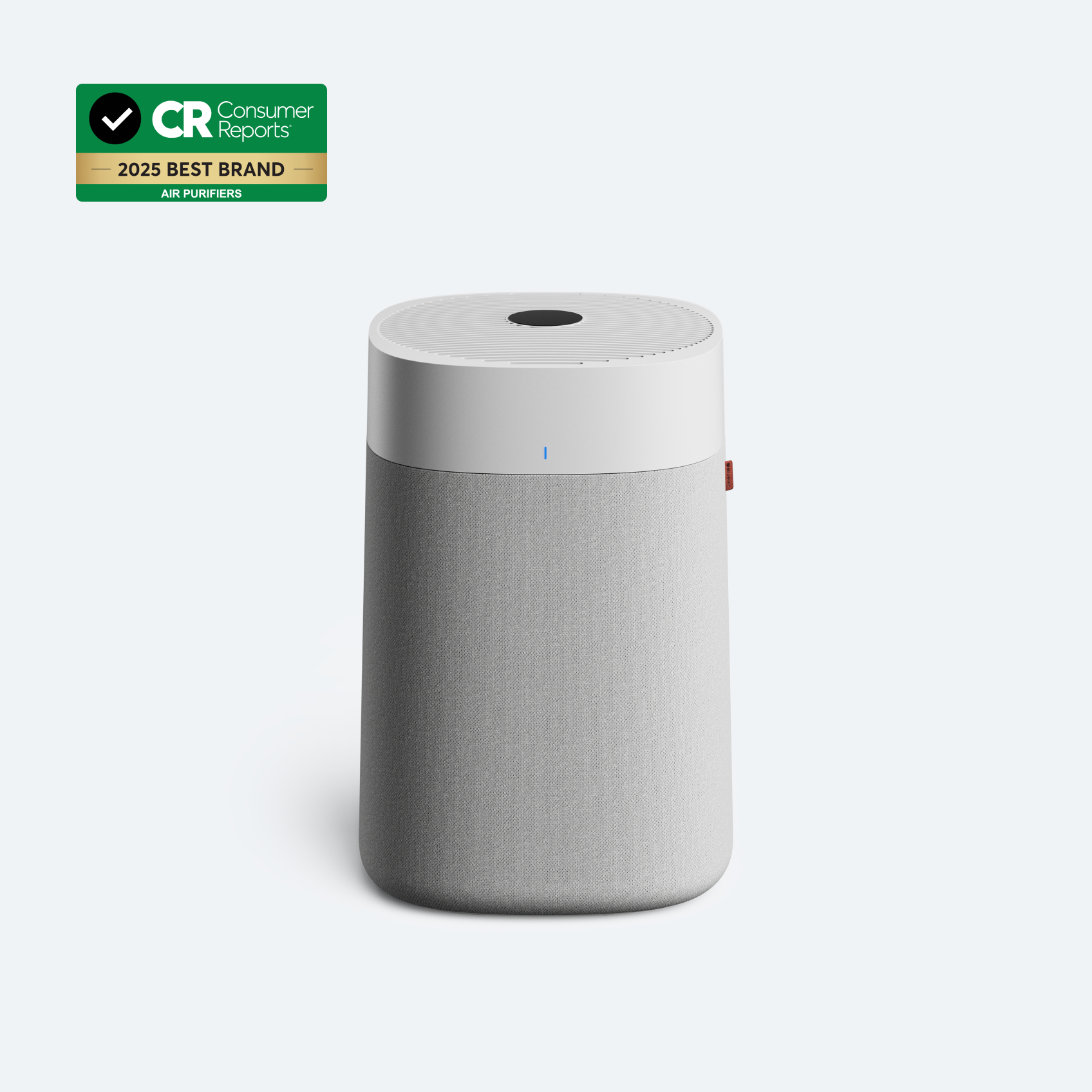
Best for: A living room around 674 square feet at the maker’s 4.8-ACH rating.
Pros
- Blueair lists 435 CFM smoke CADR and 674 square feet at 4.8 ACH
- 16.2-pound unit with auto and night modes
Cons and trade-offs
- Fabric pre-filter needs cleaning and the main filter is recurring
- Its connected features add app setup if you want to use them
Our recommendation
The 211i Max is a better current comparison than the legacy 211+. Blueair publishes separate 435 smoke, 452 dust and 450 pollen CADR figures and a 674-square-foot recommended room at 4.8 ACH. Its HEPASilent system combines mechanical and electrostatic filtration; that should be described accurately rather than relabeled as a conventional HEPA-only unit. A large room still needs a clear intake and enough fan speed.
Choose another if: You prefer a conventional mechanical-only purifier or want to avoid fabric pre-filter cleaning.
Coway Airmega 400: Automatic dual-intake choice
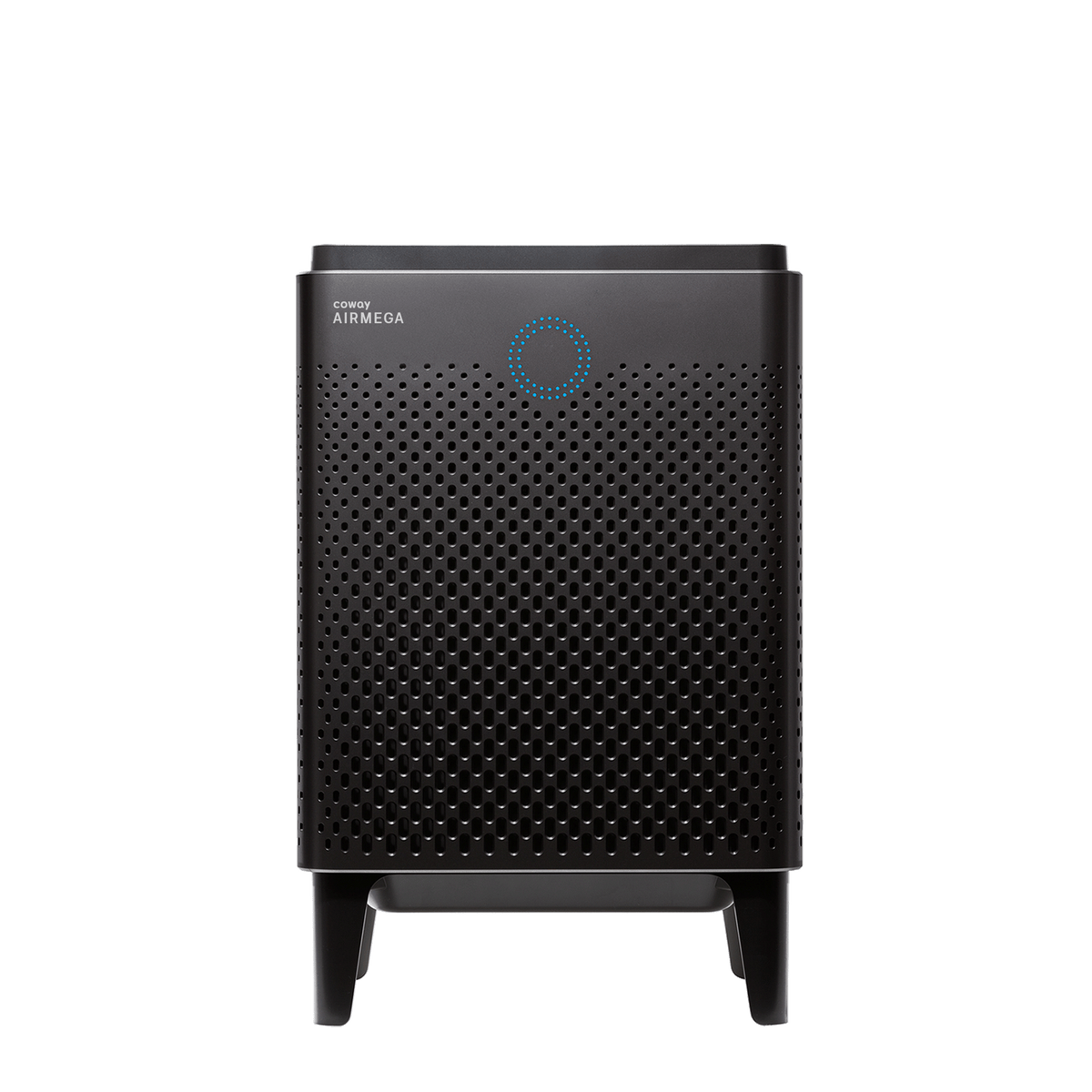
Best for: A larger occupied space where air-quality monitoring and automatic fan behavior matter more than app control.
Pros
- Coway lists 328 CFM smoke CADR and dual washable pre-filters
- Auto, eco and sleep modes with real-time air-quality display
Cons and trade-offs
- Coway lists 24.7 pounds and a wide 14.8-inch footprint
- Two intakes and Max2 filter set increase cleaning and replacement work
Our recommendation
Coway lists 3,120 square feet at one air change per hour and 1,560 square feet at two; neither is a 4.8-ACH large-room rating. Compare its 328 CFM smoke CADR with EPA room guidance instead of calling it a 3,120-square-foot rapid-cleaning unit. The dual-sided layout needs clearance and both washable pre-filters serviced. The 400 is distinct from the connected 400S.
Choose another if: You need a lighter unit or a 4.8-ACH room rating stated directly by the maker.
Levoit Core 600S-P: Connected control in a large room
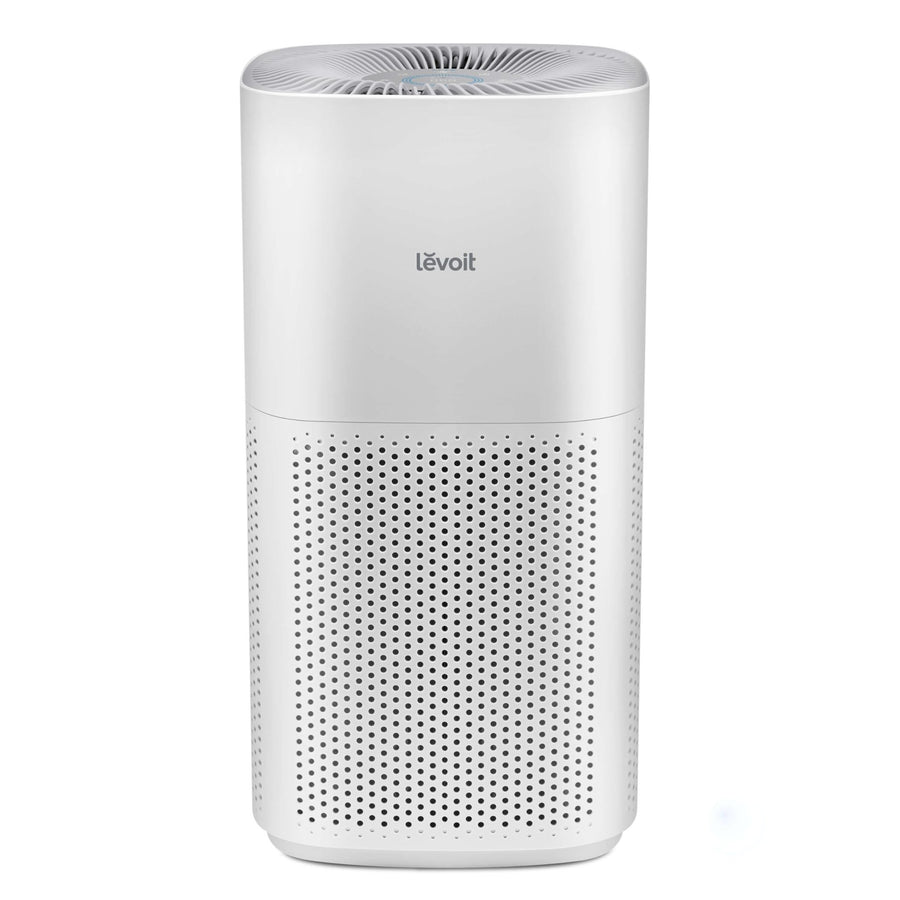
Best for: A roughly 600-square-foot room where app schedules and PM2.5 display would aid regular use.
Pros
- Levoit lists 391 CFM CADR and 606 square feet at 4.8 ACH
- Auto mode, PM2.5 display and VeSync controls
Cons and trade-offs
- App features add setup and account dependence
- One replaceable multi-stage filter remains an ongoing cost
Our recommendation
Levoit identifies US model LAP-C601S-WUS with 391 CFM CADR. Its 2,909-square-foot figure represents one air change per hour; the 606-square-foot 4.8-ACH figure is the fairer occupied-room comparison. The particle display helps track what its sensor sees, but is not a complete measure of gases or safety. Give its 360-degree intake space to breathe.
Choose another if: You want a simpler non-connected control scheme or less filter replacement cost.
Alen BreatheSmart 75i: Design and filter-choice option
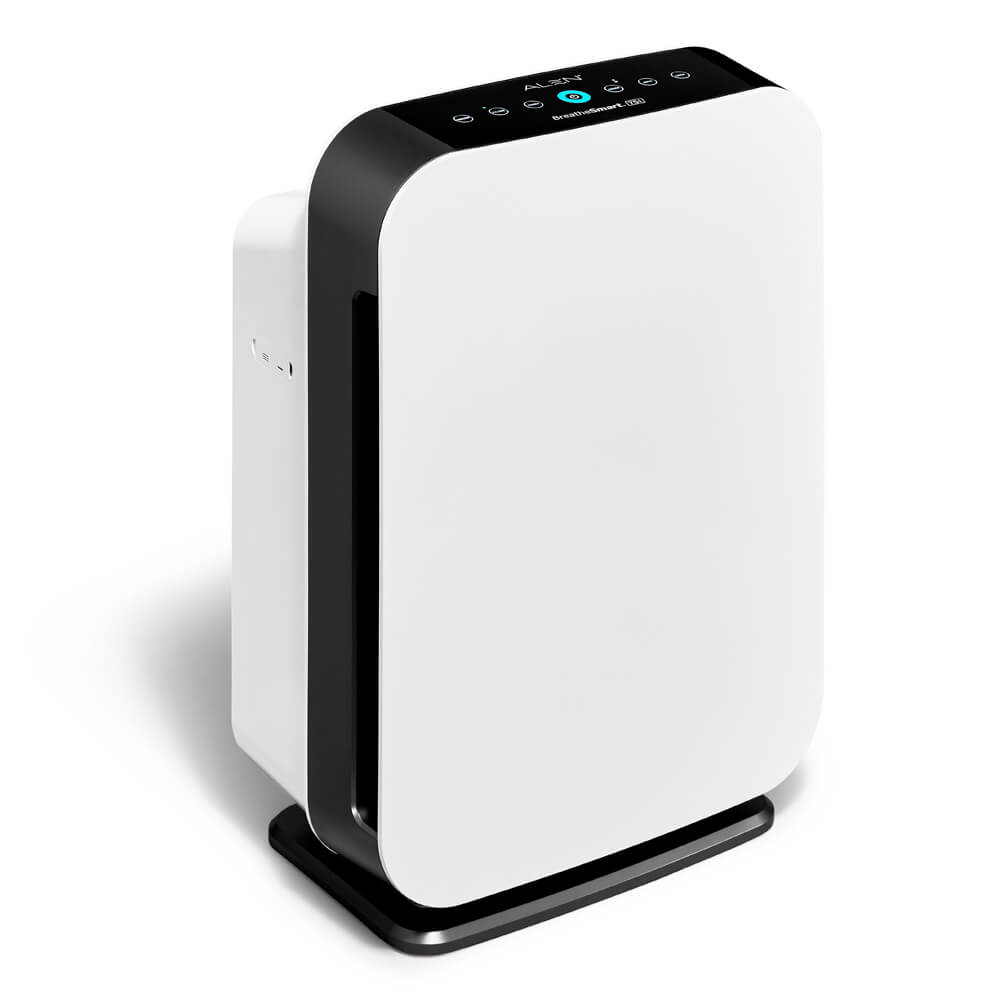
Best for: A visible living space where cabinet finishes and a choice of particle or odor-focused filters matter.
Pros
- Alen lists 375 CFM CADR and several cabinet finishes
- Different replacement filter types target different use cases
Cons and trade-offs
- Filter type and replacement cost vary by configuration
- Optional ionizer is an unnecessary feature for many buyers
Our recommendation
Alen publishes a 375 CFM maximum CADR and 25-to-51 dBA noise range. The maker offers Essential, Advanced and Ultimate filter options with different carbon content and replacement intervals, so select the exact filter for the pollutant of concern. Alen says the ionizer can be disengaged; EPA advises avoiding ozone-producing cleaning technology, so we do not count that feature as a reason to buy.
Choose another if: You do not want to research several filter variants or you want the lowest ongoing filter cost.
Medify MA-112: Extra-large high-airflow unit

Best for: A genuinely large open area where the 594 CFM maximum smoke CADR is useful and filter upkeep is acceptable.
Pros
- Medify lists 594 CFM smoke CADR and 928 square feet at 4.8 ACH
- Wheels aid moving the 33.5-pound unit
Cons and trade-offs
- Medify lists 3,000-hour filters, roughly four to five months at continuous use
- At 120W rated and up to 56.5 dBA, it is a larger operating commitment
Our recommendation
Medify publishes CADR by speed, which makes the tradeoff clear: 594 CFM at speed four falls to about 121 CFM in sleep mode. Its 4,455-square-foot one-ACH headline is not the appropriate occupied-room comparator; the maker lists 928 square feet at 4.8 ACH. This makes sense for a large room only if you can tolerate an effective fan setting and maintain the filter schedule.
Choose another if: Your room is much smaller, you need a quiet compact unit or you cannot budget frequent filters.
Buying guide
Compare at the same air-change rate
EPA’s approximate eight-foot-ceiling table calls for 260 CFM at 400 square feet, 325 at 500 and 390 at 600. A brand’s one-ACH room number cannot be compared to another brand’s 4.8-ACH number. Measure all connected space and account for higher ceilings.
Keep the fan setting realistic
Maximum CADR typically applies at the highest fan speed. Medify publishes 594 CFM at speed four but around 121 CFM in sleep mode. If noise forces you to run low, consider more capacity, two units or better placement.
Check filters and source control
All main filters need replacement. Compare exact filter code, interval, price and availability. Particle CADR does not measure gas removal; EPA advises substantial carbon for some gases. Source reduction and clean-air ventilation remain important.
Place units for airflow
Do not block intake or outlet with curtains or furniture. A dual-intake Coway needs clearance on both sides; round intake designs need perimeter clearance. EPA suggests locating cleaners in occupied rooms. Our complete buying guide covers the fundamentals, and general air-purifier comparison covers smaller spaces.
Frequently asked questions
What counts as a large room?
Measure floor area and connected volume. For a 600-square-foot room with an eight-foot ceiling, EPA’s approximate minimum particle CADR is 390 CFM. Open plans or tall ceilings need more capacity.
Is a 3,000-square-foot claim enough?
Only if you understand the air-change rate behind it. A unit may cover that area at one ACH, while serving a far smaller occupied area at 4.8 ACH.
Is the highest CADR always best?
No. Noise, energy, placement and replacement filters determine whether you will operate the unit at an effective setting.
Will a large purifier fix mold or odors?
It cannot repair dampness or remove all gases. Address source control first, then choose appropriate particle and gas filtration for the room.
Research method and primary sources
We compared current primary manufacturer pages, exact models and practical use-case tradeoffs. We have no original hands-on or durability test records. Recommendations are editorial judgments, while product specifications remain manufacturer claims.
Primary sources: Blueair Blue Pure 211i Max manufacturer page; Coway Airmega 400 manufacturer page; Levoit Core 600S-P manufacturer page; Alen BreatheSmart 75i manufacturer page; Medify MA-112 manufacturer page; EPA guide to air cleaners. Our methodology.
Affiliate disclosure
As an Amazon Associate, The Gear Audit earns from qualifying purchases. We may earn an affiliate commission when you buy through our links, at no extra cost to you. Full affiliate disclosure.