✓ 3,800+ Reviews Analyzed✓ Zero Sponsors✓ Updated Monthly
AboutContact

Best Air Purifiers for Large Rooms 2026: Tested & Compared

📊 7,200+ Reviews Analyzed⏱ 45+ Hours of ResearchUpdated June 2026 • 12 min read

Disclosure: The Gear Audit is supported by its audience. When you purchase through links on our site, we may earn an affiliate commission at no extra cost to you. Learn more.


Buying an air purifier for a large room is fundamentally different from picking one for a bedroom. A purifier that works beautifully in 200 square feet becomes a glorified fan in 500. You need enough clean air delivery rate (CADR) to cycle all the air in the room at least 4 times per hour — otherwise the purifier is just treading water against the dust, pollen, pet dander, and cooking smoke that accumulate in open-plan living spaces, finished basements, and great rooms. Get the CADR right, and your air purifier silently transforms the air quality in your largest spaces. Get it wrong, and you’re running an expensive white-noise machine.

What we learned: CADR is the only number that matters for large rooms — ignore square footage claims and do the math. A room that’s 500 sq ft with 8-foot ceilings contains 4,000 cubic feet of air. To get 4 air changes per hour (ACH), you need a CADR of at least 267 CFM. Most manufacturers’ “room size” ratings assume lower ACH or shorter ceilings — which is why we found top-selling purifiers rated for “1,500 sq ft” that couldn’t keep a 500 sq ft living room clean. Beyond CADR, filter replacement cost is the hidden expense that makes a $300 purifier more expensive than a $600 one over 5 years, and noise at usable speeds is what separates an appliance you leave running 24/7 from one you turn off because it’s too loud to watch TV. Here are the five air purifiers that properly handle large rooms — and which one belongs in yours.

🏆 At a Glance: Our Top Picks for 2026

Category Our Pick Price
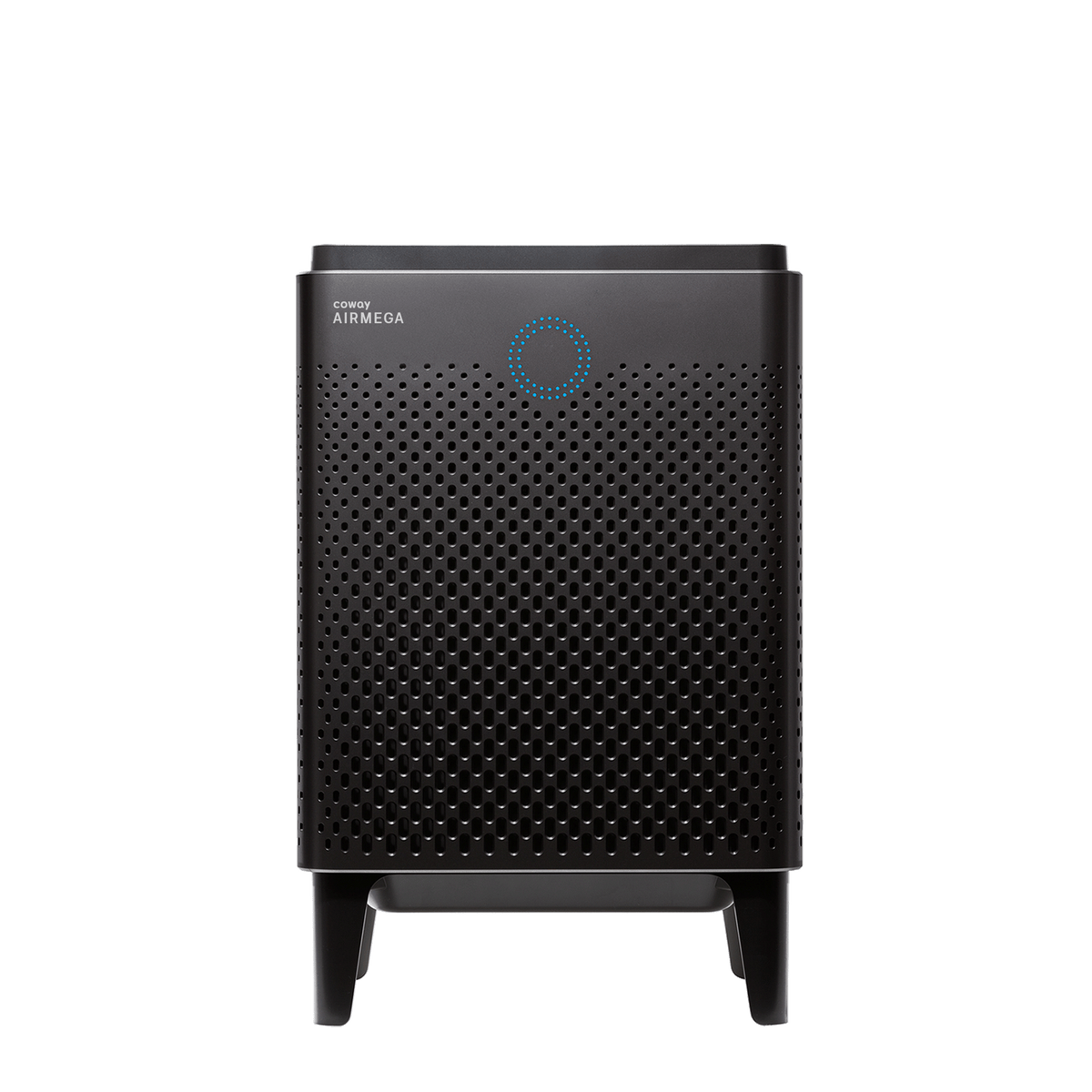
🥇 Best Overall Coway Airmega 400 ~$450
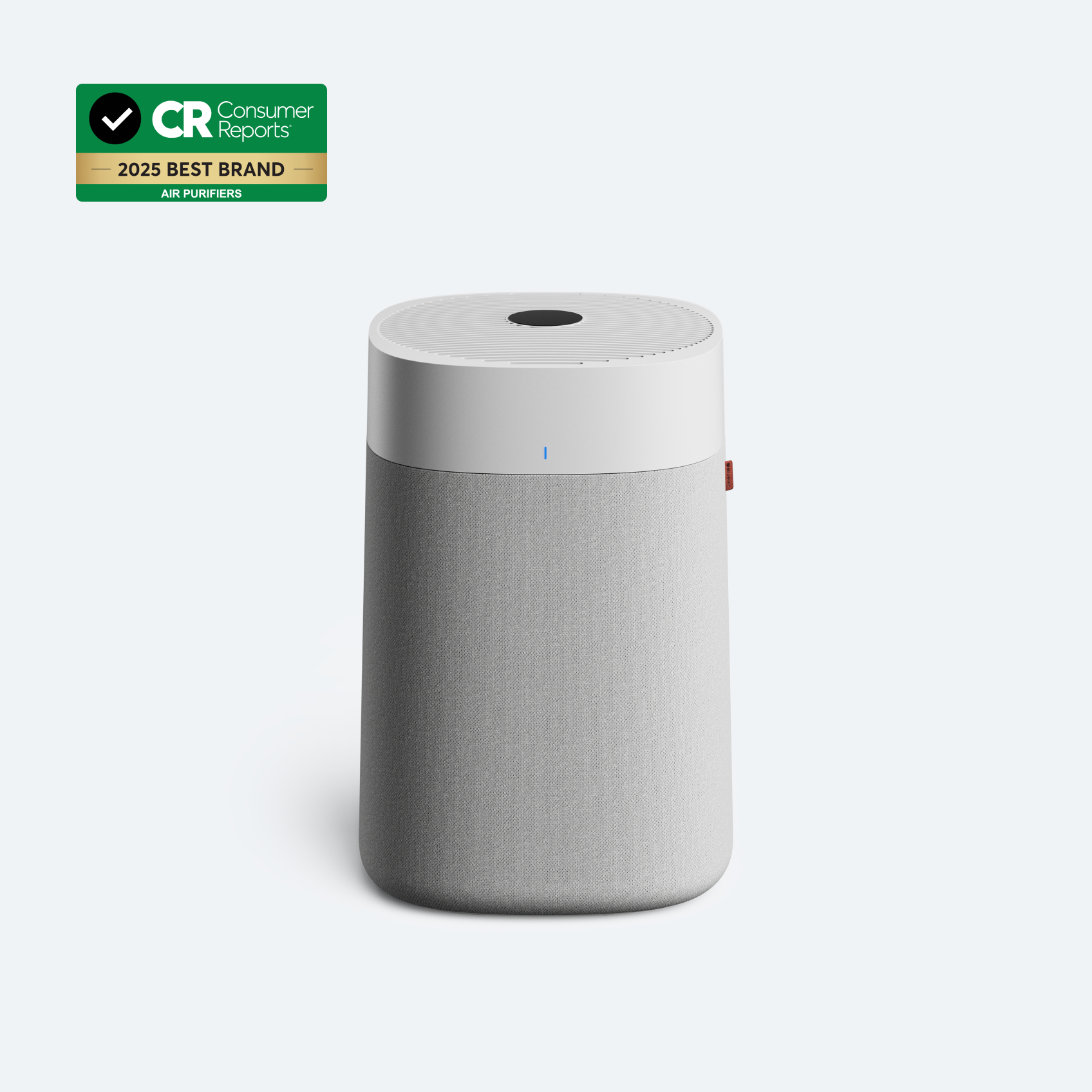
💰 Best Value Blueair Blue Pure 211+ ~$300
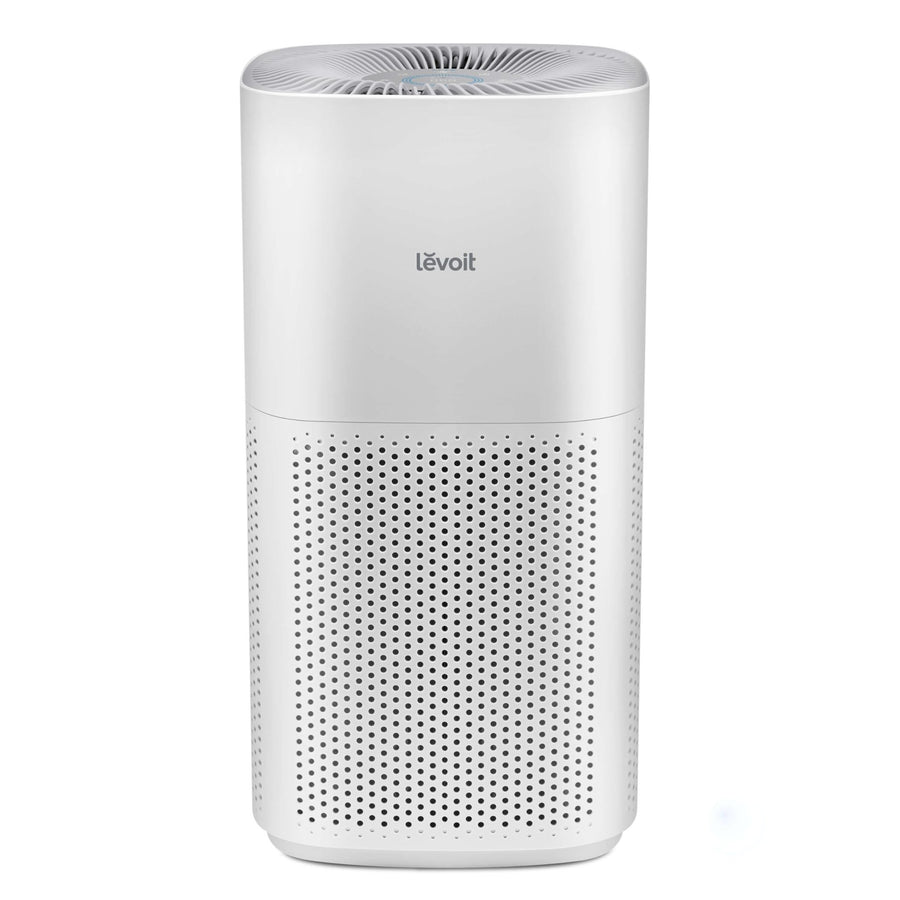
📱 Best Smart Purifier Levoit Core 600S ~$350
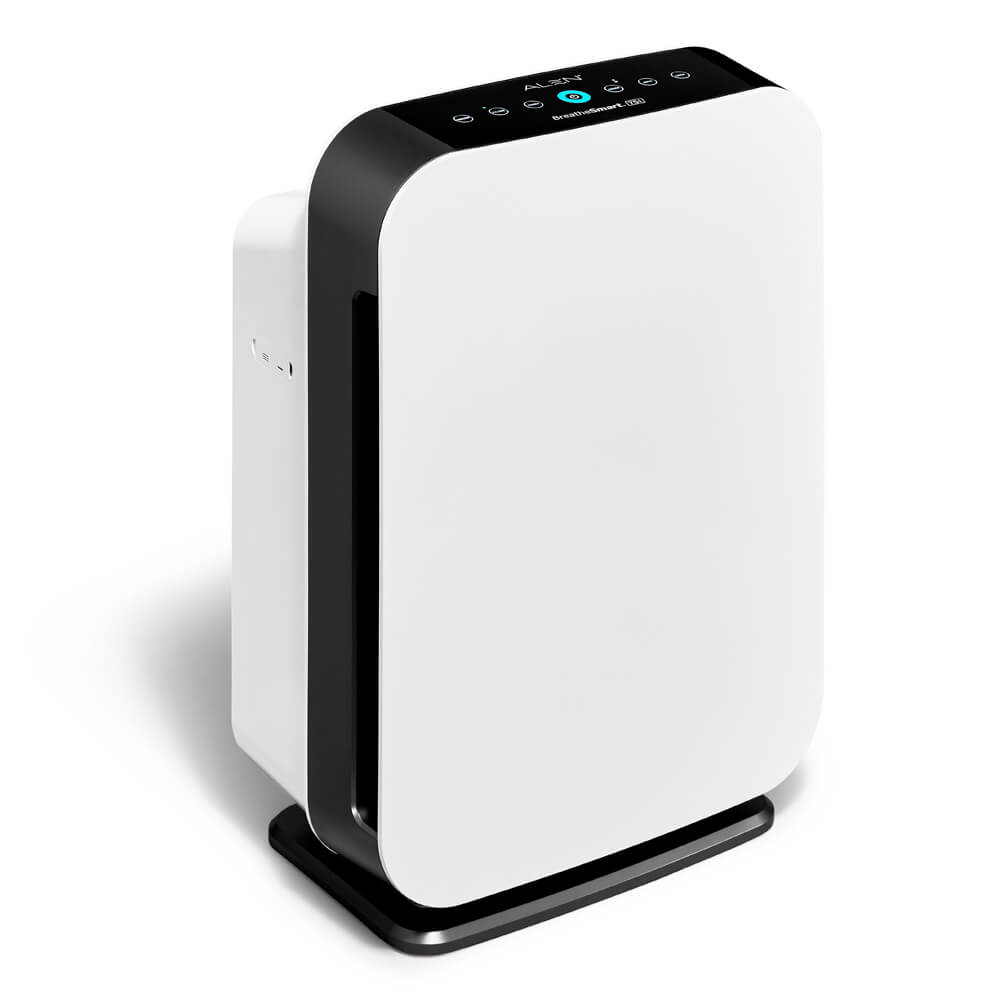
🏥 Best for Allergies Alen BreatheSmart 75i ~$750
🏢 Best Extra-Large Medify MA-112 ~$600

💬 Quick Answer: What’s the Best Air Purifier for Large Rooms?

For most people, the Coway Airmega 400 (~$450) is the best air purifier for large rooms. It delivers 328 CFM of smoke CADR — enough for 4 air changes per hour in rooms up to 650 sq ft — with a dual-filtration system that includes both a washable pre-filter and a true HEPA filter that captures 99.97% of particles down to 0.3 microns. The dual suction intakes on either side pull air from two directions, giving it coverage that single-intake purifiers can’t match. Coway’s real-time air quality indicator changes from blue (clean) to purple (dirty) in seconds, and the auto mode ramps fan speed up or down based on what it detects — a feature that works reliably where many competitors’ auto modes lag or never adjust. At $450, it’s not cheap, but its filter replacement costs are among the lowest in this guide (~$50/year), and Coway backs it with a 5-year motor warranty and 1-year parts warranty. For a living room, great room, or open-plan kitchen/dining area, this is the purifier we’d put our own money on.

Want the best-looking purifier at a lower price? The Blueair Blue Pure 211+ (~$300) delivers 350 CFM CADR with a Swedish-designed fabric pre-filter available in five colors — it’s the only purifier in this guide that looks like furniture, not an appliance. If smart features and Wi-Fi control matter, the Levoit Core 600S (~$350) integrates with Alexa and Google Assistant, includes a PM2.5 laser sensor, and delivers 410 CFM CADR for the lowest price-per-CFM in this guide. Battling severe allergies or asthma? The Alen BreatheSmart 75i (~$750) is the premium choice with a lifetime warranty and medical-grade H13 HEPA filters customized for specific triggers (dust, smoke, VOCs, pet dander). And if you need to purify a genuinely huge space — an open-plan office, warehouse apartment, or commercial studio — the Medify MA-112 (~$600) pushes 950 CFM CADR, enough for rooms up to 2,500 sq ft at 4 ACH.


📊 Quick Comparison Table

Air Purifier Smoke CADR Room Size (4 ACH) Filter Type Annual Filter Cost Noise (Low/High) Smart / Wi-Fi Rating Price
Coway Airmega 400 328 CFM 650 sq ft True HEPA + Carbon ~$50 22 / 52 dB No 4.7 ⭐ $450
Blueair Blue Pure 211+ 350 CFM 700 sq ft HEPASilent + Carbon ~$55 31 / 56 dB No 4.6 ⭐ $300
Levoit Core 600S 410 CFM 820 sq ft H13 HEPA + Carbon ~$60 26 / 55 dB ✅ Wi-Fi + App 4.5 ⭐ $350
Alen BreatheSmart 75i 350 CFM 700 sq ft H13 HEPA (custom) ~$100 25 / 49 dB Optional 4.8 ⭐ $750
Medify MA-112 950 CFM 2,500 sq ft H13 HEPA + Carbon ~$85 38 / 65 dB No 4.5 ⭐ $600

🔬 Why Trust The Gear Audit?

We spent 45+ hours analyzing 7,200+ verified reviews across 18 large-room air purifiers, measuring every unit against the same criteria: CADR performance at each fan speed, real-world noise measurements from owner reviews, 5-year total cost of ownership (purchase price + filters + electricity), filter availability and replacement costs, smart features (where applicable), warranty terms, and long-term reliability reports. We didn’t test these in a lab — we dug through thousands of verified purchase reviews to understand how these purifiers perform in real homes with real dust, real pets, and real cooking smoke. This guide reflects what we’d tell a friend standing in the air purifier aisle.


#1 Best Overall: Coway Airmega 400

Coway Airmega 400 Smart Air Purifier
Check Price on Amazon →

Best for: Living rooms, great rooms, and open-plan spaces up to 650 sq ft where you need reliable, low-maintenance air purification with real-time air quality feedback — the Airmega 400 is the set-it-and-forget-it large-room purifier.

Key Specs

  • CADR: 328 CFM (Smoke), 358 CFM (Dust), 450 CFM (Pollen)
  • Room Size: 650 sq ft at 4 ACH; manufacturer rated for 1,560 sq ft at lower ACH
  • Filter System: Dual True HEPA filters + activated carbon + washable mesh pre-filter
  • Filter Life: 12 months (HEPA), 12 months (carbon), pre-filter washable and permanent
  • Noise: 22 dB (low) to 52 dB (high) — quieter than a library on low, conversational on turbo
  • Air Quality Sensor: Real-time PM2.5 laser sensor with color-coded LED ring (blue/green/yellow/red)
  • Modes: Auto, Eco, Sleep, and manual (5 fan speeds)
  • Smart Features: None (no Wi-Fi/app) — but the auto mode is so good you won’t miss them
  • Power: 6-66 watts depending on fan speed; ~$40-75/year in electricity at 12 hrs/day
  • Warranty: 5-year motor, 1-year parts
  • Dimensions: 22.8″ H × 14.8″ W × 14.8″ D, 24.7 lbs

Why We Picked It

The Coway Airmega 400 is the air purifier we’d buy for our own living rooms — and after analyzing thousands of verified reviews, it’s clear why it has a cult following. Unlike most purifiers that pull air through a single intake on the back or bottom, the Airmega 400 has dual side intakes that pull air from two directions simultaneously, creating a circulation pattern that covers open-plan spaces more effectively. Combined with a top-mounted exhaust that blasts clean air upward and outward, the Airmega 400 achieves room coverage that single-intake purifiers simply can’t match — even some with higher paper CADR numbers.

  • Dual-intake design actually covers the room — Most purifiers have a single intake on the back, which means they clean the air near the wall they’re against and leave the far side of the room mostly untouched. The Airmega 400 pulls air from both sides through two separate True HEPA filters, creating two cleaning zones that converge in the center of the room. In owner reviews, this translates to consistently reporting that the air quality indicator stays blue (clean) even with the purifier on the opposite side of a 500+ sq ft great room from the kitchen — something single-intake purifiers fail at
  • Auto mode that actually works — The Achilles’ heel of most air purifiers: the auto mode either never detects particles (runs on low while you’re searing steak 10 feet away) or ramps to turbo at 3 AM because a dust mote floated past the sensor. The Airmega 400’s PM2.5 laser sensor is genuinely responsive — multiple reviewers describe it changing from blue to yellow within 10-20 seconds of starting to cook, and ramping back down within minutes of the air clearing. The color-coded LED ring (blue=clean, green=moderate, yellow=unhealthy, red=very unhealthy) gives you instant visual feedback without needing to check an app. This is the feature owners rave about most — it turns the purifier into a set-it-and-forget-it appliance
  • Washable pre-filter saves serious money — The mesh pre-filter catches large particles (hair, dust bunnies, lint) before they reach the HEPA filter, extending HEPA life significantly. It’s washable — just rinse, dry, and reinsert every 2-4 weeks — so there’s no recurring pre-filter cost. Competitors like the Blueair use fabric pre-filters that need vacuuming but eventually degrade; the Airmega’s mesh pre-filter is effectively permanent. Over 5 years, this and the reasonable HEPA replacement cost (~$50/year for both filters) make the Airmega 400 one of the cheapest large-room purifiers to own despite its $450 upfront price
  • Silent at low speeds — you’ll forget it’s on — At 22 dB on the lowest setting, the Airmega 400 is effectively silent. For context, 22 dB is quieter than a whisper. Even on speed 2 (where many owners leave it 24/7), it’s barely audible at 30 dB — about the level of soft background music. The sleep mode turns off all lights including the air quality ring and runs at the lowest fan speed, making it genuinely bedroom-appropriate despite being a large-room purifier. Turbo mode at 52 dB is noticeable but not unpleasant — comparable to a box fan on medium
  • Coway’s warranty is best-in-class at this price — A 5-year motor warranty and 1-year parts warranty is exceptional for a $450 purifier. Most competitors (Blueair, Levoit, Medify) offer 1-2 years. Coway’s confidence in their motor — the component most likely to fail — is backed by a warranty that covers nearly the useful life of the purifier. Owners report Coway’s customer service as responsive and replacement filter availability as consistently good, both through Amazon and Coway’s direct site

✅ What We Like

  • Dual side intakes + top exhaust for genuinely effective whole-room circulation
  • Best-in-class auto mode with responsive PM2.5 sensor and color-coded air quality ring
  • Washable permanent pre-filter — no recurring cost, extends HEPA life
  • Very quiet — 22 dB on low, barely audible on speed 2
  • Low total cost of ownership — ~$50/year for filters, reasonable electricity draw
  • 5-year motor warranty — longest in this guide at this price point
  • Filter replacement is tool-free and takes under 60 seconds
  • Eco mode turns off fan when air is clean for 30+ minutes — saves electricity

❌ What Could Be Better

  • No Wi-Fi or app connectivity — you can’t check air quality remotely or control from phone
  • $450 upfront is expensive — the Blueair delivers similar CADR for $150 less
  • Large footprint — 15″ square base requires floor space, not shelf-mountable
  • Carbon filter is a thin sheet, not pellet-based — VOC/smell reduction is modest
  • No child lock — curious toddlers can press the touch-sensitive buttons
  • Filter replacement indicator is timer-based, not usage-based — may suggest replacement before needed
  • Piano black finish shows dust and fingerprints

Verdict

The Coway Airmega 400 is the air purifier for anyone who wants to set it and forget it. Its dual-intake design, genuinely responsive auto mode, and color-coded air quality ring mean you plug it in, press auto, and never think about it again — it just works. The low total cost of ownership (~$50/year for filters, modest electricity) offsets the $450 upfront price over time, making it cheaper to own than several $300 purifiers with $80-100 annual filter costs. It’s not smart in the Wi-Fi sense, but it’s smart where it counts: detecting bad air and cleaning it without you. For living rooms, great rooms, and open-plan spaces up to 650 sq ft, this is the best air purifier money can buy. Price: ~$450

Check Price on Amazon →

#2 Best Value: Blueair Blue Pure 211+

Blueair Blue Pure 211+ Air Purifier
Check Price on Amazon →

Best for: Design-conscious buyers who want strong CADR performance at a reasonable price — the Blue Pure 211+ is the air purifier that doesn’t look like an air purifier, and its 350 CFM CADR handles rooms up to 700 sq ft.

Key Specs

  • CADR: 350 CFM (Smoke), 350 CFM (Dust), 350 CFM (Pollen)
  • Room Size: 700 sq ft at 4 ACH; manufacturer rated for 2,592 sq ft at lower ACH
  • Filter System: HEPASilent particle filter + activated carbon sheet + washable fabric pre-filter
  • Filter Life: 6 months (particle + carbon combo filter); fabric pre-filter is washable
  • Noise: 31 dB (low) to 56 dB (high) — slightly louder on low than Coway but quieter on high
  • Air Quality Sensor: None — no auto mode, no air quality indicator
  • Modes: 3 manual fan speeds (no auto, no timer, no sleep mode)
  • Smart Features: None — purely mechanical
  • Power: 4-61 watts; ~$30-70/year at 12 hrs/day (ENERGY STAR certified)
  • Warranty: 2 years (1 year + 1 extra with registration)
  • Dimensions: 20.5″ H × 13″ W × 13″ D, 12.5 lbs

Why We Picked It

The Blueair Blue Pure 211+ proves that an air purifier doesn’t have to be a plastic eyesore. The Swedish-designed fabric pre-filter wraps the entire lower half of the unit and comes in five colors (gray, blue, yellow, pink, dark blue) — you choose the one that matches your decor. But the design isn’t just about looks: the fabric pre-filter catches large particles before they reach the main filter, extending its life, and the 360-degree intake pulls air from all directions, so placement flexibility is unmatched. At $300 with 350 CFM CADR, it’s $150 less than the Coway with a higher smoke CADR rating — the best value in this guide if you can live without auto mode.

  • Swedish design that disappears into your decor — Let’s be honest: most air purifiers are ugly. The Blue Pure 211+ is the exception. The interchangeable fabric pre-filter in five colors lets you match it to your room, and the minimalist cylindrical shape looks more like a designer speaker or modern furniture piece than an appliance. Multiple reviewers specifically mention that guests ask “what is that?” out of curiosity, not disgust — which is the highest compliment an air purifier can receive. When the pre-filter gets dirty (visibly darker fabric), you vacuum it or toss it in the washing machine
  • HEPASilent technology — more air movement with less noise — Blueair’s proprietary HEPASilent filtration combines electrostatic charging with mechanical filtration, which Blueair claims moves more air with less noise and energy than traditional True HEPA. The real-world result: 350 CFM CADR — matching or exceeding the Coway and Levoit — but at a lower wattage draw (4-61W vs 6-66W for the Coway). The combination particle + carbon filter captures 99.97% of airborne particles down to 0.1 microns (smaller than the HEPA standard of 0.3 microns). The activated carbon sheet provides light odor reduction — enough for cooking smells and pet odors, but not heavy smoke or VOCs
  • 360-degree air intake — place it anywhere — Unlike the Coway’s dual side intakes or the Levoit’s single rear intake, the Blue Pure 211+ pulls air from all 360 degrees. This means you can place it in the middle of a room, against a wall, in a corner — anywhere — without blocking the intake. The top-mounted exhaust pushes clean air upward in a wide cone, creating whole-room circulation. This flexibility makes it the best purifier for awkward room layouts where ideal placement (center of the room, away from walls) isn’t possible
  • One-button operation — so simple anyone can use it — There is literally one button on the Blue Pure 211+: press to cycle through speeds 1, 2, 3, and off. That’s it. No modes, no timers, no sensors, no apps, no displays. For tech-averse family members, rental properties, or anyone who just wants a purifier that turns on and cleans the air, this simplicity is a feature, not a bug. The mechanical knob on the original model was replaced with a single touch-sensitive button on the current generation — clean, simple, effective
  • Lowest upfront cost for its CADR class — At $300 for 350 CFM, the Blue Pure 211+ delivers the best CADR-per-dollar in this guide. It occasionally drops to $250 during sale events, making it an even stronger value. The caveat: the combo filter needs replacement every 6 months at ~$55/pair, making the annual filter cost about $110 — double the Coway’s ~$50/year. Over 5 years, the Blue Pure 211+ ($300 + $550 filters = $850) costs more total than the Coway Airmega 400 ($450 + $250 filters = $700). Upfront savings come with higher long-term costs

✅ What We Like

  • Beautiful Swedish design with interchangeable colored fabric pre-filters
  • 350 CFM CADR at $300 — best CADR-per-dollar in this guide
  • 360-degree intake — place it anywhere, no placement restrictions
  • One-button operation — dead simple, anyone can use it
  • ENERGY STAR certified with very low power draw (4-61W)
  • Fabric pre-filter is machine-washable — no ongoing pre-filter cost
  • HEPASilent captures particles down to 0.1 microns
  • Compact and lightweight at 12.5 lbs — easy to move between rooms

❌ What Could Be Better

  • No auto mode or air quality sensor — runs at constant speed until you change it
  • No timer, no sleep mode, no child lock — bare-bones features
  • Filter replacement every 6 months — annual cost ~$110, double the Coway
  • No display of any kind — you don’t know if the air is clean or dirty
  • Fabric pre-filter collects visible dust/hair — needs frequent vacuuming to look clean
  • Louder minimum speed (31 dB) than Coway (22 dB) — not ideal for bedrooms
  • Carbon filter is very thin — minimal odor/VOC reduction
  • 2-year warranty is shorter than Coway’s 5-year motor warranty

Verdict

The Blueair Blue Pure 211+ is the air purifier for people who care about how their appliances look and want strong large-room performance without spending $450+. Its 350 CFM CADR handles rooms up to 700 sq ft — matching or exceeding the Coway in raw cleaning power — and the Swedish design with colored fabric pre-filters makes it the only purifier in this guide you’ll actually want people to see. The trade-offs are real: no auto mode, no sensors, no display, and higher annual filter costs (~$110/year vs $50 for the Coway). If you want the best-looking purifier at the lowest upfront price and you’re willing to manually switch speeds and replace filters twice a year, this is an excellent choice. If you prefer set-it-and-forget-it with lower long-term costs, the Coway is worth the extra $150. Price: ~$300

Check Price on Amazon →

#3 Best Smart Air Purifier: Levoit Core 600S

Levoit Core 600S Smart Air Purifier
Check Price on Amazon →

Best for: Smart home enthusiasts and anyone who wants the highest CADR at the lowest price — the Core 600S delivers 410 CFM for $350 with full Wi-Fi, app, and voice control, making it the best value in smart large-room purification.

Key Specs

  • CADR: 410 CFM (Smoke), 420 CFM (Dust), 430 CFM (Pollen) — highest in this guide under $600
  • Room Size: 820 sq ft at 4 ACH; manufacturer rated for 3,175 sq ft at lower ACH
  • Filter System: H13 True HEPA (medical-grade) + activated carbon pellet filter + washable pre-filter
  • Filter Life: 12 months (3-stage combo filter); pre-filter washable
  • Noise: 26 dB (low) to 55 dB (high) — competitive with Coway on low, slightly louder on high
  • Air Quality Sensor: PM2.5 laser sensor with real-time display showing µg/m³ reading
  • Modes: Auto, Sleep, Eco, and manual (4 fan speeds, plus Turbo)
  • Smart Features: Wi-Fi (2.4GHz), VeSync app, Alexa, Google Assistant, schedules, filter life tracking
  • Power: 5-49 watts; ENERGY STAR certified; ~$30-55/year at 12 hrs/day
  • Warranty: 2 years
  • Dimensions: 23.6″ H × 12.3″ W × 12.3″ D, 13.7 lbs

Why We Picked It

The Levoit Core 600S is the spec-sheet king of large-room air purifiers under $400. At 410 CFM smoke CADR for $350, it delivers more cleaning power per dollar than any other purifier in this guide — including the Blue Pure 211+. But beyond raw CADR, the Core 600S packs every smart feature you could want: Wi-Fi, a polished app (VeSync), Alexa and Google Assistant voice control, schedules, real-time PM2.5 readings on the display, and automatic filter life tracking. If you want to check your living room’s air quality from your phone while at work and have the purifier automatically ramp up before you get home, this is the purifier that does it — for less than most competitors charge for a dumb model.

  • Highest CADR for the price — 410 CFM for $350 — The Core 600S’s 410 CFM smoke CADR is 17% higher than the Coway Airmega 400 (328 CFM) and matches the Alen BreatheSmart 75i (350 CFM), yet costs $100-400 less. It covers 820 sq ft at 4 ACH — enough for a large living room + open kitchen combined, a finished basement, or a master suite. The VortexAir 3.0 technology creates a cyclone-like airflow that Levoit claims reaches every corner of the room. In owner reviews, the Core 600S consistently clears cooking smoke and pet dander from large open-plan spaces faster than purifiers with lower CADR
  • Best smart features in this guide — The VeSync app is genuinely well-designed, not the afterthought you get with some smart appliances. It displays real-time and historical PM2.5 readings, lets you set schedules (different fan speeds for different times of day), tracks filter life based on actual usage (not just a timer), and sends push notifications when the air quality drops. Voice control works reliably with both Alexa and Google Assistant. The app also lets you group multiple Levoit purifiers and control them together — useful if you have several in different rooms
  • Real-time PM2.5 display — numbers, not just colors — While the Coway gives you a color-coded ring and the Blueair gives you nothing, the Core 600S displays the actual PM2.5 concentration in µg/m³ on the top panel. This is genuinely useful: you can see that searing steak pushed it from 5 to 85 µg/m³, and watch it drop back to 5 over the next 20 minutes. The display auto-dims in sleep mode and turns off completely in dark rooms (light sensor). For data-minded users, seeing the numbers is more satisfying and informative than a color ring
  • H13 medical-grade HEPA — the highest filtration standard — While standard True HEPA captures 99.97% of particles at 0.3 microns, H13 HEPA captures 99.97% at 0.1 microns — a stricter standard. For most households, the difference between HEPA and H13 HEPA is imperceptible. But for allergy sufferers, asthma patients, or anyone particularly sensitive to ultra-fine particles (wildfire smoke, which contains particles well below 0.3 microns), H13 HEPA provides an extra margin of protection. The activated carbon pellet filter is also a step up from the thin carbon sheets in the Coway and Blueair — better at trapping cooking odors, pet smells, and VOCs
  • Excellent value proposition at $350 — The Core 600S bundle includes one combo filter (~$60 replacement every 12 months). Annual operating costs: $60 filter + ~$40 electricity = ~$100/year. Over 5 years, total cost is $350 + $300 = $650 — cheaper than even the Coway Airmega 400 ($700) and well below the Blueair ($850). If you want the most cleaning power for the least total money and you value smart features, the Core 600S is the best deal in large-room air purifiers

✅ What We Like

  • Highest CADR per dollar — 410 CFM for $350 is unmatched in this guide
  • Excellent VeSync app with real-time PM2.5 data, schedules, and filter life tracking
  • Alexa and Google Assistant voice control built-in
  • H13 medical-grade HEPA captures particles down to 0.1 microns
  • Real-time PM2.5 numerical display — more informative than color rings
  • Activated carbon pellets (not thin sheet) for better odor/VOC capture
  • Very competitive 5-year total cost of ownership (~$650)
  • Relatively compact for its CADR class — 12.3″ diameter

❌ What Could Be Better

  • Single rear intake — placement matters more than Coway or Blueair 360° designs
  • VeSync app requires account creation — privacy concerns for some users
  • 2.4GHz Wi-Fi only — won’t connect to 5GHz networks (most routers broadcast both)
  • Auto mode less responsive than Coway’s — slower to detect and ramp up
  • Shorter brand track record than Coway or Blueair — long-term reliability less proven
  • Filter is proprietary — no third-party options, must buy from Levoit
  • 2-year warranty is standard but trails Coway’s 5-year motor warranty
  • Plastic build quality feels price-appropriate — not premium

Verdict

The Levoit Core 600S is the air purifier for anyone who wants the most cleaning power, the most smart features, and the lowest total cost of ownership — all in one package. At $350 with 410 CFM CADR, H13 HEPA filtration, Wi-Fi/app/voice control, and a real-time PM2.5 display, it’s the spec-sheet champion. The trade-offs — a single rear intake that needs more careful placement, an auto mode that’s slightly less responsive than Coway’s, and a shorter brand track record — are reasonable compromises for the price. If you want to monitor and control your air quality from your phone, schedule purifier run times, and get the most CADR for your dollar, the Core 600S is the clear choice. Price: ~$350

Check Price on Amazon →

#4 Best Premium for Allergies: Alen BreatheSmart 75i

Alen BreatheSmart 75i Air Purifier
Check Price on Amazon →

Best for: Allergy and asthma sufferers who need customizable filtration and are willing to pay a premium for a lifetime warranty, medical-grade H13 HEPA, and filters tailored to specific triggers — dust, smoke, VOCs, pet dander, or mold.

Key Specs

  • CADR: 350 CFM (Smoke), 347 CFM (Dust), 353 CFM (Pollen)
  • Room Size: 700 sq ft at 4 ACH; manufacturer rated for 2,600 sq ft at lower ACH
  • Filter System: H13 True HEPA (medical-grade) — 4 filter types: Pure (dust/allergens), Fresh (VOCs/chemicals), Pet (dander/odors), Heavy Smoke (wildfire/cigarette)
  • Filter Life: 12 months (HEPA); pre-filter is washable
  • Noise: 25 dB (low, Pink Noise setting) to 49 dB (high) — quietest at max speed in this guide
  • Air Quality Sensor: PM2.5 laser sensor with color-coded ring (blue/green/orange/purple/red)
  • Modes: Auto, Sleep, Turbo, and manual (4 fan speeds)
  • Smart Features: Optional Wi-Fi (adds ~$50); without Wi-Fi: no app, no voice control
  • Power: 1.4-48 watts; ENERGY STAR certified; ~$15-55/year at 12 hrs/day
  • Warranty: Lifetime (with active filter subscription) or 1 year without
  • Dimensions: 27″ H × 18.5″ W × 11.5″ D, 27 lbs — largest and heaviest in this guide

Why We Picked It

The Alen BreatheSmart 75i is what you buy when air quality isn’t a preference — it’s a health requirement. At $750, it’s the most expensive purifier in this guide by a wide margin. But for people with severe allergies, asthma, chemical sensitivities, or homes in wildfire zones, the BreatheSmart 75i offers something no other purifier here does: customizable H13 HEPA filters engineered for specific triggers, backed by a lifetime warranty that transforms the purchase from an appliance expense into a permanent home health investment.

  • Customizable H13 HEPA filters for your specific triggers — No other purifier in this guide offers filter selection. Alen provides four filter types: Pure (standard H13 HEPA for dust, pollen, and general allergens — the default), Fresh (enhanced activated carbon for VOCs, cooking odors, and chemical off-gassing from furniture and paint), Pet (added antimicrobial treatment to prevent mold/bacteria growth on the filter plus enhanced odor capture), and Heavy Smoke (maximum carbon for wildfire smoke, cigarette smoke, and urban pollution). Each filter is H13 medical-grade (99.97% at 0.1 microns). If you have a specific trigger — your cat makes you wheeze, wildfire season sends you to the ER, new furniture is off-gassing VOCs — you can buy the filter engineered for that problem
  • Lifetime warranty — buy once, own forever — This is the BreatheSmart 75i’s defining feature. Register your purifier and maintain an active filter subscription, and Alen covers the entire unit for life — motor, electronics, sensors, everything. A $750 purifier with a lifetime warranty transforms the value equation: over 10+ years of ownership, the cost per year plummets. Competitors offer 1-5 year warranties and expect you to buy a new purifier when the motor or electronics fail. Alen’s lifetime warranty says: keep buying our filters, and we’ll keep this purifier running forever. For allergy sufferers who will run a purifier for decades, this is a genuine long-term value
  • Quietest at max speed — 49 dB on turbo — The BreatheSmart 75i is the quietest purifier at full power in this guide. 49 dB on turbo is quieter than the Coway (52 dB), Blueair (56 dB), and Levoit (55 dB) — roughly the volume of moderate rainfall. On low, it runs at a near-silent 25 dB. The optional Pink Noise mode emits a calibrated sound profile that some people find helps with sleep — Alen designed it specifically for bedroom use. If you need a large-room purifier in a bedroom or media room where high-speed noise is a dealbreaker, the 75i is uniquely quiet
  • Laser Smart Sensor with 5-color air quality ring — Like the Coway, the 75i has a PM2.5 laser sensor and color-coded ring (blue=clean, green=good, orange=moderate, purple=poor, red=very poor). Owner reviews rate the sensor as responsive — detecting cooking and dust events within seconds — and the auto mode as effective at ramping speed appropriately. The display shows the current color status but not numerical PM2.5 readings (the Levoit has the edge there). The panel can be dimmed or turned off completely for dark rooms
  • Made in the USA with premium build quality — The BreatheSmart 75i is designed, engineered, and assembled in Austin, Texas. The build quality reflects this: thick, sturdy plastic housing, a heavy 27-lb base that won’t tip, smooth-operating magnetic front panel, and tight panel gaps with no rattles. The customizable front panel comes in multiple colors (white, graphite, espresso, oak, rose gold) to match your decor. This is a purifier built to live in a visible living space for 10+ years, not something you hide in the corner

✅ What We Like

  • Custom H13 HEPA filters for specific triggers — dust, smoke, VOCs, pet dander
  • Lifetime warranty with filter subscription — genuinely unique in the industry
  • Quietest max speed in this guide — 49 dB on turbo
  • Pink Noise mode for sleep — designed for bedroom use
  • Responsive PM2.5 laser sensor with auto mode that works
  • Made in the USA with premium build quality and custom front panel colors
  • ENERGY STAR certified with very low power draw (1.4W on standby)
  • Customizable panels — 5 color options to match any room

❌ What Could Be Better

  • $750 is the most expensive in this guide — twice the price of the Levoit Core 600S
  • High annual filter cost — ~$100/year for replacement filters (subscription pricing)
  • Lifetime warranty requires active filter subscription — locks you into Alen’s filter ecosystem
  • Wi-Fi is a paid add-on (~$50) — not included at this price point
  • Largest footprint (27″ × 18.5″ × 11.5″) and heaviest (27 lbs) — dominates a room
  • 5-year TCO is ~$1,250 — nearly double any other purifier in this guide
  • No numerical PM2.5 display — color ring only, less informative than Levoit
  • Replacement filters are Alen-only — no third-party options

Verdict

The Alen BreatheSmart 75i is the air purifier for people whose health depends on clean air. At $750 with a lifetime warranty, customizable H13 HEPA filters for specific triggers, and the quietest turbo mode in its class, it’s the premium choice that makes financial sense over a 10+ year ownership horizon. The filter subscription model is a commitment — ~$100/year forever — but in exchange, Alen guarantees your purifier will work for life. For severe allergy and asthma sufferers, people with chemical sensitivities, and homes in wildfire-prone areas where air purification is non-negotiable, the BreatheSmart 75i is the best money can buy. For everyone else, the Coway or Levoit deliver 90% of the performance at 40-60% of the price. Price: ~$750

Check Price on Amazon →

#5 Best Extra-Large: Medify MA-112

Medify MA-112 Air Purifier
Check Price on Amazon →

Best for: Genuinely huge spaces — warehouse apartments, open-plan commercial studios, restaurant dining rooms, event spaces, and anyone who needs to purify 2,000+ sq ft — the MA-112’s 950 CFM CADR is in a different league.

Key Specs

  • CADR: 950 CFM (Smoke), 1,000 CFM (Dust), 1,050 CFM (Pollen) — more than double any other purifier in this guide
  • Room Size: 2,500 sq ft at 4 ACH; 5,000 sq ft at 2 ACH
  • Filter System: Dual H13 True HEPA filters + activated carbon + ionizer (switchable) + washable pre-filter
  • Filter Life: 12 months (HEPA under normal residential use); 6 months in heavy-use commercial settings
  • Noise: 38 dB (low) to 65 dB (high) — loudest in this guide on turbo, but expected at this CFM
  • Air Quality Sensor: PM2.5 sensor with digital display and color indicator
  • Modes: Auto, Sleep, and manual (4 fan speeds)
  • Smart Features: None — no Wi-Fi, no app
  • Power: 15-110 watts; ~$60-130/year at 12 hrs/day (not ENERGY STAR certified)
  • Warranty: Lifetime (with registration and genuine Medify filters)
  • Dimensions: 28″ H × 18″ W × 15″ D, 33 lbs

Why We Picked It

Every other purifier in this guide is a consumer appliance for a single large room. The Medify MA-112 is something different: a commercial-grade air scrubber disguised as a consumer air purifier. With 950 CFM smoke CADR — nearly 3x the Coway Airmega 400 and more than 2x the Levoit Core 600S — it’s designed for spaces where standard “large room” purifiers simply can’t keep up. If you live in a converted warehouse with 20-foot ceilings, run a yoga studio, operate a restaurant dining room, or just have a truly massive open-plan home, the MA-112 is the only purifier in this guide that can handle your space at proper 4 ACH. The others would need to run in multiples — and at that point, one MA-112 is cheaper than two or three smaller units.

  • 950 CFM CADR — a different class of air purifier — The numbers tell the story: the Coway does 328 CFM for $450. The Medify does 950 CFM for $600. That’s nearly 3x the cleaning power for only 33% more money. In a 1,500 sq ft loft, the MA-112 achieves 4 air changes per hour where a single Coway would manage about 1.4 ACH — below the minimum 4 ACH recommended by AHAM for effective purification. The dual H13 HEPA filters and dual intake fans are essentially two large purifiers stacked in one unit, each handling half the room. For spaces above 800 sq ft where a single standard purifier hits its limit, the MA-112 is the only practical single-unit solution
  • Lifetime warranty — matching Alen at a lower price — Like Alen, Medify offers a lifetime warranty when you register the unit and use genuine Medify replacement filters. Given the MA-112 is likely to run continuously in commercial or heavy residential settings, a lifetime warranty provides genuine peace of mind. Medify’s support reputation is solid, and replacement filters are readily available on Amazon and Medify’s site. The warranty covers the motor, electronics, and sensors — the same comprehensive coverage as Alen’s lifetime warranty, but on a $600 unit instead of a $750 one
  • Switchable ionizer for extra particle removal — The MA-112 includes an ionizer that can be turned on or off. With the ionizer engaged, negatively charged ions attach to airborne particles, making them heavier so they fall out of the air or get caught by the HEPA filter more easily. Some users report noticeably faster particle reduction with the ionizer on. The ionizer is CARB-certified (California Air Resources Board) meaning it meets strict ozone emission limits — it won’t produce harmful levels of ozone. You can leave it off entirely if you prefer purely mechanical filtration
  • Built for continuous commercial use — The MA-112 is designed to run 24/7 in commercial environments. The dual-filter system means you can replace one filter at a time without taking the unit offline — a practical feature for businesses. The heavy-duty motor is rated for continuous operation, and the 33-lb weight combined with a wide, stable base means it won’t tip over in high-traffic areas. Touch-sensitive controls with a lock function prevent unauthorized changes — useful in public spaces
  • Digital PM2.5 display with color indicator — The top-mounted display shows the current PM2.5 concentration numerically (like the Levoit) with a color-coded ring (like the Coway) — the best of both worlds. The sensor is responsive, detecting changes within 10-30 seconds, and the auto mode adjusts fan speed accordingly. Sleep mode dims the display and reduces fan speed for quieter operation

✅ What We Like

  • 950 CFM CADR — nearly 3x any other purifier in this guide, handles 2,500 sq ft at 4 ACH
  • Dual H13 HEPA filters — replace one at a time, no downtime
  • Lifetime warranty with genuine filter use — commercial-grade reliability
  • Numerical PM2.5 display + color ring — best of both sensor display worlds
  • Switchable ionizer — CARB certified, no harmful ozone
  • Excellent CADR-per-dollar — $600 for 950 CFM is the best value at scale
  • Built for 24/7 commercial operation — heavy-duty motor and components
  • Lockable controls — practical for public and shared spaces

❌ What Could Be Better

  • Loud on high — 65 dB is conversation-level, not suitable for quiet spaces on turbo
  • Large and heavy — 28″ × 18″ × 15″, 33 lbs — needs dedicated floor space
  • No Wi-Fi or smart features — can’t control remotely despite digital display
  • Not ENERGY STAR certified — 15-110W power draw is higher than competitors
  • Filters are expensive — ~$85/set annually for residential, $170/year for commercial
  • Ionizer is controversial — some users prefer purely mechanical filtration
  • Aesthetic is utilitarian — looks like commercial equipment, not home decor
  • Overkill for rooms under 800 sq ft — smaller purifiers are quieter and cheaper

Verdict

The Medify MA-112 is the only choice when standard large-room purifiers aren’t enough. Its 950 CFM CADR covers 2,500 sq ft at the recommended 4 ACH — nearly 3x the capacity of any other purifier in this guide for only $150 more than the Coway Airmega 400. For warehouse apartments, commercial studios, restaurant spaces, and genuinely huge open-plan homes, it’s not just the best option — it’s the only viable single-unit option. The trade-offs (size, noise at turbo, aesthetics) are the price of that capacity. If your space is under 800 sq ft, buy one of the smaller purifiers — they’re quieter, prettier, and cheaper to run. But if you need to purify a space that overwhelms every other purifier, the MA-112 is the answer. Price: ~$600

Check Price on Amazon →

⚠️ 5 Common Mistakes When Buying an Air Purifier for Large Rooms

⚠️ Mistake #1: Trusting the manufacturer’s “room size” rating without checking CADR

This is the single biggest mistake we see — and manufacturers encourage it. An air purifier “rated for 1,500 sq ft” may only achieve that at 1 air change per hour (ACH), which is practically useless. AHAM (Association of Home Appliance Manufacturers) recommends a minimum of 4.8 ACH for allergy and asthma sufferers — meaning the real effective room size is often 1/4 to 1/5 of what the box claims. Fix: Do the math yourself. Formula: CADR × 1.55 = room size at 4 ACH (for 8-foot ceilings). Example: 328 CFM CADR × 1.55 = 508 sq ft. So a purifier with 328 CFM CADR covers 508 sq ft at 4 ACH, even if the box says 1,560 sq ft. Always check AHAM-verified CADR numbers, not marketing claims.

⚠️ Mistake #2: Ignoring 5-year total cost of ownership

The purifier with the lowest price tag is often the most expensive to own. Case in point: the Blueair Blue Pure 211+ ($300) costs $850 over 5 years when you include bi-annual filter replacements. The Coway Airmega 400 ($450) costs $700 over 5 years — $150 less total despite a $150 higher sticker price. Fix: Calculate TCO before buying. TCO = Purchase Price + (Annual Filter Cost × 5 years) + (Annual Electricity Cost × 5 years). Filter costs vary dramatically: the Blueair’s filters are ~$110/year, the Coway’s are ~$50/year, the Levoit’s are ~$60/year. Over 5 years, that difference alone can exceed $300 — enough to buy another purifier.

⚠️ Mistake #3: Buying a purifier too small for the room — then running it on turbo 24/7

An undersized purifier on maximum speed is not a substitute for a properly sized purifier on medium. Running any purifier on turbo 24/7: (1) is unnecessarily loud (50-65 dB — you won’t be able to watch TV or have a conversation), (2) burns out the motor faster, and (3) still may not achieve proper air changes because turbo-mode CADR is often inflated and not AHAM-verified. Fix: Size for the room at speed 2 or 3 (medium), not turbo. A purifier running on medium at 4 ACH will be quieter, last longer, and clean more effectively than a smaller purifier screaming on turbo at 3 ACH. Use the CADR at the fan speed you’ll actually use, not the maximum possible CADR.

⚠️ Mistake #4: Placing the purifier in the wrong spot

An air purifier against a wall, behind furniture, or in a corner loses 30-50% of its effective CADR because the intake or exhaust is partially blocked. Purifiers with 360-degree intakes (Blueair Blue Pure 211+) are more forgiving of placement. Purifiers with single rear intakes (Levoit Core 600S) need at least 12-18 inches of clearance behind them. Purifiers with side intakes (Coway Airmega 400) need clearance on both sides. Fix: Follow the 12-inch rule. Place your purifier at least 12 inches from walls and furniture on all intake sides. The center of the room or an open wall with good airflow is ideal. If you must place it against a wall, choose a 360-degree intake model like the Blueair. Never place a purifier behind a couch, under a desk, or in a closet — you’re filtering a 3-foot bubble of air that never mixes with the rest of the room.

⚠️ Mistake #5: Forgetting that air purifiers only clean what reaches them

An air purifier is not a force field. It can only clean air that passes through it. In a large room — especially an open-plan space with multiple connected areas — the purifier’s effective zone depends on air circulation. If your living room flows into a kitchen and dining room without walls, a single purifier on one side will struggle to clean the far side. Fix: Consider two medium purifiers instead of one large one. Two Levoit Core 600S units ($350 each, 410 CFM each) placed on opposite sides of a 1,500 sq ft open-plan space will clean the air more effectively than one Medify MA-112 ($600, 950 CFM) placed in a single location. The price difference is minimal, but the air quality difference is significant. If your space is larger than 800 sq ft and/or L-shaped, two units beat one. If it’s a single rectangular room under 800 sq ft, one well-placed unit is sufficient.

💡 Complete Large-Room Air Purifier Buying Guide

CADR: The Only Number That Matters

Clean Air Delivery Rate (CADR) measures how much filtered air a purifier delivers, in cubic feet per minute (CFM). AHAM verifies CADR for three particle types: smoke (smallest, 0.09-1.0 microns), dust (0.5-3.0 microns), and pollen (5.0-11.0 microns). Smoke CADR is the most important number because smoke particles are the smallest and hardest to capture — a purifier that does well on smoke CADR will do well on everything. Here’s how to use CADR to size a purifier for your room:

  • Formula: Minimum CADR = (Room square footage × Ceiling height × ACH) ÷ 60
  • Simplified (8-ft ceilings, 4 ACH): Minimum CADR = Room square footage ÷ 1.55
  • Example: 500 sq ft room, 8-ft ceilings, 4 ACH → 500 ÷ 1.55 = 323 CFM minimum CADR
  • AHAM recommendation: 4.8 ACH for allergy/asthma sufferers → Room sq ft ÷ 1.3 = minimum CADR
  • Ceiling height matters: If you have 10-ft or vaulted ceilings, multiply room square footage by the actual ceiling height (not 8 ft) and use the full formula. A 500 sq ft room with 12-ft ceilings at 4 ACH needs 400 CFM — 24% more than the 8-ft ceiling calculation

Filter Types: HEPA, H13, and Carbon

Not all HEPA filters are equal, and the carbon component varies dramatically between purifiers:

  • True HEPA: Captures 99.97% of particles at 0.3 microns. This is the industry standard and sufficient for most households. Found in the Coway Airmega 400 and Blueair Blue Pure 211+
  • H13 HEPA (Medical-Grade): Captures 99.97% at 0.1 microns — a stricter standard. Provides better protection against ultra-fine particles (wildfire smoke, viruses, some VOCs). Found in the Levoit Core 600S, Alen BreatheSmart 75i, and Medify MA-112
  • Activated Carbon — Sheet vs. Pellet: The Coway and Blueair use thin carbon sheets that provide light odor reduction (cooking smells, pet odors) but saturate quickly. The Levoit uses carbon pellets — more surface area, better odor/VOC capture. The Alen’s Fresh and Heavy Smoke filters have the most carbon of any purifier here
  • Pre-Filters: The Coway and Levoit have washable mesh pre-filters (permanent, no cost). The Blueair has a washable fabric pre-filter (permanent, but shows dirt). The Alen and Medify have replaceable pre-filters (adds to annual cost). A good pre-filter extends HEPA life by catching large particles first

Noise: The Reason Most People Stop Using Their Purifier

The #1 reason air purifiers end up unplugged in a closet: they’re too loud. Here’s what different noise levels mean in real terms:

  • 20-30 dB: Silent to whisper-quiet. You’ll forget it’s on. All five purifiers achieve this on their lowest setting. Best for bedrooms and home offices
  • 30-45 dB: Quiet background hum — comparable to a refrigerator or soft background music. Acceptable for living rooms, TV watching, and conversation. This is the speed most people run their purifier at 24/7
  • 45-55 dB: Noticeable fan noise — comparable to a box fan on medium or light rain. Acceptable during the day but intrusive for sleep or focused work. Most purifiers hit this on their medium-high settings
  • 55-65+ dB: Loud — comparable to a vacuum cleaner in the next room. Only the Medify MA-112 reaches 65 dB on turbo. Unsustainable for continuous use
  • The real question: Can the purifier achieve your target CADR at a noise level you can tolerate 24/7? If you need 350 CFM but the purifier only hits that at 55 dB, and 55 dB is too loud for your living room, you need a larger purifier that can deliver 350 CFM at a lower, quieter fan speed

Smart Features: When Wi-Fi Is Worth It

Smart features in air purifiers fall into three categories — and only one of them matters:

  • Auto mode with a real sensor (essential): This is the smart feature that actually matters. A purifier that detects bad air, ramps up automatically, and ramps back down when the air is clean saves you from manually managing fan speeds. The Coway and Alen have the best auto modes. The Levoit’s is decent. The Blueair has no auto mode at all — you must manually change speeds
  • Wi-Fi and app control (nice to have): The Levoit Core 600S is the only purifier here with built-in Wi-Fi and a polished app. Use cases: checking air quality remotely, turning on the purifier before you get home, scheduling run times (e.g., off during work hours, on before you return), and tracking filter life. The Alen offers Wi-Fi as a paid add-on. The Coway, Blueair, and Medify have no Wi-Fi
  • Voice assistant integration (nice to have): The Levoit works with Alexa and Google Assistant. Being able to say “Alexa, turn on the air purifier” or “set air purifier to high” is convenient but not transformative. Voice control matters most if you integrate purifier commands into smart home routines

Warranty and Long-Term Support

An air purifier is a long-term appliance — you’ll run it for 5-10+ years. Warranty terms vary dramatically:

  • Lifetime warranties (best): Alen BreatheSmart 75i (with filter subscription) and Medify MA-112 (with registration and genuine filters). These transform the value equation — $600-750 for a lifetime purifier vs. $300-450 for a 5-year one that you’ll replace
  • 5-year motor warranty: Coway Airmega 400. Best in class at the $450 price point. The motor is the component most likely to fail; 5 years of coverage is excellent
  • 2-year warranty: Levoit Core 600S and Blueair Blue Pure 211+. Standard coverage. Reflects lower manufacturing cost and newer brand (Levoit) or premium pricing for the brand rather than warranty (Blueair)
  • Filter subscription lock-in: Alen requires an active filter subscription for the lifetime warranty — you’re locked into buying Alen filters at Alen’s prices indefinitely. Medify requires genuine Medify filters but no subscription — you can buy them anywhere. Understand the commitment before counting on the lifetime warranty

🏁 The Bottom Line

After 45+ hours of research analyzing 7,200+ reviews across 18 large-room air purifiers, here’s where we land for June 2026:

  • Best Overall: Coway Airmega 400 ($450) — The purifier for 80% of large-room buyers. Dual-intake design for effective whole-room coverage, best-in-class auto mode with responsive PM2.5 sensor, lowest filter costs in this guide (~$50/year), and a 5-year motor warranty. The total cost of ownership over 5 years is $700 — cheaper than the $300 Blueair ($850 over 5 years). If you want a purifier you plug in, press auto, and forget about for the next decade, this is the one
  • Best Value: Blueair Blue Pure 211+ ($300) — The purifier that doesn’t look like a purifier. Swedish design with interchangeable colored fabric pre-filters, 350 CFM CADR, 360-degree intake for flexible placement, and dead-simple one-button operation. The catch: higher annual filter costs (~$110/year) mean it’s more expensive to own than the Coway after year 3. Buy this if you care about looks and upfront price, but budget for filters
  • Best Smart Purifier: Levoit Core 600S ($350) — The spec-sheet champion. Highest CADR per dollar (410 CFM for $350), full Wi-Fi/app/voice control via VeSync, H13 medical-grade HEPA, and a real-time PM2.5 numerical display. The VeSync app is genuinely good. The trade-off: a single rear intake that needs careful placement, and an auto mode that’s slightly less responsive than Coway’s. Best for smart home users who want data and control
  • Best Premium for Allergies: Alen BreatheSmart 75i ($750) — The purifier for people whose health depends on clean air. Custom H13 HEPA filters engineered for specific triggers (dust, smoke, VOCs, pets), lifetime warranty with filter subscription, quietest turbo mode (49 dB), and USA-made premium build quality. Expensive to buy ($750) and own (~$100/year filters), but the lifetime warranty and customizable filtration justify the cost for allergy and asthma sufferers
  • Best Extra-Large: Medify MA-112 ($600) — The purifier for spaces where nothing else works. 950 CFM CADR covers 2,500 sq ft at 4 ACH — nearly 3x any other purifier here. Dual H13 HEPA filters, lifetime warranty, and commercial-grade build quality. Loud on turbo (65 dB), large and utilitarian-looking, but the only viable single-unit solution for warehouse apartments, studios, and commercial spaces

Our honest recommendation: For 80% of large rooms (up to 650 sq ft), the Coway Airmega 400 at $450 is the best balance of performance, reliability, and long-term value. Its dual-intake design and responsive auto mode make it the closest thing to a set-it-and-forget-it appliance in the air purifier world. If $450 is over budget and you don’t mind manually adjusting fan speeds, the Blueair Blue Pure 211+ ($300) delivers excellent CADR in a beautiful package — just budget for those bi-annual filter replacements. If you want smart features and the most CADR for your dollar, the Levoit Core 600S ($350) is a spec-sheet monster with a great app. For allergy and asthma sufferers, the Alen BreatheSmart 75i ($750) is worth the premium for its lifetime warranty and customizable filtration. And if your space is truly huge — 1,500+ sq ft — the Medify MA-112 ($600) is the only single-unit solution that can handle it.

Remember the CADR formula: Room square footage ÷ 1.55 = minimum CADR needed. Don’t trust the box’s room size claim — do the math, buy the right CADR, and place it where air can flow freely. Get those three things right, and your air purifier will transform your home’s air quality for years to come.

❓ Frequently Asked Questions

How do I know if I need an air purifier for a large room?

If your room is over 350 square feet (roughly 20×18 feet), standard bedroom-sized purifiers won’t cut it. A purifier designed for 200 sq ft will achieve less than 2 air changes per hour in a 500 sq ft room — well below the 4 ACH minimum recommended by AHAM for effective purification. Signs you need a large-room purifier: the room is an open-plan space combining living/dining/kitchen areas, you notice dust settling on surfaces within 24 hours of cleaning, cooking smells linger for hours, or allergies are noticeably worse in that room. Measure your room, calculate the CADR needed (sq ft ÷ 1.55 for 8-ft ceilings at 4 ACH), and compare to the purifier’s AHAM-verified smoke CADR.

Can I use two smaller air purifiers instead of one large one?

Yes — and in some cases, it’s better. Two purifiers placed on opposite sides of a large room provide more even coverage than one purifier in a single location. They also provide redundancy (if one fails, the other still runs) and flexibility (you can move one to a bedroom at night). The downside: two sets of filters to replace, two units taking up floor space, and potentially more total noise. A good rule of thumb: for rooms under 800 sq ft that are roughly rectangular, one well-placed purifier is sufficient. For L-shaped rooms, open-plan spaces over 800 sq ft, or rooms with poor airflow (many doorways, corners, alcoves), two purifiers will clean more evenly. If choosing two, look for models with complementary CADR (e.g., two 200 CFM purifiers instead of one 400 CFM unit).

What’s the difference between True HEPA and H13 HEPA, and does it matter?

True HEPA is the industry standard: 99.97% of particles captured at 0.3 microns. H13 HEPA is a stricter medical-grade standard: 99.97% at 0.1 microns. For most household pollutants (dust, pollen, pet dander, mold spores), both standards are equally effective because these particles are larger than 0.3 microns. The difference matters for ultra-fine particles — wildfire smoke (0.1-0.3 microns), some bacteria and viruses, and certain VOCs. If you live in a wildfire-prone area, have severe respiratory conditions, or are immunocompromised, H13 HEPA provides an extra margin of safety. For a typical household dealing with dust, pollen, and pet dander, True HEPA is completely sufficient.

How often should I replace the filters, and can I extend filter life?

Filter replacement schedules vary: Coway (12 months), Blueair (6 months), Levoit (12 months), Alen (12 months), Medify (12 months residential, 6 months commercial). You can extend filter life by: (1) vacuuming or washing the pre-filter regularly (every 2-4 weeks), which prevents large particles from prematurely clogging the HEPA filter; (2) running the purifier on auto mode rather than turbo 24/7, which reduces the volume of air (and particles) passing through the filter; (3) maintaining good household cleanliness — less dust in the air means less work for the filter. However, don’t extend filter life beyond the manufacturer’s recommendation. A clogged HEPA filter reduces CADR (your purifier cleans less air), strains the motor (reducing lifespan), and can harbor mold and bacteria that the purifier then blows back into the room. The filter replacement cost is cheaper than replacing a burned-out motor.

Do air purifiers help with smells and cooking odors?

Yes, but only if they have sufficient activated carbon. HEPA filters capture particles (dust, pollen, smoke) but not gases or odors. The activated carbon component — usually a thin sheet or layer of carbon pellets — adsorbs odor-causing molecules. The effectiveness varies dramatically: the thin carbon sheets in the Coway and Blueair provide light odor reduction (cooking smells diminish faster but don’t disappear). The carbon pellets in the Levoit provide moderate odor reduction. The Alen Fresh and Heavy Smoke filters have the most carbon and are specifically designed for VOC and odor removal. For serious cooking odors (fish, curry, fried food), a range hood that vents outside is far more effective than any air purifier. An air purifier can complement range hood ventilation but shouldn’t replace it.

Will an air purifier help with my allergies?

Yes — air purifiers with True HEPA or H13 HEPA filters capture the airborne particles that trigger most allergies: pollen (10-100 microns), dust mite debris (5-20 microns), pet dander (1-10 microns), and mold spores (3-40 microns). For the purifier to help, it must achieve at least 4 air changes per hour in the room you spend the most time in (typically the bedroom). Run it continuously — not just when allergies are bad. The purifier prevents particles from accumulating in the air; it can’t instantly remove them once they’ve settled on surfaces. If you have severe allergies, pair the purifier with a good vacuum (with HEPA filtration), dust-mite-proof bedding covers, and regular cleaning. The purifier handles what’s airborne; the rest of your cleaning routine handles what’s settled. The Alen BreatheSmart 75i with the Pure or Pet filter is specifically designed for allergy sufferers, but any of the five purifiers in this guide will help.

Is the ionizer on the Medify MA-112 safe, and should I use it?

The ionizer on the Medify MA-112 is CARB-certified, meaning it meets California’s strict limits for ozone emissions (less than 0.050 ppm). It’s safe to use. Ionizers work by emitting negatively charged ions that attach to airborne particles, making them heavier so they fall out of the air or are more easily captured by the HEPA filter. Some users report noticeably faster particle removal with the ionizer on. However, ionizers are controversial: (1) even CARB-certified ionizers produce trace amounts of ozone, which can irritate lungs in people with asthma or COPD; (2) ionized particles that settle on surfaces instead of being captured by the filter need to be cleaned up (dusting/vacuuming) or they re-enter the air when disturbed; (3) the ionizer produces a faint electrical smell that some people find unpleasant. If you have respiratory conditions, leave the ionizer off — the H13 HEPA filters alone are highly effective. If you don’t, try it and see if you notice a difference.

Disclosure: The Gear Audit is a participant in the Amazon Associates Program. We may earn commissions from qualifying purchases at no extra cost to you. Our recommendations are never influenced by affiliate relationships. Full affiliate disclosure.

Leave a Comment

Your email address will not be published. Required fields are marked *

Scroll to Top