Complete Air Purifier Buying Guide 2026: How to Choose the Right One
Quick answer
Measure the room, use EPA’s particle-CADR sizing guidance, and compare models at the same air-change rate. Plan filter costs and choose controls you will use. A purifier supplements source control and clean-air ventilation; it cannot fix mold or eliminate every pollutant.
The decision in four steps
- Measure the occupied room, including connected space and ceiling height.
- Choose a particle CADR large enough for that space at a fan speed you will actually use.
- Check the exact replacement filter, cleaning schedule, noise and controls.
- Control pollution sources and ventilate with clean outdoor air when feasible; a purifier is a supplement.
Use CADR, room size and air changes together
CADR is clean air delivery rate: the amount of particle-filtered air a portable cleaner supplies. EPA recommends a CADR large enough for the room. Its approximate eight-foot-ceiling table uses at least 65 CFM for 100 square feet, 130 for 200, 195 for 300, 260 for 400, 325 for 500 and 390 for 600. Higher ceilings or open doorways increase the air volume a unit must handle. Measure length times width for floor area and size for the entire connected space.
| Room area at 8-foot ceiling | EPA approximate minimum particle CADR | Example of published model-specific figure |
|---|---|---|
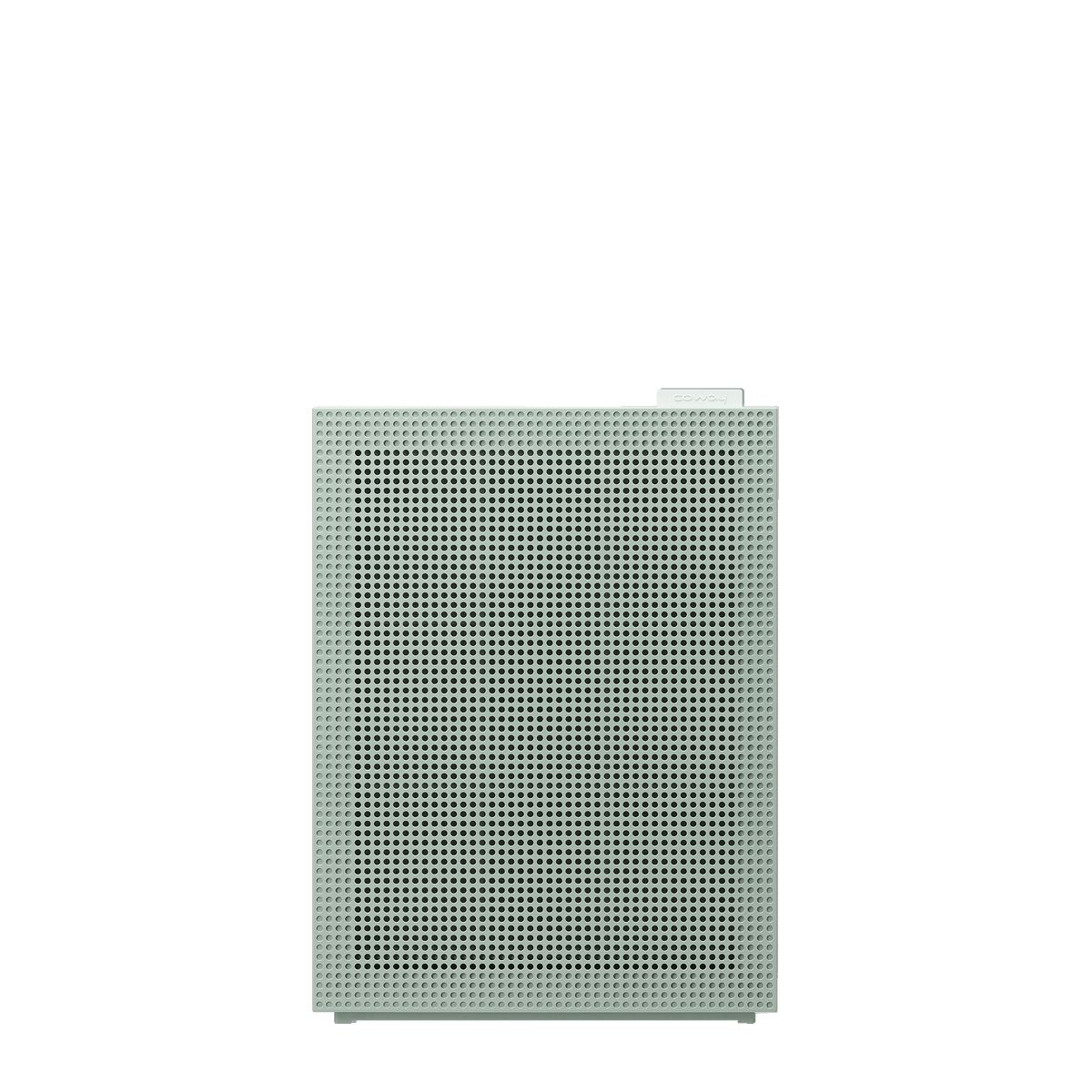
| About 200 sq ft | 130 CFM | Levoit Core 300-P: 143 CFM; Coway Airmega 150: 153 smoke CFM |
| About 300 sq ft | 195 CFM | Levoit Vital 200S-P: 250 CFM |
| About 400 sq ft | 260 CFM | Blueair 311i Max: 283 smoke CFM |
These are comparisons of published specifications, not our measured room results. Where a brand publishes smoke, dust and pollen values separately, the table uses smoke CADR. Where it publishes one CADR, we label that value as listed. Check current model pages because specifications and filter bundles change.
Decode big coverage claims
A purifier advertised for a very large space may achieve only one air change per hour in that space. The same device serves a much smaller area at 4.8 changes per hour. For example, Levoit lists Core 300-P at 1,066 square feet for one ACH and 222 square feet for 4.8 ACH. Coway lists Airmega 150 at 1,035 and 214 square feet under the same two rates. A one-ACH claim is not interchangeable with a 4.8-ACH claim. Compare models at the same rate and remember that closed doors, tall ceilings and obstructed placement affect your room.
Choose the filter for the pollutant
| Concern | What to compare | Limit |
|---|---|---|
| Dust, pollen, smoke particles and pet dander | Particle CADR and a properly sized mechanical or hybrid particle filter | Settled dust and source emissions still need cleaning and control |
| Cooking odors and certain gases | Substantial activated carbon or a gas-specific medium | Particle CADR does not rate gas removal; little carbon may saturate quickly |
| Mold-related airborne particles | Particle filtration after moisture source control | A purifier cannot repair leaks or remove growth from materials |
Particle-first room cleaner
Best for: Dust, pollen, wildfire-smoke particles or pet dander in a measured occupied room.
Pros
- Published smoke CADR gives a comparable particle-airflow measure for the same room size.
- A properly sized mechanical or hybrid particle filter can reduce airborne particles while it runs.
Cons and trade-offs
- Particle CADR does not establish removal of cooking gases, odors or a particular chemical.
- Replacement filters and a tolerable operating fan speed are ongoing costs and use constraints.
Our recommendation
Start here when airborne particles are the defined problem. Match smoke CADR to the entire connected room at a comparable air-change rate, then choose a fan setting and filter plan you will maintain. Filtration supplements cleaning and source control.
Choose another if: The main issue is a gas or odor source that needs removal or ventilation.
Odor-focused filter package
Best for: Residual household odors after the source is addressed and safe ventilation is considered.
Pros
- A substantial activated-carbon or gas-specific medium can target some gases that particle filters miss.
- Some units combine carbon with particle filtration, allowing one appliance to address different pollutant types.
Cons and trade-offs
- There is no broadly used portable-cleaner gas rating equivalent to particle CADR, so a particle coverage claim does not prove odor performance.
- Thin carbon layers can saturate, and media replacement costs may be higher than for a particle-only plan.
Our recommendation
Remove the odor source and use appropriate ventilation first. If a residual gas or odor problem remains, compare the maker’s actual carbon or gas-medium specification and replacement schedule; do not infer success from a HEPA label or a high particle CADR alone.
Choose another if: The pollutant is primarily airborne particles or a persistent moisture/mold source that requires repair.
EPA notes that most filters target either particles or gases. Some products combine a particle filter and carbon. It also notes there is no widely used portable-cleaner performance rating system for gases comparable to particle CADR. Avoid treating a thin carbon layer or a vague “odor removal” phrase as a promise for a specific chemical.
Place and run it where it matters
Prioritize the bedroom or living area where people spend the most time. Keep intake and outlet clear of furniture and curtains. Higher fan speed and longer runtime generally filter more air, according to EPA. A quiet setting is useful only if its lower airflow still meets the room’s needs. If the loudest setting discourages use, choose a model with more CADR headroom or use two units for a very large connected space.
Auto mode can adjust fan speed in response to the unit’s sensor, but a sensor may not detect every pollutant. A manual model such as Core 300-P can be preferable for simple scheduled operation. Coway Airmega 150 adds automatic fan control. Vital 200S-P adds app schedules and a washable intake pre-filter. Decide whether you will actually use those features.
Calculate ownership, not just purchase cost
Identify the exact replacement filter code, recommended interval, availability and any washable pre-filter routine before buying. Coway lists separate deodorization and HEPA replacement periods for the Airmega 150. A washable pre-filter reduces dust on the main filter but does not make it permanent. Compare the unit’s operating power at the setting you expect to use and its published noise range. EPA says an ENERGY STAR label addresses energy efficiency, not air-cleaning effectiveness.
Avoid overstating health or safety claims
EPA says source reduction and ventilation are the most effective first steps. Portable filtration can reduce indoor particle pollution, but no cleaner removes every pollutant and health improvements are not guaranteed for an individual. Avoid air cleaners that intentionally produce ozone. For allergy or asthma symptoms, seek qualified medical advice. For visible or recurring mold, repair moisture and follow appropriate cleanup guidance. An air-quality display is a sensor reading, not a certification that indoor air is safe.
Room-by-room decisions
Bedroom
Use a CADR appropriate to the enclosed sleeping area and choose a tolerable sound level for extended operation. A small model with simple sleep controls may be enough; an automatic model helps if you prefer less manual adjustment.
Living room or open plan
Measure all connected area the purifier is expected to serve. For a 400-square-foot eight-foot-high space, EPA’s approximate minimum is 260 CFM. If the room opens into a kitchen or hall, choose more capacity or multiple locations rather than relying on a nominal “whole home” label.
Pet household
Choose accessible intake and pre-filter cleaning if fur accumulates. The Vital 200S-P maker describes a U-shaped inlet and washable pre-filter. Wash bedding and clean surfaces as well; a purifier cannot catch fur already settled on furniture.
Cooking and wildfire smoke
Ventilate cooking emissions when possible. For airborne smoke particles, compare smoke CADR. Gas and odor reduction require a different medium, typically substantial carbon. During outdoor smoke events, follow local air-quality guidance on when outside air is clean enough to ventilate.
Our recommendation
Buy for the occupied room and the pollutant, then choose the controls you will maintain. For a smaller bedroom, compare Core 300-P and Airmega 150 at their documented 4.8-ACH capacities. For a medium room where schedules help consistent use, Vital 200S-P is a sensible candidate. The 311i Max has a higher published smoke CADR but its maker page requested a back-in-stock notification when checked. See the general model comparison, large-room guide, and mold-focused guide for more specific choices.
Frequently asked questions
Is HEPA enough for odors?
HEPA-type particle filtration addresses particles. EPA recommends substantial activated carbon or another gas-targeted medium for gases; particle CADR does not measure odor removal.
Should I run an air purifier all day?
Longer runtime usually filters more air. Choose a fan speed you can tolerate and follow the manufacturer’s operating instructions and filter maintenance. The best schedule depends on the source and room use.
Can one purifier clean multiple rooms?
A portable unit filters the room or area where it runs. Walls, doors and airflow limit circulation. Move the unit or size separate units for occupied rooms when needed.
Will an air purifier fix mold?
No. EPA says a cleaner may remove some airborne mold particles but cannot repair the moisture problem or remove growth. Address water intrusion and clean up the mold.
Research method and primary sources
We used EPA guidance and current exact-model manufacturer documentation. We have no original hands-on, noise, CADR or symptom-test records. Recommendations above are editorial judgments; specifications and room areas are manufacturer claims. EPA does not certify or recommend particular purifier brands.
Primary sources: EPA air-cleaner guide; EPA mold and moisture guide; Levoit Core 300-P; Coway Airmega 150; Levoit Vital 200S-P; Blueair 311i Max. Our methodology.
Affiliate disclosure
As an Amazon Associate, The Gear Audit earns from qualifying purchases. We may earn an affiliate commission when you buy through our links, at no extra cost to you. Full affiliate disclosure.