Best Baby Monitor in 2026: Five Practical Setups
Quick answer
For a simple single-nursery screen, start with Infant Optics DXR-8 PRO. Choose eufy SpaceView Pro if longer maker-rated parent-unit runtime matters; Nanit Pro and CuboAi Smart Baby Monitor 3 serve families that want app viewing. If the main job is seeing two rooms at once, the VAVA VA-IH009 two-camera kit is the clearest fit. Confirm exact camera count, compatibility and mounting before buying.
Compare the five options
| Model | Connection | Useful reason to buy | Tradeoff |
|---|---|---|---|
| Infant Optics DXR-8 PRO | Dedicated, no Wi-Fi | Direct-view monitor for a single nursery | Camera needs continuous power and parent unit needs charging |
| eufy SpaceView Pro | Dedicated, no Wi-Fi | Longer maker-rated screen runtime | Camera must stay plugged in |
| Nanit Pro Baby Monitor | Wi-Fi/app | Overhead app view and optional sleep history | Requires an internet connection and smartphone for routine viewing |
| CuboAi Smart Baby Monitor 3 | Wi-Fi/app | App camera with maker face-covering alerts | Requires a compatible smartphone and Wi-Fi |
| VAVA Split Screen Baby Monitor VA-IH009 | Dedicated, two cameras | Two simultaneous nursery views | More equipment and cables to place safely than a one-camera kit |
Our recommendation
Choose by viewing workflow first. Infant Optics DXR-8 PRO gives a direct parent-unit view without a phone; eufy SpaceView Pro emphasizes maker-rated screen runtime. Nanit Pro is the overhead app choice, while CuboAi Smart Baby Monitor 3 adds maker-described face-covering alerts that do not replace safe sleep. For simultaneous views of two rooms, VAVA VA-IH009 includes two cameras and split screen; the other base packages need careful add-on and app checks to cover a second nursery.
Infant Optics DXR-8 PRO: Direct-view monitor for a single nursery
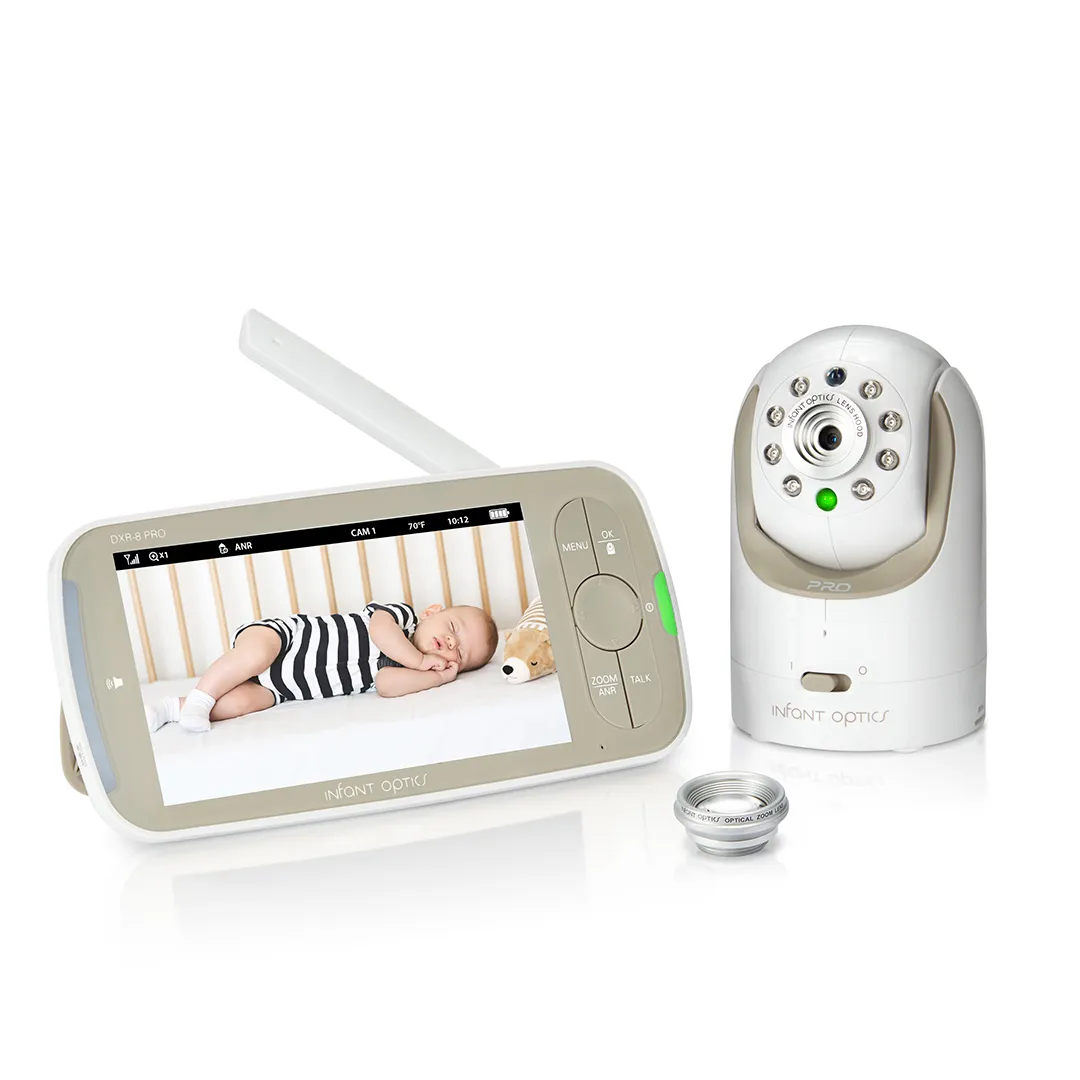
Best for: Caregivers who want a handheld screen without a router or phone app.
Pros
- 5-inch 720p parent screen and remote pan/tilt
- Active Noise Reduction can reduce repetitive nursery hum
- Replaceable parent-unit battery and optional extra cameras
Cons and trade-offs
- Camera needs continuous power and parent unit needs charging
- No phone or out-of-home viewing
- Single view; its distinct PRO SS version adds simultaneous dual audio/split screen
Our recommendation
The maker lists a direct FHSS link, not an internet connection. That avoids an online account for routine viewing, but no wireless device is “hack-proof,” and walls or nearby 2.4 GHz devices can reduce the quoted line-of-sight range. The included kit has a camera, parent unit and two lenses; check whether extra cameras or lenses are included in any retailer bundle.
Choose another if: You need a remote phone view or simultaneous split-screen viewing.
eufy SpaceView Pro: Longer maker-rated screen runtime

Best for: Caregivers who want a larger local screen and remote camera control without a phone app.
Pros
- 5-inch 720p display and pan/tilt camera
- Maker rates 12 hours with display on and 30 in default sleep mode
- Works without Wi-Fi and can pair with additional compatible cameras
Cons and trade-offs
- Camera must stay plugged in
- No recording or out-of-home phone view
- Battery is not user-replaceable according to eufy support
Our recommendation
This is SpaceView Pro part T8312, not the newer E21 hybrid. eufy’s support sheet gives its direct-link, power and battery characteristics. The advertised range is for ideal conditions; judge indoor reach in your own home before relying on it. Extra cameras are a separate purchase and the screen cycles through views rather than providing the two simultaneous feeds offered by a split-screen system.
Choose another if: You need phone access, camera battery operation or simultaneous two-camera view.
Search Amazon US for eufy SpaceView Pro T8312 baby monitor (verify the exact model and bundle).
Nanit Pro Baby Monitor: Overhead app view and optional sleep history

Best for: Households that want remote phone viewing and are prepared to mount and manage a smart camera.
Pros
- 1080p live video and two-way audio in the Nanit app
- Floor or wall mounting options with cable management
- Core live view, alerts and Breathing Motion Monitoring do not require an Insights plan
Cons and trade-offs
- Requires an internet connection and smartphone for routine viewing
- Overhead mounting and safe cord routing take setup
- Sleep history, analytics and some extra sharing features depend on an optional paid plan after the trial
Our recommendation
Nanit includes a small Breathing Band with the Pro package. It tracks breathing motion through the camera, but it is a consumer feature, not a medical monitor or a way to prevent SIDS. Nanit says live video, real-time sound/motion notifications, background audio, temperature/humidity, two-way audio and breathing-motion view remain available without Insights. History and advanced insights are plan features. Confirm floor-stand versus wall-mount bundle before ordering.
Choose another if: You need an included handheld screen or live monitoring that works without internet.
Search Amazon US for Nanit Pro Baby Monitor floor stand (verify the exact model and bundle).
CuboAi Smart Baby Monitor 3: App camera with maker face-covering alerts
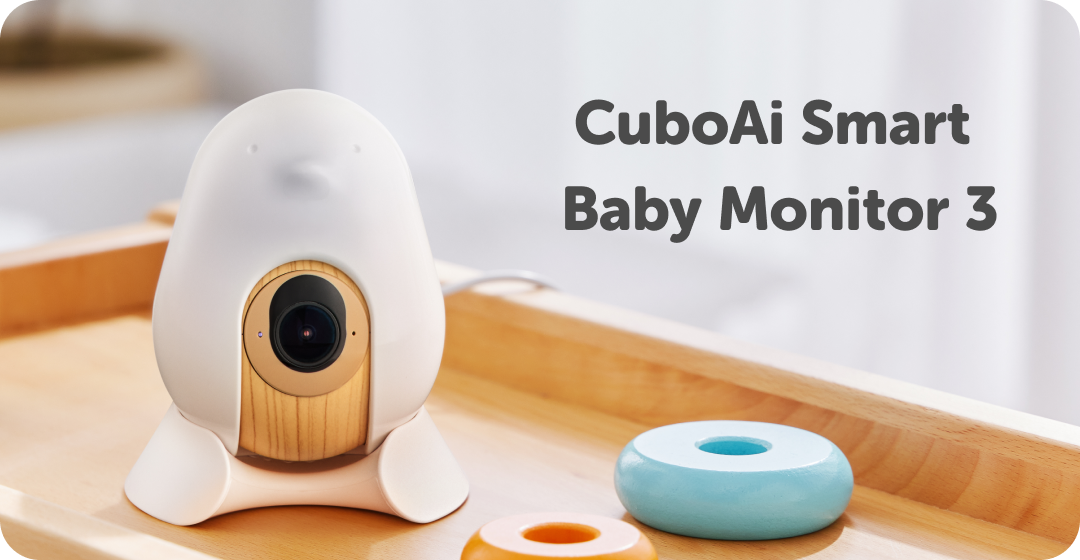
Best for: Families interested in camera-based alerts and optional sleep-history features.
Pros
- Maker-listed 2.5K camera and face-covering/rollover alerts
- Floor-stand and wall-mount packages available
- Phone-based remote viewing and optional history features
Cons and trade-offs
- Requires a compatible smartphone and Wi-Fi
- Stand or wall mounting and cord routing need careful setup
- One year of Care Premium is included; later advanced features may require payment
Our recommendation
The current US product page now calls this Smart Baby Monitor 3; the legacy “Cubo Ai Plus” article referred to an earlier generation. The alert categories are maker claims, not validated medical detection. Its mount choice affects the included stand, and any separate sleep sensor pad should be checked as a distinct bundle item. Never treat its alerts as a substitute for safe sleep or direct supervision.
Choose another if: You need a local parent unit, offline use or a simpler setup.
Search Amazon US for CuboAi Smart Baby Monitor 3 (verify the exact model and bundle).
VAVA Split Screen Baby Monitor VA-IH009: Two simultaneous nursery views
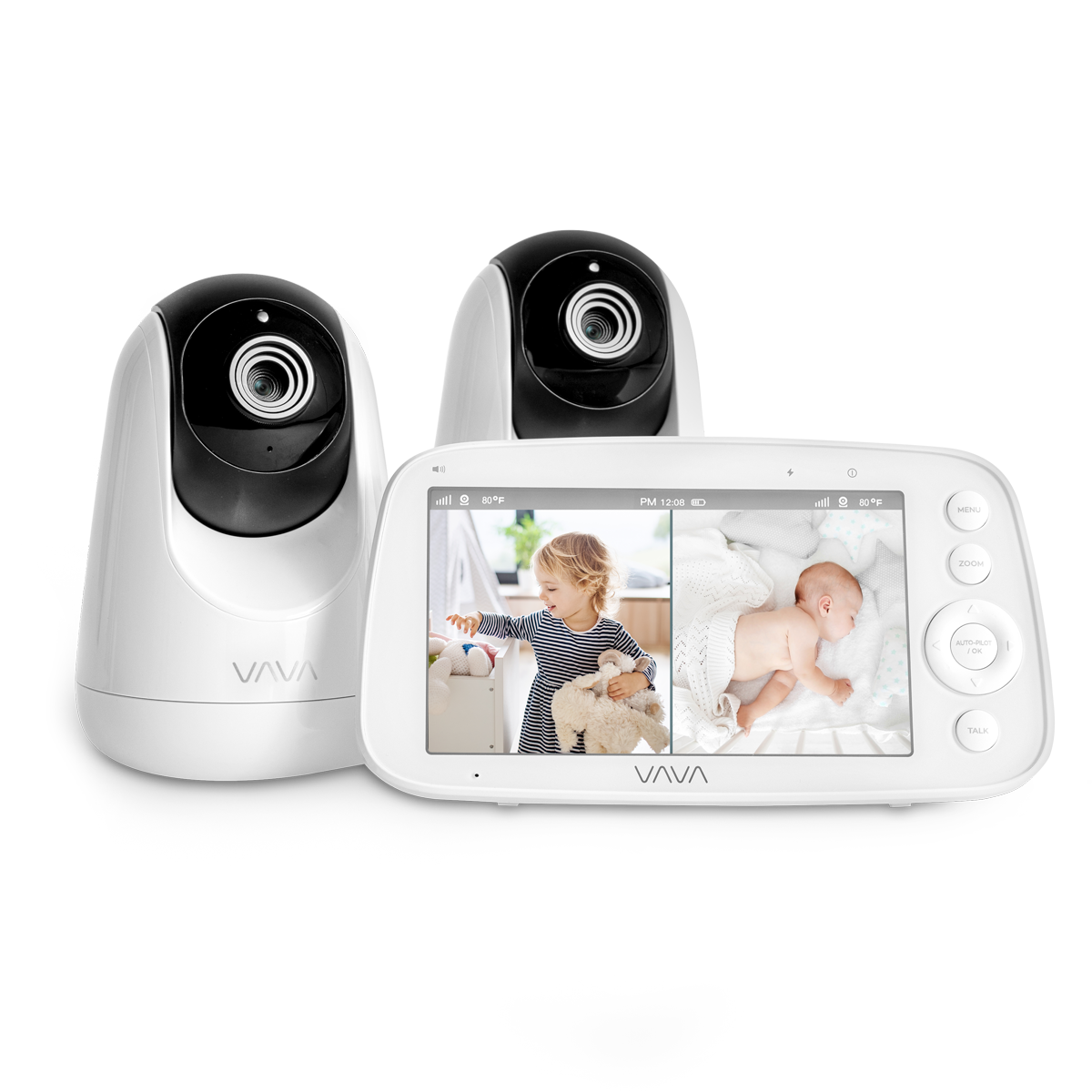
Best for: Two children or two nursery angles where both feeds need to stay visible.
Pros
- Two cameras included and two live feeds on one screen
- No Wi-Fi or app needed for local view
- Maker says up to four compatible 720p cameras can be paired
Cons and trade-offs
- More equipment and cables to place safely than a one-camera kit
- Maker rates 10 hours with screen on, so plan to recharge for overnight video
- Its 720p accessories do not pair with VAVA’s 8-inch 1080p line
Our recommendation
The exact VA-IH009 two-camera kit is the important distinction: some listings show an add-on camera or replacement parent unit rather than the complete split-screen set. VAVA lists a 720p display, two included cameras, 10-hour active-video battery claim and model-specific accessory compatibility. Position and secure both camera cords outside the child’s reach.
Choose another if: You only need one camera or want phone viewing.
Search Amazon US for VAVA VA-IH009 split screen baby monitor 2 cameras (verify the exact model and bundle).
Baby monitor buying guide
Our connection-type baby-monitor guide compares direct, Wi-Fi and hybrid viewing in more detail. A white-noise machine can mask household sound, but it does not monitor a child or replace direct supervision.
Start with the connection you actually need
A dedicated direct-link display works without a phone or home internet but generally cannot show the nursery when you are away. A Wi-Fi camera makes remote app viewing possible but adds network setup, account security and phone notification choices. A hybrid system offers both; check the exact way its local and app modes switch. Set a strong unique account password and enable multifactor authentication when available.
Check the room, not just the box
Manufacturer range claims are usually unobstructed and can shrink through walls or near other 2.4 GHz devices. Place and test the camera where it will actually be used. Battery claims vary with screen brightness, night vision, audio-only or standby mode; plan charging around the mode you use. Check whether camera and display batteries are separate, and whether the camera must stay plugged in.
Install cords safely
Keep monitor, power cord and any wall-mount hardware out of a child’s reach; follow the exact manual. A floor stand and a wall mount are different bundles. Route cables in the supplied covers and reassess reach as the child begins standing or climbing. A monitor does not replace safe sleep: the AAP advises a firm flat sleep surface, back sleeping, and no loose bedding or soft objects in the infant sleep space.
Treat alerts as conveniences
Sound, movement, temperature or camera-based breathing-motion notifications can be helpful prompts to check on a child. They can miss events or generate false alerts, and consumer monitors have not been shown to reduce SIDS. Seek a clinician’s advice if a baby needs medical monitoring.
Count cameras and check compatibility
A “two-camera compatible” monitor may ship with only one camera, and accessories from different product generations may not pair. VAVA’s VA-IH009 includes two cameras and two simultaneous feeds. eufy SpaceView Pro and Infant Optics DXR-8 PRO can add compatible cameras, but their basic views are not equivalent to a split-screen kit. For app cameras, check how each account presents two rooms and whether the mount and any subscription are bought separately.
Frequently asked questions
Do baby monitors prevent SIDS?
No. The American Academy of Pediatrics says monitoring technology does not reduce SIDS risk. Follow safe-sleep guidance and any individual medical advice.
Can a no-Wi-Fi monitor be hacked?
A direct radio link avoids internet account exposure, but “hack-proof” is not a defensible guarantee. Follow the manufacturer’s setup and firmware guidance, and protect any app account you choose.
Are advertised ranges and battery hours realistic indoors?
They are manufacturer figures under stated conditions, not our measurements. Walls, competing wireless devices, display brightness and night vision can materially change real use.
Do I need an app subscription?
It depends on the model and the feature. Nanit says its Pro live view and core alerts work without Insights, while history and advanced analytics may require a plan; direct-screen models have no app plan.
Where should I put the camera?
Follow the exact mounting and cord-routing manual. Keep every cord and attachment outside the child’s reach and recheck after the child can sit, stand or climb.
Research method and primary sources
We compared maker product pages and support documents for exact monitor models, connection methods, mounting, power and plans, then applied American Academy of Pediatrics safety guidance. We have no original hands-on range, battery, image-quality or alert-accuracy test records. Manufacturer runtime and performance figures are labeled as claims rather than our measurements.
Primary sources: Infant Optics DXR-8 PRO; eufy SpaceView Pro; Nanit Pro Baby Monitor; CuboAi Smart Baby Monitor 3; VAVA Split Screen Baby Monitor VA-IH009; AAP monitor guidance; AAP safe sleep guidance. Our methodology.
Affiliate disclosure
As an Amazon Associate, The Gear Audit earns from qualifying purchases. We may earn an affiliate commission when you buy through our links, at no extra cost to you. Read our full affiliate disclosure.