Electric Pressure Washers in 2026: Three Configurations Compared
Quick answer
For mixed jobs, start with the Sun Joe SPX3000 if two detergent tanks and five tips matter. Choose the compact, rolling Westinghouse ePX3500 for its 25-foot hose, or the Greenworks GPW2000-1RG for a wheeled open frame with a simple 25°/40°/soap nozzle set. These are specification-based use-case choices, not results from our own cleaning tests.
The right kit depends on reach, nozzle angles, detergent handling and the material you will clean. Compare rated pressure and flow, not separate maximums multiplied together.
Compare the configurations
| Model | Role | Choose another when… |
|---|---|---|
| Sun Joe SPX3000 | Two-detergent-tank upright | you want a squat, low-center-of-gravity washer or a longer included hose. |
| Westinghouse ePX3500 | Compact four-wheel washer | you specifically need separate detergent reservoirs or an included 40° fan tip. |
| Greenworks GPW2000-1RG | Open-frame wheeled washer | you want dual onboard detergent tanks, a low compact body or more included nozzle types. |
Sun Joe SPX3000: Two-detergent-tank upright
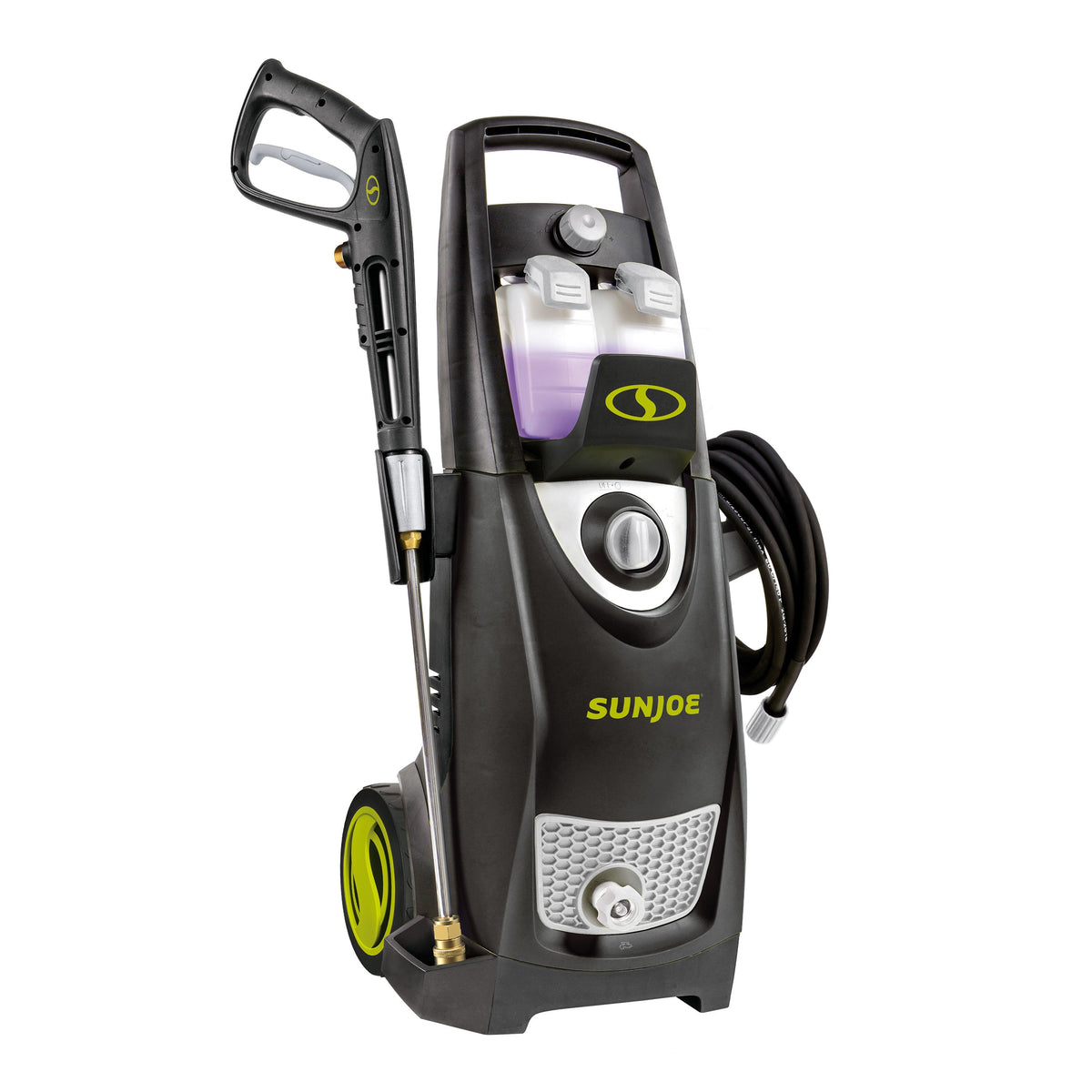
Sun Joe lists certified rated pressure of 2030 PSI and rated flow of 1.2 GPM for its SPX3000. Two removable 0.9 L detergent tanks can hold separate appropriate cleaners. Its five tips are 0°, 15°, 25°, 40° and soap; the hose is 20 feet and the GFCI cord 35 feet. The maker page mixes 13-amp text with an older 14.5-amp URL, so confirm the label on the exact unit instead of relying on a headline amp figure.
Pros
- Two removable detergent tanks make switching between suitable cleaning solutions easier without emptying one shared tank.
- Five included tips, including a gentle 40° fan and soap tip, offer more surface-specific choices than the Greenworks kit.
Cons and trade-offs
- The 20-foot hose means repositioning the upright unit more often across a long driveway.
- The tall, two-tank body takes more vertical storage room than Westinghouse’s compact rolling base.
Best for: A homeowner cleaning mixed outdoor surfaces who values separate detergent tanks and several nozzle angles.
Choose another if: you want a squat, low-center-of-gravity washer or a longer included hose.
Our recommendation
Start with SPX3000 for mixed patio, siding and vehicle-adjacent jobs, but choose the nozzle and distance for the surface and verify the precise motor label in the shipped configuration.
Westinghouse ePX3500: Compact four-wheel washer
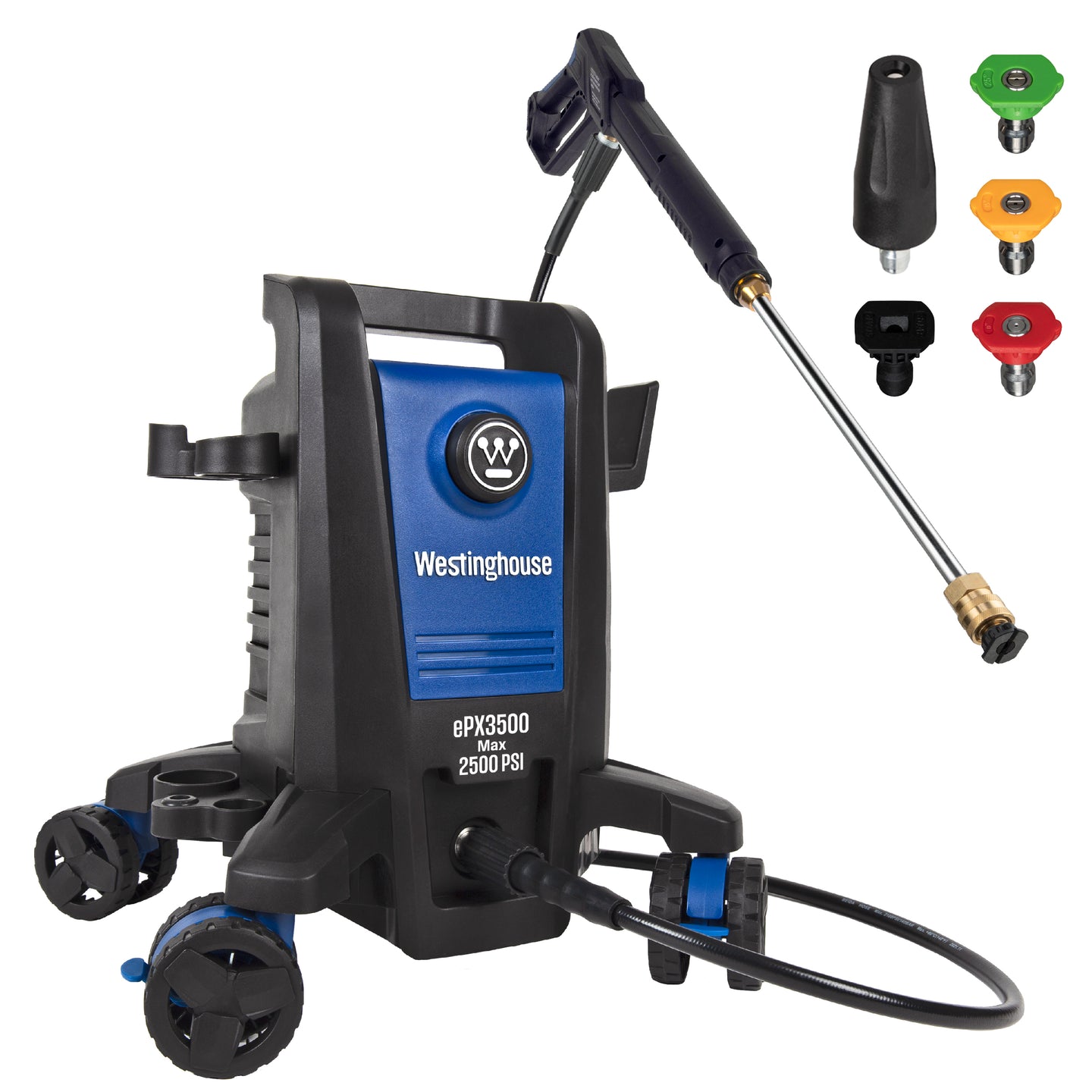
Westinghouse distinguishes its 2500 max PSI and 1.76 max GPM headline figures from 2000 rated PSI and 1.2 rated GPM. The maxima occur under different conditions, so they are not a simultaneous working pair. The ePX3500 is 19 pounds, 16.5 inches tall, and uses four 360° quick-lock wheels, a 25-foot hose and a 20-ounce onboard soap tank. Five tips include 0°, 15°, 25°, turbo and soap, rather than a 40° tip.
Pros
- Four swiveling wheels and a low center of gravity suit frequent moves around a patio or car.
- The included 25-foot hose reaches farther from one outlet and tap position than the 20-foot hoses on the other two picks.
Cons and trade-offs
- Its set has no 40° wide fan tip; start with a suitable gentle nozzle and safe stand-off distance on delicate surfaces.
- The 20-ounce detergent tank is smaller than Sun Joe’s two 0.9 L tanks, so longer soap jobs may require refilling.
Best for: Someone wanting a compact washer that rolls easily and has a longer included hose.
Choose another if: you specifically need separate detergent reservoirs or an included 40° fan tip.
Our recommendation
Choose ePX3500 for maneuverability and hose reach. Compare its rated 2000 PSI/1.2 GPM with other rated figures, not its separate maximum numbers.
Greenworks GPW2000-1RG: Open-frame wheeled washer
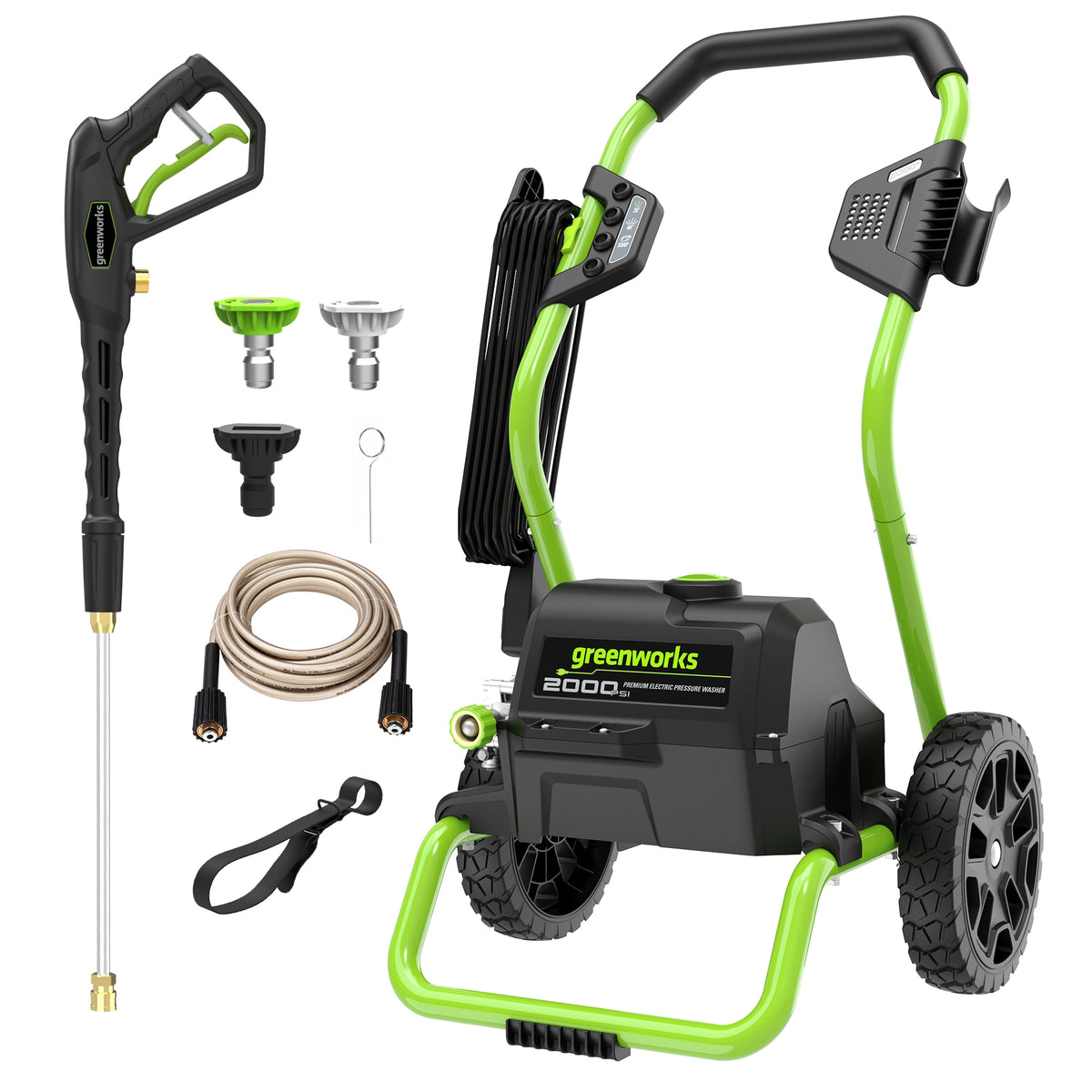
The selected Greenworks green-frame GPW2000-1RG, SKU 5117002, is an AC open-frame design with 10-inch wheels, 20-foot high-pressure hose and 35-foot GFCI cord. Greenworks lists 2000 max PSI, 1.2 max GPM, a 13-amp motor and a three-year limited tool warranty. Its three tips are 25°, 40° and soap. The URL still contains “1-1-gpm,” but the visible current title and technical table both say 1.2 GPM; match SKU and current label before purchase.
Pros
- Open-frame handle and 10-inch wheels make the upright machine straightforward to move over a yard or driveway.
- The included 25° and 40° fan tips cover many ordinary rinse tasks without needing to start with a pinpoint nozzle.
Cons and trade-offs
- Only three tips come in the kit, so a 15° or turbo option requires a compatible separate accessory if appropriate for the job.
- The 20-foot hose offers less reach from the unit than the Westinghouse 25-foot hose.
Best for: A buyer who prefers a wheeled open-frame layout and a simple fan-tip-and-soap set.
Choose another if: you want dual onboard detergent tanks, a low compact body or more included nozzle types.
Our recommendation
Choose the exact green-frame GPW2000-1RG if its open-frame handling and three-tip kit fit your tasks. Do not confuse it with the 2300-PSI Greenworks Pro shown by the old photo.
Search Amazon for Greenworks GPW2000-1RG
Buying guide
- Compare like pressure figures. Westinghouse publishes 2000 rated PSI and 1.2 rated GPM alongside higher separate maximums. Sun Joe publishes certified rated 2030 PSI and 1.2 GPM; Greenworks labels 2000 PSI and 1.2 GPM as maxima. Never multiply unrelated maximums into a supposed working output.
- Match spray to the surface. Begin with a wider fan, distance and a hidden test area; narrow tips can damage wood, paint, seals and soft surfaces. Read the surface and washer manuals before washing siding, vehicles or decking.
- Measure reach. Add the power-cord path, hose path and unit relocation. Use GFCI-protected power as directed by the maker; keep electrical connections clear of spray. The Westinghouse kit includes a 25-foot hose; Sun Joe and Greenworks list 20 feet.
- Check water supply and detergent. The source tap must meet the washer’s inlet requirements. Use a cleaner approved for the pump, surface and local drainage rules; do not assume any household soap or bleach can enter the tank.
- Plan maintenance and storage. Flush and drain per the exact manual, protect the pump from freezing and check hose/nozzle compatibility before buying accessories. For lighter hose-only watering see our hose nozzle guide; for dry debris see our leaf blower guide.
FAQ
Does 2500 PSI and 1.76 GPM describe one operating point on the ePX3500?
No. Westinghouse labels both as maximum figures and separately publishes 2000 rated PSI and 1.2 rated GPM. Compare the rated pair for ordinary specification shopping.
Can I pressure-wash a car or deck?
Possibly, with the surface manufacturer’s instructions, an appropriate gentle tip, distance and a small test spot. A narrow high-pressure jet can damage paint or wood; the washer’s headline pressure alone does not make a surface safe.
Do all three include a soap tank?
Sun Joe has two removable 0.9 L tanks and Westinghouse has one 20-ounce tank. The selected Greenworks green-frame kit uses a siphon hose and soap tip; check the exact kit before assuming an onboard tank.
Does the Greenworks product page say 1.1 or 1.2 GPM?
Its legacy URL contains 1-1-gpm, while the visible current model page and technical table state 1.2 GPM. Match the GPW2000-1RG SKU and label when ordering.
Sources and method
We checked current exact-model manufacturer pages and visually verified each chosen product image. Recommendations map documented kit differences to household uses; we did not conduct pressure, durability or cleaning-speed tests. Read our research methodology.
- Sun Joe SPX3000 manufacturer documentation
- Westinghouse ePX3500 manufacturer documentation
- Greenworks GPW2000-1RG manufacturer documentation
As an Amazon Associate, The Gear Audit earns from qualifying purchases. We may earn an affiliate commission when you buy through our links, at no extra cost to you. See our affiliate disclosure.