How to Choose a Blender: Complete Buyer’s Guide (2026)
A blender should fit the food you make, the amount you serve and the cleanup you will actually do. Start with those decisions before comparing motor numbers or preset buttons.
Quick answer
For one cold smoothie, start with a personal cup blender. For several servings and more control over texture, look at a countertop pitcher blender. If hot soup matters, check the exact container’s instructions before buying. Wattage alone cannot answer any of these questions.
- One drink to take away: the nutribullet Personal 700W illustrates the cup-and-lid approach.
- Varied recipes and manual control: the Vitamix E310 illustrates a 48-ounce pitcher with a speed dial and tamper.
- Mostly slicing or shredding: compare a food processor before buying a blender.
1. Match the blender type to your regular recipe
Personal blender: a sensible starting point when the job is one cold drink and you want to drink from the blending cup. Check usable fill limits, included lids and replacement-cup compatibility. Two cups in a bundle do not mean the motor blends both at once.
Countertop pitcher blender: consider one when you want to pour several portions, adjust a sauce’s texture or work with a manufacturer-approved tamper. A larger jar still needs the right recipe quantity; ask about minimum batches as well as maximum capacity.
Immersion blender: worth considering when transferring soup into a pitcher is your main frustration. Check the particular model’s temperature limits and approved vessel before using it in a pot. Its appeal is the workflow; it is not automatically a substitute for a countertop machine’s frozen-drink recipes.
For distinct slices, shreds or batch vegetable preparation, our food processor guide explains a different tool category.
2. Check these details before the motor rating
- Write down your usual batch. Measure the ingredients for your normal drink or recipe. Compare that with the vessel’s MAX line and the recipe instructions, rather than treating the advertised ounces as a promise of finished servings.
- Check the temperature rule. A sealed personal cup and a pitcher can have very different restrictions, even within one brand. A generic “soup” recipe claim does not establish permission to add hot ingredients.
- Choose a control style. An automatic cycle suits a repeatable drink routine; a dial suits someone who wants to stop at a coarse or smoother texture. Neither feature proves a better result.
- Plan the cleanup. Read separate instructions for the cup, lid, blade and motor base. “Dishwasher safe” is not permission to put every component in the machine.
- Measure the storage route. Check clearance with the lid fitted, room to lift the vessel and a place to dry the parts. A blender that is awkward to put away may become an unused purchase.
- Compare the complete purchase. Include the cups or containers you need, compatible replacement parts, seller, returns and written warranty terms. We do not assign a universal budget or lifespan to a blender class.
About watts: use the electrical rating to identify the model and its supply requirements. Do not use a fixed watt threshold to promise smooth greens, crushed ice or nut butter. Look for instructions and recipes for the exact task; a permitted task still does not establish how two machines perform against each other.
3. Compare two real configurations
These US models illustrate different buying decisions. They are research-based examples, not a tested ranking. Vessel sizes are manufacturer-listed capacities, not recommended fill levels.
| Decision | nutribullet Personal 700W | Vitamix E310 |
|---|---|---|
| Configuration | NB50150-02 US bundle; 24-ounce cup and 21-ounce handled tumbler | US Explorian; 48-ounce container and mini-tamper |
| Controls | Push-and-twist start; automatic cycle | Ten variable speeds and pulse |
| Temperature boundary | No hot or warm ingredients in the sealed cup | 48-ounce container has specific hot-liquid precautions |
| Practical choice | Individual cold drink with a take-away lid | Pouring batches and adjusting texture manually |
Personal example: nutribullet Personal Blender 700W

Who it suits: someone making an individual cold smoothie who values a cup they can carry away. The US product page identifies this bundle as NB50150-02; it replaces the discontinued Original 600W. Check the model number when shopping.
Pros for this use
- Two included vessel formats let you choose a handled tumbler or conventional cup.
- To-go lids support the blend-and-carry routine without another drinking vessel.
- The automatic cycle reduces manual timing decisions.
Trade-offs
- The sealed cup excludes hot and warm recipes.
- Individual vessels mean separate batches when serving several people.
- The manual requires liquid and excludes dry grinding; this is not a general-purpose dry mill.
Our recommendation: shortlist it for a cold-drink routine. Choose a pitcher configuration if larger pours or manual texture control are more important. For cleaning, follow the supplied manual; we recommend handwashing the extractor blade because the linked guide and product FAQ disagree about dishwasher use.
Pitcher example: Vitamix Explorian E310
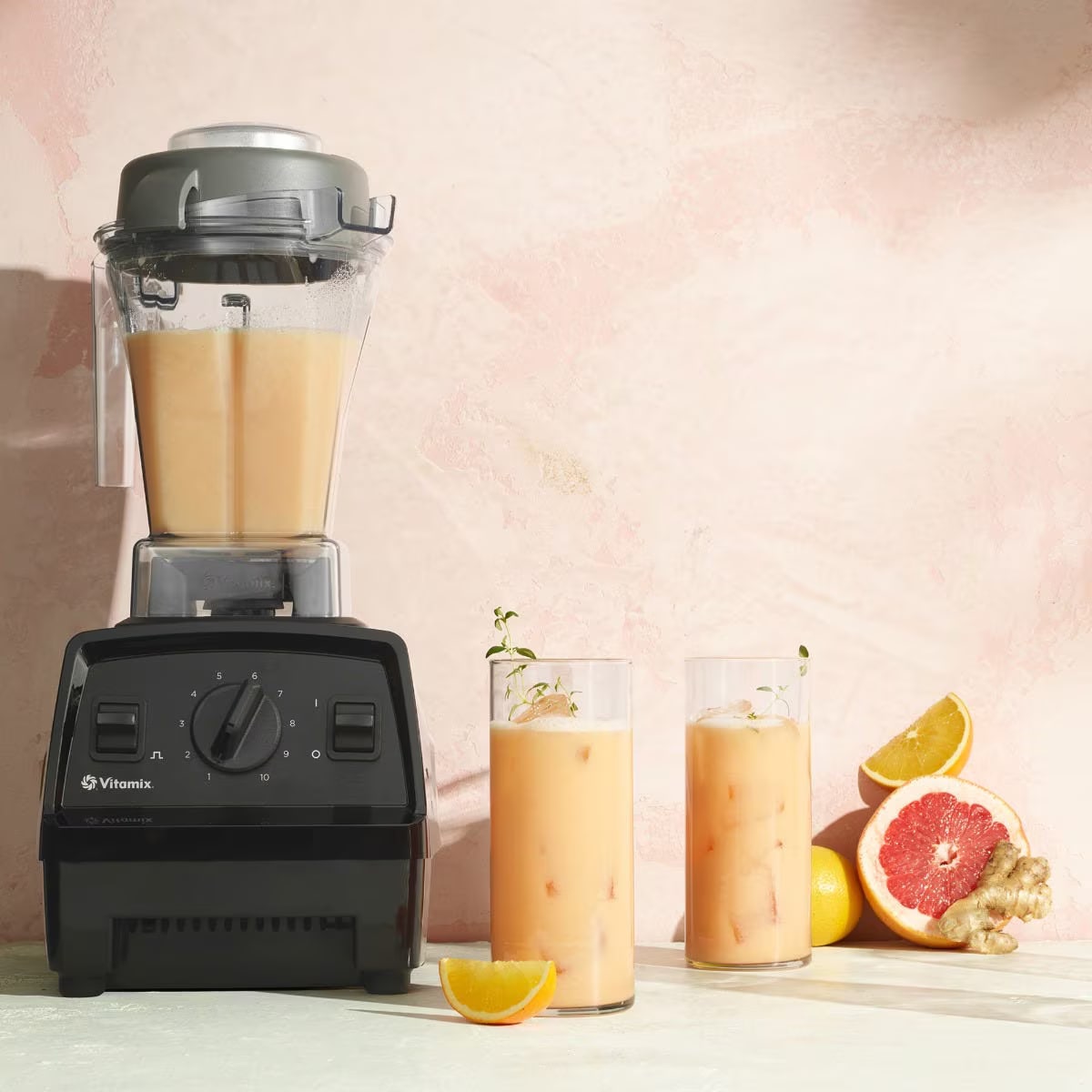
Who it suits: a cook who wants to adjust texture and work with a pitcher. The US E310 includes a 48-ounce container and mini-tamper, with ten variable speeds and pulse.
Pros for this use
- A speed dial gives direct control as you watch the mixture.
- The supplied tamper supports manufacturer-approved thicker recipes.
- A pouring pitcher accommodates a different serving routine from individual cups.
Trade-offs
- Its 18-inch assembled height needs a clearance check.
- The standard box lacks a take-away blending cup.
- Manual controls require you to choose and manage the blend rather than select a recipe preset.
Our recommendation: consider the E310 when manual control and the pitcher workflow justify the space. A personal model is simpler to consider for one portable cold drink. The E310’s hot-liquid instructions apply to its 48-ounce container: start at the lowest speed, keep below maximum capacity and observe the full burn precautions. They do not authorize hot blending in an optional personal cup.
Buying FAQs
Does more power mean a better smoothie?
The motor number alone cannot establish that. Compare the exact recipe permissions, vessel, controls and independent performance evidence. We have not measured smoothie texture or ranked these two models head to head.
Can I put hot soup in any blender?
No. The nutribullet guide prohibits hot or warm ingredients in its sealed cup. The E310’s larger container has specific precautions. Read the instructions for the exact container you will use.
Can all blender parts go in the dishwasher?
No. Check each component. Keep motor bases out of water, and follow the supplied care guide for removable parts. A different model’s cleaning rule is not a safe shortcut.
Which type should I buy first?
Choose around the task you repeat most. One cold drink points toward a personal cup; serving from a pitcher and adjusting varied recipes points toward a countertop model. See our personal, manual and preset blender comparison and five-configuration blender guide for more configurations.
Research method and sources
We checked the US manufacturer pages and linked owner guides on October 23, 2026. Recommendations are our interpretation of documented configurations and operating restrictions. We have not hands-on tested these blenders, measured noise or texture, or established durability. Amazon buttons are searches, not verified exact-variant offers; confirm the model, included parts, seller and current terms before purchasing.
- nutribullet Personal 700W US page: NB50150-02 bundle and controls.
- nutribullet NB50150 owner guide: temperature, liquid and cleaning restrictions.
- Vitamix E310 US page: container, controls, included tamper and product photograph.
- Vitamix E310 US owner manual: hot-liquid precautions, tamper and care instructions.