Sony A7 IV vs Canon EOS R6 Mark II: Which Full-Frame Mirrorless Wins in 2026?
By The Gear Audit Team · Manufacturer specification research September 27, 2026.
Quick answer: pick the constraint that matters to your work
Choose Sony Alpha 7 IV (ILCE-7M4) if 33MP still files, Sony E-mount lenses and a CFexpress Type A/SD card option fit your system. Choose Canon EOS R6 Mark II if you need its 24.2MP full-frame body with up-to-40-fps electronic-shutter shooting or full-width 4K 60p under Canon’s conditions. Sony’s 4K 60p uses Super 35 framing. These are different manufacturer modes, not a measured image-quality verdict. Existing lenses, cards and flash accessories often matter more than a single headline specification.
The specifications that change a camera kit
| Decision | Sony Alpha 7 IV ILCE-7M4 | Canon EOS R6 Mark II |
|---|---|---|
| Sensor and mount | Full-frame, approximately 33.0MP effective; Sony E-mount | Full-frame, approximately 24.2MP effective; Canon RF mount |
| Stated burst ceiling | Up to 10 fps under Sony’s stated mode and conditions; lower with some RAW settings | Up to approximately 12 fps mechanical/first-curtain or 40 fps electronic, with Canon’s restrictions |
| 4K 60p framing | Super 35 mode only | Full-width 4K 59.94p listed, with Canon’s heat and card conditions |
| Recording media | Dual slots; slot 1 accepts CFexpress Type A or SD UHS-II, slot 2 SD UHS-II | Two SD slots compatible with UHS-II |
| Lens continuity | E-mount; check each specific lens, adapter and feature | RF lenses; Canon lists EF/EF-S via Mount Adapter EF-EOS R, excluding EF-M |
These figures come from Sony’s ILCE-7M4 specifications and Canon’s R6 Mark II technical specifications. The table compares supported modes; it does not claim equal lenses, exposures, file formats or measured results.
Sony A7 IV: 33MP and E-mount continuity
Best for: A stills-led E-mount kit where the extra nominal pixel count and existing Sony-compatible lenses matter.
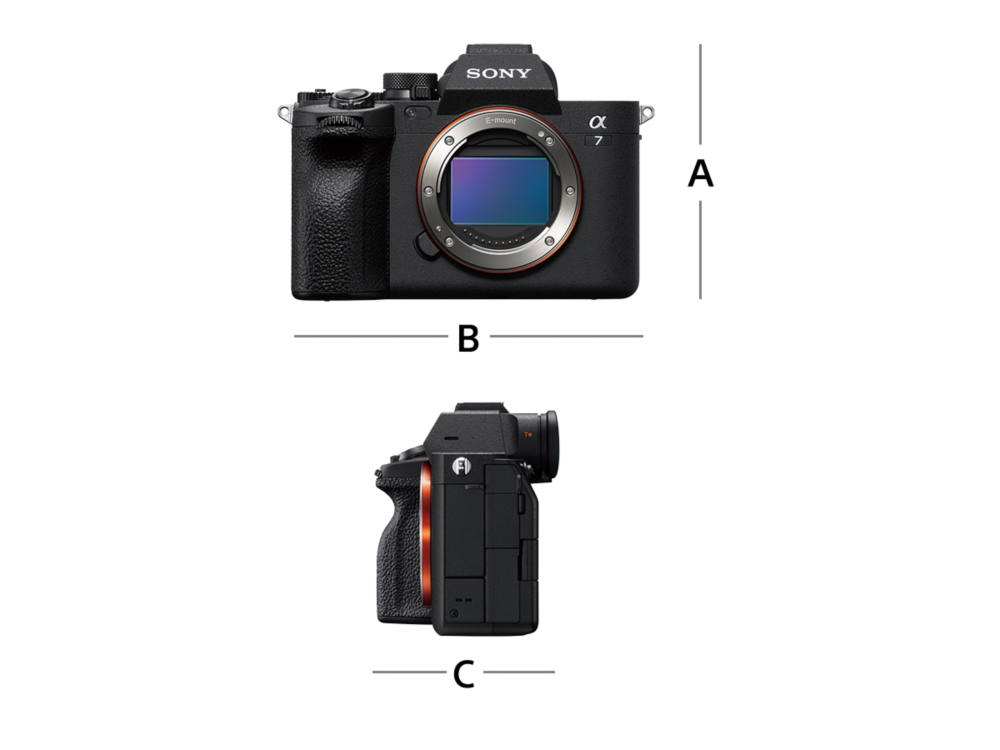
Sony lists an approximately 33.0MP effective full-frame Exmor R sensor. That creates a larger pixel grid than Canon’s 24.2MP file, which can be useful when the final delivery or crop needs it. Pixel count alone does not prove sharper photographs: lens resolving power, focus, movement, noise and processing also determine detail. For video, Sony lists 4K 60p but notes Super 35 framing. A wide full-frame lens therefore gives a narrower angle of view in that mode than it does for full-frame 4K 30p. Plan lens focal lengths around the video mode you actually need.
Sony’s body can use CFexpress Type A in its first slot as well as SD UHS-II. That is a card-format choice, not a promise that every shooting mode needs an expensive card. Check the recording format and bitrate against Sony’s media requirements. Sony’s published up-to-10-fps stills rate also depends on mode and file choice; Sony says lossless or uncompressed RAW lowers the maximum. Avoid buying from a single burst number without checking the workflow.
Pros
- 33MP effective resolution. More pixels give room for a crop when the lens and capture support it.
- CFexpress Type A or SD in slot 1. The media option accommodates demanding formats without giving up SD compatibility.
- E-mount continuity. An owner of compatible lenses can avoid rebuilding a kit, subject to exact lens and feature checks.
Cons and trade-offs
- 4K 60p uses Super 35 framing. Wide-angle video planning changes at that frame rate.
- Up-to-10-fps does not apply unchanged to every RAW setting. A lossless or uncompressed workflow needs a mode-specific check.
- CFexpress Type A is a separate media cost. The right cards and reader matter for high-bitrate work.
Choose another if: Full-width 4K 60p or a much faster electronic burst mode is a hard requirement and your lens investment permits a switch.
Our recommendation
Choose the A7 IV when its E-mount kit and 33MP stills output solve defined jobs. Build a sample purchase basket with lenses, cards and batteries; body-only prices do not compare complete systems.
Sources: Sony specifications and Sony exact body listing. Recommendation is editorial.
Search Sony ILCE-7M4 body on Amazon US
Canon EOS R6 Mark II: speed and full-width 4K
Best for: A Canon RF or adapted EF kit that needs a documented high-speed electronic mode or full-width 4K 60p framing.
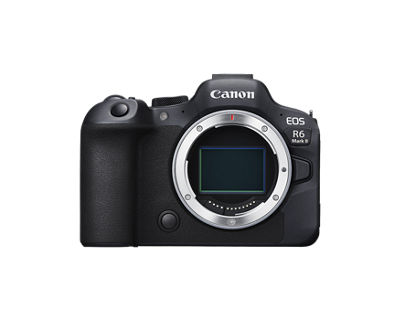
Canon lists an approximately 24.2MP effective full-frame CMOS sensor and two UHS-II SD slots. It lists up to approximately 12 fps with mechanical or electronic first-curtain shutter and 40 fps in a high-speed electronic-shutter mode. The fastest setting depends on exposure, battery, lens and other conditions; Canon also warns that electronic shutter can produce banding under flickering lights and has restrictions with flash and some features. A sports or event buyer should decide whether the subject and venue suit electronic shutter before treating 40 fps as an unconditional advantage.
Canon’s technical page lists 4K 59.94p using the full sensor width and 6K oversampling. It also gives heat and recording-media conditions; continuous recording time varies with temperature and prior use. This is a useful framing distinction against Sony’s Super 35 4K 60p, but it does not prove that Canon video looks better in every scene. Canon’s RF mount accepts compatible RF lenses, and its specifications name EF/EF-S compatibility via Mount Adapter EF-EOS R while excluding EF-M. Check each lens for autofocus and stabilization behavior before committing.
Pros
- Full-width 4K 60p framing. The same wide lens can remain wide in the stated mode.
- Up-to-40-fps electronic mode. This provides a high burst ceiling where its restrictions are acceptable.
- Dual UHS-II SD slots. Both media bays use the same familiar card type.
Cons and trade-offs
- 24.2MP effective resolution is lower than Sony’s 33MP. A large crop leaves fewer source pixels.
- Electronic-shutter restrictions matter. Flicker banding, flash limitations and changing burst rates can affect an event workflow.
- RF migration has a kit cost. EF/EF-S adaptation needs the right adapter; EF-M lenses are excluded by Canon’s specification.
Choose another if: Your existing E-mount lenses and 33MP deliverables are more valuable than Canon’s particular speed and video modes.
Our recommendation
Choose R6 Mark II for full-width 4K 60p or a verified electronic-burst use case, then price the actual RF or adapted EF kit. Confirm the card format required for the selected video codec.
Source: Canon US R6 Mark II specifications and media guidance. Recommendation is editorial.
Search Canon EOS R6 Mark II body on Amazon US
Three choices that change the answer
Stills crop versus subject timing: If you often deliver large prints or crop wildlife frames, compare the actual required output pixels with Sony’s 33MP and Canon’s 24.2MP. If you need a burst sequence, consider shutter mode and restrictions, not just frame rate. Canon’s 40-fps electronic ceiling may be useful but can be unsuitable under some lighting.
Wide-angle 4K 60p: Record your focal-length needs. Sony’s Super 35 mode narrows the view at 60p; Canon lists full-width 60p. The appropriate choice depends on lens inventory, framing, recording format, card speed and thermal conditions. Neither product page supplies our measured rolling shutter or color comparison.
Lens and media investment: A photographer already owning compatible lenses may save more by staying in a mount than by chasing a body feature. Add the price of lens replacement or adaptation, card media, reader, batteries and flash accessories to the comparison. Verify the exact lens model and firmware with the maker’s compatibility guide.
A practical camera-buying checklist
- Name the output. Identify print or crop dimensions, burst subject and video delivery format.
- Match the capture mode. Read shutter restrictions and video crop/heat/card notes for the exact mode.
- Inventory lenses. Keep a list of mount, lens version and any required adapter; check compatibility one lens at a time.
- Budget the complete kit. Count lenses, cards, reader, batteries, microphone and support gear alongside the body.
- Inspect an older-model offer. Confirm body versus kit, condition, shutter history when available, return terms and warranty eligibility.
For other body classes, see our mirrorless camera guide. This comparison does not claim that one maker’s entire lens catalog or all third-party choices are better.
Sony A7 IV versus Canon R6 II FAQ
Does 33MP mean the Sony always makes sharper photographs?
No. It records a larger pixel grid, but lens, focus, motion, noise and processing affect visible detail.
Can the Canon always shoot 40 fps?
No. That is a stated electronic-shutter ceiling under conditions. Canon lists feature restrictions, potential flicker banding and circumstances that lower speed.
Is Sony’s 4K 60p full frame?
Sony says its 4K 60p mode uses Super 35 framing; check the angle of view of the lens in that mode.
Can EF lenses be used on the Canon body?
Canon lists EF and EF-S lenses through Mount Adapter EF-EOS R, with EF-M excluded. Confirm the exact lens and adapter combination.
Research method, sources and correction
We checked Sony and Canon US manufacturer specifications on September 27, 2026. Sensor counts, burst ceilings, video modes, card formats and lens support above are manufacturer statements. Pros, cons and recommendations are editorial judgments. We did not shoot either camera, compare RAW detail, meter stabilization, measure autofocus, run video heat trials or count third-party lenses. The prior article’s claims of studio trials, ratings, review counts, static prices and reviewer-authored Product schema had no supporting record and are omitted from this replacement.
Primary sources: Sony ILCE-7M4 specifications, Sony body listing and Canon EOS R6 Mark II specifications. Read our methodology.
Amazon price cards, when available, apply only to the named model and configuration. Check the displayed update time, seller, condition and included items. Search links may return other variants. Customer star ratings are not shown when verified API data is unavailable.
Affiliate disclosure
As an Amazon Associate, The Gear Audit earns from qualifying purchases. We may earn an affiliate commission when you buy through our links, at no extra cost to you. Read our full affiliate disclosure.