Best Portable Air Conditioners 2026: 5 Research-Based Picks
Quick answer
Choose a portable AC by DOE SACC and the vent you can install securely. For a larger room, start with the 12,000-SACC Whynter ARC-1230WN; the 10,000-SACC Midea Duo MAP12S1TGR-S is a lighter dual-hose alternative. LG’s LP0626PGSF suits a smaller room with smart controls, BLACK+DECKER’s BPACT08WT covers a modest basic load, and Whynter’s ARC-1230WNH adds supplemental heat for suitable outdoor temperatures. All still need an outdoor exhaust and a drainage plan.
Compare the five picks on the same capacity basis
| Model | Editorial role | DOE SACC | Vent design | Key constraint |
|---|---|---|---|---|
| Whynter ARC-1230WN | Best for a larger room | 12,000 BTU/h | Hose-in-hose dual | About 77 lb and 19.5 in wide; less convenient to move or store |
| Midea Duo MAP12S1TGR-S | Best mid-size dual-hose option | 10,000 BTU/h | Hose-in-hose dual | The integrated hose and window panel still take setup and sealing |
| LG LP0626PGSF | Best smart smaller-room pick | 6,000 BTU/h | Single exhaust | Single-hose layout may draw replacement air into a leaky room |
| BLACK+DECKER BPACT08WT | Best basic controls | 4,000 BTU/h | Single exhaust | Only 4,000 BTU/h on the DOE basis; unsuitable as a larger-room substitute |
| Whynter ARC-1230WNH | Best if you also need shoulder-season heat | 12,000 BTU/h | Hose-in-hose dual | Whynter says heating requires outdoor ambient above 41°F; it is not a cold-weather primary heater |
Our recommendation: Start with the room’s actual cooling load and the approved vent location. The Whynter ARC-1230WN is the strongest cooling-only choice here on documented SACC, but the smaller Midea and LG make more sense where floor space, weight or required output is lower. The BLACK+DECKER is for a genuinely small load. Buy the H-suffix Whynter only if its supplemental heating limit fits your climate.
Whynter ARC-1230WN: Best for a larger room
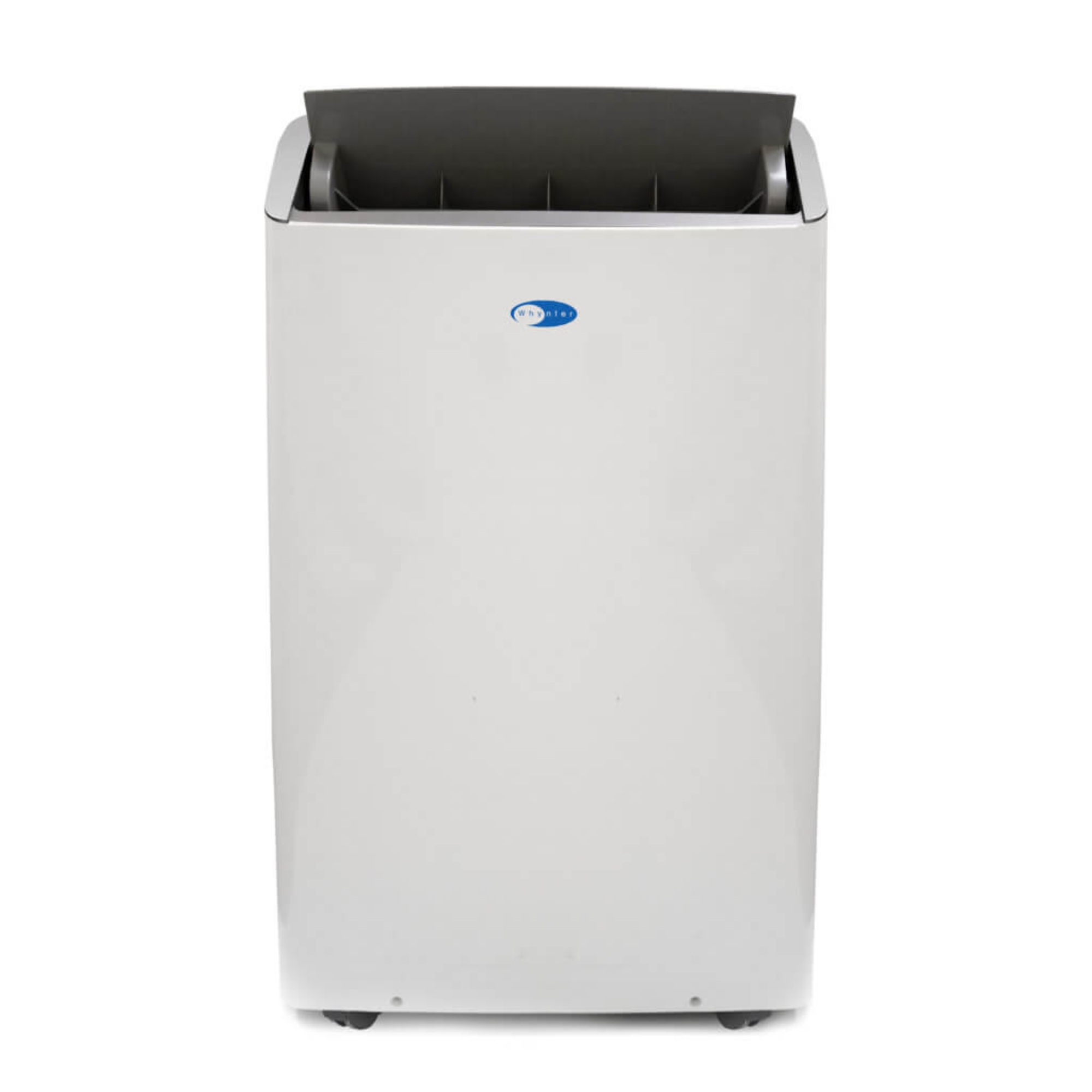
Best for: A larger room with a window that can take its wide panel and a place for a 77-pound floor unit.
Pros
- 12,000 BTU/h SACC is the highest documented cooling capacity in this group
- Dual-hose inverter design and Wi-Fi controls
- Upper and lower drain ports give options when humidity is high
Cons and trade-offs
- About 77 lb and 19.5 in wide; less convenient to move or store
- 47-inch maximum hose length and a sizable window panel constrain placement
- No heat mode
Our recommendation
Whynter lists 14,000 BTU/h by ASHRAE and 12,000 BTU/h by DOE SACC. Use the latter when comparing it with other portables. The maker lists a 600-square-foot coverage estimate, but room heat gain and sealing can change the result. Its 56.5 dBA high-speed figure also makes it a poor choice if you expect fan noise to disappear during a hot afternoon.
Choose another if: You need heat as well, or the 19.5-inch-wide body and 28–82-inch window-kit span do not fit.
Midea Duo MAP12S1TGR-S: Best mid-size dual-hose option

Best for: A medium room where you want dual-hose intake and exhaust without stepping up to the heaviest large-room option.
Pros
- 10,000 BTU/h DOE capacity and manufacturer 450-square-foot room guidance
- Dual-hose inverter and app control
- 55.12-pound listed weight is lower than the Whynter 12,000-SACC model
Cons and trade-offs
- The integrated hose and window panel still take setup and sealing
- No heat mode
- Smart controls depend on the app and home network
Our recommendation
The gray MAP12S1TGR-S is a specific US model, not the black MAP12S1TBL or the heat-capable MAP14HS1TBL. The maker lists cooling, drying and fan modes but no heat. Choose it when 10,000 SACC aligns with your load; do not assume its advertised 450-square-foot coverage applies to a sunny, open-plan or poorly insulated room.
Choose another if: You need heating, or a 55-pound unit is still too large to store.
LG LP0626PGSF: Best smart smaller-room pick
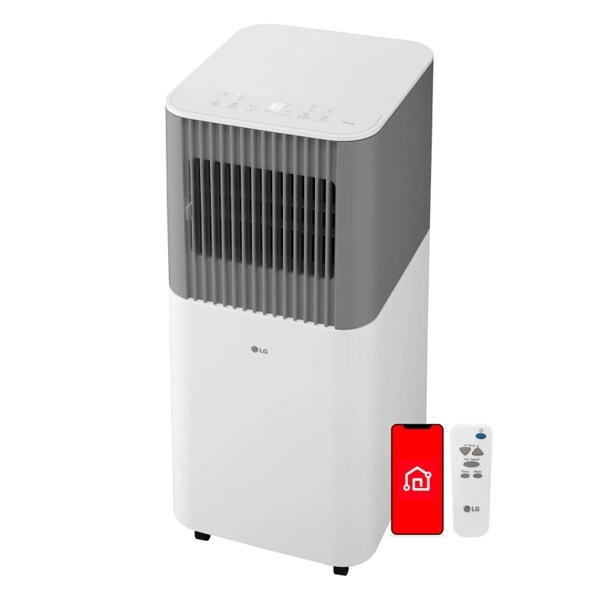
Best for: A small office or bedroom where a compact 6,000-SACC unit and phone scheduling are more useful than maximum output.
Pros
- 6,000 BTU/h SACC rating is explicit beside the 10,000 ASHRAE figure
- ThinQ app, schedules and remote control
- Included window kit and automatic condensate evaporation system
Cons and trade-offs
- Single-hose layout may draw replacement air into a leaky room
- Auto evaporation minimizes draining but cannot guarantee a dry tank in all humidity
- A 250-square-foot maker estimate is not a cooling promise
Our recommendation
LG’s 2026 model pairs a clear DOE SACC rating with useful scheduling. It is the pragmatic smart choice for a smaller room, not a rival to a 10,000- or 12,000-SACC unit for a larger heat load. Measure the opening and check Wi-Fi requirements before making app control the deciding factor.
Choose another if: You need dual-hose pressure control or substantially more than 6,000 SACC.
BLACK+DECKER BPACT08WT: Best basic controls

Best for: A small room where simple onboard and remote controls matter more than Wi-Fi or high cooling capacity.
Pros
- Manufacturer explicitly separates 4,000 BTU/h DOE and 8,000 ASHRAE figures
- Remote, timer, washable filter and included window kit
- Auto evaporation can reduce routine draining
Cons and trade-offs
- Only 4,000 BTU/h on the DOE basis; unsuitable as a larger-room substitute
- Single-hose layout and window-panel sealing still matter
- No Wi-Fi or inverter feature documented on the exact product page
Our recommendation
The maker’s product title says 4,000 DOE BTU/h, while some descriptive copy inconsistently says 4,100. Use the product-title rating for comparison and check the current EnergyGuide or carton. This is a capacity-limited basic option, not a cheap stand-in for the larger dual-hose machines.
Choose another if: You need more capacity, dual-hose intake, or a documented inverter.
Whynter ARC-1230WNH: Best if you also need shoulder-season heat
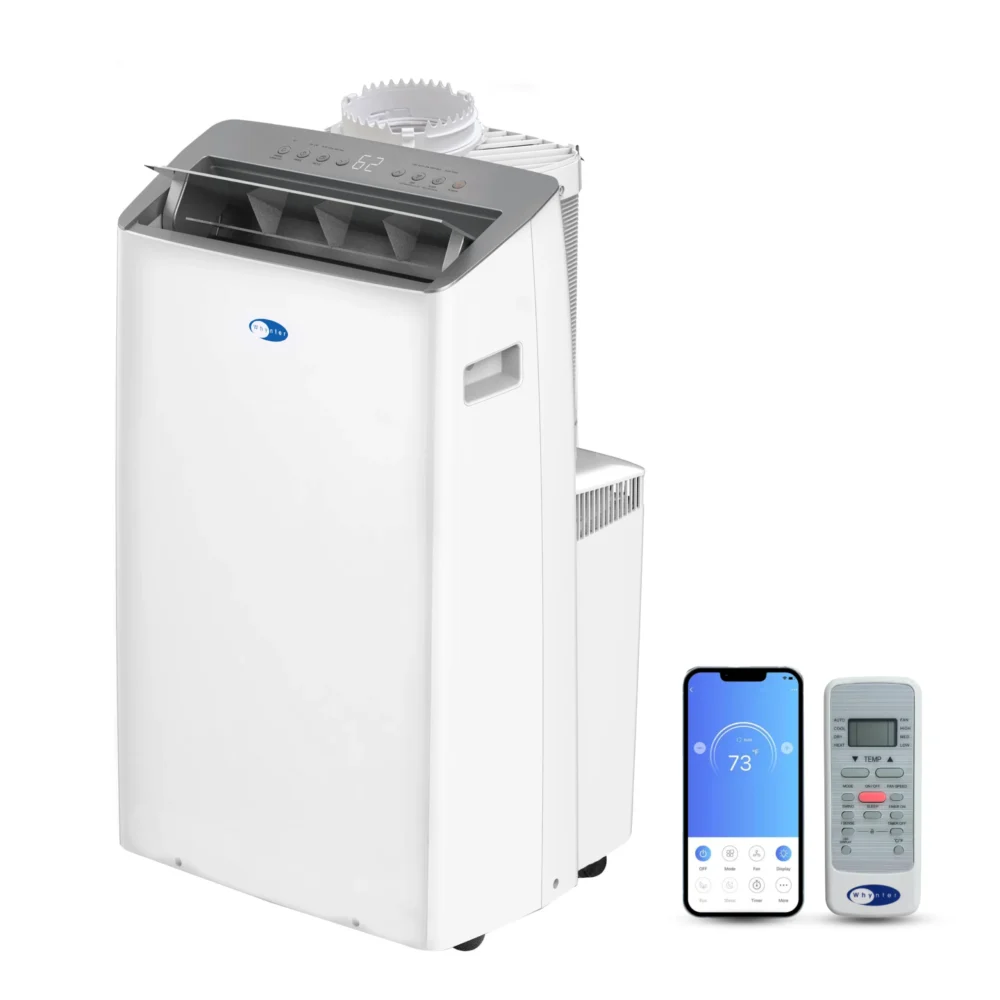
Best for: A space that needs strong portable cooling plus supplemental heat when outdoor temperatures remain suitable for a heat pump.
Pros
- Maker lists 12,000 BTU/h SACC cooling and a heat mode
- Dual-hose inverter, Wi-Fi and a heat-mode AutoPump
- Same documented window-kit dimensions as the cooling-only variant
Cons and trade-offs
- Whynter says heating requires outdoor ambient above 41°F; it is not a cold-weather primary heater
- About 77 lb and a large floor footprint
- The heat function adds condensate and venting setup to manage
Our recommendation
The final H matters: ARC-1230WNH has heat, while ARC-1230WN does not. Whynter’s FAQ says portable heat-pump operation requires ambient temperatures above 41°F, so buy this for suitable shoulder-season use rather than assuming it replaces a furnace in winter. Inspect the listing and manual for the exact H suffix.
Choose another if: You need a primary heater in freezing weather, or cooling-only ARC-1230WN meets your needs.
Portable-AC buying guide: four checks before ordering
Use DOE SACC, then account for the room
The cooling numbers in this roundup are DOE seasonally adjusted cooling capacity (SACC), so they are comparable as rated portable-AC outputs. The ASHRAE number on the same box can be much larger. A square-foot coverage claim is a manufacturer estimate, not a guaranteed performance measure. Sun exposure, insulation, ceiling height, open doorways and cooking equipment can all raise the load. If a securely mounted window AC is allowed, compare that format too; the portable gives up floor space and still needs an outdoor vent.
Plan the hose route and window seal
Measure the opening, check whether the supplied panel fits the window type, and position the cabinet within the maker’s allowed hose length. A hose-in-hose dual design separates outdoor intake from exhaust; a single-hose unit draws its condenser air from the room. Either way, a loose panel leaks conditioned air. Do not exhaust into an attic, another room or an unapproved opening. Keep the specified clearances around intake grilles.
Plan condensate and cleaning
“Self-evaporating” does not mean zero drainage under every condition. High humidity, dry/dehumidify mode and heating can fill a tank or require a hose. Check drain-port height before relying on gravity drainage, and protect the floor as the manual directs. Clean the filter at the maker’s interval, keep the outdoor opening clear and dry the unit before storage.
Compare noise and electricity without false precision
Noise figures often describe different fan speeds and test conditions. Check low and high settings for the exact model, and expect compressor and airflow sounds in the room. A published wattage or CEER does not predict your bill without hours, climate and local tariff. If electricity use drives the purchase, compare the EnergyGuide labels and efficiency metrics for the exact configurations rather than using a generic monthly-cost estimate.
Frequently asked questions
Is a dual-hose portable always better?
It can reduce the room-pressure penalty of a single-hose design, but a well-fitted window panel, appropriate SACC and the actual model matter more than hose count alone.
Do portable ACs need a window?
They need an approved route to exhaust heat outdoors. A window kit is common; any alternate wall or door arrangement must follow the model manual and building rules.
Why does an 8,000-BTU box say 4,000 DOE BTU?
The two numbers use different test methods. For BPACT08WT, BLACK+DECKER labels 8,000 by ASHRAE and 4,000 by DOE. Compare portables using DOE SACC.
Will auto evaporation eliminate draining?
It may reduce routine draining during cooling, but high humidity, dry mode and heat mode can still require emptying or a hose. Read the exact model manual.
Can the Whynter heater replace my winter heat?
No. Whynter says the ARC-1230WNH heat-pump mode requires outdoor ambient above 41°F. Treat it as supplemental heat within its operating conditions.
Research method and primary sources
We checked exact US model pages and DOE’s portable-AC test-method guidance. These are source-led buying judgments, not results from units we installed or measured. Manufacturer capacity, room-size and noise statements remain manufacturer claims. Check current manuals and the seller’s exact SKU before purchase.
Primary sources: DOE portable-air-conditioner test procedures; Whynter ARC-1230WN manufacturer page; Midea Duo MAP12S1TGR-S manufacturer page; LG LP0626PGSF manufacturer page; BLACK+DECKER BPACT08WT manufacturer page; Whynter ARC-1230WNH manufacturer page. Read our methodology.
For help choosing an AC format, see our air-conditioner buying guide. If your window can support a room unit, compare window air conditioners.
Affiliate disclosure
As an Amazon Associate, The Gear Audit earns from qualifying purchases. We may earn an affiliate commission when you buy through our links, at no extra cost to you. Read our full affiliate disclosure.