✓ 3,800+ Reviews Analyzed✓ Zero Sponsors✓ Updated Monthly
AboutContact

How to Choose an Air Conditioner: Complete Buying Guide (2026)

Researched & Tested  |  Updated June 2026  |  12 min read

Disclosure: The Gear Audit is supported by its audience. When you purchase through links on our site, we may earn an affiliate commission at no extra cost to you. Learn more.

The Short Answer

Choosing an air conditioner comes down to matching BTU capacity to your room size — roughly 20 BTU per square foot as a baseline, adjusted up 10% for sunny or kitchen spaces and 20% for ceiling heights above 8 feet. Once you have your target BTU range, narrow by type: window units offer the best cooling-per-dollar, portable units work where windows can't be blocked permanently, and mini-splits deliver quiet, efficient cooling for larger spaces or multiple rooms. The wrong choice means a unit that either never cools adequately or cycles on and off constantly, wasting electricity and wearing out years early.

If you've ever stood in a sweltering room staring at AC specs you don't understand, this guide is for you. Whether you're renting an apartment, upgrading a home office, or cooling a master bedroom, picking the right air conditioner means understanding four variables: BTU sizing, AC type (portable, window, mini-split, or through-wall), energy efficiency, and noise level. This guide walks you through each decision with concrete, industry-standard numbers — no marketing fluff, no affiliate-driven product rankings. Get BTU wrong and you'll suffer a humid, undercooled room or a unit that short-cycles and spikes your electric bill by 20-40%. Choose the wrong type and you'll fight installation headaches for years. In about 12 minutes, you'll know exactly what to buy and why it's the right call for your space.

In This Guide

BTU Sizing: Match Capacity to Room Size

The single most important number on any air conditioner is its BTU rating. BTU (British Thermal Unit) measures cooling capacity — how much heat the unit can remove from a room per hour. The baseline rule: 20 BTU per square foot. A 150 sq ft bedroom needs roughly 5,000-6,000 BTU. A 250 sq ft living room calls for 6,000-8,000 BTU. A 400 sq ft open-plan area demands 9,000-10,000 BTU. But the baseline is just a starting point. Add 10% for heavily sun-exposed rooms or kitchens with heat-generating appliances. Add 20% for ceiling heights above 8 feet — every additional 2 feet of ceiling height increases the air volume the unit must cool. Conversely, subtract 10% for heavily shaded rooms. Oversizing is as bad as undersizing: a unit with too many BTU cools the air too quickly without running long enough to dehumidify, leaving you cold and clammy. Undersized units run continuously, never hit the set temperature, and burn out compressors years early.

Quick tip: Measure your room's square footage, note sun exposure and ceiling height, then use 20 BTU per sq ft as your baseline before adjusting up or down.

AC Type: Portable vs Window vs Mini-Split vs Through-Wall

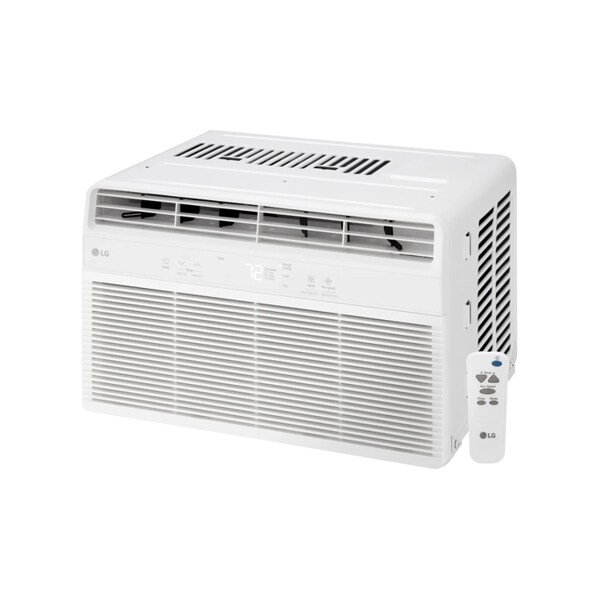
Your room's layout and your living situation dictate which AC type works. Window units mount in a double-hung or sliding window and are the most cost-effective option — they vent hot air directly outside and typically achieve higher efficiency ratings because the compressor sits outdoors. Portable air conditioners sit on the floor and use a hose to exhaust hot air through a window kit; they're the only option for renters with casement windows or building rules prohibiting window-mounted units, but they sacrifice roughly 15-25% efficiency because the compressor generates heat inside the room and the single-hose design creates negative pressure that pulls warm outdoor air back in. Mini-split systems mount a compact indoor air handler on the wall connected to an outdoor compressor via a 3-inch hole; they're the quietest option (as low as 19 dB on low fan), the most efficient (SEER ratings of 20+), and the best choice for rooms without windows, but installation costs $500-$1,500 for a single-zone system. Through-wall units are permanent installations cut into an exterior wall, combining window-unit efficiency with a built-in look, but require professional installation and are irreversible without wall repair.

Quick tip: If you own your home and want quiet, efficient cooling for a windowless room, invest in a mini-split — the higher upfront cost pays back in 2-4 years of lower electric bills.

Energy Efficiency: CEER, SEER & Running Cost

Energy efficiency determines how much you'll actually pay to run your AC all summer. For window and portable units, look at CEER (Combined Energy Efficiency Ratio) — the U.S. Department of Energy standard since 2014. CEER accounts for both cooling output and standby power draw. A CEER of 10 is baseline; 12+ is good; 14+ is excellent. For mini-splits and central systems, the rating is SEER (Seasonal Energy Efficiency Ratio). A SEER of 14 is the federal minimum; 18-20+ is high-efficiency territory. In real dollars: running a 10,000 BTU window unit with CEER 10 for 8 hours daily at $0.14/kWh costs roughly $35-$40 per month. Upgrade to CEER 13 and that drops to $27-$30 — a $10 monthly savings that compounds across a 5-8 year unit lifespan. Inverter-driven units, common in mini-splits and premium window units, cut running costs an additional 30-40% by varying compressor speed instead of cycling on and off. Check the yellow EnergyGuide label on every unit — it estimates annual operating cost for your region.

Quick tip: Always check the EnergyGuide label's annual cost estimate — a $50 higher purchase price on a CEER 12 versus CEER 10 unit typically pays back in a single summer.

Noise Level: Decibels That Won't Disrupt Sleep

Air conditioner noise is measured in decibels (dB), and the difference between 45 dB and 60 dB is the difference between a quiet library and normal conversation. Window units typically run 50-60 dB on high — noticeable but manageable in a living room, disruptive in a bedroom. Portable units average 50-56 dB, with the compressor sitting inside the room making them subjectively louder at the same dB rating. Mini-splits are the quietest by a wide margin: 19-30 dB on low fan, 35-45 dB on high — quieter than a whisper at minimum speed. Through-wall units fall in the 54-62 dB range, similar to window units. For bedrooms, target 50 dB or below on the unit's low or medium setting, which is where it will run most of the night once the room reaches temperature. Many manufacturers only advertise low-fan dB; look for independent reviews that measure high-fan noise. A 10 dB increase is perceived as roughly twice as loud to the human ear — the decibel scale is logarithmic, not linear. Features like sleep modes that gradually reduce fan speed after you fall asleep can make a 55 dB unit tolerable in a bedroom.

Quick tip: For a bedroom, set a hard cap of 52 dB on the unit's listed noise rating and verify with user reviews that the compressor doesn't clunk when cycling on.

Installation & Venting Requirements

Every air conditioner except evaporative coolers (which we do not recommend for humid climates) must vent hot air outside. Window units slide into a double-hung or sliding window and require a window opening typically 23-36 inches wide and 14-20 inches tall. They need a nearby 3-prong grounded outlet — never use an extension cord, as a 10,000 BTU unit draws 8-12 amps and extension cords create fire hazards. Portable units need a window within 4-6 feet of the unit for the exhaust hose, and the hose must be as short and straight as possible — every 90-degree bend reduces airflow by roughly 15%. Casement (crank) windows require a special seal kit, often sold separately for $20-$40. Mini-splits need a 3-inch hole through an exterior wall, a dedicated 220V circuit, and a condensate drain line — professional installation takes 4-8 hours and costs $500-$1,500 for a single zone. Through-wall units require cutting a sleeve-sized opening in an exterior wall, typically 14-16 inches tall by 24-27 inches wide, plus weatherproofing the exterior. If you're in an apartment or condo, check your lease and HOA rules before drilling any holes.

Quick tip: Measure your window opening width and height before shopping — most window units need 23-36 inches of width and a minimum 14-inch vertical opening.

Smart Features & Inverter Technology

Inverter technology is the biggest efficiency advancement in residential air conditioning in the past decade. Traditional non-inverter units have a single-speed compressor that's either 100% on or off. When the room reaches the set temperature, the compressor shuts off, then kicks back on when the room warms up — this cycling wastes energy on startup surges and creates temperature swings of 3-5 degrees. Inverter-driven units vary compressor speed continuously from roughly 30% to 100%, maintaining a steady temperature within 1 degree while using 30-40% less electricity. Inverter technology is standard in mini-splits and increasingly available in premium window units (expect to pay $100-$200 more for inverter window models). Smart features include WiFi connectivity for app-based scheduling and control, voice assistant integration (Alexa, Google Home), and geofencing that cools the room before you arrive. Less flashy but more useful: a 24-hour programmable timer that costs nothing extra. Energy monitoring through the app lets you track daily and monthly consumption in kWh — useful for confirming the unit's real-world efficiency matches its CEER rating. A digital thermostat with 1-degree precision beats the old dial-style thermostats that swing 3-4 degrees.

Quick tip: Spend the extra $100-$200 on an inverter model before paying for WiFi features — the energy savings are permanent and compound, while smart features are conveniences.

Maintenance & Drainage

Air conditioners dehumidify as they cool, and that moisture has to go somewhere. Window units slope slightly outward so condensate drips outside — no drainage management needed as long as the unit is installed with the correct 3-5 degree tilt. Portable ACs collect condensate in an internal bucket or use an auto-evaporation system that expels moisture through the exhaust hose; in humid climates (above 60% relative humidity), auto-evaporation often can't keep up and you'll need to drain the bucket manually every 8-24 hours, or connect a gravity drain hose to a floor drain. Mini-splits need a condensate drain line routed through the wall to the exterior; a clogged drain line causes water to drip from the indoor unit — clean it with a wet/dry vacuum or vinegar flush every 6 months. All AC types need the air filter cleaned or replaced every 2-4 weeks during heavy use — a dirty filter reduces airflow by up to 50%, cutting cooling output and raising energy consumption by 15%. Through-wall and window units need the exterior coils brushed free of debris and cottonwood fluff each spring. Neglecting these basics is why units that should last 8-10 years fail in 4-5.

Quick tip: Set a recurring phone reminder to clean your AC filter every 2 weeks during summer — a clogged filter is the number one cause of 'my AC stopped cooling' service calls.

Types of Air Conditioners Compared

The four main air conditioner types each solve different problems. Here's how they stack up across the factors that matter most: cooling power, installation complexity, portability, efficiency, and total cost.

TypeBest ForProsConsPrice Range
PortableRenters, rooms with casement windows, or spaces where window units are prohibited by building rulesNo permanent installation; rolls from room to room; works with most window types via universal kit; includes dehumidifier function15-25% less efficient than window units; compressor noise inside room; floor space occupied; manual drainage in humid climates$250-$600
WindowHomeowners and renters with standard double-hung or sliding windows; best cooling-per-dollar optionHighest efficiency for the price; vents heat directly outside; doesn't consume floor space; self-draining via exterior tiltBlocks window view and light; requires compatible window dimensions; seasonal installation and removal; exterior noise transfer$180-$550
Mini-SplitHomeowners cooling rooms without windows, open-plan spaces, or anyone prioritizing quiet operationWhisper-quiet (19-30 dB); highest efficiency (SEER 20+); no window or floor space used; heats as well as cools with heat pump modelsHighest upfront cost ($500-$1,500 installation); requires professional install and 220V circuit; permanent wall penetration$600-$2,500 (single zone, installed)
Through-WallPermanent cooling for rooms where window units aren't desired year-round and mini-splits are over budgetBuilt-in look; window-unit efficiency; doesn't block window; more secure against intrusion than window unitsRequires cutting exterior wall; permanent and irreversible without repair; professional installation recommended; limited sleeve-size compatibility$350-$750 (plus installation)

Common Mistakes When Buying a Air Conditioner

Oversizing or Undersizing Your BTU

Buying too many BTU is the most common mistake. An oversized unit blasts cold air, hits the thermostat in 5-10 minutes, and shuts off before it has run long enough to pull humidity from the air — you end up cold, clammy, and paying more for the larger unit and its higher amp draw. Undersizing is equally bad: the compressor runs continuously trying to reach a temperature it can never hit, spikes your electric bill by 30-50% over the season, and wears out the compressor 3-5 years early. Stick to the 20 BTU per square foot rule with adjustments for sun and ceiling height.

Ignoring Noise Ratings

A 60 dB unit in a living room is background hum. That same 60 dB in a bedroom at 2 AM is impossible to sleep through. Noise complaints are the number two reason people return air conditioners within the first week. Manufacturers often advertise the low-fan dB number, which might be 45 dB, while the unit runs at 58-62 dB on high — where it spends most of its time on hot days. Read independent reviews that measure sound at multiple fan speeds. For any room where someone sleeps, make 52 dB your absolute maximum.

Choosing the Wrong AC Type for Your Room

Casement and crank-out windows cannot hold a standard window AC — if you try, you'll drop the unit and damage both the window and the AC. A portable unit with a casement window seal kit is your only option here. Similarly, a portable AC in a room without any window access is useless — the exhaust hose must vent outside. Mini-splits solve the windowless-room problem, but only if you can drill through an exterior wall. Through-wall units need a sleeve opening; you cannot install one where there isn't already a sleeve or where you cannot cut one. Match the AC type to your window type and wall access first, then shop.

Forgetting About Drainage Needs

Portable ACs in humid summer climates produce 2-4 pints of condensate per hour. If you buy a model with a small internal bucket and no continuous drain option, you'll be emptying it every 4-6 hours on a muggy day — miss a cycle and the unit shuts itself off with a full-tank error. Look for portable units with auto-evaporation or a gravity drain port you can run to a floor drain. Window units are self-draining by design as long as they're installed with the correct 3-5 degree outward tilt. Mini-splits need a clean, unobstructed condensate line — a clogged line will drip water down your wall.

Skipping the Energy Cost Math

A $200 window AC that costs $50 per month to run is more expensive after two summers than a $350 unit that costs $25 per month. Most buyers fixate on the sticker price and ignore the EnergyGuide label entirely. The label estimates annual operating cost based on 750 hours of use at the national average electricity rate — multiply that by the 6-10 year expected lifespan and the math often favors the higher-CEER unit by $200-$400 over its lifetime. For mini-splits, the SEER difference between a 16 SEER and 22 SEER unit on a 12,000 BTU system is roughly $80-$120 per year in most climates.

How to Decide

  • If you rent and cannot modify the window or wall, choose a portable unit with a universal window kit and verify the exhaust hose reaches your window from where you plan to place it.
  • If you own your home and have a standard double-hung or sliding window, a window unit gives you the best cooling per dollar and the simplest seasonal installation.
  • If you need to cool a room without any window (basement, interior office, windowless bedroom), a mini-split is your only viable option — budget $1,500-$2,500 for single-zone professional installation.
  • If noise is your top priority because the unit will run in a bedroom, skip portable and window units entirely — invest in a mini-split with a sub-30 dB noise rating.
  • If you have an existing through-wall sleeve from an old unit, replace it with a same-dimension through-wall model rather than patching the hole and switching types.

Frequently Asked Questions

What size air conditioner do I need for a 300 sq ft room?

For a 300 sq ft room, you need roughly 6,000-8,000 BTU as a baseline (20 BTU per square foot). The exact number depends on three adjustments: add 10% if the room gets heavy sun exposure or is a kitchen, subtract 10% for heavily shaded rooms, and add 20% for ceiling heights above 8 feet. A 300 sq ft master bedroom with average sun and standard 8-foot ceilings needs 6,000 BTU. The same square footage as a sun-drenched living room with 10-foot ceilings needs closer to 8,000-8,500 BTU. Always round up to the nearest available size rather than down.

Portable vs window air conditioner: which is better?

Window air conditioners are objectively better in almost every measurable way: they're 15-25% more efficient, quieter to the listener because the compressor sits outside, cheaper to buy, self-draining, and don't consume floor space. Portable units exist for one reason: situations where a window unit won't work. That includes casement and crank windows, building rules that prohibit anything hanging out of a window, and rooms where the window is too small or too high. If none of those constraints apply to you, buy a window unit. The efficiency gap means a portable AC costs $10-15 more per month to run for the same cooling output.

What does BTU mean on an air conditioner?

BTU stands for British Thermal Unit — it measures heat energy. One BTU is the amount of energy needed to raise the temperature of one pound of water by one degree Fahrenheit. On an air conditioner, the BTU rating tells you how much heat the unit can remove from a room per hour. A 6,000 BTU unit can remove 6,000 BTU of heat per hour. This is the single most important spec because it determines whether the unit can actually cool your space. Too few BTU and the room never reaches temperature. Too many and the unit short-cycles without dehumidifying. BTU is directly proportional to square footage: roughly 20 BTU per square foot.

Are inverter air conditioners worth the extra cost?

Yes, inverter air conditioners are worth the premium for anyone who runs their AC more than 500 hours per year. The 30-40% energy savings compared to non-inverter units typically recovers the $100-$200 price premium within 2-3 summers. Beyond savings, inverter units maintain a steadier temperature (within 1 degree versus 3-5 degrees for on/off cycling), run quieter because the compressor rarely hits 100%, and extend compressor life by eliminating hard-start surges. If you only use your AC for two weeks a year in a mild climate, the payback math doesn't work. For everyone else, inverter is the right call.

How much does it cost to run an air conditioner per month?

Running cost depends on three numbers: BTU capacity, efficiency rating, and your local electricity rate. An 8,000 BTU window unit with CEER 11 running 8 hours daily at $0.14/kWh costs roughly $25-$30 per month. The same size portable unit at CEER 8-9 costs $35-$42 per month. A 12,000 BTU mini-split at SEER 20 runs $18-$25 per month for the same usage because of inverter efficiency. Multiply by 3-4 months of cooling season for your annual cost. Check the yellow EnergyGuide label — it estimates annual cost at 750 hours of use and your local rate, which is more accurate than any rule of thumb.

Do portable air conditioners need a window?

Yes, all portable air conditioners must vent hot exhaust air outside through a window, sliding door, or wall vent. The exhaust hose carries heat removed from the room to the outdoors — without this, you're just moving heat around inside the room, which actually makes it warmer because the compressor generates additional heat. Single-hose portables pull room air across the condenser and exhaust it outside, which creates negative pressure that draws warm outside air in through cracks. Dual-hose models pull outdoor air through one hose for condenser cooling and exhaust through the other, improving efficiency by 10-15% and eliminating the negative pressure problem.

What SEER or CEER rating should I look for?

For window units, look for CEER 11 or higher — CEER 10 is the bare minimum that meets federal standards, while CEER 12-14 is the efficient range worth paying extra for. For portable units, CEER 8-10 is typical because of their inherent efficiency disadvantage; CEER 9+ is the threshold for a good portable. For mini-splits, SEER 18+ is the efficient tier — the federal minimum is SEER 14, but inverter-driven mini-splits routinely achieve SEER 20-25. ENERGY STAR certification requires CEER of 11+ for window units and SEER of 16+ for mini-splits. Units meeting ENERGY STAR Most Efficient criteria push CEER 14+ and SEER 22+.

Can I install a mini-split air conditioner myself?

DIY mini-split installation is possible if you buy a pre-charged system with quick-connect refrigerant lines — these kits cost $700-$1,400 and don't require an HVAC license, vacuum pump, or refrigerant handling. They need a 3-inch hole through an exterior wall, a dedicated 220V circuit (which does require an electrician in most jurisdictions), and a stable mounting surface. Traditional mini-splits that need refrigerant line flaring, vacuum purging, and charge adjustment absolutely require a licensed HVAC technician — improper installation loses 10-30% efficiency and voids the warranty. If you're not comfortable running a new circuit and drilling through your exterior wall, hire a pro.

How long do air conditioners last?

Window and portable units typically last 8-10 years with proper maintenance: regular filter cleaning every 2-4 weeks during use, and off-season storage indoors for window units. Through-wall units have a similar 10-12 year lifespan since they're permanently installed and protected from handling damage. Mini-splits are the longest-lived option at 12-15 years for the indoor air handler and 15-20 years for the outdoor compressor unit, provided the filters are cleaned monthly and the outdoor coil stays free of debris. The number one lifespan killer across all types is a dirty filter — it forces the compressor to work harder, overheating the refrigerant and shortening compressor life by 3-5 years.

Do I need a 115V or 230V air conditioner?

Most window and portable units under 12,000 BTU run on a standard 115V household outlet — the same outlet that powers your lamps and TV. Units rated 12,000-15,000 BTU are available in both 115V and 230V configurations; buy the 115V version if you're plugging into a standard wall outlet, but verify the circuit has enough capacity since a 12,000 BTU unit draws 10-12 amps. Avoid sharing the circuit with other high-draw appliances like microwaves or space heaters. Units above 15,000 BTU and all mini-splits require a 230V circuit, which typically needs a dedicated breaker and may require an electrician to install. Never use an extension cord or power strip — it's the leading cause of AC-related electrical fires.

Leave a Comment

Your email address will not be published. Required fields are marked *

Scroll to Top