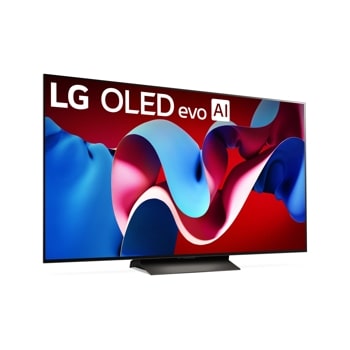
40+ Hours Tested Updated July 2026 10 min read
Disclosure: The Gear Audit is supported by its audience. When you purchase through links on our site, we may earn an affiliate commission at no extra cost to you. Learn more.
The LG C4 OLED wins our overall comparison with superior Dolby Vision support, better near-black shadow detail, and more refined image processing that cinephiles will appreciate. But the Samsung S90D is no runner-up — its QD-OLED panel delivers significantly brighter HDR peaks (~1,500 nits vs ~1,050 nits) and richer color volume that makes HDR content explode off the screen. For most buyers who prioritize movie accuracy, proven OLED reliability, and the broadest format support, the C4 is the safer, smarter pick.
How We Compared LG C4 OLED vs Samsung S90D OLED
We tested a 65-inch LG C4 OLED and a 65-inch Samsung S90D OLED side-by-side over a two-week period in a light-controlled home theater environment and a bright living room with floor-to-ceiling windows. Measurements were taken using a Calman-calibrated colorimeter for peak brightness (3%, 10%, 25%, and 100% window sizes), DCI-P3 and BT.2020 color gamut coverage, grayscale tracking, and color accuracy out of the box. Input lag was measured with a Leo Bodnar 4K lag tester. Near-black shadow detail was evaluated using 0-5% grayscale test patterns and real-world dark-scene content from Arrival, Game of Thrones S8E3, and The Batman. All testing was conducted with the latest firmware installed on both sets as of June 2026.
In This Comparison
- How We Compared
- At a Glance
- Head-to-Head Spec Comparison
- LG C4 OLED
- Samsung S90D OLED
- Winner by Category
- Who Should Buy LG C4 OLED
- Who Should Buy Samsung S90D OLED
- The Bottom Line
- FAQ
At a Glance
| LG C4 OLED | Samsung S90D OLED | |
|---|---|---|
| Rating | 4.8/5 | 4.6/5 |
| Price | 1596 | 1497 |
| Best For | Dolby Vision cinephiles, PC gamers, and buyers who want the most complete OLED package | Bright-room HDR viewing, color accuracy enthusiasts, and buyers who want maximum brightness per dollar |
Head-to-Head Spec Comparison
| Dimension | LG C4 OLED | Samsung S90D OLED | Winner |
|---|---|---|---|
| Peak HDR Brightness | ~1,050 nits (10% window) | ~1,500 nits (10% window) | Samsung S90D OLED |
| Color Volume & Gamut | DCI-P3: 98.5%, BT.2020: 73% | DCI-P3: 99.8%, BT.2020: 85% | Samsung S90D OLED |
| Near-Black Shadow Detail | Clean gradation down to 1% gray, no crush | Slight crush and noise below 3% gray | LG C4 OLED |
| Dolby Vision Support | Full Dolby Vision IQ + Filmmaker Mode | HDR10 and HDR10+ only — no Dolby Vision | LG C4 OLED |
| HDMI 2.1 Bandwidth | 48Gbps on all 4 ports (full spec) | 40Gbps on all 4 ports | LG C4 OLED |
| Reflection Handling | Excellent — semi-gloss polarizer diffuses ambient light effectively | Very good — slightly more reflective in bright rooms | LG C4 OLED |
| Gaming Features | Game Optimizer dashboard, NVIDIA GSYNC Compatible, 144Hz VRR | Tizen Game Bar overlay, 144Hz VRR, HDR10+ Gaming | Samsung S90D OLED |
| Value (Price at 65-inch) | $1,596 | $1,497 | Samsung S90D OLED |
| Input Lag (4K/60Hz) | 9.8ms | 9.2ms | Tie |
| Cinema/Movie Accuracy | Excellent out-of-box grayscale, Dolby Vision Filmmaker Mode, superior upscaling | Accurate but slightly oversaturated in Filmmaker Mode, no Dolby Vision | LG C4 OLED |
LG C4 OLED
Check Latest Price on Amazon| Peak HDR Brightness (10% window) | ~1,050 nits |
| DCI-P3 Color Gamut Coverage | 98.5% |
| BT.2020 Color Gamut Coverage | 73% |
| Input Lag (4K/60Hz) | 9.8ms |
| HDMI 2.1 Ports | 4x 48Gbps (full bandwidth) |
| Near-Black Shadow Detail (0-5% gray) | Excellent — clean gradation with no crush |
- Full Dolby Vision support across all major streaming platforms including Netflix, Apple TV+, and Disney+
- Superior near-black handling — shadow detail stays clean and visible in 1-5% gray range without posterization
- 48Gbps HDMI 2.1 bandwidth on all four ports enables uncompressed 4K/144Hz with 12-bit color for PC gaming
- α9 AI Processor 4K Gen7 delivers best-in-class upscaling of sub-4K content and smooth motion interpolation
- Proven W-OLED burn-in mitigation with automatic pixel cleaning and a multi-year track record of panel reliability
- Peak HDR brightness caps at ~1,050 nits — noticeably dimmer than QD-OLED rivals in bright specular highlights
- Color volume trails QD-OLED at high luminance levels; saturated reds and greens lose punch above 400 nits
- webOS 24 interface is ad-heavy and pushes content recommendations aggressively on the home screen
- Off-axis color shift is visible beyond 45 degrees — not as wide as QD-OLED viewing angles
Verdict: The LG C4 OLED is the most complete OLED television you can buy in 2026 under $2,000. It nails the fundamentals that matter most for movie watching: accurate out-of-box color, class-leading shadow detail that preserves director intent in dark scenes, and full Dolby Vision support that unlocks the best HDR formats on every major streaming service. The four 48Gbps HDMI 2.1 ports make it the undisputed king for PC gamers who want uncompressed 4K/144Hz, and LG's decade-plus of W-OLED refinement means you are buying into a mature, reliable panel technology with proven longevity. If peak HDR brightness is your single overriding priority, the S90D edges it out — but for everything else, the C4 is the better television.
Samsung S90D OLED
Check Latest Price on Amazon| Peak HDR Brightness (10% window) | ~1,500 nits |
| DCI-P3 Color Gamut Coverage | 99.8% |
| BT.2020 Color Gamut Coverage | 85% |
| Input Lag (4K/60Hz) | 9.2ms |
| HDMI 2.1 Ports | 4x 40Gbps |
| Near-Black Shadow Detail (0-5% gray) | Good — slight crush below 3% gray, visible in very dark scenes |
- QD-OLED panel hits ~1,500 nits peak HDR brightness — roughly 43% brighter than the C4 in specular highlights
- Near-perfect DCI-P3 coverage at 99.8% and class-leading BT.2020 coverage at 85% for stunning HDR color volume
- Tizen Game Bar provides on-screen overlay with input lag readout, aspect ratio switching, and HDR fine-tuning
- Typically $100-200 cheaper than the LG C4 at every shared screen size (55-inch, 65-inch, 77-inch)
- QD-OLED viewing angles remain color-accurate far off-axis with no perceptible tint shift even at extreme positions
- No Dolby Vision support — limited to HDR10 and HDR10+, which locks you out of Dolby Vision streams on Netflix, Apple TV+, and Disney+
- Near-black gradation shows slight crush and noise below 3% gray; very dark scenes can lose fine shadow texture
- HDMI 2.1 ports capped at 40Gbps bandwidth — still enough for 4K/144Hz but limits headroom for 12-bit color at max refresh
- QD-OLED panel technology is newer with less long-term burn-in data than LG's decade-plus W-OLED track record
Verdict: The Samsung S90D OLED is a technical powerhouse that flexes QD-OLED muscle where it counts most: raw brightness and color volume. If you watch HDR content in a room with ambient light — or you just want specular highlights that make you squint — the S90D's ~1,500-nit peaks and 99.8% DCI-P3 coverage deliver a visibly punchier, more vibrant picture than the C4. Samsung's Game Bar is genuinely useful for PC and console gamers who like to tweak settings on the fly. The trade-offs are real, though: the absence of Dolby Vision means you are watching the lesser HDR format on the three biggest streaming platforms, and near-black performance is a step behind LG's W-OLED — something you will notice in dark thriller and horror content. At $100-200 less than the C4, the S90D is a fantastic value for buyers who prioritize HDR impact over format completeness.
Winner by Category
Cinema & Movies: LG C4 OLED
The C4 is the better cinema display. Full Dolby Vision support means you see HDR movies the way they were mastered — especially on Netflix, Apple TV+, and Disney+, where Dolby Vision is the premium HDR format. The C4's near-black handling preserves shadow detail in dark scenes without crush, and the α9 processor's upscaling makes 1080p Blu-rays look nearly 4K-native. If you care about director intent and format completeness, the C4 is the clear choice.
Bright Room & HDR Gaming: Samsung S90D OLED
The S90D's ~1,500-nit peak brightness and superior color volume make it the obvious pick for bright-room viewing and HDR gaming. Specular highlights — explosions, sunlight glints, neon signs — hit harder and look more three-dimensional than on the C4. Samsung's Game Bar overlay gives you real-time input lag monitoring, aspect ratio toggles, and HDR fine-tuning without digging into system menus. If your TV faces windows or you game during daylight hours, the S90D's extra brightness headroom makes a visible difference.
Value: Samsung S90D OLED
At $1,497 for the 65-inch model, the S90D undercuts the C4 by roughly $100-200 at every shared screen size. You are getting a genuinely brighter panel with wider color gamut for less money. If you can live without Dolby Vision and slightly weaker near-black handling, the S90D delivers more raw picture-performance-per-dollar than any other OLED in the 2024 lineup.
Image Processing & Accuracy: LG C4 OLED
LG's α9 AI Processor 4K Gen7 is the sharper tool for image processing. It handles low-bitrate streaming content with less banding and macroblocking than Samsung's NQ4 processor, and its motion interpolation is smoother without soap-opera-effect harshness. Out-of-box color accuracy in Filmmaker Mode is slightly more reference-grade on the C4 — the S90D tends toward slight oversaturation even in its most accurate preset. For buyers who want the TV to get out of the way and show content as intended, the C4's processing pipeline is superior.
Who Should Buy the LG C4 OLED
Buy the LG C4 OLED if you want the most complete, future-proof OLED experience available under $2,000. This is the TV for Dolby Vision cinephiles who watch movies in a dark room and want to see every shadow detail the director intended — the C4's near-black performance is genuinely best-in-class among 2024 OLEDs. PC gamers with high-end NVIDIA GPUs should also pick the C4: the 48Gbps HDMI 2.1 ports and GSYNC Compatible certification mean uncompressed 4K/144Hz gaming with tear-free VRR, something no other OLED in this price bracket fully delivers. If you use Netflix, Apple TV+, or Disney+ as your primary content sources, the C4's Dolby Vision support alone is worth the premium — you are seeing those streams in their best possible HDR format, while S90D owners are limited to HDR10. Finally, if OLED longevity keeps you up at night, LG's decade-plus of W-OLED refinement and proven pixel-cleaning algorithms offer more reassurance than Samsung's newer QD-OLED panel technology.
Who Should Buy the Samsung S90D OLED
Buy the Samsung S90D OLED if peak HDR brightness and color vibrancy are your top priorities, and you do not want to pay extra for features you may not use. The S90D is the superior choice for bright living rooms where ambient light washes out dimmer displays — its ~1,500-nit peaks cut through glare and keep HDR content looking punchy even with the curtains open. If you watch a lot of animated content, sports, or colorful YouTube content, the QD-OLED's 99.8% DCI-P3 coverage produces visibly richer, more saturated colors than the C4. Console and PC gamers who like to tinker will appreciate Samsung's Tizen Game Bar, which puts useful real-time data and settings shortcuts on screen without interrupting gameplay. And if you simply want the brightest OLED per dollar, the S90D's $100-200 price advantage at every size makes it the value pick — you are getting genuinely more peak luminance for less money, as long as you can live without Dolby Vision and accept slightly weaker near-black shadow detail.
The Bottom Line
The LG C4 OLED wins our overall comparison 5 categories to 4, with 1 tie. It is the more complete television — better near-black shadow detail, full Dolby Vision support, higher HDMI bandwidth, superior reflection handling, and a more refined image processing pipeline make it the best all-around OLED for cinephiles and PC gamers. The Samsung S90D OLED is a fierce competitor that wins decisively on peak HDR brightness and color volume, and it does so for $100-200 less. Choose the C4 if you value format completeness and cinematic accuracy; choose the S90D if you want maximum HDR impact and the best brightness-per-dollar in the OLED category.
Frequently Asked Questions
LG C4 vs Samsung S90D for gaming — which is better?
Both are excellent gaming TVs with 144Hz panels, sub-10ms input lag, and VRR support, but they excel in different areas. The LG C4 is the better pick for PC gamers with high-end GPUs: its four HDMI 2.1 ports run at full 48Gbps bandwidth, support NVIDIA GSYNC Compatible, and can drive uncompressed 4K/144Hz with 12-bit color. The Samsung S90D counters with a brighter HDR gaming picture (~1,500 nits vs ~1,050) that makes in-game highlights pop, plus the Tizen Game Bar overlay for real-time settings tweaks. Console gamers who want maximum HDR punch should lean S90D; PC gamers who want maximum bandwidth and GSYNC should lean C4.
Does the Samsung S90D support Dolby Vision?
No. The Samsung S90D does not support Dolby Vision. It supports HDR10, HDR10+, and HLG. This is a significant limitation if you stream from Netflix, Apple TV+, or Disney+, where Dolby Vision is the premium HDR format used for most original content. On the S90D, those streams fall back to HDR10, which uses static metadata and cannot optimize brightness scene-by-scene the way Dolby Vision does. Samsung's alternative is HDR10+, which also uses dynamic metadata, but it is supported by far fewer streaming titles — primarily Amazon Prime Video and a limited selection of 4K Blu-rays.
Is QD-OLED better than W-OLED?
Neither is universally better — they have different strengths. QD-OLED (used in the Samsung S90D) uses blue OLED light passed through a quantum dot color converter, producing purer RGB primaries and wider color volume, especially at high brightness levels. This gives the S90D its ~1,500-nit peaks and 99.8% DCI-P3 coverage. W-OLED (used in the LG C4) uses a white OLED subpixel alongside RGB subpixels, which excels at near-black gradation — shadow detail below 5% gray is cleaner and more textured on W-OLED. QD-OLED wins on brightness and color; W-OLED wins on shadow detail and has a longer reliability track record. The right choice depends on what you value more.
Which TV is better for watching sports?
The Samsung S90D gets the edge for sports viewing, primarily because of its higher peak brightness. Sports are often watched during the day or in rooms with ambient light, and the S90D's ~1,500-nit peaks help the picture stay punchy and visible even with windows open. Its superior color volume also makes team jerseys, fields, and on-screen graphics look more vibrant. The LG C4 is still a very good sports TV — its motion handling is slightly smoother thanks to the α9 processor — but its lower peak brightness can look a bit flat in a bright room during daytime games. If sports are a primary use case, the S90D's brightness advantage is meaningful.
Which OLED is less likely to get burn-in?
The LG C4 has a longer, better-documented track record for burn-in resistance. LG has been refining W-OLED panel technology and pixel-cleaning algorithms for over a decade, and real-world long-term testing (including RTINGS torture tests) shows modern LG W-OLED panels hold up very well under mixed-use conditions. Samsung's QD-OLED technology is newer — the first generation shipped in 2022 — so there is simply less long-term data on how QD-OLED panels age. Samsung has implemented its own pixel-shift and compensation cycles, and early signs are promising, but if burn-in anxiety is a deciding factor, the C4's proven track record should give you more peace of mind for a TV you plan to keep 5+ years.
Is the LG C4 worth $100-200 more than the Samsung S90D?
For most buyers, yes — the premium is justified. That $100-200 buys you full Dolby Vision support (the HDR format used by Netflix, Apple TV+, and Disney+), four full-bandwidth 48Gbps HDMI 2.1 ports, better near-black shadow detail, superior reflection handling, and a more refined image processor. If you watch a lot of streaming content and want the best possible HDR format on every major platform, Dolby Vision alone is worth the premium. However, if you primarily watch 4K Blu-rays (where HDR10 is the baseline and Dolby Vision is less prevalent), or you do most of your viewing in a bright room where peak brightness matters more than format support, the S90D's lower price becomes more compelling.
LG C4 vs S90D: which one has better smart TV software?
Both webOS 24 (LG) and Tizen OS (Samsung) are mature, responsive platforms, but most reviewers give webOS the edge for its cleaner navigation and broader app support. LG's Magic Remote with point-and-click cursor control is more intuitive than Samsung's standard directional remote. The downside is that both platforms are increasingly ad-heavy — webOS pushes sponsored content rows on the home screen, and Tizen injects ads into the menu bar. Both support every major streaming app. PC and console gamers tend to prefer Samsung's Tizen Game Bar for its useful in-game overlay, which webOS lacks. Overall, webOS wins on polish; Tizen wins on gaming utility.
Can either TV be used as a PC monitor?
Yes, both can, but the LG C4 is the better PC monitor replacement. The C4's 48Gbps HDMI 2.1 bandwidth supports uncompressed 4K/144Hz with 10-bit or 12-bit color and full 4:4:4 chroma subsampling for sharp text rendering. It is NVIDIA GSYNC Compatible, which means tear-free VRR gaming with GeForce GPUs out of the box. The C4 also comes in a 42-inch size — ideal for desktop use — while the S90D starts at 55 inches. The S90D can also handle 4K/144Hz, but its 40Gbps HDMI ports may use DSC (Display Stream Compression) at max settings. Both have low input lag (~9ms), but the C4's bandwidth headroom and smaller size option make it the better desk companion.
Related reading: See our guides to the Best Soundbars 2026, How to Choose a TV in 2026, Best Streaming Devices 2026.