Best Electric Scooters for 2026: Five Commuter Picks
Quick answer
For a regular paved commute, the Segway MAX G3 offers the strongest range flexibility here; the NIU KQi 300P is a balanced 20-mph alternative. Apollo Go makes more sense for hills, GOTRAX G4 Original for a simpler short trip on smooth pavement, and Hiboy S2 Pro for people who prefer flat-resistant solid tires. These are manufacturer-source comparisons, not results of our own range or braking tests.
Compare the options
| Model | Best use | Main tradeoff |
|---|---|---|
| Segway Ninebot MAX G3 | Longer-commute all-rounder | Segway lists a 54.2-pound net weight |
| Apollo Go | Dual-motor hilly-route option | Pneumatic tires require pressure checks and can puncture |
| NIU KQi 300P | Balanced comfort commuter | NIU lists nearly 46 pounds, still substantial for stairs |
| GOTRAX G4 Original: Straightforward short-commute choice | Straightforward short-commute choice | Original has no front suspension and weighs 37 lb |
| Hiboy S2 Pro | Flat-resistant short-trip option | Solid tires transmit more sharp impacts than pneumatic tires |
Our recommendation
Check the selected G4 Original variant before buying; the Pro trim adds front suspension and is a different package. Match the tire and charger details to the exact current listing.
Segway Ninebot MAX G3: Longer-commute all-rounder
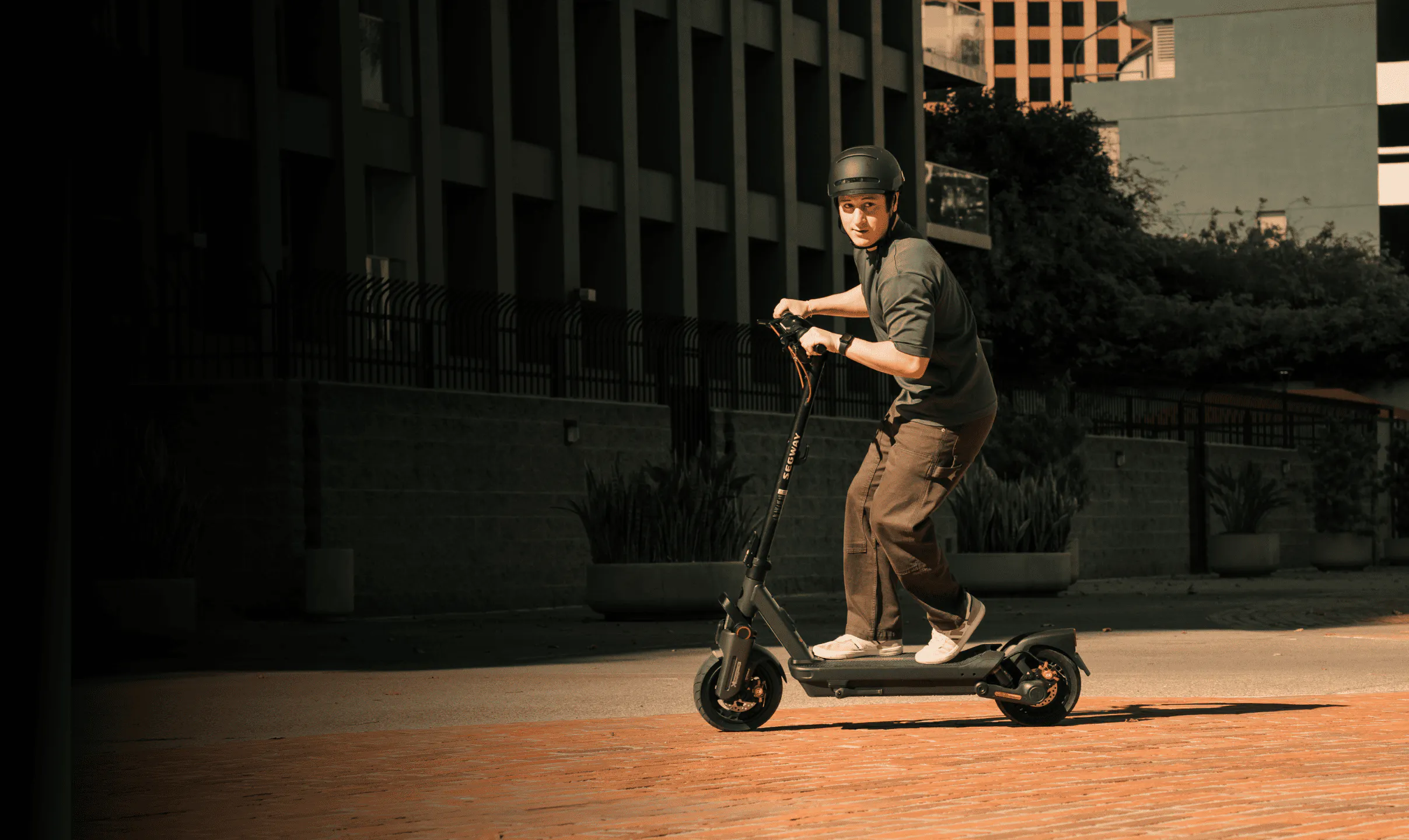
Best for: Riders wanting a larger battery, pneumatic tires and suspension for regular paved commuting.
Pros
- 597Wh battery and mode-specific range guidance in Segway US manual
- Front and rear suspension with 11-inch self-sealing tires
Cons and trade-offs
- Segway lists a 54.2-pound net weight
- High-speed app setting may be inappropriate or unavailable on your route
Our recommendation
The US manual identifies MAX G3 model 051601U and lists 20 mph as the factory speed setting, with an optional 28 mph high-speed setting through the app. Segway gives a 50-mile Eco-mode estimate, but only about 25 miles in Sport+; that spread is more useful than a single headline range. Its suspension and pneumatic tires suit imperfect pavement, while the weight makes stairs a meaningful cost. Confirm local route rules before enabling faster settings.
Choose another if: You must carry the scooter up many stairs or need a lighter last-mile ride.
Apollo Go: Dual-motor hilly-route option

Best for: Riders facing hills who want dual motors without a 70-pound flagship scooter.
Pros
- Dual-motor drive and front/rear suspension
- Apollo lists 49 pounds and a 540Wh battery
Cons and trade-offs
- Pneumatic tires require pressure checks and can puncture
- Its high performance needs closer attention to local route restrictions
Our recommendation
The current Apollo Go has dual motors, 10-inch self-healing pneumatic tires and regenerative braking. Apollo lists up to 36 miles, but explicitly says actual range varies with weight, speed, terrain and conditions. At 49 pounds it is lighter than the MAX G3 on paper, yet still awkward if you carry it daily. The Apollo City 2.0 shown elsewhere on the maker site was a pre-order for December 2026 when checked, so Go is the more actionable choice for this guide.
Choose another if: Your local scooter speed restrictions make its 28-mph capability unusable, or your priority is the simplest low-cost commute.
NIU KQi 300P: Balanced comfort commuter
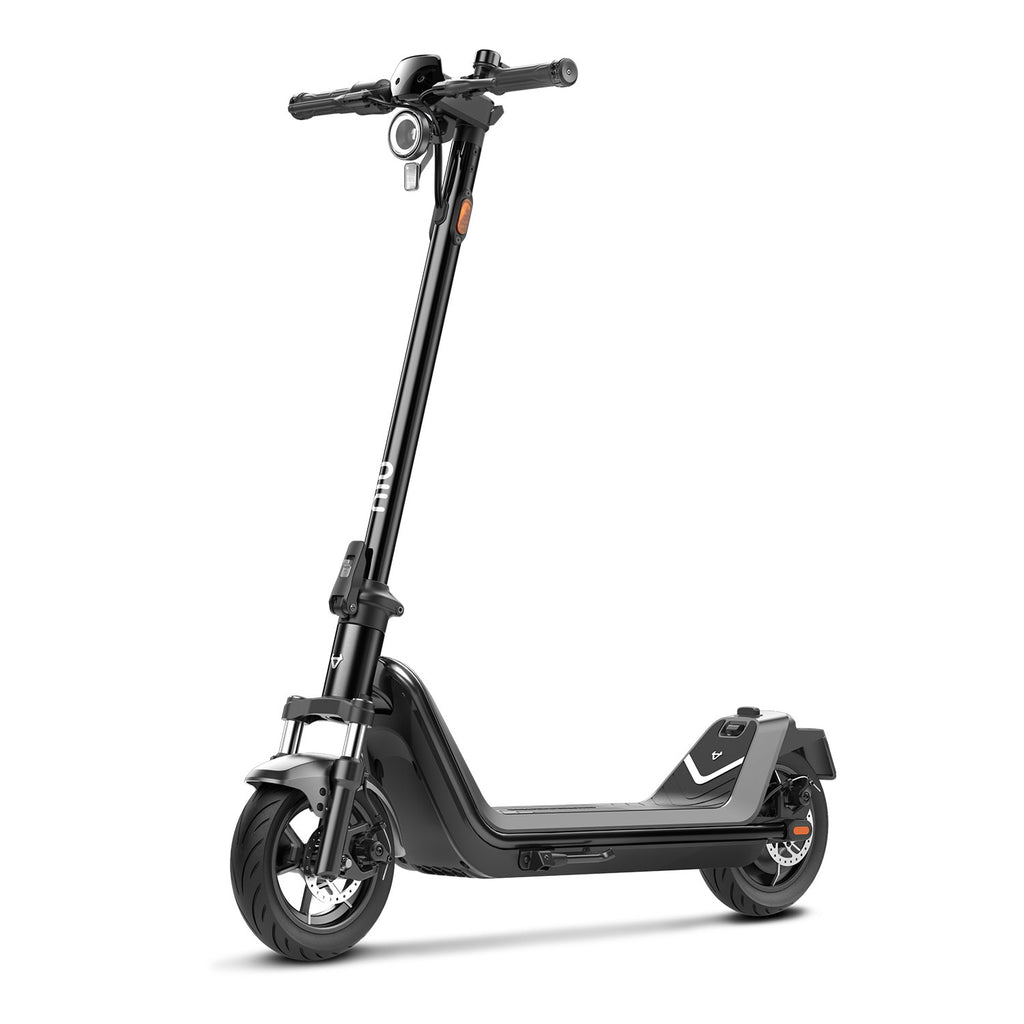
Best for: Riders wanting suspension, tubeless tires and dual disc brakes in a 20-mph scooter.
Pros
- Front hydraulic suspension and 10.5-inch tubeless tires
- Dual disc plus regenerative braking and turn signals
Cons and trade-offs
- NIU lists nearly 46 pounds, still substantial for stairs
- Up-to-30-mile maker range should leave a commute reserve
Our recommendation
NIU specifies a 486.7Wh battery, 450W rated motor and 20-mph top speed for the KQi 300P. This is a practical feature mix for city streets: tire volume and front suspension address bumps, while two mechanical disc brakes provide independent stopping systems. The 300P is distinct from the 300X, whose battery and range differ. NIU lists IP55, which describes resistance to dust and water jets, not permission to ride through standing water.
Choose another if: You need a very light scooter for frequent carrying or a longer claimed Eco-mode range.
Search Amazon US for NIU KQi 300P (confirm exact model and configuration).
GOTRAX G4 Original: Straightforward short-commute choice

Best for: Riders on smoother pavement who value a basic folding scooter and integrated cable lock.
Pros
- GOTRAX lists a 37-pound weight and 20-mph top speed
- Folding frame, integrated cable lock and 10-inch tires
Cons and trade-offs
- The Original lacks the front suspension GOTRAX reserves for G4 Pro; rough pavement may feel harsher
- At 37 lb, carrying it up stairs is still a substantial daily lift
Our recommendation
Choose the G4 Original for a shorter paved commute when a folding frame and integrated cable lock matter more than suspension. GOTRAX lists a 500W motor, 36V 10.4Ah battery and up-to-25-mile maker range; real range will depend on route and speed. The G4 Pro is a separate trim with front suspension, so confirm Original on the product label and selected offer.
Choose another if: You need front suspension or ride rough pavement daily.
Search Amazon US for GOTRAX G4 Original (confirm exact model and configuration).
Hiboy S2 Pro: Flat-resistant short-trip option
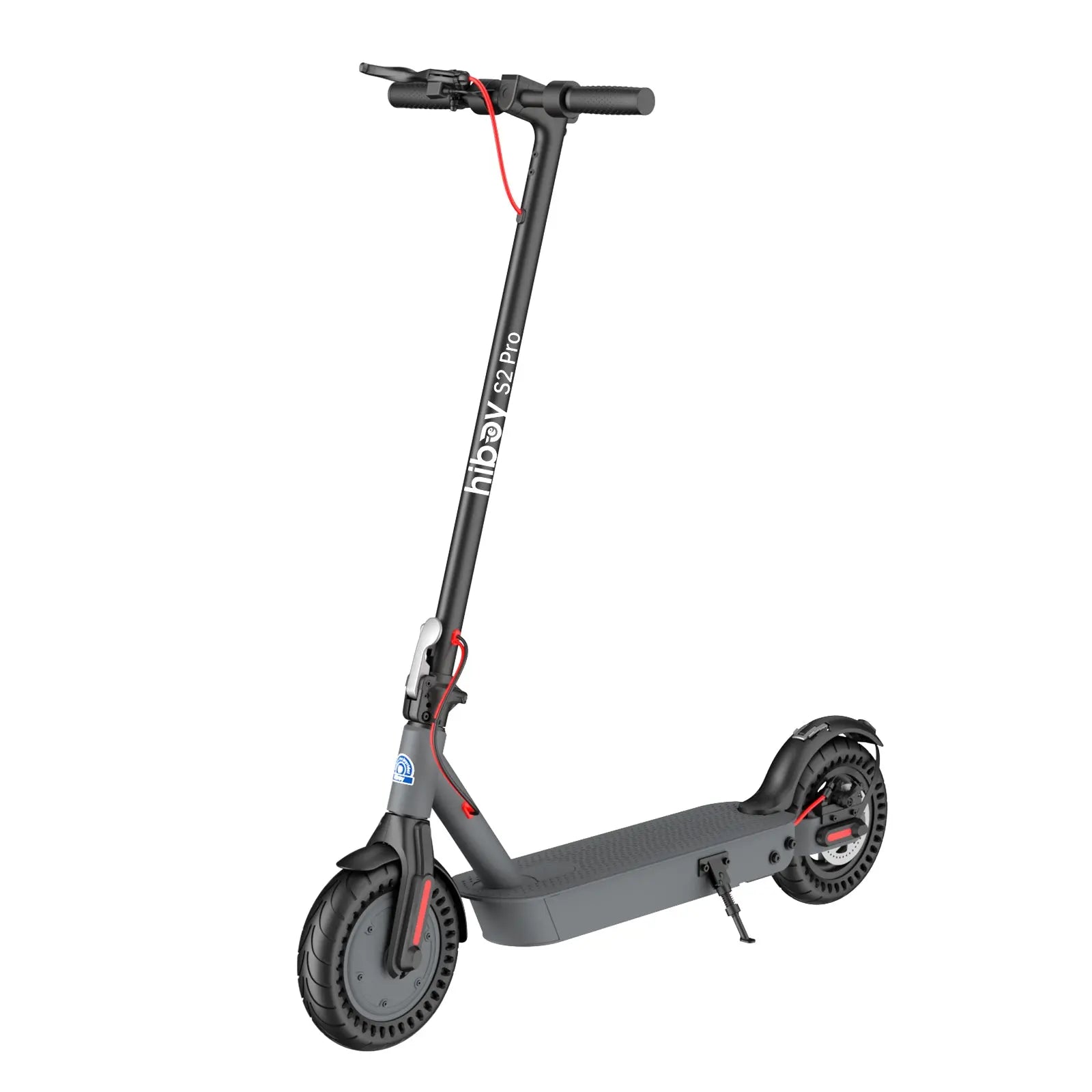
Best for: Riders on relatively smooth streets who prefer solid tires to routine tire inflation.
Pros
- 10-inch honeycomb tires avoid flats
- Hiboy lists 37.4 pounds and rear suspension
Cons and trade-offs
- Solid tires transmit more sharp impacts than pneumatic tires
- Rear-only suspension cannot fully offset rough pavement
Our recommendation
Hiboy specifies a 500W rated motor, 19-mph maximum speed, 36V 11.6Ah battery and up-to-25-mile maximum range. The solid honeycomb tires reduce puncture and pressure upkeep, which is valuable for an uncomplicated short commute, but that same tire choice is a comfort compromise. Hiboy lists IPX4 splash resistance; do not read it as a guarantee for heavy rain or pooled water.
Choose another if: Your route has frequent potholes, long distances or steep hills where pneumatic tires and more suspension matter.
Buying guide
Size the scooter for the route, not the range headline
Measure the round trip, hills and charging opportunities. Use a conservative reserve because speed, rider weight, wind, hills and cold affect range. Segway’s own MAX G3 manual illustrates why: its Eco and Sport+ estimates differ substantially.
Count every flight of stairs
A folding stem solves storage, not weight. Compare net weight, folded dimensions and grip points. A 37-pound scooter may be manageable where a 54-pound one is impractical; try lifting one in a shop if possible.
Choose tires and suspension for pavement quality
Pneumatic or tubeless tires can improve comfort but need pressure checks and may puncture. Solid honeycomb tires avoid flats but feel harsher. Suspension helps, yet no small-wheel scooter should be ridden into potholes or standing water.
Check brakes, visibility and rules
Look for a reliable primary brake system, lights and reflectors, then wear an appropriate helmet and make yourself visible. Electric-scooter permissions, speed caps, sidewalk use and age rules vary by place. Check your exact route and building policy. Our electric-bike guide covers seated pedaling alternatives; the exercise-bike guide covers stationary training.
Plan charging and security
Use the manufacturer charger, inspect the battery and cable for damage and follow storage instructions. A built-in cable lock is a deterrent for a quick stop, not strong theft protection. Confirm parts, tire service and local repair support before a scooter becomes your only commute option.
Frequently asked questions
How far will an electric scooter actually go?
Treat each manufacturer range as a conditional maximum. Your speed mode, body and cargo weight, hills, wind, tire pressure and temperature change it. Keep a substantial reserve for the return trip.
Which is best for carrying upstairs?
The GOTRAX G4 Original and Hiboy S2 Pro are lighter on their maker sheets than the MAX G3 and Apollo Go. Folded shape and your ability to lift safely matter too; measure rather than assuming a folding scooter is portable.
Can I ride in rain?
Follow the exact maker rating and instructions. IP ratings concern water resistance under defined tests, not traction or braking on wet pavement. Avoid deep water and do not charge a wet scooter.
Is the fastest scooter the best commuter?
Often no. Your legal route speed, braking, visibility, weight and practical range matter more. The MAX G3 ships with a 20-mph factory setting even though an app can enable higher speed; check local rules before changing it.
Research method and primary sources
We compared current primary manufacturer pages, exact models and practical use-case tradeoffs. We have no original hands-on or durability test records. Recommendations are editorial judgments, while product specifications remain manufacturer claims.
Primary sources: Segway Ninebot MAX G3 manufacturer page; Apollo Go manufacturer page; NIU KQi 300P manufacturer page; GOTRAX G4 manufacturer page; Hiboy S2 Pro manufacturer page; Segway MAX G3 US user manual. Our methodology.
Affiliate disclosure
As an Amazon Associate, The Gear Audit earns from qualifying purchases. We may earn an affiliate commission when you buy through our links, at no extra cost to you. Full affiliate disclosure.