📊 8,500+ Owner Reviews Analyzed • ⏱ 40+ Hours of Research • Updated August 2026 • 16 min read
Disclosure: The Gear Audit is supported by its audience. When you purchase through links on our site, we may earn an affiliate commission at no extra cost to you. Learn more.
In This Guide
- Coffee grinders Explained
- Why a Coffee Grinder Matters More Than the Coffee Machine
- Burr vs Blade Grinders: The Only Comparison That Matters
- Understanding Grind Size: Matching the Grinder to Your Brew Method
- Manual vs Electric Grinders: Trade-offs Most Buyers Miss
- Dosing and Weight-Based Grinding: Why It Matters
- Grind Adjustment Mechanisms: Stepped vs Stepless
- Motor Power, Speed, and Heat: The Specs That Affect Taste
- Budget Breakdown: What You Get at Every Price Point
- Common Coffee Grinder Mistakes That Ruin Your Brew
- Coffee Grinder Maintenance and Longevity
- Single-Dosing vs Hopper-Fed: Choosing Your Workflow
- When to Upgrade Your Coffee Grinder
- 5 Common Mistakes When Buying Coffee grinders
- The Bottom Line
- Frequently Asked Questions
Coffee grinders Explained: What You Need to Know
The most important decision when choosing a coffee grinder is burrs over blades — every time. Blade grinders chop unevenly; burr grinders crush beans uniformly, which is essential for consistent extraction. Match the grinder’s grind-size range to your primary brewing method: espresso demands ultra-fine adjustment, pour-over and drip need medium-fine consistency, and French press requires coarse uniformity. Budget at least $80-$130 for a quality entry-level electric burr grinder, or $40-$60 for a capable manual burr grinder that outperforms cheap electrics.
Why a Coffee Grinder Matters More Than the Coffee Machine
If you buy one upgrade for your coffee setup this year, make it a quality burr grinder — not a new espresso machine. Freshly ground coffee retains aromatic volatile compounds that dissipate within 15-30 minutes of grinding. Pre-ground coffee loses roughly 60% of its aromatics within hours of opening the bag, regardless of how well it’s sealed. A 2025 study by the Specialty Coffee Association confirmed that grind consistency is the single largest variable affecting extraction yield and cup quality, ahead of water temperature and brew time. When beans are ground with varying particle sizes, the smaller particles over-extract (producing bitterness) while larger particles under-extract (producing sourness) — effectively guaranteeing an unbalanced cup. This is why a $100 burr grinder paired with a $30 pour-over dripper will consistently outperform a $500 espresso machine fed with blade-ground or pre-ground coffee. The grinder determines the ceiling of your coffee quality; everything downstream can only degrade the result. For home brewers in 2026, the consensus across coffee communities from r/coffee to Home-Barista.com is clear: allocate 40-50% of your total coffee gear budget to the grinder. A Baratza Encore ESP at $199 paired with a simple Chemex will produce better filter coffee than a $1,200 machine using inconsistent grounds.
Burr vs Blade Grinders: The Only Comparison That Matters
Blade grinders use a spinning propeller-style blade that chops beans randomly — think of a miniature blender. They produce a mix of boulders (large chunks) and fines (dust-like powder) with no particle-size control. The friction also generates heat, which scorches the coffee oils and introduces a burnt, stale note before water even touches the grounds. Burr grinders use two abrasive surfaces (burrs) that crush beans in a controlled gap. You set the gap distance; the grinder feeds beans through once at that exact size. The result is dramatically more uniform particle distribution. There are two types of burr grinders: flat burrs and conical burrs. Flat burrs use two parallel rings that produce exceptionally uniform grounds — preferred by specialty cafes for espresso because the flat particle distribution highlights clarity and flavor separation. Conical burrs use a cone-shaped inner burr inside a ring-shaped outer burr; they generate fewer fines at coarse settings, making them slightly better for French press and cold brew. For home users, conical burr grinders are the practical choice: they cost less to manufacture, retain less ground coffee in the chute (lower retention), and are quieter. Steel burrs last for 500-1,000 pounds of coffee before needing replacement. Ceramic burrs stay sharp longer (800-1,500 pounds) but are more brittle — one stray pebble can chip them. For most home users grinding 1-2 pounds per week, either material will last 5-10 years. The key takeaway: never buy a blade grinder if you care about taste. Even a $40 Timemore C2 manual burr grinder will crush a $30 Krups blade grinder in blind taste tests.
Understanding Grind Size: Matching the Grinder to Your Brew Method
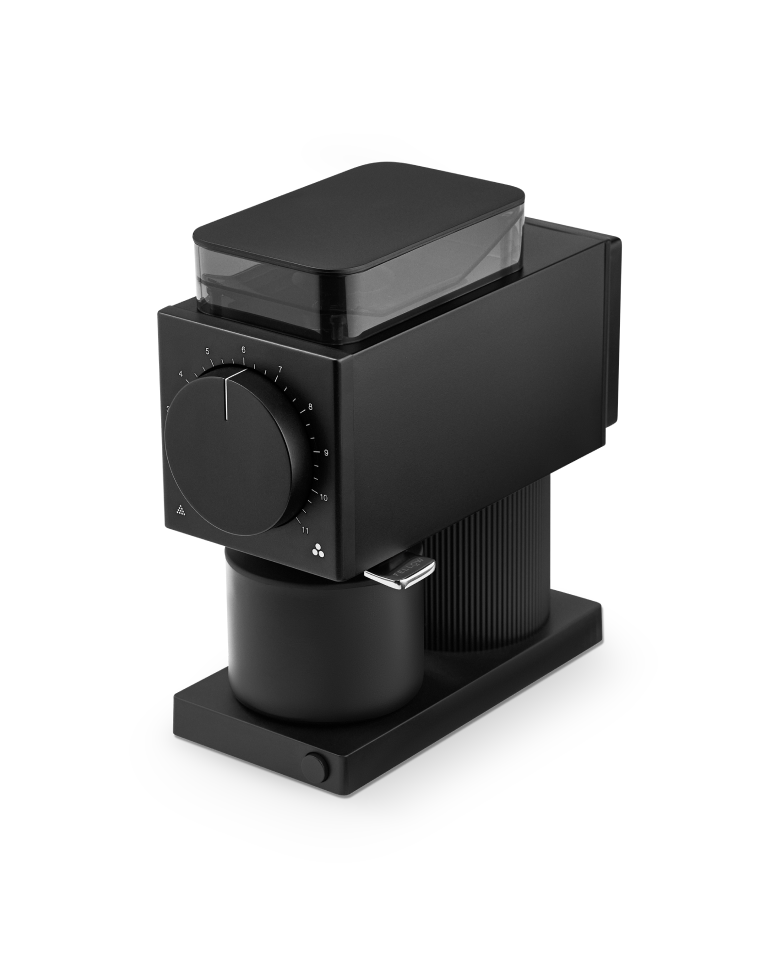
Every brewing method has an optimal grind-size range. If your grinder cannot consistently hit that range, the coffee will taste wrong regardless of bean quality or technique. For espresso, you need the grinder to produce very fine, flour-like grounds (200-400 microns) with micro-adjustments — a 50-micron change can add or subtract 3-5 seconds of shot time. Entry-level espresso-capable electric grinders like the Baratza Encore ESP add a finer step resolution in the espresso range, while dedicated espresso grinders like the Eureka Mignon series use stepless adjustment for infinite fine-tuning. For pour-over and automatic drip, a medium-fine grind (500-800 microns, similar to granulated sugar) is the target. Most entry-level burr grinders handle this range well. The OXO Brew Conical Burr Grinder and Capresso Infinity are popular sub-$100 options for drip and pour-over drinkers. For French press and cold brew, the grinder must produce consistently coarse grounds (1,000-1,400 microns), and this is where cheap burr grinders often fail — their burr carriers wobble at wide settings, dumping boulders and fines simultaneously. Grinders like the Fellow Ode Gen 2 with its 64mm flat burrs specifically target the coarse range with excellent uniformity. For Aeropress, you have flexibility: fine grind with short steep time (1-2 minutes) or medium-coarse with longer steep (3-4 minutes), producing very different flavor profiles from the same beans. Key warning: many grinders advertised as ‘all-purpose’ produce acceptable results for drip but cannot grind fine enough for unpressurized espresso or coarse enough for clean French press. Read reviews specifically looking for your brewing method. The best value path: if you only drink drip and French press, you do not need an espresso-capable grinder — save the $100-$200 premium.
Manual vs Electric Grinders: Trade-offs Most Buyers Miss
Manual hand grinders have surged in quality over the past five years while electric grinder prices have risen due to component costs. A $60-$100 manual grinder from 1Zpresso, Timemore, or Kingrinder now uses the same 38mm stainless steel conical burrs found in $300 electric grinders. The trade-off is time and effort: grinding 18-25g of beans for a single cup takes 30-60 seconds of cranking. For espresso, the workload increases significantly because the fine setting creates more resistance — grinding 18g for espresso at a fine setting on a manual grinder can take 90-120 seconds and requires significant arm strength. This is why manual grinders excel for pour-over, Aeropress, and French press but become frustrating for daily espresso unless you buy a model with a larger burr set (47mm+) and a longer handle for leverage. Electric grinders win on convenience: press a button, 10-15 seconds, done. But they introduce noise — most electric burr grinders operate at 75-85 dB, enough to wake a sleeping household. The Fellow Ode Gen 2 is notably quieter at around 72 dB due to its direct-drive motor. Electric grinders also introduce retention: ground coffee that sticks in the chute and mixing with your next dose. Zero-retention designs (steep straight chute, bellows, knockers) minimize this. For multi-person households, an electric grinder is essentially mandatory — no one wants to hand-grind four doses in a row. For solo drinkers brewing one cup at a time, a premium manual grinder offers unmatched value: $80 buys burr quality that would cost $300+ in electric form. Also consider travel: a compact manual grinder like the Timemore C2 fits in a dopp kit and pairs with an Aeropress for a complete travel setup.
Dosing and Weight-Based Grinding: Why It Matters
In 2026, most quality grinders have shifted to weight-based dosing away from timed dosing. Timed dosing — sold for decades as ‘grind for 10 seconds’ — is inconsistent: as the hopper empties, the same 10 seconds produces less coffee. A half-full hopper might dose 15g in 10 seconds; a near-empty hopper might dose only 11g. This variability undermines the entire point of precision grinding. Weight-based dosing uses a built-in scale (gravimetric) to stop the grinder when the target weight is reached, regardless of hopper level. The Baratza Sette 270Wi was one of the first home grinders to implement this accurately; now the Eureka Mignon Libra and Varia VS3 Gen 2 offer gravimetric dosing at the $300-$500 level. The alternative is single-dosing: you weigh your beans before grinding, dump exactly that amount into an empty hopper or bellows, and grind until the chute runs empty. Single-dosing eliminates retention concerns — no stale grounds in the chute — and lets you switch beans daily without purging. It’s the preferred workflow in specialty coffee. Single-dosing grinders like the DF54, DF64, and Niche Zero are built with vertical burr assemblies and bellows to push retained grounds through. If you single-dose, look for: steep chute angle (no horizontal path for grounds to collect), bellows or knocker included, and low retention (under 0.5g measured). If you prefer hopper-based grinding, look for: gravimetric dosing for consistency, and a hopper gate so you can swap beans without emptying.
Grind Adjustment Mechanisms: Stepped vs Stepless
The adjustment mechanism controls how finely you can change grind size, and it’s one of the most overlooked specs. Stepped adjustment means the grinder clicks between preset notches — like a gear shift. Most entry-level grinders use 40-60 steps across the entire range. For filter coffee, 40 steps is adequate because a 50-micron change between steps is tolerable. For espresso, 40 steps is insufficient — you need micro-steps or stepless control because a single click can change shot time by 5-8 seconds, the difference between a 28-second and a 36-second extraction. Stepped grinders with fine resolution (like the Baratza Encore ESP’s dual-range with 40 steps total, 20 in the espresso range) bridge this gap at a budget price. Stepless adjustment means the burr carrier rotates freely without detents — you can set it anywhere on the continuum. Stepless grinders like the Eureka Mignon series, DF64, and higher-end Mazzer and Mahlkonig grinders are standard in cafes because they allow infinitely fine tuning. The trade-off: stepless adjustment makes it hard to return to a previous setting after changing beans. You can’t just count clicks back to ’12’ — you have to re-dial in. For home users who switch between brew methods (espresso in the morning, pour-over in the afternoon), a stepped grinder with clear, repeatable settings is more practical. Some grinders, like the Fellow Ode Gen 2 with SSP burrs, use stepped adjustment optimized for filter coffee with 31 steps of 50 microns each — excellent resolution but deliberately not fine enough for espresso. Know your primary method and choose accordingly.
Motor Power, Speed, and Heat: The Specs That Affect Taste
Electric grinder motor specs directly impact grind quality through heat generation. Grinders use either AC or DC motors. AC motors are cheaper, larger, and spin at high RPM (1,200-1,600 RPM), generating friction heat at the burrs. Above 40 degrees Celsius (104 degrees Fahrenheit), volatile aromatic compounds in the ground coffee begin to dissipate. High-speed AC grinders can push burr temperatures past 50 degrees Celsius in sustained grinding, essentially baking the coffee before it hits water. DC motors spin slower (400-800 RPM), generate less heat, and are physically smaller — they’re the standard in premium home grinders. The Niche Zero uses a DC motor at 330 RPM; the DF64 runs at 550-1,400 RPM depending on the model. Low RPM grinding preserves aromatics and also reduces static electricity, so grounds don’t stick to the chute as aggressively. Motor power matters for light roasts: denser light-roast beans require more torque to crush. Underpowered motors (under 100W) can stall on light-roast Ethiopian beans, especially at fine espresso settings. Most quality home grinders use 130-250W DC motors — sufficient for any roast level at reasonable single-dosing volumes. If you exclusively drink dark roasts (less dense), motor power is less critical. For commercial or high-volume home use (parties, multiple pots daily), look for 300W+ with thermal protection. A final note on noise: motor type affects sound. DC motors are quieter and lower-pitched; AC motors are louder with a higher-pitched whine. The difference is 72-75 dB (DC) vs 82-88 dB (AC).
Budget Breakdown: What You Get at Every Price Point
Coffee grinder pricing in 2026 clusters into clear tiers based on burr quality, motor type, and feature set. At $30-$60, you’re in manual burr territory with the Timemore C2/C3, Kingrinder K1/K2, and 1Zpresso Q Air. These use 38mm stainless steel conical burrs and produce pour-over-quality uniformity. They are the single best value proposition in coffee gear. Avoid any electric grinder in this price range — they are blade grinders or have false burrs (knobby discs that crush poorly). At $80-$150, entry-level electric burr grinders appear: the Baratza Encore, Capresso Infinity Plus, and OXO Brew Conical Burr. These use 40mm steel conical burrs with stepped adjustment. They handle drip and pour-over well but are marginal for espresso. The Baratza Encore ESP at $199 specifically adds the espresso range missing from the base Encore. At $200-$350, you get the espresso-capable tier: Baratza Encore ESP ($199), Turin DF54 ($229), Fellow Opus ($195), and Breville Smart Grinder Pro ($199). These add finer step resolution and better motor control. The DF54 stands out with 54mm flat burrs — a burr size typically found on $500+ grinders. At $350-$600, single-dosing specialists appear: DF64 Gen 2 ($399) with 64mm flat burrs, Niche Zero (used $450-$500), and Eureka Mignon Specialita ($450-$500). These are capable of cafe-quality espresso and filter. The DF64 is the price-performance leader; the Niche is beloved for its workflow. Above $600, you enter diminishing returns with grinders like the Lagom P64, Weber EG-1, and Mahlkonig EK43 — commercial-grade equipment where $1,500+ buys marginal improvement in particle distribution detectable only in side-by-side comparisons. For 95% of home users, the $200-$400 range is the sweet spot.
Common Coffee Grinder Mistakes That Ruin Your Brew
The most common mistake is not cleaning the grinder. Coffee oils oxidize and turn rancid inside the burr chamber and chute within 7-14 days, imparting stale, bitter notes to every subsequent brew. Run grinder cleaning tablets (Grindz pellets) through the grinder monthly, and disassemble the burr chamber for a brush-out quarterly. For manual grinders, disassemble completely and scrub burrs with the included brush every two weeks if used daily. Second mistake: adjusting grind size while the grinder is off. Burrs under spring tension can bind if you tighten the adjustment without the motor running. Always adjust finer with the grinder running (or empty for a manual grinder). Third: grinding too far ahead. Ground coffee peaks in flavor within 15 minutes. Grinding the night before sacrifices 80% of the aromatic benefit. If your morning routine is tight, consider a grinder with an auto-start timer — load beans the night before, the grinder runs at 6:30 AM. Fourth: ignoring burr alignment on flat-burr grinders. Misaligned burrs (one side closer than the other) produce boulders at your target setting. The ‘whiteboard marker test’ (color the burr edge with dry-erase marker, install and spin briefly, check for even wear) can reveal alignment issues on DF-series and Niche grinders. Fifth: failing to purge retention after changing grind settings. The chute holds 0.5-2g of grounds at the previous setting. After adjusting, purge 2-3g of beans to clear stale grounds before grinding your dose. A quick spritz of water on beans (the Ross Droplet Technique) dramatically reduces static and retention — one spray per dose, shake, then grind.
Coffee Grinder Maintenance and Longevity
A quality burr grinder is a 10-year appliance, but only with basic maintenance. Replace steel burrs after 500-1,000 pounds of coffee (about 5-8 years for a household grinding 20 pounds annually). Dull burrs produce more fines, which over-extract and mute flavor clarity. Signs of worn burrs: your pour-over draw-down time increases unexpectedly (more fines clogging the filter) and coffee tastes consistently muddier despite fresh beans and correct technique. Ceramic burrs last 800-1,500 pounds but the replacement signal is the same. Burr replacement costs $25-$45 for most home grinders (Baratza, Fellow, Eureka sell replacement burrs directly). The motor typically outlasts multiple burr sets. For hand grinders, the main wear item is the crank arm bushing — after roughly 500 hours of use, the crank develops lateral play. Replacement bushings are $5-$10 from manufacturers. Keep the hopper free of bean oils: wash the hopper with warm soapy water monthly (hoppers are usually dishwasher-safe on the top rack, but confirm with your manual). Never submerge the grinder body or burrs in water — use a dry brush and compressed air. For static-prone grinders, a spritz of water on beans (RDT method) reduces mess and retention but introduces moisture to the burr chamber; wipe the chamber dry after each grinding session if you RDT regularly. Store your grinder away from the stove — heat, steam, and cooking oil aerosol all accelerate burr and hopper degradation.
Single-Dosing vs Hopper-Fed: Choosing Your Workflow
Single-dosing has become the dominant home workflow in specialty coffee for good reason: it solves retention, staleness, and bean-switching problems in one approach. You weigh your dose, dump it into an empty grinder, grind until the chute runs empty, and repeat with each cup. The ritual is satisfying, and every cup uses freshly ground beans with zero stale grounds mixed in. Single-dosing grinders are designed with vertical burr paths and bellows to push retained grounds through. Hopper-fed grinding is the traditional approach: fill the hopper with 8-12 ounces of beans, set a timer or weight target, and the grinder doses on demand. This workflow is faster for making multiple drinks in sequence — ideal for dinner parties or households where two or three people make coffee in the morning. The downside is that beans in the hopper go stale within 2-3 days from oxygen exposure, even with a UV-tinted hopper. The solution: only load what you’ll use in 1-2 days. Hopper-fed grinders also require periodic purging of the chute (2-3g wasted each morning if retention is high). Some grinders bridge the gap. The Eureka Mignon Libra has a hopper but uses gravimetric weight-based dosing, so you get the convenience of hopper-fed with the precision of single-dosing if you load small batches. The Baratza Encore ESP works well for single-dosing despite being designed as a hopper grinder — its retention is low enough (~0.5g) that purging is minimal. Choose single-dosing if: you switch beans frequently, you prioritize freshness above all, or you brew 1-2 cups daily. Choose hopper-fed (or gravimetric hopper) if: you brew 4+ cups daily, multiple people use the grinder, or you want push-button speed. There is no universally right answer — but if you care about taste, single-dosing is the more rigorous approach.
When to Upgrade Your Coffee Grinder
Most coffee drinkers upgrade their brewing device first and their grinder last — the exact wrong order. Here are the clear signals that your current grinder is the bottleneck. Signal one: your coffee tastes simultaneously bitter and sour. This is the classic sign of uneven extraction from wide particle distribution — the fines over-extract (bitter) while boulders under-extract (sour), and the two flavors compete in the cup rather than harmonizing. If changing brew recipe variables (ratio, temperature, grind size coarse/fine) doesn’t fix this, the grinder is the problem. Signal two: you cannot consistently dial in espresso. If your shot times vary by more than 5 seconds dose-to-dose with the same beans and grind setting, your grinder lacks the fine adjustment resolution or particle consistency needed for espresso. A stepped grinder with fewer than 30 steps in the espresso range will always produce this variability. Signal three: you’ve upgraded to specialty single-origin light roasts and they taste ‘muted’ or ‘flat’ compared to cafe brews of the same beans. Light roasts require better grind uniformity because their delicate floral and fruit notes are easily buried by over-extracted fines from a mediocre burr set. A grinder with larger, sharper burrs (54mm+ flat burrs or precision 47mm+ conicals) will unlock those notes. Signal four: you’re producing excessive fines that clog pour-over filters, extending draw-down beyond 4 minutes for a single cup. This indicates dull burrs or a grinder design that inherently produces too many fines. Signal five: you’re hand-grinding multiple doses daily and starting to skip making coffee because the effort is annoying. This is a lifestyle signal, not a quality signal — but it matters. If a manual grinder is preventing you from enjoying your coffee routine, an electric grinder in the $130-$350 range is a justified upgrade that will increase how often you brew fresh.
5 Common Mistakes When Buying Coffee grinders
Mistake 1: Buying a Blade Grinder Because It Costs $20
Blade grinders are not grinders — they are electric choppers. They produce wildly inconsistent particle sizes with no grind-size control beyond ‘run it longer.’ The result is coffee that tastes simultaneously bitter and sour because different-sized particles extract at different rates. Even a $40 manual burr grinder will dramatically outperform a $30 blade grinder. If your budget is truly under $50, buy pre-ground from a local roaster who grinds to order on a commercial grinder — it will taste better than anything from a blade grinder.
Mistake 2: Buying an Espresso Grinder When You Only Brew Drip
Espresso-capable grinders command a $100-$300 premium for their finer adjustment mechanism and higher torque motors. If you exclusively brew pour-over, drip, French press, or cold brew, that premium buys you nothing — and some espresso-focused grinders actually perform worse at coarse settings because their burr geometry is optimized for the fine range. A Fellow Ode Gen 2 ($345) produces better filter-coffee grounds than an espresso grinder at the same price. Match the grinder to your actual brewing method, not to an aspirational espresso setup you may never buy.
Mistake 3: Ignoring Retention and Cleaning
Retention is the grams of ground coffee left inside the grinder after dosing. If your grinder retains 2g and you dose 18g, you are getting roughly 10% stale grounds from yesterday’s dose mixed into today’s fresh grind — and those stale grounds oxidize rancid within hours. High-retention grinders need daily purging (wasting coffee) or bellows to clear the chute. Additionally, coffee oils build up inside the burr chamber and go rancid within two weeks. A grinder that hasn’t been cleaned in months is adding stale, bitter oil to every cup regardless of bean quality. Clean monthly with Grindz tablets; deep-clean quarterly.
Mistake 4: Adjusting Grind Size Without the Motor Running
When you tighten the grind adjustment (go finer) on a grinder with beans in the burrs or burr tension engaged, the burrs can bind against partially ground beans — potentially damaging the adjustment mechanism or stalling the motor. Always adjust finer with the motor running and beans flowing, or adjust with the grinder completely empty. Adjusting coarser is safe at any time. For manual grinders, turn the adjustment ring only when the grinder is empty. This simple habit extends the life of the adjustment mechanism significantly.
Mistake 5: Grinding All Your Beans at Once for the Week
Ground coffee goes stale exponentially faster than whole beans. Whole beans retain freshness for 2-4 weeks post-roast. Once ground, peak flavor lasts approximately 15-30 minutes. After 24 hours, ground coffee has lost the majority of its volatile aromatic compounds — the floral, fruity, and complex notes that distinguish specialty coffee from commodity coffee. Grinding a week’s worth of coffee on Sunday means drinking stale coffee by Monday afternoon. If your morning is too rushed for grinding, a grinder with a programmable timer that auto-starts at a set time solves the time problem without sacrificing freshness.
The Bottom Line
Choosing a coffee grinder comes down to three decisions: burr vs blade (always burr), matching grind range to your primary brewing method, and deciding between manual and electric based on your daily volume and patience. The single best investment for improving coffee at home is not a better machine but a better grinder — the data from coffee extraction science consistently shows grind uniformity as the dominant variable. A $100-$200 burr grinder paired with a $30 dripper will produce better coffee than a $500 machine fed with pre-ground beans.
Key Takeaway: If you brew pour-over or drip exclusively, buy a Fellow Ode Gen 2 or Baratza Encore at $150-$345 and stop there. If you make espresso, the Baratza Encore ESP at $199 is the entry-level floor, and the DF54 at $229 or DF64 Gen 2 at $399 represent the best value in the mid-range. If you’re on a tight budget and brew one cup at a time, a $60-$100 manual grinder from 1Zpresso or Timemore will give you burr quality that electric grinders can’t match for less than $300.
Budget Tip: Do not buy a grinder cheaper than $35 — every electric grinder below that price uses false burrs or blades and will produce worse coffee than buying pre-ground from a roaster. The real entry point for a worthwhile electric burr grinder is approximately $130 (Baratza Encore). If that’s above your budget, buy a $40-$60 manual burr grinder. It’s more work per cup, but the coffee will be dramatically better. Consider buying used: Baratza grinders are famously repairable with widely available parts, and a used Encore for $70-$80 plus a $35 burr upgrade to the M2 burr produces Encore ESP-level grind quality for under $120 total.
Frequently Asked Questions
1. What’s the difference between a burr grinder and a blade grinder?
A burr grinder crushes coffee beans between two abrasive surfaces (burrs) at a consistent, adjustable gap, producing uniform particle sizes. A blade grinder chops beans with a spinning propeller, producing a random mix of powder-fine dust and chunky boulders. Uniform grounds extract evenly; uneven grounds over-extract the fines (bitter) and under-extract the boulders (sour). Burr grinders start around $40 for manual models and $80 for electric; blade grinders cost $15-$30. The price difference directly reflects the taste difference in the cup.
2. Can I use the same grinder for espresso and French press?
Technically yes, but practically difficult. Espresso requires very fine, consistent grounds with micro-adjustment capability. French press requires coarse, uniform grounds with minimal fines. Most grinders optimize for one range. An all-purpose grinder like the Baratza Encore ESP can handle both, but switching between extremes means purging retained grounds, re-dialing in your espresso shot each time, and accepting slightly more fines in your French press than a dedicated coarse grinder would produce. For homes making both daily, the practical solution is two grinders — one for espresso (stepless, fine-focused) and one for filter coffee (stepped, coarse-capable) — or a high-end grinder like the DF64 with burr swaps.
3. How much should I spend on a coffee grinder?
Spend 40-50% of your total coffee gear budget on the grinder. If your total budget is $200, allocate $80-$100 on a manual burr grinder like the Timemore C3 or 1Zpresso Q Air and $100-$120 on a brewing device. If your budget is $500, spend $200-$250 on an electric burr grinder like the Baratza Encore ESP or DF54 and $250-$300 on the brewer. If your budget is $1,000+, spend $400-$600 on the grinder (DF64 Gen 2, Eureka Mignon Specialita) and the rest on the espresso machine or pour-over setup. The grinder sets the quality ceiling for everything downstream.
4. Are manual coffee grinders good enough for espresso?
Yes, but choose carefully. Manual grinders with 38mm burrs (Timemore C2/C3, standard 1Zpresso Q) have adequate burr quality but insufficient adjustment resolution for unpressurized espresso — one click jumps too far. Manual grinders with 47mm+ burrs and fine-thread adjustment (1Zpresso J-Max, K-Ultra, Kingrinder K6) offer the micro-adjustment needed for espresso dialing. The J-Max has 8.8 microns per click — equivalent to many $500 electric grinders. The trade-off is effort: grinding 18g for espresso at a very fine setting takes 60-90 seconds of cranking with significant resistance. For one espresso daily, a premium manual grinder is viable. For two or more, strongly consider electric.
5. How often should I clean my coffee grinder?
Every two to four weeks for regular maintenance. Use Grindz grinder cleaning tablets — run 35-40g through the grinder like beans, then grind a small amount of fresh coffee to purge any residue. The tablets absorb coffee oils from the burrs and chute. For a deep clean every 3-6 months, disassemble the burr chamber (most quality grinders make this tool-free or single-screw), brush all surfaces with the included cleaning brush, and wipe the hopper with warm soapy water. Never wash the burrs or motor housing with water. For manual grinders, disassemble and brush clean every 2 weeks if used daily — they accumulate oils faster because hand cranking generates less centrifugal force to eject grounds.
6. What is single-dosing and should I do it?
Single-dosing means weighing your coffee beans for each cup, dumping only that amount into an empty grinder, and grinding until the chute is empty — rather than filling a hopper with beans and grinding on demand. The advantages are major: zero stale grounds mixed into your dose (no retention problem), the ability to switch beans or roast levels between cups without purging, and your beans stay sealed in an airtight container rather than sitting in a hopper exposed to air. The disadvantages: slightly more time per cup, and some hopper-designed grinders (like the standard Baratza Encore) popcorning beans upward without a weight on top. Single-dosing grinders include bellows or steep chutes to manage this. It is the preferred workflow in specialty coffee.
7. Do I need a separate grinder for espresso?
If you make espresso daily and also brew filter coffee regularly, having two grinders is the most practical solution — not a luxury. Dialing in espresso (finding the exact grind setting for a 25-30 second shot) is tedious; switching to pour-over means losing that setting and re-dialing when you return to espresso, wasting 2-3 shots of coffee each switch. A dedicated espresso grinder ($200-$500) and a separate brew grinder ($100-$350) eliminate this friction. If space or budget prohibits two, choose a grinder with easily repeatable settings (stepped with clear numeric markings, not stepless) and budget for the purge waste.
8. What grind size should I use for my brewing method?
As a starting point, use these guidelines and adjust to taste. Extra fine (like flour): Turkish coffee. Fine (like table salt): espresso, Moka pot. Medium-fine (like granulated sugar): pour-over (V60, Chemex), AeroPress (short steep), automatic drip. Medium (like coarse sand): flat-bottom drip, some pour-over methods. Medium-coarse (like sea salt): Chemex with thicker filters, Clever Dripper, AeroPress (long steep). Coarse (like kosher salt): French press, cupping. Extra coarse (like cracked peppercorns): cold brew. Always start a bit coarser than you think and gradually go finer until you hit bitterness, then back off one step — that’s your sweet spot for that bean and method.
9. Are flat burrs or conical burrs better?
Neither is universally better — they produce different flavor profiles from the same beans. Flat burrs create a tighter particle distribution with fewer fines, which highlights flavor clarity, separation, and acidity. This makes them preferred for light-roast pour-over where you want to taste individual origin notes. Conical burrs produce a bimodal distribution — more fines mixed with uniform grounds — which adds body, texture, and perceived sweetness even if some clarity is sacrificed. This is why many espresso drinkers prefer conicals: the extra body improves mouthfeel. For filter coffee, flat burr grinders have gained popularity in specialty coffee. For espresso, the debate is unresolved and comes down to personal preference. Both are excellent when manufactured to tight tolerances — the specific grinder matters more than the burr geometry.
10. Why does my coffee taste bad even though I bought a good grinder?
A good grinder is necessary but not sufficient. Common culprits after upgrading the grinder include: stale beans (check the roast date — beans older than 4 weeks from roast lose significant flavor), improper water (tap water with high mineral content or chlorine ruins coffee; use filtered water at 195-205 degrees Fahrenheit), wrong ratio (standard starting point is 1:16 coffee-to-water by weight — use a $15 scale), dirty grinder (rancid oil buildup taints fresh beans), and grind size too fine or too coarse for the method. Start with fresh beans roasted within 2 weeks, filtered water at the right temperature, 1:16 ratio, and a clean grinder, then adjust grind size until extraction time and taste align.
Ready to pick the best coffee grinder?
Check out our detailed comparison of the top-rated coffee grinders on the market, hands-on tested and ranked.
See Our Top Picks