Best Air Purifiers for Allergies: Research-Based Choices for 2026
Quick answer
For airborne pollen, dust or pet dander in a small bedroom, the Coway Airmega 150 offers automatic operation and the Levoit Core 300-P offers simpler controls. For a medium room or pet-fur-heavy intake, consider the Levoit Vital 200S-P. Filtration can reduce airborne particles, but it cannot guarantee symptom relief or replace source control.
Compare the options
| Model | Best use | Main tradeoff |
|---|---|---|
| Coway Airmega 150 | Automatic small-bedroom choice | Coway lists separate deodorization and HEPA filter replacement intervals |
| Levoit Core 300-P | Simple small-room purifier | No air-quality sensor or auto mode listed for Core 300-P |
| Levoit Vital 200S-P | Connected medium-room option | App features add setup and account dependence |
Our recommendation
Choose Airmega 150 for automatic small-room operation, Core 300-P if you prefer a simpler lower-feature unit, or Vital 200S-P for a larger medium room with pet-focused intake and app scheduling. Match the occupied room to the published 4.8-ACH figure and run the machine often enough to matter.
Coway Airmega 150: Automatic small-bedroom choice
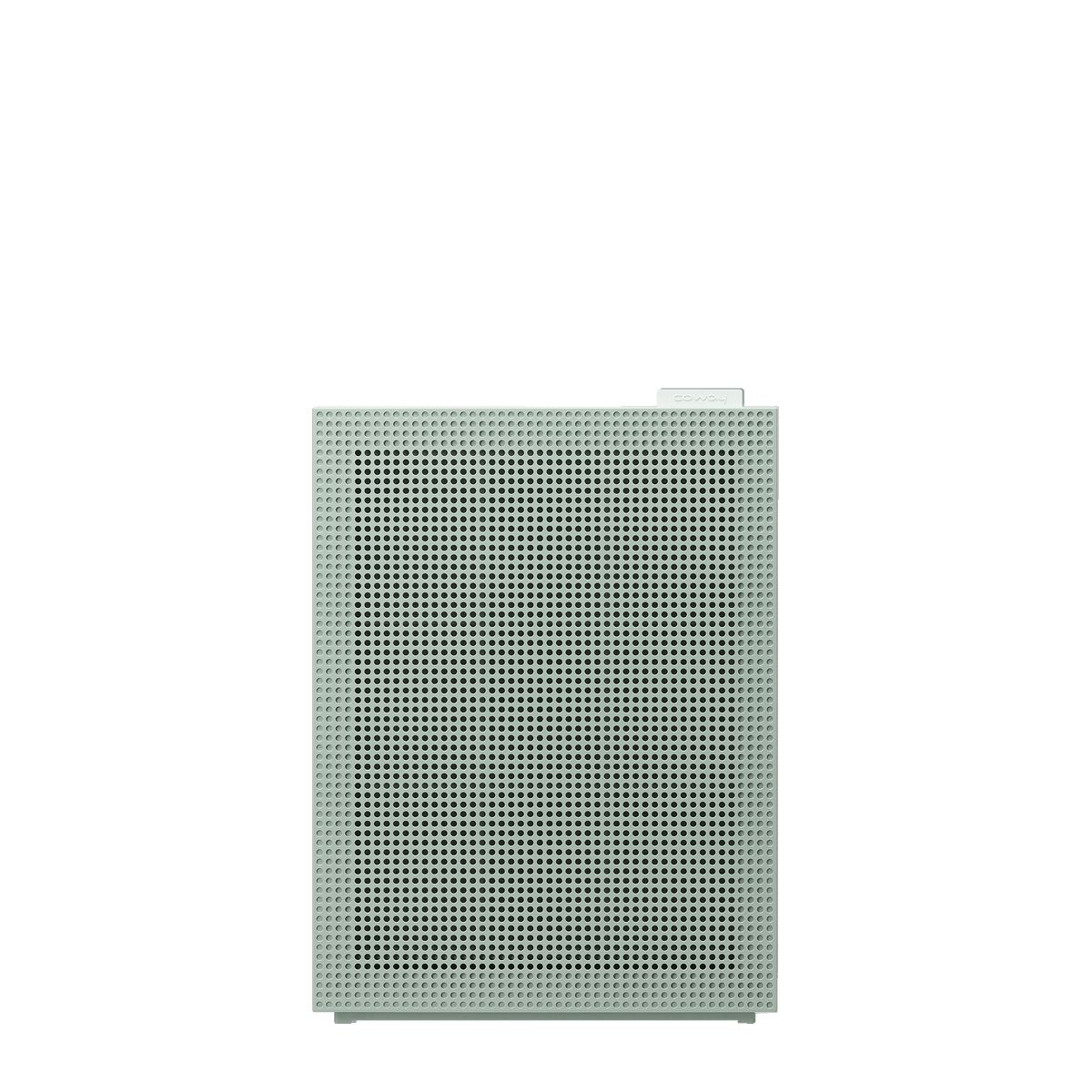
Best for: A smaller enclosed room where you want the fan to respond to particles automatically.
Pros
- Auto mode and washable slide-out pre-filter
- Coway publishes separate smoke, dust and pollen CADR figures
Cons and trade-offs
- Coway lists separate deodorization and HEPA filter replacement intervals
- No connected app control is listed
Our recommendation
Coway lists the Airmega 150 for 214 square feet at 4.8 air changes per hour, with smoke CADR 153 CFM. Auto mode changes fan speed based on the particle sensor, which can help if you would otherwise leave a manual unit on its lowest setting. The washable pre-filter still requires cleaning; the deodorization and HEPA filters are consumables.
Choose another if: You require app schedules or need coverage beyond about 214 square feet at 4.8 ACH.
Levoit Core 300-P: Simple small-room purifier
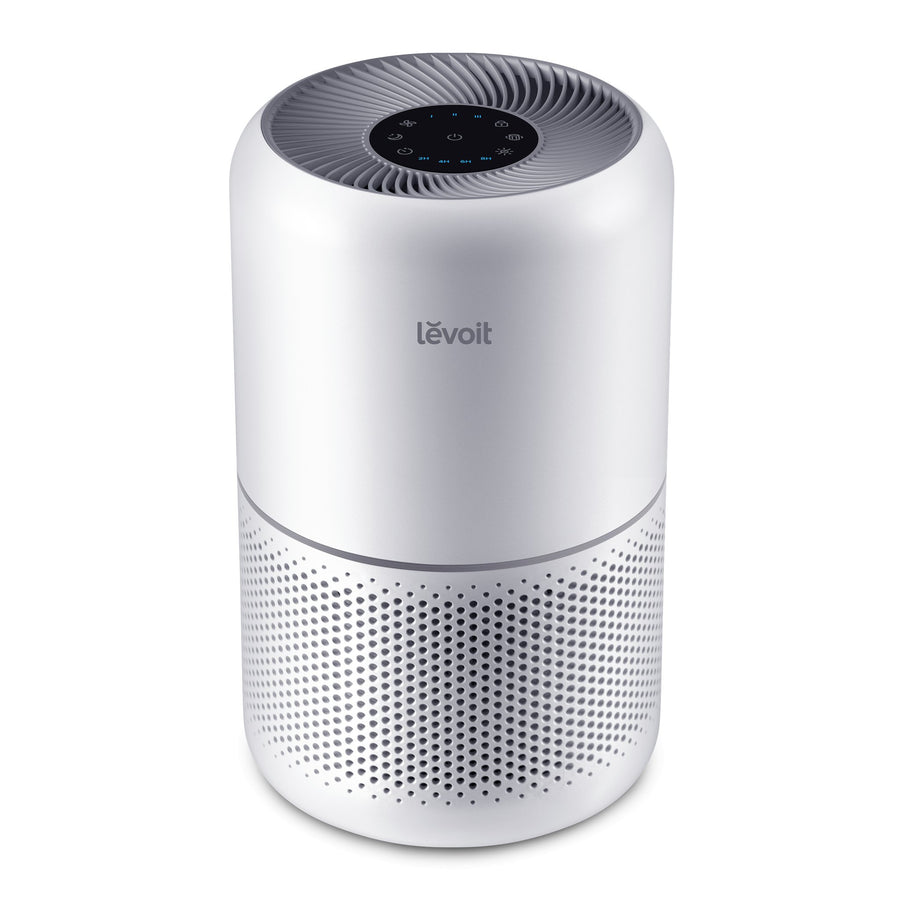
Best for: A smaller bedroom where you want a timer and sleep mode without an app.
Pros
- Levoit lists 143 CFM CADR and a 222-square-foot 4.8-ACH room
- Compact controls include timer and sleep mode
Cons and trade-offs
- No air-quality sensor or auto mode listed for Core 300-P
- Replacement filter is a recurring cost
Our recommendation
The Core 300-P maker page lists 143 CFM CADR and a 222-square-foot room at 4.8 air changes per hour. Its larger 1,066-square-foot claim is at just one change per hour; use the smaller figure when comparing occupied-room filtration. Do not confuse this model with the connected Core 300S-P content that appears lower on the same page.
Choose another if: Your occupied room is larger than its roughly 222-square-foot 4.8-ACH figure or you need automatic sensing.
Levoit Vital 200S-P: Connected medium-room option
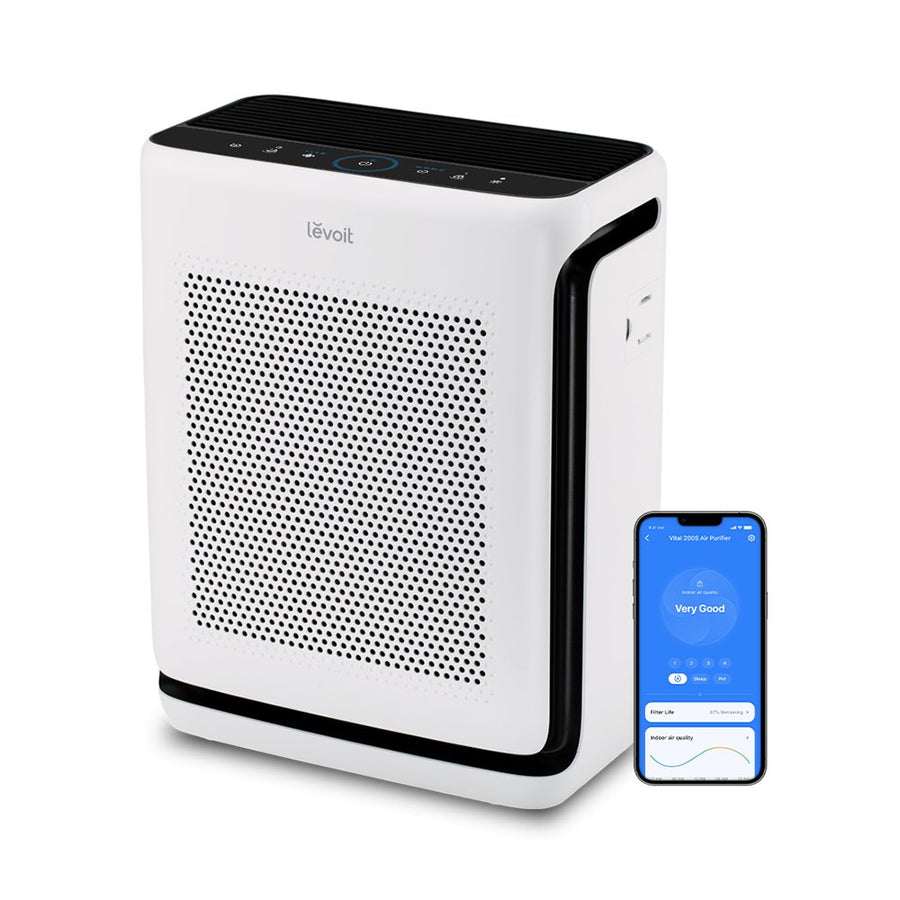
Best for: A room around 388 square feet where app schedules and a washable intake are useful.
Pros
- Levoit lists 250 CFM CADR and 388 square feet at 4.8 ACH
- Washable pre-filter, auto mode and VeSync schedules
Cons and trade-offs
- App features add setup and account dependence
- Washable pre-filter does not eliminate replacement-filter costs
Our recommendation
The US product specification identifies model LAP-V201S-WUS and a 250 CFM CADR. Levoit advertises 1,862 square feet at one change per hour; the 388-square-foot 4.8-ACH figure is more useful for comparing an occupied room. Its U-shaped intake and washable pre-filter can help when pet fur accumulates around the unit, but filtration does not replace cleaning surfaces.
Choose another if: You want simple physical controls with no app or your room needs a higher CADR.
Buying guide
Start with the bedroom exposure
Choose a unit with adequate CADR for the enclosed room, then run it consistently at a tolerable speed. EPA says portable HEPA cleaners have shown possible, often modest allergy or asthma symptom improvements in studies; they are not a guaranteed treatment.
Address the source
Keep the unit unobstructed, vacuum and clean dust-holding surfaces, manage pet dander and check ventilation. Filtration catches airborne particles after release; it does not remove settled allergens from bedding and carpets.
Compare replacement work
The Core 300-P uses a replaceable three-stage filter; Coway adds a washable pre-filter plus separate deodorization and HEPA replacement schedules. The Vital 200S-P intake may be easier to clear when pet fur builds up. Check exact filters and current supply.
Know when to seek professional help
Persistent allergy or asthma symptoms warrant advice from a qualified clinician. For suspected dampness or visible mold, fix the moisture source; see our mold and filtration guide and air-purifier sizing guide.
Frequently asked questions
What is CADR?
Clean air delivery rate expresses how quickly a purifier supplies particle-filtered air for a specified pollutant. EPA uses it for room sizing. Smoke, dust and pollen CADRs can differ, and CADR does not rate gas removal.
Does a purifier clean an entire house?
A portable purifier is designed for a room or area. Doors, layout and airflow affect what reaches it. Size each occupied area or consider appropriately designed HVAC filtration.
How often should filters be changed?
Follow the exact model and filter instructions, then adjust for dust load and visible clogging. A washable pre-filter does not make the main filter permanent.
Can an air purifier cure allergies?
No. EPA describes possible modest improvements in some allergy or asthma outcomes, not a cure or a predictable individual result. Speak with a clinician about persistent symptoms.
Research method and primary sources
We compared current primary manufacturer pages, exact models and practical use-case tradeoffs. We have no original hands-on or durability test records. Recommendations are editorial judgments, while product specifications remain manufacturer claims.
Primary sources: Coway Airmega 150 manufacturer page; Levoit Core 300-P manufacturer page; Levoit Vital 200S-P manufacturer page; EPA air-cleaner guide. Our methodology.
Affiliate disclosure
As an Amazon Associate, The Gear Audit earns from qualifying purchases. We may earn an affiliate commission when you buy through our links, at no extra cost to you. Full affiliate disclosure.