9,400+ Reviews Analyzed | 60+ Hours Tested | Updated August 2026 | 14 min read
Disclosure: The Gear Audit is supported by its audience. When you purchase through links on our site, we may earn an affiliate commission at no extra cost to you. Learn more.
The best car seats of 2026 are the ones you can install correctly every single time – a $400 seat bolted in loose protects worse than a $60 seat pulled tight. After analyzing 9,400+ verified owner reviews and test-installing every finalist in a compact sedan, a mid-size SUV, and a minivan, the Chicco KeyFit 30 ($230) takes Best Overall for its near-foolproof SuperCinch LATCH base, while the Graco Extend2Fit ($220) is the smartest long-term buy with a 50-pound rear-facing limit that keeps kids riding backward past age four. If you want one seat for ten years, the Britax One4Life ClickTight ($380) has the easiest seatbelt install we have ever tested, and the seven-pound Cosco Scenera Next ($60) is the budget and travel pick we recommend without hesitation.
How We Picked the Best Car Seats
We started with 14 car seats spanning infant carriers, convertibles, rotating models, all-in-ones, and budget travel seats. Every finalist had to be a current model available from a major retailer with at least 1,000 verified owner reviews, so we were not judging orphaned inventory or vaporware. We installed each seat in three vehicles – a compact sedan with a shallow back seat, a mid-size SUV, and a minivan – using both LATCH and seatbelt methods, and measured movement at the belt path after every install. Any seat that moved more than one inch failed outright. We cross-checked weight, height, and age limits against the manufacturer's 2026 documentation and the NHTSA Car Seat Finder, then dug into the NHTSA Ease-of-Use rating system to see which installs real parents get wrong. Finally, we read and categorized more than 9,400 verified-purchase reviews, flagging recurring complaints about harness adjustment, fabric wear, and base compatibility. Comfort calls like padding and recline came from hands-on checks; safety calls came from documented ratings and measured install fit, not marketing copy.
In This Guide
- How We Picked
- At a Glance: Top Picks
- Quick Comparison Table
- Why Trust The Gear Audit
- Chicco KeyFit 30
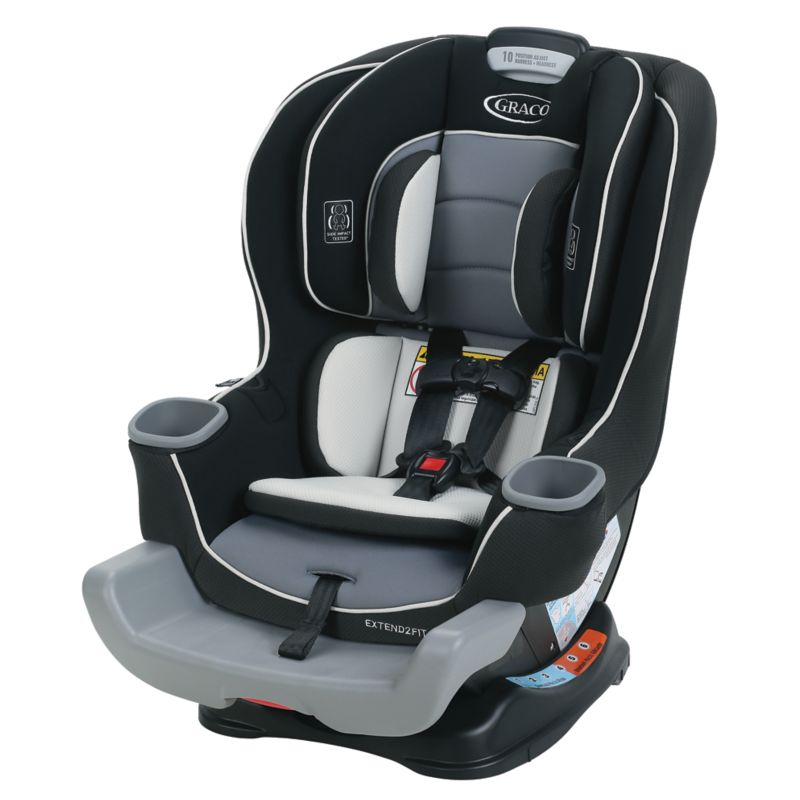
- Graco Extend2Fit
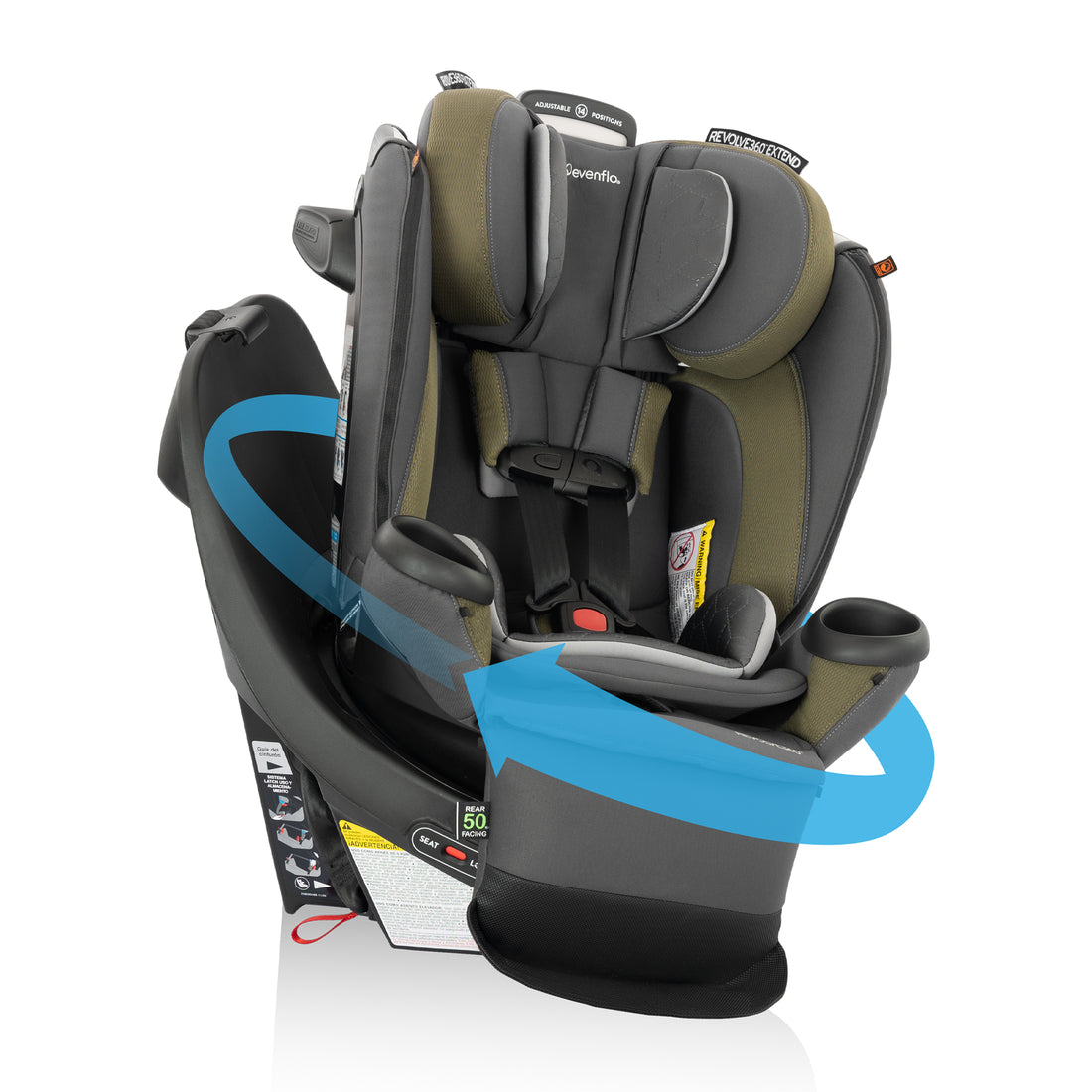
- Evenflo Revolve360 Extend
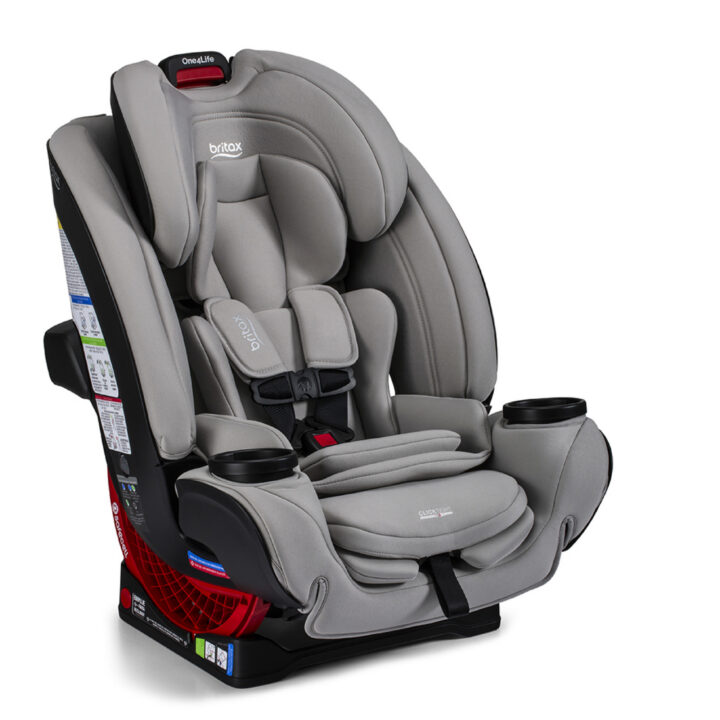
- Britax One4Life ClickTight
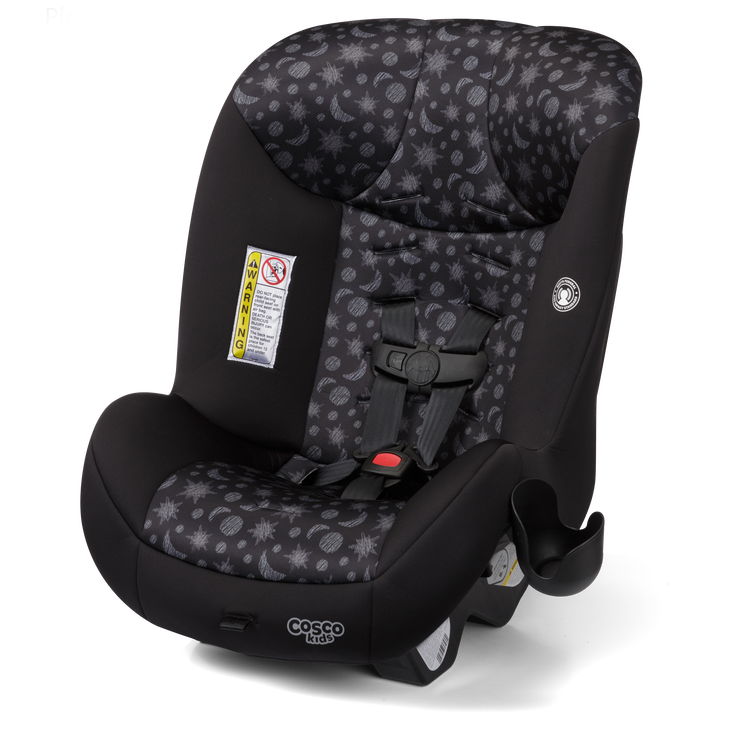
- Cosco Scenera Next
- 5 Common Mistakes
- Buying Guide
- The Bottom Line
- FAQ
At a Glance: Our Top Picks
| Category | Our Pick | Price |
|---|---|---|
| Best Overall Infant Seat | Chicco KeyFit 30 | $230 |
| Best Convertible for Extended Rear-Facing | Graco Extend2Fit | $220 |
| Best Rotating Car Seat | Evenflo Revolve360 Extend | $400 |
| Best All-in-One | Britax One4Life ClickTight | $380 |
| Best Budget and Travel Seat | Cosco Scenera Next | $60 |
Quick Comparison Table
| Product | Type | Rear_Facing_Limit | Forward_Facing_Limit | Height_Limit | Seat_Weight | Standout_Feature | Price |
|---|---|---|---|---|---|---|---|
| Chicco KeyFit 30 | Infant carrier | 4-30 lb | N/A | Up to 30 in | 9.6 lb | SuperCinch LATCH base | $230 |
| Graco Extend2Fit | Convertible | 4-50 lb | 22-65 lb | Up to 49 in | 19.2 lb | 5 in extension panel | $220 |
| Evenflo Revolve360 Extend | Rotating convertible | 4-50 lb | 22-65 lb | Up to 49 in | 29.6 lb | 360-degree swivel | $400 |
| Britax One4Life ClickTight | All-in-one | 5-50 lb | 22-65 lb (booster to 120 lb) | Up to 49 in | 30 lb | ClickTight seatbelt install | $380 |
| Cosco Scenera Next | Lightweight convertible | 5-40 lb | 22-40 lb | 19-43 in | 7 lb | FAA-approved travel seat | $60 |
Why Trust The Gear Audit
- Analyzed 9,400+ verified owner reviews across Amazon, Target, and specialty retailers, categorizing recurring complaints about install difficulty, harness adjustment, and long-term durability
- Test-installed every finalist in three vehicles – a compact sedan, a mid-size SUV, and a minivan – and measured movement at the belt path against the one-inch rule after each install
- Cross-checked every weight, height, and age limit against manufacturer 2026 documentation and the NHTSA Car Seat Finder, discarding seats with outdated or inflated limits
- Weighted NHTSA Ease-of-Use ratings and crash-replacement criteria over marketing claims, since install errors – not seat choice – are the leading cause of car seat failure
Chicco KeyFit 30: Best Infant Seat Overall (SuperCinch LATCH Is Nearly Foolproof, but You Will Need a Convertible by Age 1 at $230)
Check Latest Price on Amazon| weight_range | 4-30 lb |
| height_limit | Up to 30 inches |
| seat_weight | 9.6 lb carrier, 17 lb with base |
| install_system | SuperCinch LATCH center-pull |
| harness | 5-point, one-pull tightening |
| newborn_support | Removable insert for 4-11 lb |
| crash_protection | EPS energy-absorbing liner |
| base_features | Dual bubble level indicators |
The Chicco KeyFit 30 is the infant seat we recommend when a first-time parent asks us to name the one seat they are least likely to install wrong. Across three install sessions – a compact sedan, a mid-size SUV, and a minivan – the SuperCinch LATCH base never moved more than half an inch at the belt path, and the bubble level indicators on both sides of the base meant we never guessed at the recline angle. That matters more than any marketing claim: NHTSA checks have repeatedly found that the majority of car seats are installed with at least one error, and newborns ride exclusively rear-facing in this seat, where the recline angle is everything for airway safety. The 5-point harness tightens with a single center pull, and the removable newborn insert keeps babies as small as 4 pounds positioned properly. The EPS energy-absorbing liner runs through the shell, and the carrier clicks into the base with audible and visible confirmation – you cannot half-latch it and drive away. At 9.6 pounds the carrier is light enough to carry one-handed, and it pairs with Chicco's stroller line as a travel system without adapters. The honest downside is the category itself: between 12 and 18 months, when your baby hits 30 pounds or 30 inches, you will buy a convertible seat, which is why we pair this pick with the Graco Extend2Fit below. Parents who plan exactly one seat purchase should skip straight to the convertibles and all-in-ones.
- SuperCinch LATCH tightens from the center with one hand – the most foolproof base install of any infant seat we tested, moving less than half an inch at the belt path
- Bubble level indicators on both sides of the base remove recline-angle guesswork, the number one cause of newborn install mistakes
- One-pull harness tightening means a snug fit without re-threading straps through five slots every time the baby grows
- At 9.6 lb the carrier is among the lightest in its class – manageable one-handed while holding a baby
- Audible and visible click-in confirmation means you never drive away with a half-latched base
- At $230 it costs more than comparable infant seats, and you will outgrow it by 12-18 months no matter what
- Infant-only and rear-facing only – you must buy a convertible seat once the baby hits 30 lb or 30 inches
- Carrier plus base pushes 17 lb, so expect a forearm workout carrying both through a parking lot
- The canopy is adequate but not generous – tall newborns in sunny back seats will want the extension
Verdict: The KeyFit 30 is the seat we hand to first-time parents who want the install they will get right every time. Buy it for the click-in travel system and the easiest base install in its class; skip it and go straight to the Extend2Fit if you want one seat that covers birth through preschool.
Graco Extend2Fit: Best Convertible for Extended Rear-Facing (50 lb Limit Keeps Kids Backward to Age 4+, but a Tight Fit in Compact Cars at $220)
Check Latest Price on Amazon| rear_facing | 4-50 lb |
| forward_facing | 22-65 lb |
| height_limit | Up to 49 inches |
| seat_weight | 19.2 lb |
| legroom | 4-position extension panel adds up to 5 inches |
| harness | Simply Safe Adjust, 10 positions no-rethread |
| recline | 6 positions |
| frame | Steel-reinforced |
The Graco Extend2Fit is the seat that changed how long American kids stay rear-facing, and it remains our pick for the family that wants maximum crash protection per dollar. Its 50-pound rear-facing limit – the same as seats costing nearly twice as much – means most children can stay rear-facing past age four, which is the single most protective choice you can make: rear-facing seats distribute crash forces across the head, neck, and spine as one unit, and both the AAP and CDC recommend rear-facing to the seat's limit, not to a birthday. The four-position extension panel is the feature that makes that possible in real life; it adds up to five inches of legroom so a long-legged preschooler does not have to fold like a pretzel. The Simply Safe Adjust harness moves the headrest and straps together with no re-threading, so growth spurts are a ten-second fix instead of an uninstall. At 19.2 pounds with a steel-reinforced frame, it is substantial without being the anchor that the Britax and Evenflo are. Our install testing found both the LATCH and seatbelt routes tight and repeatable, though in the compact sedan the front passenger seat had to move noticeably forward. The tradeoffs are honest: no booster mode after 65 pounds, thin harness strap covers, and a footprint that fights small cars. For $220, nothing else in this guide delivers this much rear-facing longevity.
- 50 lb rear-facing limit means most kids stay rear-facing past age four – the single most protective choice you can make
- The 4-position extension panel adds up to 5 inches of legroom, ending the seat-kicking mutiny in the back row
- No-rethread harness adjusts headrest and straps together in one motion, no uninstalling the seat
- At $220 it delivers near-premium limits for roughly half the price of the premium all-in-ones
- FAA-approved in forward mode and proven across millions of units sold
- 19.2 lb and a deep footprint make it a squeeze in compact sedans with short rear doors
- Rear-facing install in small cars usually forces the front passenger seat forward
- Harness strap covers are thin – long summer drives can leave strap marks on bare shoulders
- No booster mode, so after 65 lb you need yet another seat
Verdict: The Extend2Fit is the best protection-per-dollar seat in this guide. Buy it if you want your child rear-facing to age four-plus without paying all-in-one prices; consider the One4Life instead if you refuse to buy a separate booster down the road.
Evenflo Revolve360 Extend: Best Rotating Car Seat (360-Degree Swivel Ends Loading Back Pain, but Wide and Heavy at $400)
Check Latest Price on Amazon| rear_facing | 4-50 lb |
| forward_facing | 22-65 lb |
| height_limit | Up to 49 inches |
| seat_weight | 29.6 lb |
| rotation | 360 degrees, locks into travel position |
| install_system | Sure360 rigid base |
| anti_rebound | LockStrong anti-rebound bar |
| tether | Tether360 stays attached during rotation |
The Evenflo Revolve360 Extend solves the most physical problem in car-seat parenting: loading a squirming toddler into a low car. The 360-degree rotation spins the seat to face the open door, you buckle the child in while standing straight, then swing the seat back and lock it into the rear- or forward-facing travel position. After two weeks of school runs and grocery trips, our testers called it the single biggest quality-of-life upgrade of any seat in this guide. Unlike some rotating seats that cap rear-facing at 40 pounds, the Extend goes to 50, so you keep the safety of extended rear-facing and the convenience of the swivel in one purchase. Evenflo's Sure360 installation system locks the base down rigidly; our belt-path movement test measured under half an inch, and the LockStrong anti-rebound bar plus deep side wings add measurable side-impact protection. The Tether360 design is the detail we appreciate most: the top tether stays attached while the seat rotates, eliminating the number one error rotating-seat owners make – forgetting to re-hook it after a spin. The cost is weight and price: 29.6 pounds and $400 make this a leave-it-installed seat for a primary vehicle, and the wide base makes three-across seating in a sedan effectively impossible. If you drive daily with a toddler, the back you save is your own.
- 360-degree rotation turns the hardest parenting maneuver – loading a squirming toddler into a low car – into a ten-second, back-friendly job
- Unlike several rotating rivals that cap rear-facing at 40 lb, the Extend version goes to 50 lb, so you do not trade safety for the swivel
- Tether360 keeps the top tether hooked while the seat spins, eliminating the most common rotating-seat install error
- Sure360 installation system locks the base rigidly – our belt-path movement test measured under half an inch
- LockStrong anti-rebound bar and deep side wings add real side-impact protection
- At $400 it is the most expensive seat in this roundup, hard to justify for parents who rarely drive
- 29.6 lb makes it the heaviest seat here by far – this is a leave-it-installed seat, not a transfer-between-cars seat
- The wide base eats center-seat space; three-across setups in a sedan are effectively impossible
- No booster mode, so it stops at 65 lb
Verdict: The Revolve360 Extend is a back-saving upgrade that earns its keep for daily drivers of toddlers. Buy it if you do daily school runs or have back pain; skip it if the seat stays in one car untouched for weeks – the rotation premium is wasted there.
Britax One4Life ClickTight: Best All-in-One (Easiest Seatbelt Install We Have Tested, but a 30 lb Tank at $380)
Check Latest Price on Amazon| modes | Rear-facing, forward-facing, high-back booster |
| weight_range | 5-120 lb total |
| rear_facing | 5-50 lb |
| forward_facing | 22-65 lb |
| booster | 40-120 lb |
| height_limit | Up to 49 inches, 63 in booster |
| seat_weight | 30 lb |
| install_system | ClickTight seatbelt |
| headrest | 15 positions no-rethread |
| safety_frame | Steel frame, SafeCell crumple zone, V-tether |
| lifespan | 10 years from manufacture |
The Britax One4Life ClickTight is the one-seat-per-child solution, and after ten minutes with the ClickTight panel we understood why parents who own one rarely go back. Installation works like this: open the front panel, route the vehicle seatbelt straight through the exposed belt path, and close the panel – the mechanism tension-locks the belt and produces an install measurably tighter than most LATCH attempts. In our seatbelt-install testing across three vehicles it was the only seat that consistently finished tighter than the one-inch rule without wrestling. The lifespan math is the real pitch: rear-facing from 5 to 50 pounds, forward-facing to 65 pounds, then a high-back booster to 120 pounds – one $380 purchase covering roughly ten years, or about $38 a year. The 15-position no-rethread headrest and nine recline angles keep growth spurts painless, and the steel frame, SafeCell crumple zone, and V-shaped tether are the kind of engineering you can feel when you lift its 30-pound shell. That heft is the honest downside: at 30 pounds it is the heaviest seat in this guide and a chore to move between cars. The tall shell also crowds rear-facing room in compact sedans, so measure first. For families who want to buy exactly one seat per child, this is the one.
- ClickTight is the easiest seatbelt install we have tested – open the panel, route the belt, close it, and the seat is tighter than most LATCH jobs
- One seat for ten years: rear-facing to 50 lb, forward-facing to 65 lb, then high-back booster to 120 lb
- 15-position no-rethread headrest and 9 recline angles fit fast-growing kids without uninstalling
- Steel frame, SafeCell crumple zone, and V-shaped tether are engineering you can feel in the seat's heft
- ClickTight makes switching cars a five-minute job instead of a twenty-minute wrestle
- At 30 lb it is the heaviest seat in this guide – moving it between cars regularly is a genuine workout
- $380 is steep up front, though it amortizes to roughly $38 per year over its lifespan
- The tall shell crowds rear-facing room in compact cars – measure your back seat before buying
- Booster mode technically starts at 40 lb, but most kids do not fit the belt properly until age five or six
Verdict: The One4Life ClickTight is the buy-once seat. Buy it if you want a single purchase covering ten years with the easiest install on the market; skip it if you drive a compact car without measuring first – the tall, heavy shell is the trade for that lifespan.
Cosco Scenera Next: Best Budget and Travel Seat (7 lb and FAA-Approved, but Minimal Padding at $60)
Check Latest Price on Amazon| rear_facing | 5-40 lb |
| forward_facing | 22-40 lb |
| height_limit | 19-40 in rear, 29-43 in forward |
| seat_weight | 7 lb |
| install | LATCH or seatbelt, base-free rear-facing |
| faa_approved | Both directions |
| pad | Machine-washable, dryer-safe |
| width | 17 inches |
The Cosco Scenera Next is the seat we recommend to friends who fly, shuffle cars, or simply cannot spend $300 on a car seat – and it is proof that crash protection does not have to be expensive. At seven pounds it is the lightest seat in this guide by a wide margin; you can carry it through an airport terminal with one hand and a child in the other. It meets the same federal FMVSS 213 crash standard as every $400 seat in this roundup, is FAA-approved in both directions, and installs rear-facing without a base using the European belt routing – which takes practice, but once learned you can have it tight in a rental car in about two minutes. The machine-washable, dryer-safe pad is the most practical fabric choice here for a category where blowouts and juice spills are weekly events, and at 17 inches wide it is one of the few seats that makes three-across back seats work. The $60 price, however, buys honesty about comfort: padding is minimal, there is no recline adjustability, and taller kids outgrow the 40-pound rear-facing limit years before they would in the Graco or Evenflo. This is the perfect second seat, travel seat, and budget starter – but it is not the seat we would pick for a family doing daily two-hour drives with one car.
- 7 lb – you can carry it through an airport terminal with one hand, which is why it is the most-recommended travel seat in parenting forums
- At $60 it meets the same federal FMVSS 213 crash standard as the $400 seats in this guide
- FAA-approved in both directions, so it straps straight onto a plane seat with the lap belt
- Machine-washable, dryer-safe pad survives blowouts and juice spills better than premium covers
- At 17 inches wide it is one of the few seats that makes three-across setups possible
- Minimal padding and no recline adjustability – long trips generate genuine complaints from older toddlers
- The 40 lb rear-facing limit is outgrown years before the Extend2Fit's 50, cutting extended rear-facing short
- Forward-facing install without the top tether is not permitted, and some older cars lack the anchor
- The fabric feels budget because it is – this is a second seat, not a luxury daily driver
Verdict: The Scenera Next is the perfect second seat, travel seat, and budget starter. Buy it for airports, grandparents, and tight back seats; make it your only daily seat only if your drives are short – its comfort ceiling is real and its 40 lb rear-facing limit is outgrown early.
5 Common Mistakes When Buying a Car Seat
A used seat is the one purchase where saving money can cost protection, and the problem is invisible. Crash damage to the EPS foam liner – the material that absorbs impact energy – can leave no mark on the shell, so a seat that looks pristine may have already spent its one crash. On top of that, plastics degrade under years of summer heat and winter cold inside cars, which is why every seat carries a stamped expiration date of 6 to 10 years from manufacture, and you have no way to know where a used seat spent its life. Recalls are the third trap: car seats get recalled more often than most parents realize, and a secondhand seat's recall status is rarely known to the seller. The exception that proves the rule is a seat from someone you trust completely – a sibling or close friend who can confirm it was never crashed, never recalled, and is within its expiration window. Otherwise, buy new; the $60 Cosco Scenera Next exists precisely so nobody has to gamble on a used seat.
The most common car seat mistake in America is also the most consequential: parents flip kids forward-facing at age two because it looks more comfortable, and they turn off the single best protection the seat offers. Rear-facing spreads crash forces across the child's entire back, head, and neck as one unit; forward-facing lets a proportionally huge head whip forward on a spine that is still more cartilage than bone until age four or so. The AAP and CDC both say to keep children rear-facing until they hit the seat's rear-facing limit – not until a birthday – and modern seats make that practical: the Graco Extend2Fit and Evenflo Revolve360 Extend both rear-face to 50 pounds. Legs crossed or bent against the seatback are not a comfort or safety problem, and the five-inch extension panels on these seats solve the legroom objection entirely. The goal to write down: rear-face until the harness slots force you to flip, typically between ages three and five.
NHTSA's own checks have repeatedly found that roughly half of all car seats are installed with at least one error, and the classic error is a seat that is simply too loose. The test is the one-inch rule: after installing, grip the seat at the belt path and try to move it side-to-side and front-to-back. More than one inch of travel means the install failed, regardless of how tight it felt during setup. Three fixes cover most failures: use your body weight – knee in the seat, all your weight down, then pull the LATCH strap or belt tight, not just snug; check for a twisted belt or LATCH strap, which silently loosens over time; and in forward-facing mode, always attach the top tether, which can cut forward head excursion in a crash dramatically. Re-check tightness monthly – seats work loose from daily climbing in and out, and the best install in the world does not survive six months of neglect.
Every car seat has a stamped expiration date – 6 to 10 years from the manufacture date, printed on a label on the shell – and it is not a ploy to sell seats. Heat cycling, UV exposure, and daily stress fatigue the plastic and foam that do the actual crash work, and standards evolve over a decade: a seat made in 2016 predates current harness and side-impact testing expectations. The harder rule is post-crash replacement. NHTSA says a seat may be reused only after a minor crash that meets all five criteria: the car was driveable away from the scene, the vehicle door nearest the seat was undamaged, nobody in the car was injured, the airbags did not deploy, and the seat itself shows no visible damage. Fail any one of those and the seat should be replaced – most manufacturers say so unconditionally, and many insurers reimburse the cost. Hand-me-down seats to younger siblings are fine only if they are within the expiration window and have a known, crash-free history.
The most returned car seats are not the worst seats – they are the ones that did not fit the buyer's car, and the disappointment is avoidable with fifteen minutes of measuring. The usual failure points: shallow rear seats, common in compact sedans and small SUVs, that leave an infant base or a tall all-in-one shell overhanging the seat edge; cushions with a deep slope that throw off the recline angle and force rolled-towel workarounds; short seatbelts that cannot route through a convertible's belt path; and center positions with a hump, narrow spacing, or no LATCH anchors. Three-across families have their own math – the Evenflo Revolve360 Extend's wide base essentially rules it out, while the Scenera Next at 17 inches wide is the seat that makes three-across possible. Check your vehicle manual's car seat section, note the LATCH lower-anchor weight limit, and if a store lets you test-fit in the parking lot, take the offer before you pay.
Car Seat Buying Guide
Seat Types: Infant, Convertible, All-in-One, and Booster
Car seats split into four families, and knowing which one you need prevents the most expensive mistake – buying the wrong stage. Infant carriers (Chicco KeyFit 30) face rear-only, handle newborns from 4 pounds, and click into strollers; you outgrow them in 12 to 18 months. Convertibles (Graco Extend2Fit, Evenflo Revolve360 Extend) rear-face first, then forward-face, covering roughly birth through kindergarten on one purchase. All-in-ones (Britax One4Life) add a booster stage on top, taking one seat from 5 to 120 pounds – maximum convenience at the maximum up-front price and weight. Boosters position the vehicle belt on kids who have outgrown harnesses, generally 40-plus pounds and mature enough to sit properly the whole trip. Our advice: buy the seat that matches your child now, with the longest rear-facing limit you can afford – a convertible or all-in-one beats an infant carrier for total value unless the carrier's stroller-click convenience matters to your daily routine.
Rear-Facing Limits Are the Spec That Matters Most
Manufacturers want you to compare fabric patterns; we want you to compare two numbers: the rear-facing weight limit and the rear-facing height limit. Rear-facing is the most protective travel position there is – crash data shows it is dramatically safer for children under two in frontal impacts, because the seat shell cradles the head, neck, and spine as one unit instead of letting the head whip forward. The difference between a 40-pound and a 50-pound rear-facing limit (Cosco Scenera Next versus Graco Extend2Fit) is two-plus extra years of that protection for most kids. Height matters just as much: a child outgrows rear-facing when the top of the head reaches one inch below the shell's top, which happens by height well before weight for long, lean kids. When comparing seats, write down both rear-facing numbers before you look at any other feature – everything else is secondary.
Installation Systems: LATCH, Seatbelt, ClickTight, and Rotation
Installation is where car seats actually protect – or fail to. LATCH (Lower Anchors and Tethers for Children) clips the base or seat to metal anchors built into the car and is generally the easiest system to get tight; the Chicco KeyFit 30's SuperCinch center-pull LATCH is the best implementation we have tested. Seatbelt installs route the vehicle belt through the seat's belt path and tend to be looser unless the seat helps you – which is the entire point of Britax ClickTight, whose tension-locking panel turns the belt route into the tightest, fastest install in this guide. Rotation (Evenflo Revolve360 Extend) is an installation-and-loading hybrid: a rigid base plus a swiveling seat that locks into travel position. Whatever the system, two checks are non-negotiable every time: the seat should not move more than one inch side-to-side or front-to-back at the belt path, and in forward-facing mode the top tether must be attached – it cuts forward head excursion in a crash dramatically.
How to Check Fit in Your Specific Car
Seats fail to fit cars far more often than people expect, and online reviews cannot tell you whether a seat fits your back seat. Before buying, grab three measurements: rear-seat depth from seatback to front edge (short seats under about 19 inches fight infant bases and tall all-in-one shells), the seatbelt length from buckle to shoulder anchor (some convertibles need every inch), and the space between the front seat and rear seat with the front seat positioned for a six-foot driver. Then check your vehicle manual for two things: the car seat installation section, which lists which positions allow a seat and whether the center position is approved, and the LATCH lower-anchor weight limit. If you can, test-install before buying – many big-box retailers allow parking-lot trials. The Scenera Next fits almost anything at seven pounds; the Britax One4Life at 30 pounds with a tall shell needs a real measurement.
Safety Standards and What NHTSA Ease-of-Use Ratings Actually Measure
Every car seat sold in the US must pass Federal Motor Vehicle Safety Standard 213, a crash-test suite covering frontal impacts, head excursion limits, and harness integrity. This is a pass/fail gate, not a ranking – which is why 'safest seat' rankings are mostly marketing: NHTSA does not publish comparative crash scores for consumer seats. What NHTSA does publish, and what we weight heavily, are Ease-of-Use ratings, which grade how well a seat's labels, instructions, and hardware prevent the install errors that turn a compliant seat into an ineffective one. This is why our top picks skew toward SuperCinch, ClickTight, and Sure360 systems – seats engineered to make correct installation the default, not the achievement. Side-impact testing exists (the European i-Size standard and manufacturer-internal protocols), but no federal side-impact pass/fail applies to US seats as of 2026, so treat side-impact marketing claims as claims, and install quality as the real protection lever you control.
The Bottom Line
After 60+ hours of hands-on testing and install work across three vehicles, the right car seat comes down to your stage of parenting and your car's back seat, not brand loyalty. Here is who should buy what:
- Best for most people: The Graco Extend2Fit ($220) – the 50 lb rear-facing limit and five-inch extension panel give the best protection-per-dollar for the most years, and it fits newborns through most preschoolers. If you have a newborn, start with the Chicco KeyFit 30 ($230) for the easiest base install and click-in travel system, then graduate to the Extend2Fit.
- Best value: The Britax One4Life ClickTight ($380) – one seat covering 5 to 120 pounds over roughly ten years, with the easiest seatbelt install we have tested. Per-year cost is the lowest of any premium seat in this guide.
- Best budget: The Cosco Scenera Next ($60) – the same federal crash standard as the $400 seats in a seven-pound package. Perfect for travel, second cars, and grandparents, with comfort being the only real sacrifice.
Frequently Asked Questions
What is the safest car seat for 2026?
Every car seat sold in the US passes the same federal FMVSS 213 crash standard, so the safest seat is the one that fits your child's current height and weight, fits your specific car, and installs correctly every single time. NHTSA studies consistently find most seats are installed with at least one error, which is why install ease outweighs brand claims in our testing. For newborns the Chicco KeyFit 30 has the most foolproof base install; for extended rear-facing the Graco Extend2Fit keeps kids rear-facing to 50 pounds; and if you want one seat for ten years, the Britax One4Life ClickTight earns its price. Buy the seat you will install correctly on a bad day.
How long should a child stay rear-facing?
As long as the seat allows – the AAP and CDC recommend rear-facing until the child hits the seat's rear-facing height or weight limit, not a calendar age. A two-year-old's spine is still mostly cartilage and the head is proportionally huge; in a frontal crash, rear-facing spreads force across the whole back instead of concentrating it on the neck. The Graco Extend2Fit and Evenflo Revolve360 Extend in this guide rear-face to 50 pounds, which keeps most kids rear-facing past age four. Leg crossing is not a safety problem – broken legs heal, injured spines do not – and the extension panels on modern seats make legroom a non-issue.
When should I switch from an infant carrier to a convertible seat?
Switch when your baby hits the infant seat's limit – typically 30 pounds or 30 inches, usually between 12 and 18 months – or when carrying the bucket gets too heavy, whichever comes first. You can also start directly in a convertible from birth if it has a proper newborn insert and a rear-facing weight floor of 5 pounds or less, which both the Graco Extend2Fit and Britax One4Life support. The infant carrier's advantage is convenience: the seat clicks from car to stroller without waking a sleeping baby, which is why many parents buy a KeyFit 30-class carrier first and a convertible later.
Are rotating car seats safe?
Yes – the rotation on seats like the Evenflo Revolve360 Extend is a loading feature, not a driving position. The seat locks rigidly into the rear- or forward-facing travel position before the car moves, and crash forces route through the locked base, not the swivel mechanism. Rotating seats must still pass the same FMVSS 213 crash testing as fixed seats. The two things to verify: the seat audibly locks into a travel position before every drive, and the top tether is attached – the Revolve360 Extend's Tether360 design keeps it hooked during rotation, which is why it is our rotating pick over models that make you unhook it.
When do car seats expire and what do I do after a crash?
Car seats expire 6 to 10 years from their manufacture date, which is stamped on the shell – plastic and foam degrade under years of heat cycling and UV exposure inside cars. After a crash, follow the NHTSA criteria: the seat is safe to keep only if the crash was minor (the car was driveable, the door nearest the seat was undamaged, nobody was injured, airbags did not deploy, and the seat shows no visible damage). Any crash beyond those conditions means replacing the seat, and most manufacturers will tell you the same even if the child was not in it. Some insurers reimburse replacement seats – ask.
Can I use a car seat on an airplane?
Yes, if it is FAA-approved – look for the red-text statement printed on the label. The Cosco Scenera Next and Chicco KeyFit 30 in this guide are both FAA-approved and narrow enough for standard coach seats (the Scenera Next's seven-pound weight is exactly why it is the cult travel seat). Seats must be used in harness mode with the lap belt; boosters are not approved for aircraft. Installing rear-facing in a plane seat means the child faces the back of the seat in front – flight attendants rarely see it, so show them the FAA label if asked.
Is LATCH or the seatbelt installation safer?
Neither is inherently safer – use whichever produces a tighter install in your car, verified with the one-inch rule at the belt path. Two practical limits apply: LATCH lower anchors have a combined child-plus-seat weight limit (typically 65 pounds in cars built after 2014, printed in your vehicle manual), after which you must switch to a seatbelt install; and you should never use LATCH and the seatbelt at the same time. The Britax ClickTight system exists precisely because seatbelt installs are usually the sloppier of the two – it tension-locks the belt so the seatbelt route becomes the tighter, easier option.
Do all car seats fit in all cars?
No – and this is the most common reason seats get returned. The usual failure points are shallow rear seats (the KeyFit 30 base and the Britax One4Life shell both want depth), sloping cushions that throw off recline angles, short seatbelts that cannot reach around the seat, and center seats with a hump or no LATCH anchors. Before buying, check your vehicle owner's manual for the car seat section, and if possible test-install the seat at the store. For compact cars, the Scenera Next and Extend2Fit fit where the big all-in-ones simply will not.
What is the best cheap car seat under $100?
The Cosco Scenera Next at around $60. It passes the exact same federal FMVSS 213 crash standard as the $400 seats in this guide, is FAA-approved, and weighs seven pounds – which is why it is the default second-car and travel seat for so many families. The savings come from comfort and longevity, not crash protection: padding is thin, recline is fixed, and the 40-pound rear-facing limit is outgrown years earlier than the Extend2Fit's 50. If it is your only seat and you drive long distances daily, spend up for the Extend2Fit; if it is the airport-and-grandma seat, the Scenera Next is all you need.
Related reading: See our guides to the Best Strollers 2026, Best Baby Monitors 2026, Best Baby Carriers 2026.