How to Inspect a Used or Refurbished Desk Chair Listing
By The Gear Audit Team · Original source review September 9, 2026; seller-evidence and manufacturer-policy check September 27, 2026.
Quick answer: identify the chair and the seller’s promise
Before comparing a used or refurbished chair, request proof of its exact model, revision, size, options and condition, then read the written return and warranty terms for that seller. Photos of the actual chair and a demonstration of important controls are more useful than a stock image and a broad “refurbished” label. Herman Miller’s own refurbished Aeron program documents a specific process and warranty, but those terms do not transfer to independent sellers.
Get its product label, full chair photos and the model/revision/size shown on the listing.
Ask for a current video of height, tilt, arms, lumbar and casters that the actual chair includes.
Get return window, shipping/restocking costs, warranty provider and covered parts in writing.
Use chair dimensions and your desk measurements before a non-returnable purchase.
The listing-evidence checklist
| Ask the seller for | What to inspect | Decision it supports |
|---|---|---|
| Manufacturer label and underside photo | Brand, model or product code, size, production information and visible alterations | Whether the chair matches the title and which revision documentation applies |
| Current photos of the actual chair | Seat, back, underside, base, casters, arms, controls and wear points | Whether condition and parts match the written description, beyond a stock photo |
| Short control video | Seat height, recline/tilt, arms, lumbar/seat-depth controls if advertised | Whether the actual mechanisms move and hold as stated |
| Written replacement-parts list | Which parts were cleaned, repaired or replaced; OEM or third-party; who performed work | What “refurbished” means for this specific seller and chair |
| Written terms | Returns or final sale, delivery/assembly, damage reporting, restocking, warranty provider and coverage | Your recourse and total transaction risk |
Record a source beside every answer: seller message, actual-item photograph, manufacturer’s label, formal warranty or checkout terms. A missing answer is unresolved, not a defect you have already proven. If a feature is essential, make it a condition of the purchase and request it in writing before ordering.
“Refurbished” describes a process only when the seller defines it
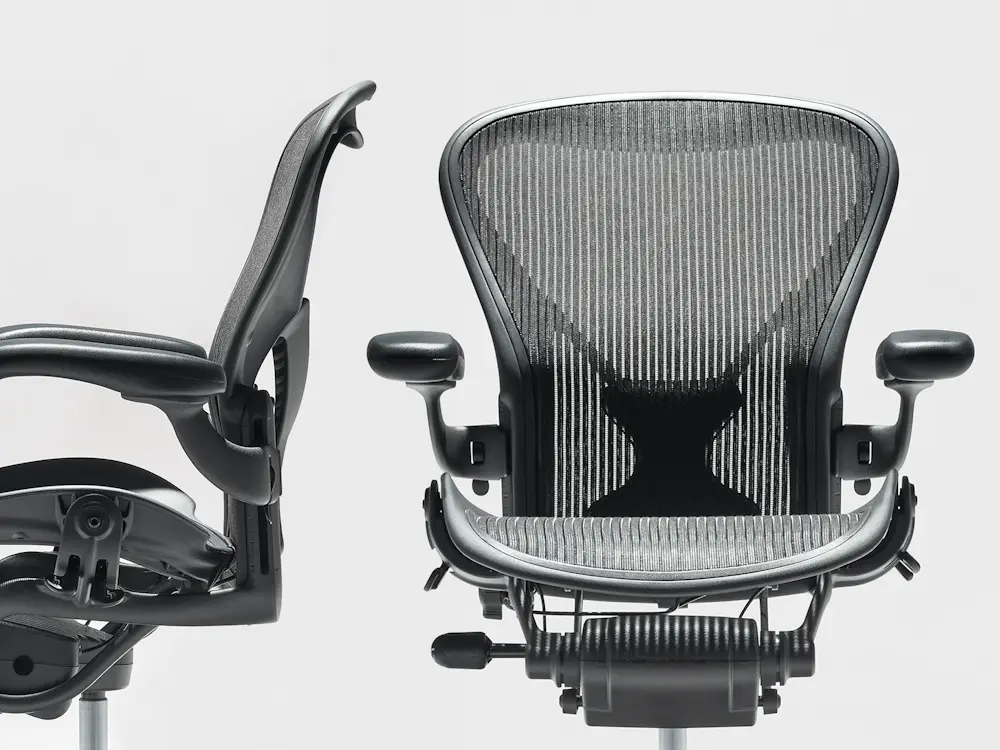
As a documented example, Herman Miller says chairs in its own authorized refurbished Aeron program are inspected, serviced with genuine parts where needed, recalibrated and tested again. The program offers a separate five-year refurbished limited warranty on eligible products. Its FAQ distinguishes a refurbished Aeron Classic from a refurbished newer Aeron, says options depend on inventory rather than custom build, and states that product photos are representative. These are Herman Miller program claims; they do not verify an independent marketplace seller’s work or coverage.
The current US FAQ describes refurbished Aeron sales as final, with an instruction to contact customer service promptly if a chair arrives damaged, defective or materially different from its description. It currently specifies three days for that contact and says the sales policy does not limit the separate limited-warranty remedies. Read the exact current terms at checkout and keep a copy. An independent reseller can have different return rights, charges and warranty handling; ask rather than assume equivalence.
What a documented program can establish
- Named work and parts. A defined inspection and replacement process gives the buyer concrete questions to compare with another refurbisher.
- A responsible warranty provider. A written limited warranty identifies who handles a qualifying problem and the covered term.
Limits of the example
- It does not certify unrelated stock. A chair advertised elsewhere as “Aeron refurbished” is not automatically part of Herman Miller’s authorized program.
- Representative photos cannot show actual condition. The specific unit can vary in age, cosmetic wear and available options, even within a defined program.
Match the revision and configuration before using a spec sheet
Aeron, Leap and other long-running chair names cover different production periods and option packages. For example, Herman Miller itself differentiates refurbished Aeron Classic and refurbished current Aeron mechanisms and materials. Its current new Aeron work-chair sheet is not evidence that an older Classic chair has the same controls. Ask the seller for the chair’s label and year or product code, then use documentation for that revision. Record arm type, lumbar/back support, tilt, seat-depth control, casters and upholstery as separate lines.
Do not infer adjustments from a manufacturer gallery image. A seller’s actual-chair photos and video should show the advertised controls clearly. If the seller cannot identify an adjustment you rely on, mark it unconfirmed and choose a listing that can document it. Our office-chair shortlist compares current Aeron, Leap and Sayl adjustment choices, but its current configuration details cannot certify a specific used unit.
Check personal fit and room clearance before a final sale
A chair can be authentic and mechanically sound yet still be the wrong size for the person or desk. Record desired seat height and depth, available under-desk width and height, and the floor area for casters, entry and recline. Our compact-desk fit guide gives a six-field room checklist. Ask for a dimensioned drawing or seller measurement of the actual chair package where clearance is close.
For an in-person inspection, sit in the exact chair with the controls set for you, then check visible wear, stability, adjustment movement and your desk-height relationship. For a shipped chair, save the listing, seller messages, invoice and written terms before delivery. Photograph the sealed package and chair on arrival and report damage within the applicable seller window. This documentation may help resolve a description dispute; it does not predict remaining service life or guarantee a warranty claim.
A short message you can send the seller
Request these facts in writing
“Please confirm the exact model, revision, size and production label; send photos of the actual chair including the underside, seat, back, base and arms; show the advertised controls working; list every replaced part and whether it is original; and provide the return, damage-reporting and warranty terms, including who pays shipping and who handles service.”
If the answers are complete, compare the chair with its matching manufacturer documentation and your fit measurements. If a critical answer is missing, keep looking. A low asking price cannot make a wrong size or unknown mechanism work for your desk.
Search used and refurbished Aeron listings on Amazon
This is a labelled search to inspect listing evidence; it is not a verified product offer or endorsement of any seller, condition, authenticity, warranty, revision or price.
Used-chair listing FAQ
Does “refurbished” guarantee original manufacturer parts?
No. Herman Miller says its own authorized refurbished Aeron program uses genuine parts, but an independent seller must disclose its own replacements and service. Request a parts list and the warranty provider in writing.
Can I use a new Aeron specification sheet for an Aeron Classic?
No. First establish the actual chair’s revision, size and options. A current new-chair sheet cannot prove the mechanisms on an older unit.
Are manufacturer refurbished Aeron photos of the unit shipped?
Herman Miller says its program images are representative and may not depict the exact chair delivered. For another seller, request current photos of the actual unit and inspect the listing terms.
What if a final-sale chair arrives damaged?
Follow the seller’s written reporting process immediately. Herman Miller’s current US refurbished FAQ asks buyers to contact its customer service promptly for damage, defect or material difference, currently within three days. That is a program-specific term; read the terms applicable to your own order and keep delivery evidence.
Research method, sources and limits
This is a buyer-evidence checklist, based on Herman Miller’s current US refurbished program, FAQ and limited-warranty wording checked September 27, 2026. Descriptions of Herman Miller’s inspection, repairs, warranty and sales terms are manufacturer statements about its authorized program. Questions for other sellers are editorial guidance. We did not inspect a particular listing or chair, test any mechanism, verify a marketplace seller, or estimate remaining life. Product images are illustrative; the actual unit must be documented separately.
Primary sources: Herman Miller refurbished program; US refurbished FAQ; limited warranty. Read our methodology.
Affiliate disclosure
As an Amazon Associate, The Gear Audit earns from qualifying purchases. We may earn an affiliate commission when you buy through our links, at no extra cost to you. Read our full affiliate disclosure.