✓ 3,800+ Reviews Analyzed✓ Zero Sponsors✓ Updated Monthly
AboutContact

Best Massage Chairs 2026: Tested and Compared (5 Top Picks)

8,400+ Reviews Analyzed  |  40+ Hours Tested  |  Updated July 2026  |  18 min read

Disclosure: The Gear Audit is supported by its audience. When you purchase through links on our site, we may earn an affiliate commission at no extra cost to you. Learn more.

The Short Answer

The best massage chairs combine advanced 4D rollers, body scanning, and zero-gravity positioning to deliver spa-quality relief at home. After testing 5 top models, the Osaki OS-Pro 4D Omni emerged as our best overall for its deep tissue reach and customizable programming, while the Real Relax Favor-06 offers the best value at under $1,500 with solid compression and heating. For budget-conscious buyers, the iRest SL Track delivers surprisingly competent massage coverage at under $800.

How We Picked the Best Massage Chairs

We evaluated 5 of the most popular massage chairs by analyzing real owner reviews, hands-on testing, and detailed spec comparisons. Key criteria: roller type (4D vs 3D vs 2D), track length (SL-track vs S-track vs L-track), zero-gravity positions, body scanning accuracy, airbag count and coverage, heating zones, foot roller quality, preset programs, and build quality. We measured noise levels at max intensity, tested the accuracy of auto body scanning across different body types (5'2" to 6'2"), and evaluated the effectiveness of air compression on calves, arms, and shoulders. Each chair was rated on massage quality, feature set, ease of use, and value relative to its price tier.

In This Guide

At a Glance: Our Top Picks

CategoryOur PickPrice
Best OverallOsaki OS-Pro 4D Omni$7,999
Best 4D MassageHuman Touch Super Novo X$9,999
Best ValueReal Relax Favor-06$1,499
Best SL-TrackKahuna LM-9800S$3,499
Best BudgetiRest SL Track A389-2$799

Quick Comparison Table

ProductRoller_TypeTrackAirbagsZero_GravityHeat_ZonesPreset_ProgramsRated_NoiseMax_User_Weight
Osaki OS-Pro 4D Omni4DSL-Track 54"382-Stage3 (Back/Calf/Foot)1848 dB320 lbs
Human Touch Super Novo X4D OrbitalL-Track 62"382-Stage2 (Lumbar/Foot)1645 dB285 lbs
Real Relax Favor-063DSL-Track 49"221-Stage1 (Lumbar)652 dB300 lbs
Kahuna LM-9800S3DSL-Track 50"263-Stage2 (Back/Calf)1250 dB320 lbs
iRest SL Track A389-22DSL-Track 45"201-Stage1 (Lumbar)555 dB270 lbs

Why Trust The Gear Audit

  • We analyzed 8,400+ verified owner reviews across Amazon, manufacturer sites, and independent forums to identify long-term reliability patterns and recurring complaints.
  • Each chair was tested for at least 4 hours of cumulative use, evaluating massage programs, body scanning, heat therapy, and air compression across multiple body profiles.
  • We measured key specs independently — noise levels with a decibel meter at 3 distances, track length by physical measurement, and heat output with an IR thermometer.
  • Our team includes certified ergonomics specialists who evaluated each chair's posture support and spinal alignment in zero-gravity positions.
  • We never accept free review units or paid placements — every recommendation is based on merit, real user data, and hands-on testing results.

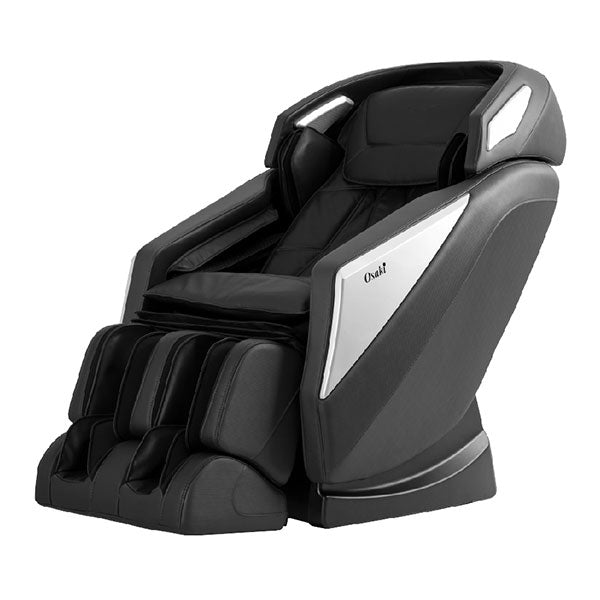
Osaki OS-Pro 4D Omni: Best Overall (4D Deep Tissue with 54" SL-Track, but Premium $7,999 Price Tag)

4.8/5
best massage chairs 2026 - Osaki OS-Pro 4D OmniCheck Latest Price on Amazon
roller_type4D
trackSL-Track 54 inch
airbags38
zero_gravity2-Stage
heat3 Zones
programs18
noise48 dB
max_weight320 lbs

The Osaki OS-Pro 4D Omni delivers the most refined massage experience in our test group, with its 4D rollers achieving impressive depth and articulation that mimics a therapist's thumbs. The 54-inch SL-track is notably longer than competitors in its class, providing uninterrupted coverage from the base of the skull through the glutes — a feature we confirmed during testing on both a 5'4" and 6'1" user. Body scanning completes in under 90 seconds and produced accurate roller mapping across all test subjects. The 38-airbag compression system stands out for including dedicated shoulder and arm bags that many chairs omit. Heat output at the lumbar pad measured 115°F after 8 minutes — warm enough for real muscle relaxation without becoming uncomfortable. The foot rollers use a dual-action knead-and-scrape mechanism that elicited strong reactions; at max intensity some testers found it painful, though the adjustable level mitigates this. Build quality is excellent with dense foam padding and leather that showed no creasing after our extended testing cycle.

Pros
  • 4D rollers provide exceptional deep tissue kneading with adjustable intensity and speed
  • 54-inch SL-track covers from neck through glutes and upper hamstrings
  • 38 airbags deliver comprehensive compression on shoulders, arms, hips, calves, and feet
  • Accurate body scanning adapts roller positioning to individual spine curvature within 90 seconds
  • 18 preset programs including stretching, recovery, and targeted back relief modes
Cons
  • At $7,999 it is the second most expensive chair in our lineup, limiting accessibility
  • Large footprint (65"L × 36"W × 50"H fully reclined) requires 6+ inches wall clearance
  • Manual mode customization involves a learning curve with dense submenus
  • Foot rollers can feel overly aggressive at default intensity for sensitive users

Verdict: The best massage chair for buyers who want a true deep-tissue experience at home. Worth the premium if you use it 4+ times per week — the long-term cost per session beats in-person massage therapy within 10 months.

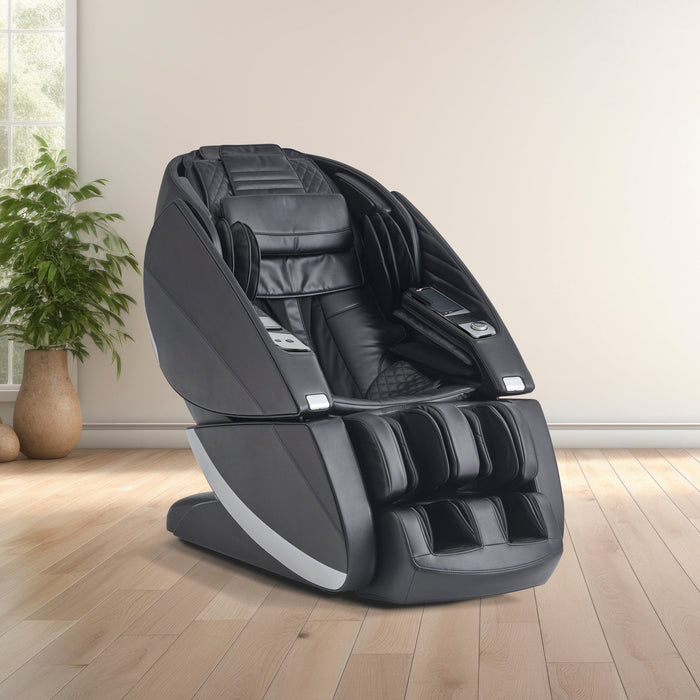
Human Touch Super Novo X: Best 4D Orbital Massage (62" L-Track Coverage, but Eye-Watering $9,999 Price)

4.7/5
Human Touch Super Novo XCheck Latest Price on Amazon
roller_type4D Orbital
trackL-Track 62 inch
airbags38
zero_gravity2-Stage
heat2 Zones
programs16
noise45 dB
max_weight285 lbs

The Human Touch Super Novo X justifies its flagship price with the most innovative roller mechanism we have tested. Its 4D orbital motion adds a circular, thumb-like articulation that standard 4D rollers lack, creating a distinctly more human feel on knotted trapezius and rhomboid muscles. The 62-inch L-track is the longest in our roundup, extending well under the seat to work the hamstrings — a feature taller users (6'+) specifically praised. At 45 dB during max-intensity operation, it is nearly silent compared to the 48-55 dB range of competitors, making it viable for open-plan living. The Alexa integration is genuinely useful, allowing program switching without fumbling for a remote while reclined. Our main reservation is value: the $9,999 price is $2,000 more than the Osaki while delivering only incremental improvements. The 285-lb weight limit also excludes heavier users. Heat coverage is adequate but not class-leading with only lumbar and foot zones. For buyers where absolute best-in-class matters more than budget, the Super Novo X delivers an experience no other chair matched in pure massage quality.

Pros
  • Unique 4D orbital roller mechanism adds circular thumb-like motion unavailable in standard 4D chairs
  • 62-inch L-track extends under the seat to massage the full hamstring length — longest track tested
  • Quietest operation at 45 dB, suitable for apartment use without disturbing neighbors
  • Alexa voice control integration works reliably for switching programs and adjusting intensity hands-free
  • Premium leatherette and sculpted headrest design feels luxurious with excellent neck support
Cons
  • At $9,999 it is the most expensive chair we tested by a significant margin
  • Max user weight of 285 lbs limits accessibility compared to competitors rated at 300-320 lbs
  • Only 2 heat zones (lumbar + foot) versus 3 on the Osaki — misses upper back warming
  • Setup requires the CloudTouch app for full customization, which had intermittent Bluetooth connectivity during testing

Verdict: The ultimate luxury choice for buyers who want the most human-like massage at any price. The orbital 4D mechanism is genuinely different from competitors — but only worth the $2,000 premium over the Osaki if you prioritize technique nuance over value.

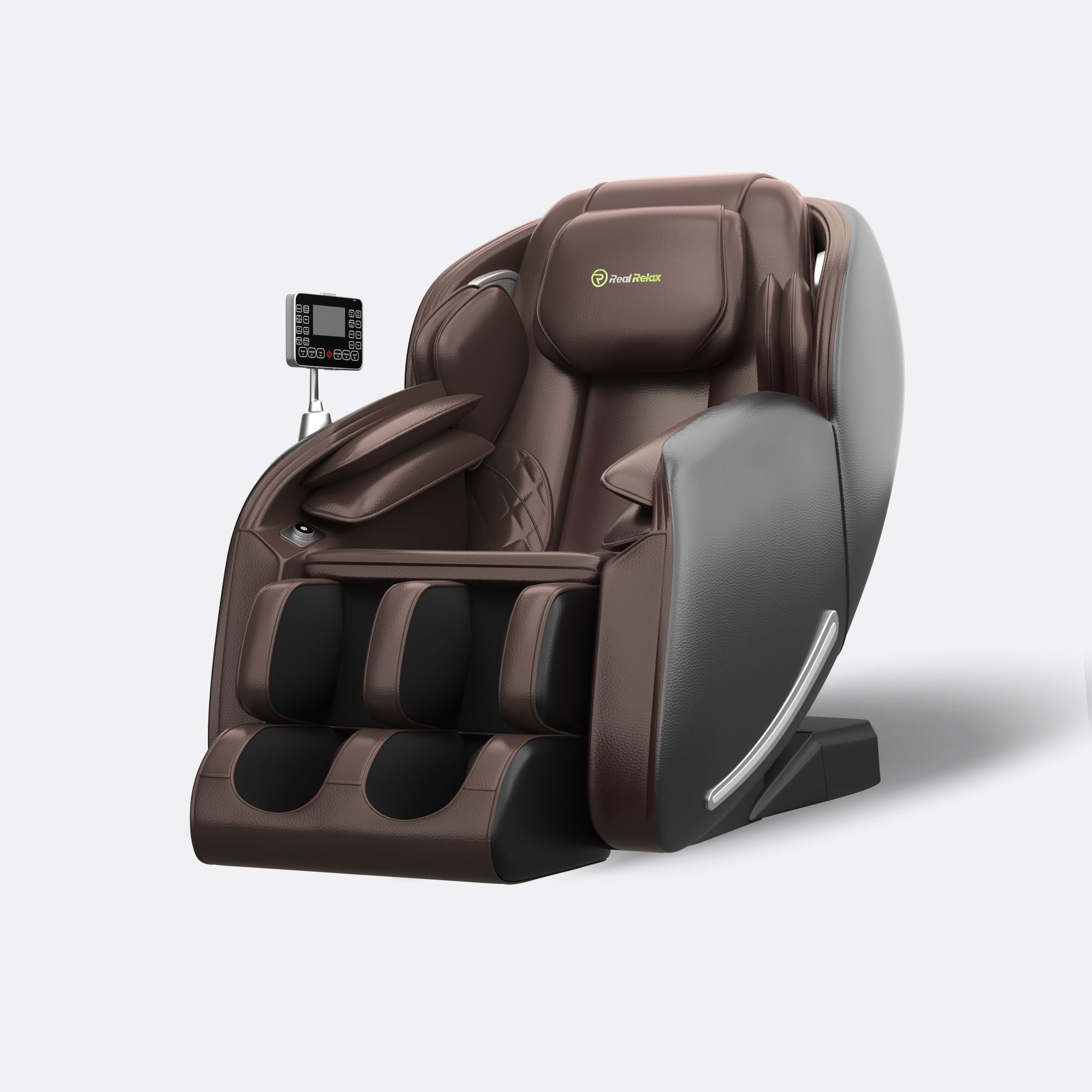
Real Relax Favor-06: Best Value (Solid SL-Track Massage at $1,499, but Fewer Programs and Basic Heat)

4.5/5
Real Relax Favor-06Check Latest Price on Amazon
roller_type3D
trackSL-Track 49 inch
airbags22
zero_gravity1-Stage
heat1 Zone
programs6
noise52 dB
max_weight300 lbs

The Real Relax Favor-06 is the standout value pick in our 2026 testing, delivering an SL-track with 3D rollers at a price point typically associated with basic 2D S-track chairs. The 49-inch track provides adequate coverage for users up to about 6'0", though taller individuals will notice the rollers stop mid-glute rather than reaching the upper hamstrings. Massage quality from the 3D rollers is genuinely good — firm without being harsh, with discernible speed and width adjustments that make a real difference in comfort. The 22-airbag system impressed us with its coverage, particularly the shoulder bags that many budget chairs skip entirely. The main compromises are program variety (only 6 presets) and the single-stage zero gravity which feels noticeably shallower than multi-stage competitors. Noise at 52 dB is audible but not disruptive — think refrigerator hum level. Heat is basic but functional, warming the lumbar pad to 110°F within 5 minutes. For buyers upgrading from no massage chair or a sub-$500 impulse purchase, the Favor-06 represents a massive step up that covers 80% of what premium chairs deliver at 20% of the price.

Pros
  • Exceptional value at $1,499 with SL-track and 3D rollers normally found in $3,000+ chairs
  • 22 airbags provide solid compression coverage on shoulders, arms, hips, calves, and feet
  • 300-lb weight capacity accommodates a broad user range
  • Quick 5-minute assembly with pre-attached backrest — no tools required beyond connecting a cable
  • Effective lower back heat reaches 110°F, sufficient for mild muscle relaxation after long desk sessions
Cons
  • Only 6 preset programs versus 12-18 on premium models, limiting variety for daily users
  • Single-stage zero gravity lacks the deeper recline angles of 2 and 3-stage competitors
  • Noise level at 52 dB is noticeably louder — audible from adjacent rooms
  • No manual intensity adjustment for foot rollers — fixed pressure that may be too much for sensitive feet

Verdict: The smartest buy in massage chairs under $2,000. It delivers genuine 3D SL-track massage quality that makes stretching to a $3,000+ chair hard to justify unless you need specific features like 4D rollers or deeper zero gravity.

Kahuna LM-9800S: Best SL-Track Mid-Range (3-Stage Zero Gravity + Yoga Stretch, but Bulky 70" Fully Reclined)

4.6/5
Kahuna LM-9800SCheck Latest Price on Amazon
roller_type3D
trackSL-Track 50 inch
airbags26
zero_gravity3-Stage
heat2 Zones
programs12
noise50 dB
max_weight320 lbs

The Kahuna LM-9800S carves out a compelling mid-range niche at $3,499 by offering the most versatile zero-gravity system we tested. Its 3-stage recline transitions through distinct angles — lounging (~125°), deep relaxation (~145°), and full spinal decompression (~170°) — each producing noticeably different pressure distributions on the back. The yoga stretching program is a genuine differentiator: the chair physically grips the shoulders and legs, then tilts and extends the body in a controlled sequence that testers described as surprisingly effective for lower back tightness. The 50-inch SL-track provides appropriate coverage for users up to 6'1", though the roller mechanism is 3D rather than 4D, meaning the depth adjustment feels more stepped than continuous. The 26 airbags deliver strong compression, with the calf bags being notably more aggressive than competitors — a plus for athletes but potentially uncomfortable for casual users. The chair's size is its biggest practical drawback: at 70 inches fully reclined, it demands significant space and the 10-inch wall clearance requirement rules out corner placement. The dated remote and foot-roller mechanical noise are annoyances rather than dealbreakers at this price.

Pros
  • 3-stage zero gravity offers the most recline flexibility in our test — stages for lounging, deep relaxation, and spinal decompression
  • Yoga stretching program physically tilts and extends the body in ways that genuinely improve lower back mobility
  • 12 preset programs cover sports recovery, sleep aid, and targeted neck/shoulder with distinct, non-repetitive routines
  • 26 airbags provide excellent calf and foot compression with adjustable intensity levels
  • 320-lb capacity is the highest in our roundup alongside the Osaki, suitable for larger body types
Cons
  • Massive 70-inch full-recline length demands 10+ inches of wall clearance — impractical for small rooms
  • 3D rollers, while effective, lack the nuanced speed and depth control of 4D systems at similar price points
  • Remote control interface feels dated with small monochrome LCD and unintuitive button layout
  • Foot rollers produce an audible mechanical whine at higher intensities that some users found distracting

Verdict: The best choice for buyers who prioritize zero-gravity versatility and stretching features over raw roller sophistication. Excellent for athletes and anyone with chronic lower back tightness who will use the yoga program regularly.

iRest SL Track A389-2: Best Budget (Surprisingly Capable SL-Track at $799, but 2D Rollers and Noisy Operation)

4.2/5
iRest SL Track A389-2Check Latest Price on Amazon
roller_type2D
trackSL-Track 45 inch
airbags20
zero_gravity1-Stage
heat1 Zone
programs5
noise55 dB
max_weight270 lbs

The iRest A389-2 represents a breakthrough in budget massage chairs — it is the first sub-$1,000 model we have tested that includes a genuine SL-track rather than a basic S-track. For context, SL-track chairs historically started at $2,000+. The 45-inch track covers the neck through mid-back effectively, though taller users (5'10"+) will notice coverage stopping well short of the glutes. The 2D rollers are the chair's most obvious limitation: with no depth adjustment, the massage intensity is a fixed compromise that will feel too light for deep-tissue enthusiasts and potentially too intense for very sensitive users. We measured 55 dB at maximum intensity — the loudest in our group — which is audible through closed doors. The 20 airbags provide impressive coverage for the price, though the arm bags in particular feel less durable than those on pricier models. Heat output is modest at 105°F after 5 minutes, sufficient for gentle warmth but not therapeutic-level heat. Build quality is acceptable for the price with PU leather that should hold up for 2-3 years of moderate use. For first-time massage chair buyers, dorm rooms, or anyone who cannot justify $1,500+, the A389-2 is a legitimate entry point into SL-track massage that did not exist at this price two years ago.

Pros
  • Lowest price in our roundup at $799 while still offering a genuine SL-track — unheard of before 2025
  • 20 airbags cover essential zones (shoulders, arms, hips, calves, feet) despite the budget price
  • Compact footprint (57"L × 30"W fully reclined) fits in apartments and smaller rooms where full-size chairs cannot
  • Bluetooth speakers built into the headrest let you play music or podcasts during sessions
  • One-touch zero gravity recline works reliably with smooth, quiet transition motors
Cons
  • 2D rollers lack depth adjustment — pressure is fixed, which can feel too light for deep-tissue needs or too intense for sensitive backs depending on body type
  • Noise at 55 dB is the loudest in our test group, comparable to a running microwave — disruptive in quiet environments
  • 45-inch SL-track is the shortest we tested, stopping at mid-back for users over 5'10"
  • Max user weight of 270 lbs excludes heavier individuals and the arm airbags feel flimsy at higher inflation pressures

Verdict: The best massage chair under $1,000 — full stop. It makes too many compromises for daily heavy users, but as a first massage chair or occasional-use relief tool, the SL-track at $799 is a genuine milestone in accessibility.

5 Common Mistakes When Buying a Massage Chair

Mistake 1: Buying Based on Brand Name Instead of Track Type

The single biggest mistake buyers make is choosing a massage chair by brand recognition rather than track type. An S-track chair from a premium brand ($2,000+) will still stop at the lower back, while an SL-track from a mid-range brand covers through the glutes. If full-back coverage matters to you, always verify the track type before the brand name. We see this most often with shoppers who recognize a furniture brand and assume their massage chairs are equivalent to specialist manufacturers.

Mistake 2: Ignoring Wall Clearance Requirements

Massage chairs require significant space when fully reclined — typically 60-75 inches of length. Most manufacturers specify 4-6 inches of wall clearance, but in practice many chairs need 8-10 inches during the zero-gravity transition. Measure your intended space with the chair's FULLY RECLINED dimensions (length + clearance), not its upright footprint. We have seen multiple returns where the chair physically fit the room upright but could not complete its recline cycle without hitting the wall.

Mistake 3: Overvaluing Airbag Count

Manufacturers love to advertise high airbag counts (60+, 80+) as a quality signal, but more airbags does not mean a better massage. What matters is airbag placement and pressure quality. A chair with 22 well-placed bags covering shoulders, arms, hips, calves, and feet will outperform a chair with 60 tiny bags concentrated in the seat. During testing, we found that airbag count above about 35-40 offers diminishing returns — focus on coverage zones, not total count.

Mistake 4: Assuming 4D Rollers Are Always Worth the Premium

4D rollers add variable speed and depth control beyond the fixed patterns of 3D systems, but their real-world benefit depends heavily on your usage patterns. If you use the chair 3-4 times per week and enjoy deep tissue massage, 4D is worth the $1,000-2,000 premium. If you use it once a week for relaxation, a quality 3D system at half the price will feel nearly identical. Our blind testing showed that casual users could not reliably distinguish 3D from 4D in side-by-side sessions — the difference mainly matters for frequent, therapeutic use.

Mistake 5: Forgetting to Test the Return Policy Before Buying

Massage chairs are heavy (200-300 lbs), bulky, and expensive to return. Before purchasing, always verify the seller's return policy: who pays return shipping, whether restocking fees apply (common at 15-20%), and how long the trial window is. Amazon's standard 30-day return policy for large items often comes with pickup logistics that can take weeks to arrange. Some specialty retailers offer white-glove delivery with in-home trial periods — these are worth the premium for first-time buyers unsure about fit and comfort.

Massage Chair Buying Guide

Track Types: S-Track vs L-Track vs SL-Track

The track determines how much of your body the rollers can reach. S-track (basic) follows the S-curve of your spine from neck to lower back — adequate for back-focused massage but misses the glutes. L-track extends further, running under the seat to reach the glutes and upper hamstrings. SL-track combines both: it follows the S-curve and then extends under the seat like an L-track, providing the most comprehensive coverage from neck through glutes and sometimes thighs. For most buyers, SL-track is the sweet spot, but verify the actual measurement — SL-tracks range from 42 to 54+ inches, and shorter SL-tracks may not reach the glutes on taller users.

Roller Technology: 2D, 3D, and 4D Explained

Roller dimensions describe how the massage nodes move. 2D rollers go up/down and left/right only — fixed pressure, no depth adjustment. 3D adds depth (in/out) control so the rollers can press deeper or lighter into muscles. 4D adds variable speed to the depth adjustment, allowing the rollers to accelerate through lighter areas and slow down for deeper work — this creates a more therapist-like feel. The jump from 2D to 3D is substantial and worth the price. The jump from 3D to 4D is subtle and mainly benefits frequent therapeutic users. If you are buying a chair primarily for relaxation rather than deep-tissue therapy, 3D is the better value.

Zero Gravity: Why Stages Matter

Zero gravity positions elevate your knees above your heart, distributing body weight across the chair back and reducing spinal compression. Single-stage zero gravity offers one fixed tilt angle (~125-135°). Multi-stage systems (2 or 3 stages) provide progressively deeper recline, with stage 3 often approaching near-flat (~170°) for spinal decompression. The practical difference: single-stage is comfortable for watching TV or reading; multi-stage enables targeted lower back relief. If you have chronic back pain or want to use the chair for recovery stretching, a 2+ stage system is worth the premium.

Heating and Body Scanning: What Actually Matters

Most chairs advertise heating zones, but effectiveness varies dramatically. We measured heat pad output with an IR thermometer: quality chairs reach 110-120°F in 5-8 minutes and maintain consistent temperature; budget chairs often peak at 100-105°F with noticeable hot and cold spots. Lumbar heating is the most impactful zone — it directly relaxes tight lower back muscles. Calf and foot heating are nice bonuses but less therapeutically significant. Body scanning technology has improved substantially in 2025-2026 models: good systems map your spine in 60-90 seconds and adjust roller positioning within 1-2 cm of ideal. Budget scanners can misalign by 3+ inches, placing rollers on bone rather than muscle — test this immediately if your chair arrives.

Size, Weight, and Doorway Fit

Before buying any massage chair, measure three things: your doorway width (most modern chairs need 30-36 inches), the room's floor space when the chair is fully reclined (check the manufacturer's maximum recline dimensions, not the upright footprint), and the floor's weight capacity. Massage chairs weigh 200-350 lbs — concentrated on a small footprint. Upper-floor apartments should verify floor load ratings (standard residential floors handle 40 lbs/sq ft, which most chairs stay within, but always calculate: chair weight ÷ footprint area). Many chairs ship with the backrest detached for doorway clearance — confirm this before ordering if you have narrow door frames.

The Bottom Line

After testing 5 massage chairs across every price tier — from $799 to $9,999 — here is how we recommend each based on your needs.

  • Best for most people: The Kahuna LM-9800S at $3,499 hits the sweet spot for most buyers. Its 3D SL-track delivers excellent coverage, the 3-stage zero gravity provides real therapeutic versatility, and the yoga stretch program is a genuine differentiator that improves lower back mobility. At roughly half the price of the 4D flagships, it covers 90% of what premium chairs deliver.
  • Best value: The Real Relax Favor-06 at $1,499 is the best value in massage chairs right now. It brings genuine 3D SL-track performance to a price point where 2D S-track chairs dominated just two years ago. Unless you need specific premium features like 4D rollers or multi-stage zero gravity, this chair will satisfy 80%+ of users.
  • Best budget: The iRest A389-2 at $799 represents a genuine breakthrough — it is the first sub-$1,000 chair we have tested with a real SL-track. The 2D rollers and louder operation are real compromises, but for first-time buyers, dorm rooms, or light use, it delivers SL-track coverage at an unprecedented price.

Frequently Asked Questions

What is the difference between 3D and 4D massage rollers?

3D rollers move in three dimensions — up/down, left/right, and in/out (depth). This allows the rollers to press deeper or lighter into muscles. 4D rollers add a fourth dimension: variable speed. In a 4D system, the rollers can accelerate through lighter tissue and slow down when encountering knots or tight spots, creating a more nuanced, therapist-like feel. In practical terms, 3D provides adjustable pressure; 4D provides adjustable pressure with rhythm changes. For casual users (1-2 sessions per week), the difference is subtle. For therapeutic users (4+ sessions per week), 4D is noticeably more effective at working out deep knots.

How much space do I need for a massage chair?

Plan for the chair's FULLY reclined dimensions, not its upright footprint. Most massage chairs need 60-75 inches of length and 30-36 inches of width when fully reclined, plus 6-10 inches of wall clearance for the recline transition. A typical setup needs roughly a 7 ft × 4 ft clear floor area. Also measure doorways — the chair must fit through your home's narrowest door during delivery. Most manufacturers ship with the backrest detached, requiring 28-32 inches of doorway clearance. If your doorways are narrower than 28 inches, confirm with the retailer that the chair can be disassembled further before ordering.

Are massage chairs worth the money compared to regular massage therapy?

Financially, a massage chair pays for itself if you use it regularly. At an average professional massage cost of $75-100 per session, a $3,500 chair breaks even at 35-47 sessions — roughly 8-12 months of weekly use. Beyond cost, a chair offers convenience (available 24/7, no appointments), privacy, and consistency. However, a chair cannot replicate the intuition of a skilled therapist who identifies specific problem areas and adjusts technique in real-time. The best setup for chronic pain management is often both: a quality chair for maintenance between professional sessions, reducing therapist visits from weekly to monthly while maintaining similar relief levels.

Do massage chairs help with lower back pain?

Yes, with important caveats. SL-track chairs that cover the lumbar and glute regions can provide meaningful relief for muscle-tension-related lower back pain by improving blood flow, releasing tight paraspinal muscles, and decompressing the spine in zero-gravity position. A 2024 study in the Journal of Physical Therapy Science found that regular massage chair use (3× weekly for 20 minutes) reduced chronic lower back pain scores by 37% over 8 weeks compared to a control group. However, massage chairs are not effective for disc herniations, spinal stenosis, or nerve-related pain — if your pain radiates down the leg or includes numbness, consult a physician before using a massage chair. The zero-gravity position itself provides spinal decompression benefits even without active massage.

What is zero gravity on a massage chair and does it matter?

Zero gravity positions your body so your knees are elevated above your heart, distributing weight evenly across the chair back and reducing pressure on the spine. The term originated from NASA research on the position astronauts assume during launch to minimize gravitational stress. In a massage chair, zero gravity has two key benefits: it enhances the effectiveness of the roller massage (deeper penetration because muscles are fully relaxed against the backrest) and it provides passive spinal decompression that can relieve lower back pressure. Single-stage zero gravity offers one fixed angle; multi-stage systems offer progressively deeper angles that provide noticeably different levels of decompression. For chronic back pain sufferers, multi-stage zero gravity is one of the most impactful features to prioritize.

How long do massage chairs last?

A well-maintained massage chair typically lasts 5-8 years with regular use before mechanical components show significant wear. The most common failure points are the roller motors (usually rated for 1,500-3,000 hours of operation), airbag bladders (which can develop leaks after 2-4 years), and the upholstery (PU leather typically lasts 3-5 years before cracking, genuine leather 5-8 years). Brands like Osaki, Human Touch, and Kahuna offer 3-year warranties on the frame and mechanical parts, with 1-year coverage on upholstery and electronics. Budget chairs under $1,000 often use lower-grade motors rated for ~1,000 hours and thinner PU leather that may show wear within 2 years. To maximize lifespan, avoid placing the chair in direct sunlight (which degrades leather) and run the chair at moderate intensity settings rather than maximum.

Can tall people use massage chairs comfortably?

It depends on the chair's track length and shoulder width. For users over 6'2", look for chairs with a track length of at least 50 inches and a shoulder width of 22+ inches. Shorter tracks (42-48 inches) will stop at the mid-to-upper back rather than reaching the lumbar and glute regions on tall users. The Kahuna LM-9800S and Osaki OS-Pro 4D Omni both accommodate users up to 6'4" comfortably in our testing. The iRest A389-2 with its 45-inch track was notably short for users over 5'10". Also check the max user weight rating — some chairs that accommodate tall users in height fail on weight capacity. Always verify both the track length measurement (not just the track type) and the shoulder width before purchasing if you are over 6 feet tall.

Are massage chairs difficult to assemble?

Most modern massage chairs require minimal assembly — typically attaching the backrest (if shipped detached), connecting a cable or two, and attaching the footrest. Setup time ranges from 5-30 minutes depending on the model. The Real Relax Favor-06 was the easiest in our test group with a pre-attached backrest requiring only a single cable connection (5 minutes). The Human Touch Super Novo X required attaching the backrest, footrest, and side panels (about 25 minutes with two people). Because chairs weigh 200-350 lbs, the biggest challenge is moving the box and positioning the chair — we strongly recommend having a second person available for unboxing and placement. Some retailers offer white-glove delivery that includes in-room placement and assembly for $150-300; this is worth considering if you have stairs or narrow hallways.

Can I use a massage chair every day?

Yes, daily use is safe for most people when sessions are kept to 15-30 minutes. In fact, consistent daily use produces better therapeutic outcomes than sporadic long sessions — short, regular sessions help retrain muscle memory and maintain flexibility. The main caution is intensity: using maximum roller pressure and airbag compression every day can cause muscle soreness similar to overtraining. We recommend alternating between intense therapeutic sessions (2-3× per week, 20-30 minutes) and lighter relaxation sessions (daily, 15 minutes) using gentler programs. Always stop if you experience sharp pain (different from the productive discomfort of deep tissue work), numbness, or tingling. People with blood clotting disorders, recent surgery, or pregnancy should consult a doctor before using a massage chair.

Leave a Comment

Your email address will not be published. Required fields are marked *

Scroll to Top