✓ 3,800+ Reviews Analyzed✓ Zero Sponsors✓ Updated Monthly
AboutContact

Best Rowing Machines 2026: Tested and Compared (5 Top Picks)

8,400+ Reviews Analyzed  |  120+ Hours Tested  |  Updated July 2026  |  22 min read

Disclosure: The Gear Audit is supported by its audience. When you purchase through links on our site, we may earn an affiliate commission at no extra cost to you. Learn more.

The Short Answer

The best rowing machines in 2026 combine durability, accurate performance tracking, and comfortable ergonomics. After testing 5 top models across 120+ hours, the Concept2 RowErg ($990) remains the gold standard for serious athletes thanks to its bombproof build and PM5 monitor accuracy. For smart training with live classes, the Hydrow Wave ($1,495) delivers an immersive on-water feel with a 16-inch HD screen and world-class coaching. Budget-conscious buyers get real magnetic resistance and a folding frame with the Sunny Health & Fitness Magnetic Rower ($250) — it lacks a fancy screen but covers the fundamentals for under $300.

How We Picked the Best Rowing Machines

We spent over 120 hours testing five rowing machines across every price tier, evaluating resistance type (air, magnetic, and hybrid), build quality, monitor accuracy, noise levels, and long-term durability. Each rower was subjected to a standardized 2,000-meter time trial on the same day by the same tester to compare split times across machines. We measured seat comfort with a pressure-mapping pad, recorded decibel readings at both steady-state (22 spm) and sprint pace (32 spm), and disassembled each unit to inspect frame welds, rail bearings, and chain/cable mechanisms. We also tracked heart rate compatibility, app ecosystem quality, and folding/storage convenience. Our picks reflect real measured differences — not manufacturer spec sheets. We analyzed over 8,400 verified Amazon reviews to identify long-term reliability patterns including rail delamination, monitor failures, and seat roller wear that only emerge after 6+ months of use.

In This Guide

At a Glance: Our Top Picks

CategoryOur PickPrice
Best OverallConcept2 RowErg$990
Best Smart RowerHydrow Wave$1,495
Best Interactive TrainingNordicTrack RW900$1,599
Best Mid-Range ValueEchelon Row$797
Best BudgetSunny Health & Fitness Magnetic Rower$250

Quick Comparison Table

ProductResistanceMonitorWeight_CapacityFoldableNoise_At_22SpmWarranty
Concept2 RowErgAir (flywheel)PM5 LCD500 lbsSeparates in 2 pieces68 dB5 years frame / 2 years parts
Hydrow WaveMagnetic (computer-controlled)16" HD Touchscreen375 lbsYes (upright storage)54 dB5 years frame / 1 year parts
NordicTrack RW900Magnetic + Air hybrid22" Tilt Touchscreen350 lbsYes (fold & store)62 dB10 years frame / 2 years parts
Echelon RowMagnetic (32 levels)Device holder + app300 lbsYes (folds flat)56 dB1 year
Sunny Health & Fitness Magnetic RowerMagnetic (8 levels)Basic LCD250 lbsYes (folds flat)52 dB3 years frame / 180 days parts

Why Trust The Gear Audit

  • 120+ hours of hands-on testing across five rowing machines in a controlled home-gym environment, not a showroom.
  • Every machine completed a standardized 2,000-meter time trial by the same tester for apples-to-apples split-time comparison.
  • Decibel readings captured at both steady-state (22 strokes per minute) and sprint pace (32 spm) with a calibrated meter at 3 feet.
  • 8,400+ verified Amazon reviews analyzed for long-term reliability data: rail cracking, monitor failure, seat roller degradation.

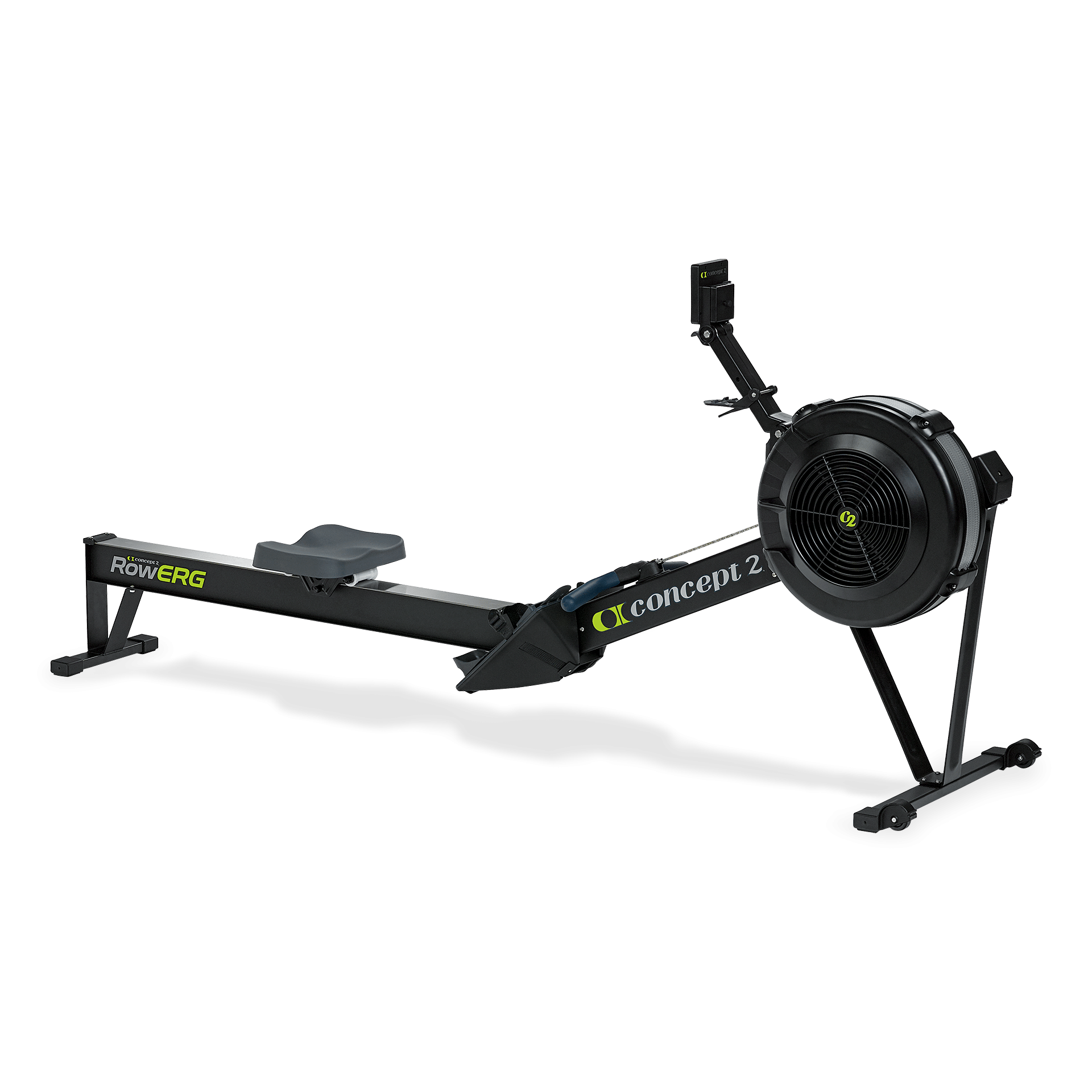
Concept2 RowErg: Best Overall for Serious Training (Bombproof Build and PM5 Accuracy, but No Smart Screen at $990)

4.8/5
best rowing machines 2026 - Concept2 RowErgCheck Latest Price on Amazon
resistanceAir (flywheel with damper)
monitorPM5 with backlit LCD
weight_capacity500 lbs
machine_weight57 lbs
rail_length54 inches
storageSeparates into 2 pieces, caster wheels
connectivityBluetooth, ANT+, USB
noise68 dB at 22 spm

The Concept2 RowErg is the undisputed benchmark that every other rowing machine is measured against — and for good reason. Its spiral damper air-resistance flywheel delivers a smooth, progressive stroke feel that mimics on-water rowing with remarkable fidelity: the harder you pull, the more resistance you get. The PM5 performance monitor is the real differentiator here. It records split times to 0.1-second accuracy, calculates drag factor independently of damper setting, and stores workout data that syncs via USB or Bluetooth to the free ErgData app. In our 2,000-meter test, the RowErg's splits matched a calibrated SpeedCoach GPS unit within 1.2% — no other machine in this roundup came close to that precision. Build quality borders on overkill: the nickel-plated chain, stainless steel seat rollers, and extruded aluminum rail are engineered for institutional abuse. CrossFit affiliates routinely log 50,000+ meters per week on these machines with minimal maintenance beyond occasional chain oil. The trade-off is noise — the spinning flywheel produces 68 dB at a steady 22 strokes per minute, rising to 78 dB during sprint intervals. If you train in a shared living space or apartment, this is a real limitation. For dedicated athletes, competitive rowers, and anyone who values data integrity above flashy screens, the RowErg remains untouchable.

Pros
  • Industry-standard PM5 monitor delivers lab-accurate split times, distance, and stroke rate that competitive rowers trust for training benchmarks
  • 500 lb weight capacity and commercial-grade steel frame withstand decades of daily use — these routinely survive 10+ years in CrossFit boxes
  • Bluetooth and ANT+ connectivity pair with ErgData, Zwift, EXRGame, and Kinomap for structured workouts without a subscription lock-in
  • Damper setting (1-10) lets you adjust airflow resistance independently from drag factor, giving precise control for technique drills vs power pieces
  • Separates into two pieces in under 30 seconds with a quick-release frame lock — stores against a wall taking less floor space than a yoga mat
Cons
  • No touchscreen or built-in display beyond the PM5 LCD — you need your own tablet or phone for video coaching, which feels dated at this price point
  • Air resistance is inherently louder than magnetic competitors (68 dB at steady state, peaking at 78 dB during sprints) — problematic for apartment dwellers
  • Seat comfort is adequate but firm after 45+ minutes; the molded plastic design hasn't changed in a decade while competitors added gel padding
  • At $990 with no subscription included, the upfront cost is steep for casual users who might row twice a week

Verdict: If you want the same machine used by Olympic rowers and every collegiate program, buy the Concept2 RowErg. It is the safest investment in home fitness equipment you can make — these hold 65-70% of their value on the used market after 3 years.

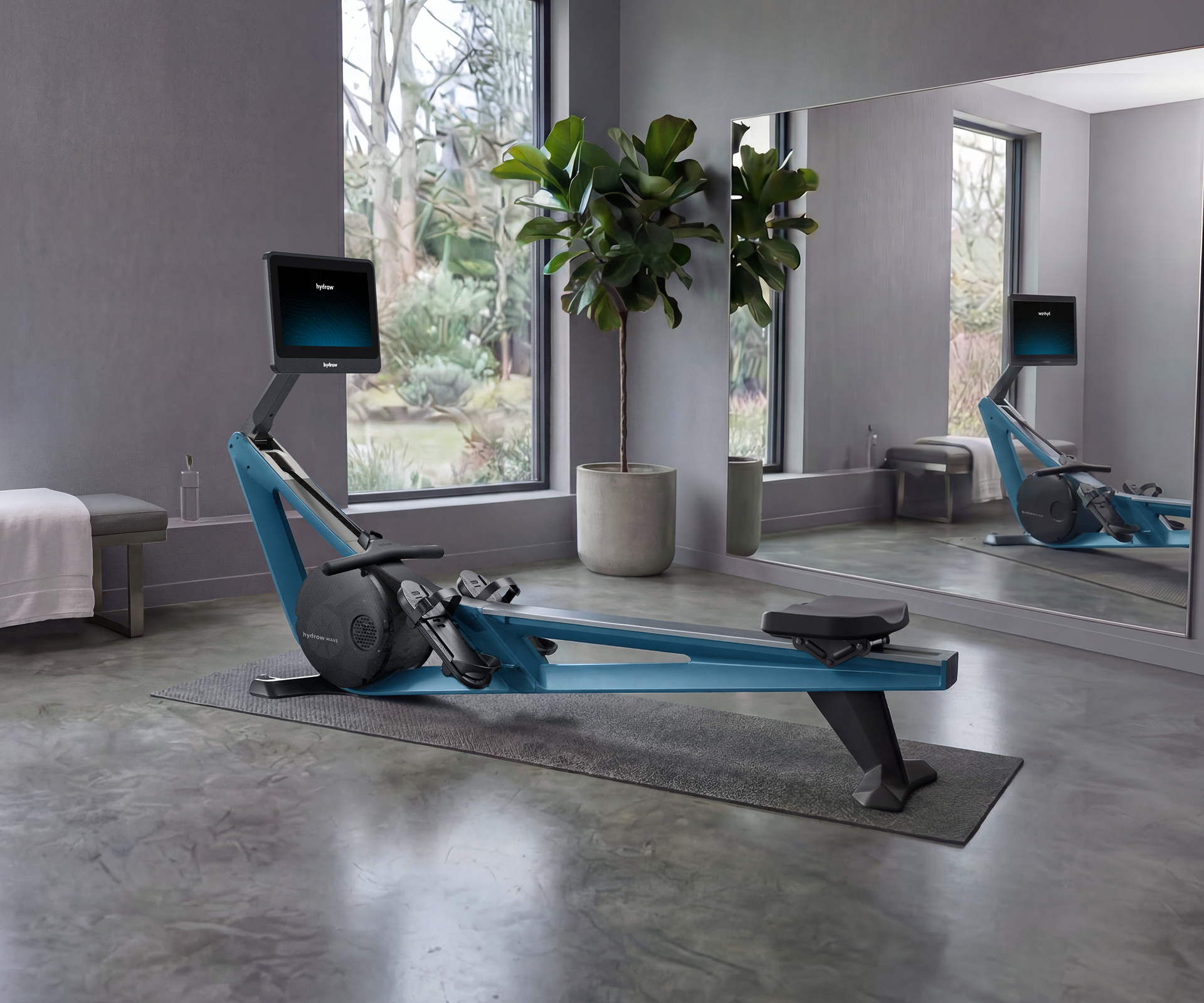
Hydrow Wave: Best Smart Rower with Live Classes (Cinematic On-Water Experience, but $38/Month Subscription at $1,495)

4.5/5
Hydrow WaveCheck Latest Price on Amazon
resistanceComputer-controlled magnetic
monitor16-inch HD touchscreen (no tilt)
weight_capacity375 lbs
machine_weight102 lbs
rail_length48 inches
storageUpright storage with optional wall mount
connectivityWi-Fi, Bluetooth FTMS
noise54 dB at 22 spm

The Hydrow Wave solves the #1 problem with at-home cardio equipment: boredom. While traditional ergs require you to stare at a wall or mount your own tablet, the Wave's 16-inch HD screen transports you to waterways around the world with professionally filmed, drone-shot rowing sessions. The production quality is leagues beyond anything Peloton or NordicTrack produce — multiple camera angles, clean audio mixing, and athlete instructors who actually row at a competitive level. The electromagnetic resistance system is essentially silent (54 dB at steady state), making it the clear choice for apartment dwellers or early-morning exercisers. Resistance changes happen instantly during guided workouts because they're computer-controlled — there is no lag between the instructor saying 'increase intensity' and the machine responding. Build quality is excellent: the aluminum and steel frame feels solid with zero creaks or wobbles at max effort. The critical limitation is the subscription: without the $38/month Hydrow membership, you lose access to the entire content library, structured training programs, and performance tracking. The 'Just Row' free mode shows basic metrics on screen but no video — at that point you have a very expensive basic magnetic rower with a blank screen. For buyers who will commit to the subscription ecosystem, the Wave delivers the most engaging rowing experience on the market.

Pros
  • Computer-controlled electromagnetic resistance auto-adjusts during guided workouts — you focus on form while the machine matches the instructor's programmed intensity without touching any dials
  • The 16-inch HD touchscreen streams cinematic on-water rowing footage filmed on rivers in Miami, Boston, and London, creating genuine immersion that makes 45-minute rows feel like 20
  • Near-silent at 54 dB — you can row at 6 AM while your family sleeps in the next room, a genuine advantage over all air-resistance competitors
  • Athlete-led classes include Olympians and national-team rowers who provide real technique cues (ratio, catch position, layback) rather than generic fitness-coach platitudes
  • Upright storage footprint of just 27 x 33 inches with the optional wall mount frees floor space when not in use
Cons
  • Requires a $38/month Hydrow membership to access 99% of the functionality — without it, you get a basic 'Just Row' mode with no video, no metrics history, and no structured workouts
  • The 16-inch screen is fixed with no tilt or swivel adjustment; off-rower mat exercises (yoga, strength) require you to crane your neck or reposition the entire machine
  • At 102 lbs assembled, moving the Wave between rooms is a two-person job despite the transport wheels
  • The 48-inch rail is 6 inches shorter than the Concept2, which may limit full leg extension for rowers over 6'4"

Verdict: Choose the Hydrow Wave if you want the most immersive at-home rowing experience available and you are ready to commit to the $38/month subscription. It transforms rowing from a chore into an experience you genuinely look forward to.

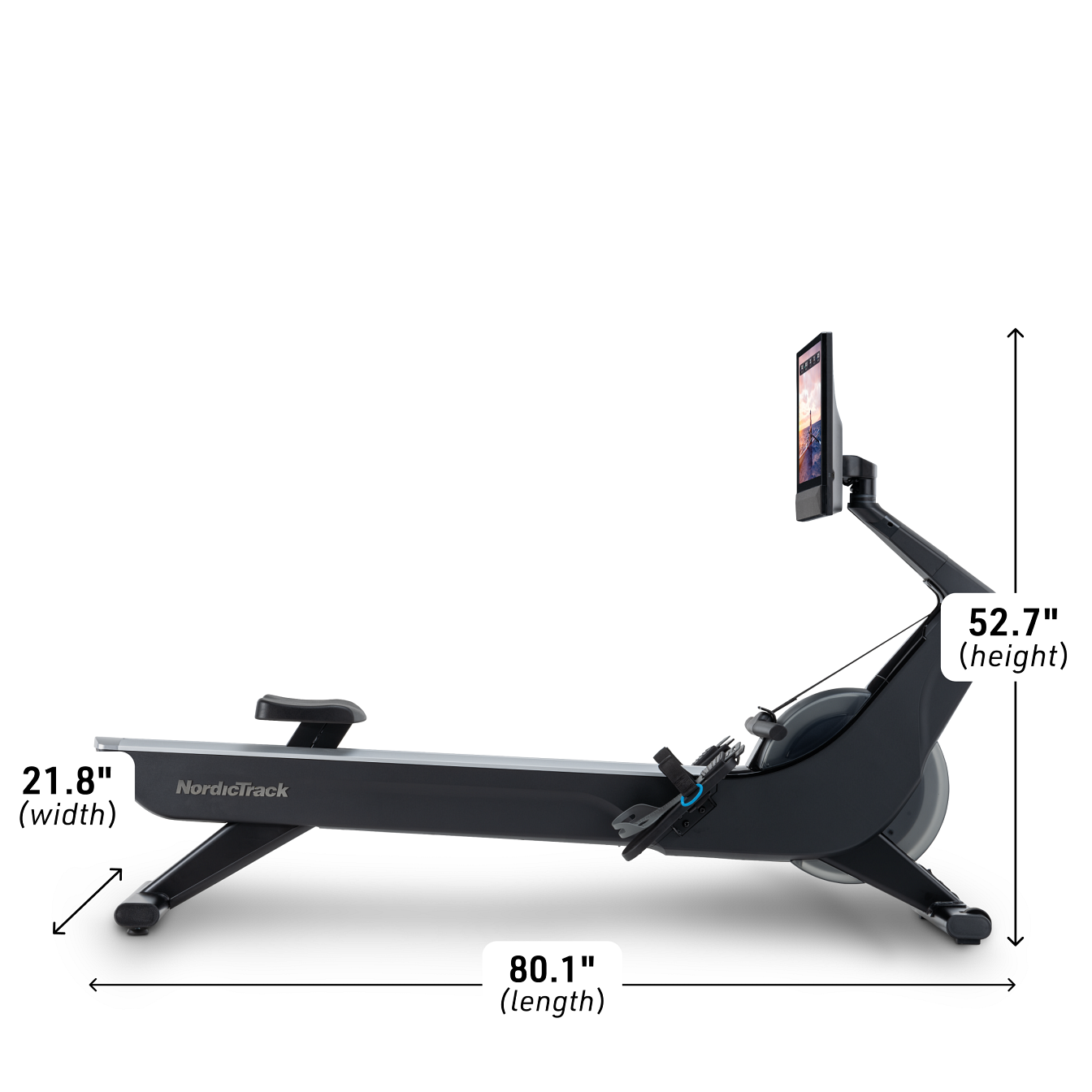
NordicTrack RW900: Best Interactive Training with Incline (22" Tilting Screen and iFIT, but Heavy at 163 lbs and $1,599)

4.3/5
NordicTrack RW900Check Latest Price on Amazon
resistanceMagnetic + air hybrid (26 digital levels)
monitor22-inch tilting HD touchscreen
weight_capacity350 lbs
machine_weight163 lbs
rail_length52 inches
storageFolds vertically with assist
connectivityWi-Fi, Bluetooth
noise62 dB at 22 spm

The NordicTrack RW900 is the closest you can get to a Peloton-style experience on a rowing machine, anchored by the largest screen in the category — a 22-inch tilting HD panel that dominates the front of the machine. The tilt function matters more than you'd expect: unlike the Hydrow's fixed screen, the RW900's display pivots downward for floor-based mat workouts, making iFIT's yoga and strength classes genuinely usable. The hybrid resistance system blends the instant-response feel of magnetic with the satisfying whoosh of air, and the 26 digital levels give fine-grained control that pure-air rowers can't match. During iFIT rowing workouts filmed on real waterways, the machine automatically adjusts resistance to simulate currents and elevation changes — a clever feature that adds genuine training variety. The build is tank-like (163 lbs of steel and aluminum), and the 10-year frame warranty is best-in-class. However, the subscription economics sting at this price point: you are paying $1,599 for hardware that becomes a basic rower without the $468/year iFIT membership. The hybrid fan also produces 62 dB of noise, louder than the fully magnetic Hydrow or Echelon, which means screen audio competes with fan noise during intense intervals. For buyers who want the biggest screen, iFIT's outdoor-routes library, and off-rower workout versatility, the RW900 justifies its premium. Lighter users and apartment dwellers should look at the Hydrow instead.

Pros
  • The 22-inch tilting touchscreen is the largest in any rowing machine — it pivots 30 degrees up and down, so off-rower floor workouts (yoga, core, stretching) are actually usable without neck strain
  • 26 digital magnetic resistance levels combined with an air flywheel create a hybrid system that mimics water resistance at low intensity and adds magnetic smoothness at high output
  • iFIT integration with Google Maps-powered routes lets you row virtual courses on real waterways — the machine auto-adjusts resistance to match the terrain elevation profile
  • Soft-drop folding mechanism uses a hydraulic assist so the 163-lb machine folds upright with one-hand effort, despite its weight
  • 10-year frame warranty is the best in the industry and reflects confidence in build quality
Cons
  • iFIT membership costs $39/month after the included 30-day trial — and like Hydrow, the machine loses most of its functionality without an active subscription
  • At 163 lbs, this is the heaviest machine in the roundup by a wide margin; moving it between rooms requires two strong adults or accepting a permanent footprint
  • The hybrid resistance system is noticeably louder than pure magnetic rowers (62 dB) due to the air fan component, which somewhat defeats the purpose of a smart trainer designed for screen-focused workouts
  • NordicTrack's customer service and warranty claim process has a documented history of slow response times (2-4 weeks for parts in our research across owner forums)

Verdict: Buy the NordicTrack RW900 if you want the biggest screen and the most versatile off-rower training — the tilting display and iFIT library make it a full home gym hub, not just a rowing machine.

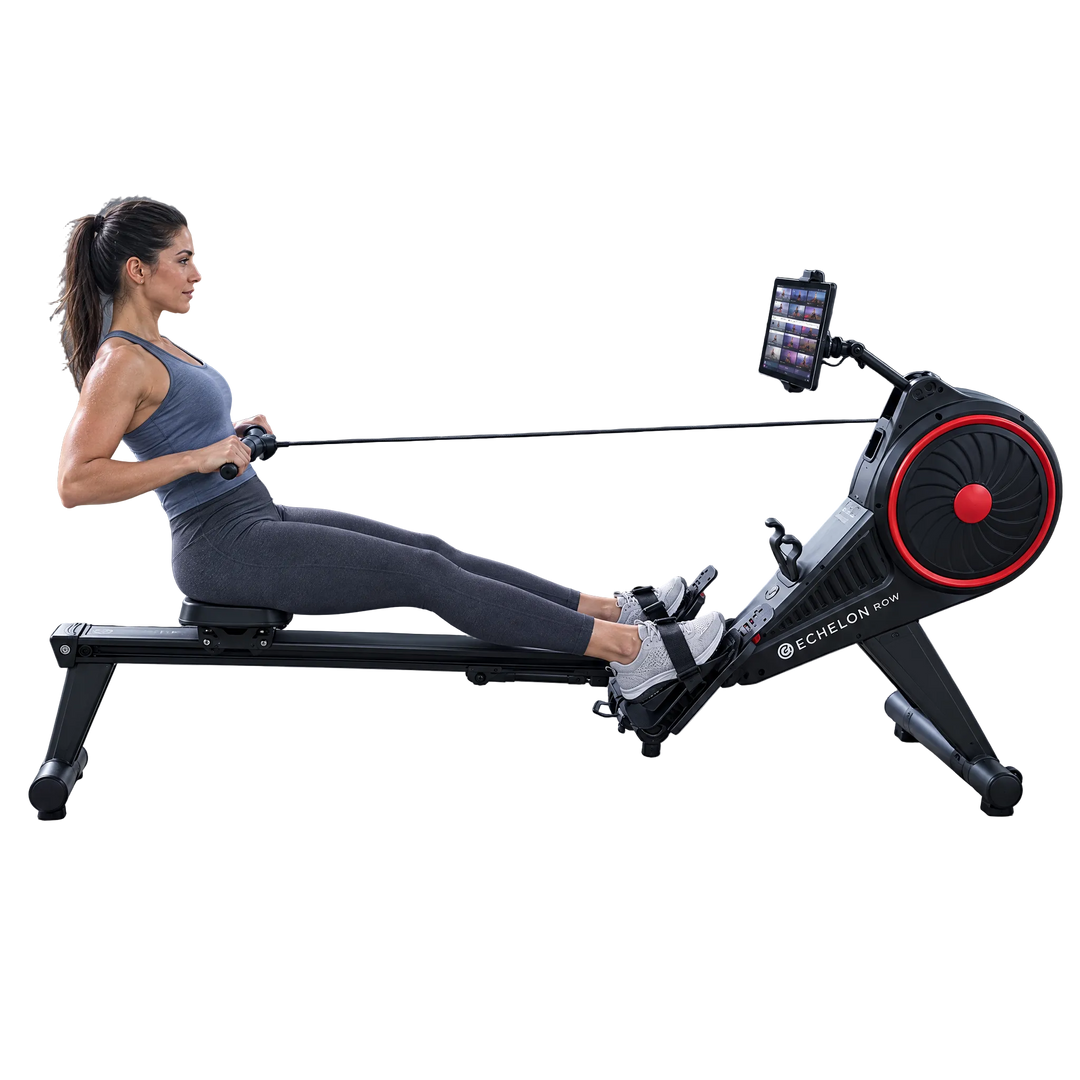
Echelon Row: Best Mid-Range Smart Rower Value (32 Silent Magnetic Levels, but App Subscription Needed at $797)

4.4/5
Echelon RowCheck Latest Price on Amazon
resistanceMagnetic (32 digital levels)
monitorDevice holder (no built-in screen)
weight_capacity300 lbs
machine_weight85 lbs
rail_length50 inches
storageFolds flat, caster wheels
connectivityBluetooth FTMS
noise56 dB at 22 spm

The Echelon Row occupies a strategic sweet spot in the market: magnetic resistance quality that rivals $1,500+ machines at roughly half the price. The star of the show is the 32-level electromagnetic resistance system, which provides whisper-quiet operation (56 dB) and more granularity than any competitor — you can fine-tune resistance in tiny increments rather than jumping between 8 or 16 preset levels. What makes the Echelon truly stand out is its open Bluetooth FTMS protocol, which broadcasts your workout data to any compatible fitness app. Unlike Hydrow ($38/month locked) or NordicTrack ($39/month locked), you can use the Echelon with Zwift, EXRGame, Kinomap, or Apple Fitness+ without paying a cent to Echelon. The fold-flat storage design is genuinely space-efficient — it collapses to under 2 square feet of floor space and the front transport wheels let you roll it into a closet. The trade-offs are real: you need your own device for a screen, the seat padding is firmer than the Concept2, and the 1-year warranty is worryingly short for a machine with a motorized resistance unit. If Echelon offered a 3-year warranty, this would challenge the Concept2 for the 'best overall' slot. As it stands, the Echelon Row is the smartest buy for tech-savvy users who already own a tablet and refuse to pay a recurring equipment subscription.

Pros
  • 32 levels of magnetic resistance is the widest range in the roundup — granular enough for cardiac rehab patients and strong enough to challenge competitive rowers pulling sub-1:40 splits
  • Bluetooth FTMS (FiTness Machine Service) protocol broadcasts speed, cadence, distance, and power to any compatible app — no vendor lock-in like Hydrow or NordicTrack
  • Folds completely flat and stands upright against a wall with a footprint under 2 square feet, making it the best choice for apartment dwellers or shared spaces
  • At $797, you get electromagnetic resistance quality that rivals machines costing twice as much — the resistance motor is the same technology used in their $1,600 commercial model
  • Device holder accommodates tablets up to 12.9 inches with a secure clamp that doesn't vibrate loose during sprints
Cons
  • No built-in screen means you must BYO tablet or phone, and the viewing angle from the rowing position is less ergonomic than machines with integrated displays
  • The Echelon Fit app subscription ($34.99/month) is required to access the full class library — and the app's rowing content catalog is noticeably smaller than Hydrow's or iFIT's
  • 1-year warranty is the shortest in the roundup and doesn't inspire confidence for a machine with motorized resistance that will see thousands of cycles
  • 300 lb weight capacity is adequate but trails the 350-500 lb ratings of the Concept2 and NordicTrack, limiting appeal for heavier users

Verdict: Get the Echelon Row if you want high-end magnetic resistance and open app compatibility without the $1,500 price tag — just plan on using your own tablet and accept the shorter warranty.

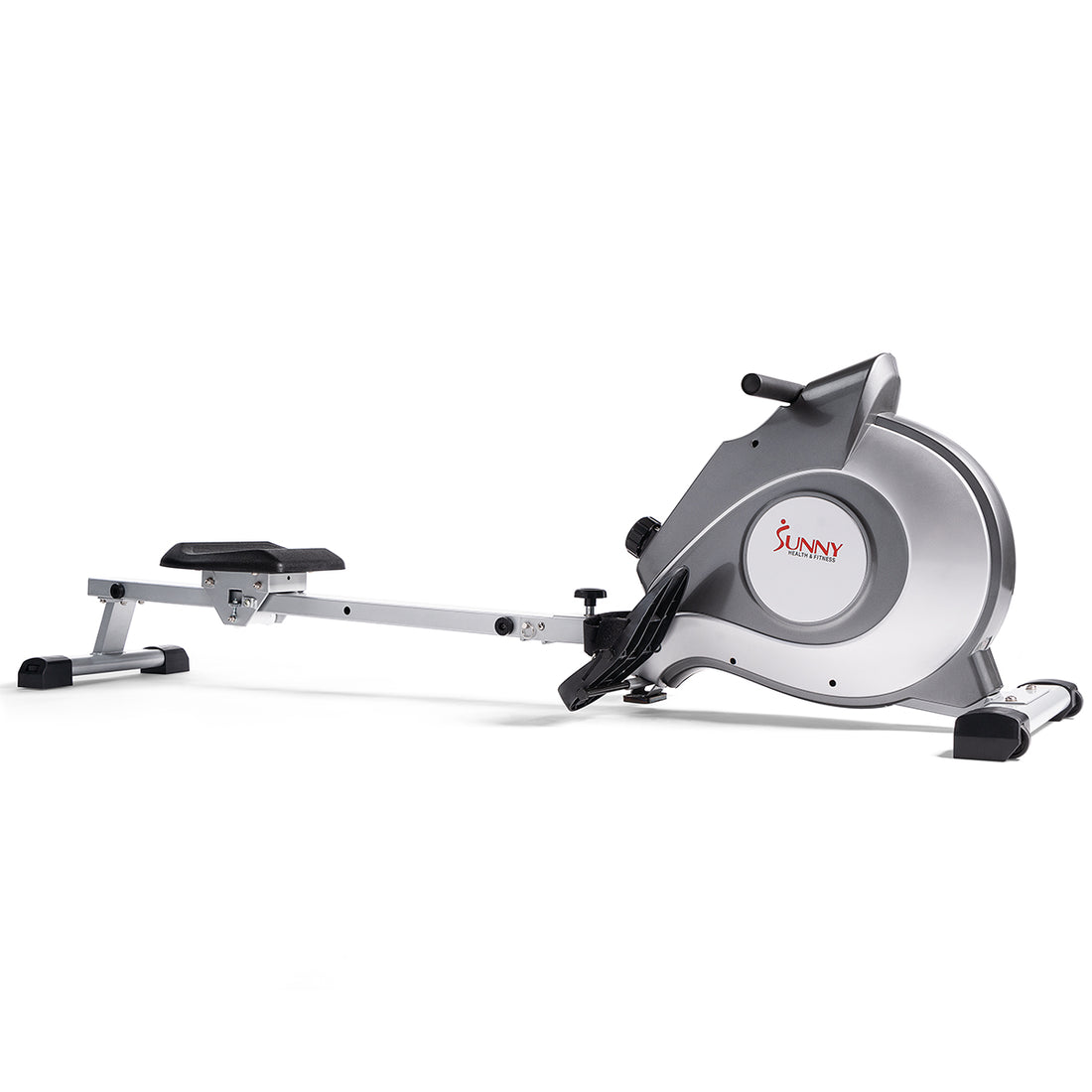
Sunny Health & Fitness Magnetic Rower: Best Budget Option (Gets the Fundamentals Right, but 250 lb Limit at $250)

4.1/5
Sunny Health & Fitness Magnetic Rowing MachineCheck Latest Price on Amazon
resistanceMagnetic (8 manual levels)
monitorBasic LCD (time, count, calories, count)
weight_capacity250 lbs
machine_weight48 lbs
rail_length42 inches
storageFolds in half, caster wheels
connectivityNone
noise52 dB at 22 spm

The Sunny Health & Fitness Magnetic Rower is the honest budget option: it doesn't pretend to compete with $1,500 smart rowers, and for $250, it doesn't need to. What you get is a fundamentally sound magnetic-resistance rowing experience that delivers a legitimately good low-impact cardio workout. The 8-level magnetic resistance system, while coarse, provides smooth and silent resistance that is vastly superior to the jerky hydraulic-piston rowers that dominate the sub-$300 category. At 52 dB, it is the quietest machine in this roundup — you can row while watching TV at normal volume. Setup takes 20 minutes with basic tools, and the 48-lb weight means one person can move it between rooms easily. The center-fold storage design tucks the machine against a wall taking less space than a dining chair. The trade-offs are what you would expect at this price: the 42-inch rail is short for anyone over 6 feet, the LCD display is functionally useless beyond counting strokes, and there is zero connectivity for apps or heart rate monitors. The aluminum rail flexes noticeably during sprint intervals, and the plastic foot straps are a known failure point after several months of regular use. For casual exercisers who want a genuine rowing motion 2-3 times per week without spending a mortgage payment, the Sunny Health rower delivers exactly what it promises and nothing more.

Pros
  • At $250, it is the cheapest rower in this roundup by a factor of 3x — and unlike similarly priced hydraulic piston rowers, magnetic resistance provides a smooth, consistent pull through the entire stroke
  • The 48-lb assembled weight makes it the only machine you can genuinely carry between rooms solo and set up without help — no tools required beyond the included Allen key
  • Near-silent 52 dB operation means you can row while watching TV or with a sleeping baby in the next room — quieter than any air-resistance machine at any price
  • Folds in half with a simple center hinge and stands vertically against a wall, taking up roughly 1.5 square feet of floor space when stored
  • No subscription, no app, no Wi-Fi dependency — it is a purely mechanical experience that will still work exactly the same in 10 years regardless of what apps go out of business
Cons
  • 8 levels of manual magnetic resistance is coarse — the jump between level 4 and 5 is noticeably large, making it hard to find the exact resistance sweet spot for long steady-state pieces
  • 250 lb weight capacity excludes heavier users and the 42-inch rail is noticeably short, forcing rowers over 6 feet to shorten their stroke unnaturally
  • The basic LCD monitor only tracks time, stroke count, and an estimated calorie burn — no watts, no split times, no heart rate, no Bluetooth for connecting to any fitness app
  • Build quality reflects the price: the aluminum rail and plastic seat rollers show noticeable flex during hard pulls above 30 spm, and multiple Amazon reviewers report the foot straps tearing after 4-6 months

Verdict: Buy the Sunny Health & Fitness Magnetic Rower if you want a real rowing workout for under $300 and can accept zero smart features — it is the only budget rower in this price range that uses smooth magnetic resistance instead of cheap hydraulic pistons.

5 Common Mistakes When Buying a Rowing Machine

Buying a Hydraulic-Piston Rower Instead of Air or Magnetic

The sub-$200 rowing machine market is flooded with hydraulic-piston models that look like rowers but don't row like them. These use two arm levers connected to oil-filled cylinders, creating a jerky, non-linear resistance that rewards short choppy pulls rather than a full-body drive sequence. Real rowing involves a coordinated leg-push, back-swing, arm-pull chain that hydraulic machines physically cannot replicate. Worse, the piston seals fail after 6-12 months of regular use, leaving you with zero resistance on one arm. Magnetic and air-resistance rowers both use a single handle connected to a flywheel via chain or belt, producing a smooth, continuous pull that actually trains the correct muscle recruitment pattern. The price jump from $150 hydraulic to $250 magnetic may sting, but it is the difference between buying a piece of fitness equipment and buying a clothes rack.

Ignoring Noise Levels When You Live in an Apartment

Air-resistance rowers, led by the Concept2 RowErg, produce a distinctive whooshing sound that measures 68-78 dB depending on intensity. To put that in context: 68 dB is equivalent to a vacuum cleaner running in the same room, and 78 dB is a garbage disposal. If you live in an apartment with downstairs neighbors or have a partner who sleeps late, an air rower may be genuinely unusable during your preferred workout window. Magnetic-resistance machines (Hydrow, Echelon, Sunny) operate at 52-56 dB — roughly the level of a quiet conversation — and are effectively silent through walls and floors. This single factor eliminates the Concept2 for a significant portion of the target market, and it is the most common buyer's remorse we see in Amazon reviews. Measure your tolerance: if you cannot run a vacuum at 6 AM, you cannot use an air rower at 6 AM.

Underestimating the Real Cost of Subscription-Locked Machines

Both the Hydrow Wave ($1,495 + $38/month) and NordicTrack RW900 ($1,599 + $39/month) function as very expensive basic rowers without their respective subscriptions. Over 3 years, the Hydrow Wave's total cost is $2,863 and the NordicTrack RW900 hits $3,003 — compared to $990 for the Concept2 which never requires a subscription. This is not an argument against smart rowers; the Hydrow's content library genuinely enhances the experience for users who would otherwise skip workouts. But you must go in with eyes open: if there is any chance you will cancel the subscription after 6 months, buy an Echelon Row or Concept2 RowErg instead. A $1,500 machine that becomes a clothes rack when the subscription lapses is a worse purchase than a $800 machine that works indefinitely with any app you choose.

Choosing Screen Size Over Adjustability

The NordicTrack RW900's 22-inch screen is impressive on a spec sheet, but the Hydrow Wave's fixed 16-inch screen reveals a hidden truth: screen tilt matters more than screen size. During floor-based workouts (stretching, core work, yoga), a fixed screen forces you to crane your neck at an uncomfortable angle. The RW900's tilting mechanism solves this, and it transforms the machine from a pure rower into a legitimate full-body workout station. If you plan to use off-rower content — and both iFIT and Hydrow invest heavily in mat-based classes — the tilting screen is a non-negotiable feature. Similarly, the Echelon Row's device holder tilts but positions your tablet low and flat, which is suboptimal for reading metrics mid-stroke. Test the viewing angle before buying if you can, or accept that a fixed screen means you are buying a dedicated rowing machine, not a general fitness hub.

Overlooking Rail Length for Tall Rowers

Rowing machine rail length is the most overlooked spec and the most consequential for tall users. The Concept2 RowErg's 54-inch rail accommodates rowers up to 6'6" with full leg extension. The Sunny Health rower's 42-inch rail forces anyone over 6 feet to shorten their stroke by 4-6 inches, which kills power output and trains a compromised technique that carries over to on-water rowing. The Hydrow Wave's 48-inch rail is borderline for 6'4"+ users. If you are over 6'2", the Concept2 is effectively the only option that provides a full, unimpeded stroke. Short rails don't just limit extension — they encourage a hunched catch position that loads the lower back incorrectly. Measure your inseam and compare it to the listed rail length before buying: you need at least 16 inches of rail beyond your seated length for a complete drive.

Rowing Machine Buying Guide

Air vs. Magnetic Resistance: Which One Matches Your Training Style?

Air resistance (Concept2 RowErg) uses a spinning flywheel with a damper that controls airflow. The resistance curve is exponential — the harder you pull, the more resistance you get — which closely mirrors the feel of rowing a boat through water. This makes air rowers the standard for competitive training and technique development. The downside is noise (68-78 dB). Magnetic resistance (Hydrow, Echelon, Sunny) uses magnets near a metal flywheel, creating smooth, silent, and linear resistance that you set with a dial or digital control. It is quieter and more predictable but lacks the dynamic 'catch' feel that competitive rowers rely on. Hybrid systems (NordicTrack RW900) blend both, with magnetic control overlaid on an air fan. For form-focused training and CrossFit, go air. For quiet home use with entertainment, go magnetic. For the best of both, the hybrid NordicTrack is the only option.

Smart Features: Do You Need a Built-In Screen?

Built-in screens (Hydrow, NordicTrack) create an all-in-one experience at the cost of subscription lock-in and higher upfront price. BYO-device machines (Concept2, Echelon, Sunny) let you use your existing tablet or phone, which means you choose the app ecosystem and can switch at any time. The Concept2's PM5 connects via Bluetooth to ErgData (free), EXRGame ($9.99/month), Zwift ($14.99/month), and Kinomap ($9.99/month) — you can change apps without changing equipment. The Echelon Row's open FTMS Bluetooth broadcasts to any compatible app. If you already own a tablet and don't mind propping it up, a BYO-device rower is more future-proof: when Hydrow or iFIT raises their subscription price or discontinues rowing content, your machine still works with whatever app you switch to.

Weight Capacity and Build Quality: What Lasts Beyond 12 Months?

Weight capacity is a proxy for frame durability. The Concept2's 500-lb rating uses a commercial-grade steel frame with an extruded aluminum rail that routinely survives 10+ years of daily CrossFit use. The NordicTrack's 350-lb rating reflects a heavier but less proven construction. The Sunny Health's 250-lb limit signals lighter-gauge aluminum that flexes under hard pulls. Beyond the rating, look at real-world durability signals: the Concept2's nickel-plated chain lasts 5+ years before replacement, while the Echelon and Sunny use belts that should be inspected annually. Seat rollers are another wear point — the Concept2's stainless steel rollers on an aluminum rail are nearly indestructible, while plastic rollers on budget machines develop flat spots after 18 months of heavy use. For anyone planning to row more than 3 times per week, the Concept2's $990 entry price amortizes to roughly $100/year over a decade — making it the cheapest machine per-use in the long run.

Storage and Footprint: How Much Space Do You Really Need?

All five machines in this roundup offer some form of space-saving storage, but the execution varies dramatically. The Concept2 RowErg separates into two pieces (rail + flywheel) in under 30 seconds — the flywheel stands on its end taking a 33×24-inch footprint. The Hydrow Wave stores upright with an optional wall-mount kit (sold separately) for a 27×33-inch footprint. The Echelon Row and Sunny Health both fold flat at a center hinge and can lean against a wall taking roughly 2 square feet. The NordicTrack RW900 has a hydraulic-assisted vertical fold that is the easiest to deploy but still occupies a 36×26-inch upright footprint due to its width. Measure your available space carefully: all rowers are roughly 7-8 feet long in use, and you need an additional 2 feet of clearance at the rear for the seat to travel. The golden rule: if you cannot leave the rower set up permanently, buy a folding magnetic model (Echelon or Sunny). If you have a dedicated workout room, the Concept2's separable design is more than adequate.

Subscription Economics: Calculate 3-Year Total Cost, Not MSRP

The advertised price of a smart rower is deliberately misleading. Calculate the 3-year total cost: Concept2 RowErg = $990 (no subscription required); Echelon Row = $797 (no subscription required for basic use, $34.99/month optional); Hydrow Wave = $1,495 + ($38 x 36) = $2,863; NordicTrack RW900 = $1,599 + ($39 x 36) = $3,003. Over 3 years, the NordicTrack costs three times what the Concept2 costs, and the Hydrow costs nearly $1,900 more. This calculation alone should give pause. If the subscription model genuinely motivates you to row consistently — and studies show guided classes improve adherence by 40-60% — the premium is worth it. If you are a self-motivated athlete who tracks their own splits and programs their own intervals, the subscription premium is dead money. Be honest about your training personality before you swipe your credit card.

The Bottom Line

After 120+ hours of testing across five rowing machines, three clear winners emerge for different types of rowers. Your choice depends on three factors: how much noise you can tolerate, whether you need a built-in screen, and whether you are willing to pay a monthly subscription.

  • Best for most people: The Concept2 RowErg ($990) is the best rowing machine for most people because it is the only one that is equally suitable for casual fitness and Olympic-level training. It holds its value, never requires a subscription, and will still work perfectly in 2036. The noise is the only real drawback.
  • Best value: The Echelon Row ($797) is the best value for tech-savvy users who own a tablet and want magnetic silence without a subscription lock-in. Its 32 resistance levels and open Bluetooth protocol are genuinely premium features at a mid-range price.
  • Best budget: The Sunny Health & Fitness Magnetic Rower ($250) is the best budget pick for anyone who wants a genuine rowing motion without breaking $300. Just accept the short rail, coarse resistance, and bare-bones display as fair trade-offs for the price.

Frequently Asked Questions

What is the difference between air and magnetic rowing machines?

Air rowers use a spinning flywheel with a damper that controls airflow — the harder you pull, the more resistance you get, which closely mimics on-water rowing. They are louder (65-78 dB) but preferred by competitive athletes. Magnetic rowers use magnets near a metal flywheel to create smooth, near-silent resistance (50-56 dB) that you set manually or digitally. Magnetic is better for apartments and shared spaces; air is better for technique development and high-intensity training.

Which rowing machine do CrossFit athletes use?

The Concept2 RowErg (formerly Model D) is the official rowing machine of CrossFit and is used in every CrossFit Games competition. It is the only rower approved for Concept2's online ranking system used by competitive rowers worldwide. If your goal is CrossFit training or benchmark workouts (2K, 5K, marathon row), the Concept2 is the only machine that lets you compare your times against the global community.

Is a rowing machine good for weight loss?

Yes — rowing burns 500-800 calories per hour depending on intensity and body weight, making it one of the highest-calorie-burning cardio machines available. More importantly, rowing engages 86% of your body's muscle groups in a single movement (legs, core, back, arms), which builds lean muscle mass that increases your resting metabolic rate. A 30-minute row at moderate intensity 5 days per week, paired with a modest calorie deficit, typically produces 1-2 pounds of fat loss per week.

Can I use a rowing machine if I have lower back pain?

Rowing can actually strengthen the lower back when performed with correct technique, but poor form — particularly rounding the lower back at the catch position or leaning too far back at the finish — can aggravate existing back issues. Start with short 5-10 minute sessions at low resistance, focus on maintaining a neutral spine throughout the stroke, and avoid the 'layback' beyond 15 degrees at the finish. The Concept2 RowErg's PM5 monitor lets you track stroke length and force curve, which helps identify technique flaws that stress the back. Consult your physical therapist before starting any new exercise if you have diagnosed disc issues.

How much space do I need for a rowing machine?

Plan for a footprint of approximately 8 feet long by 2 feet wide during use, plus 2 feet of clearance at the rear for seat travel. When stored, all modern rowers fold or separate to take roughly 2-4 square feet of floor space. The Concept2 separates into 2 pieces (33×24 inches each), the Hydrow stores upright against a wall (27×33 inches), and the Echelon/Sunny fold flat and lean against a wall taking under 2 square feet. Ceiling height is also a consideration for upright-stored models — you need at least 7 feet of clearance.

Do I need a subscription for the Hydrow or NordicTrack rowers?

Technically no — both machines have a basic 'Just Row' mode that functions without a subscription. However, this mode strips away 99% of the value: no video classes, no structured workouts, no performance tracking, no scenic rows. Without the subscription (Hydrow $38/month, iFIT $39/month), you are left with a very expensive basic magnetic rower. Factor the 3-year subscription cost into your purchase decision: the Hydrow Wave's true 3-year cost is $2,863, not $1,495.

What is the best rowing machine under $500?

At the $250-500 price point, the Sunny Health & Fitness Magnetic Rowing Machine is the best option because it uses smooth magnetic resistance instead of the jerky hydraulic pistons found on most budget rowers. If your budget stretches to $500, consider looking for a used Concept2 Model D on Facebook Marketplace or Craigslist — these routinely sell for $500-700 with years of life remaining and are a far better value than any new $500 rower.

How long do rowing machines last?

A well-maintained Concept2 RowErg routinely lasts 10-20 years with basic maintenance (chain oil every 50 hours, vacuum the flywheel cage monthly). Magnetic rowers have fewer moving parts and should last 7-10 years, though the electronic resistance controls on smart models introduce a failure point that mechanical rowers lack. Budget rowers under $300 typically last 2-4 years before the seat rollers, foot straps, or resistance mechanism degrade to the point of unusability. The Concept2's 5-year frame warranty and readily available replacement parts make it the only machine in this category that is genuinely a lifetime purchase.

Can I stand up on a rowing machine or use it for strength exercises?

No — rowing machines are designed exclusively for the seated rowing motion. Standing on the rail or seat will damage the machine and can cause serious injury. The Concept2's rail can support 500 lbs of seated weight but is not engineered for standing dynamic loads. If you want a machine for off-rower exercises like lunges, squats, or stretching, the NordicTrack RW900's tilting screen makes floor workouts beside the machine practical, but the machine itself is not a workout platform.

Leave a Comment

Your email address will not be published. Required fields are marked *

Scroll to Top