Best Mattress Topper in 2026: Tested & Compared
A mattress topper can extend the life of an aging bed, adjust a too-firm or too-soft sleep surface, and save you thousands of dollars compared to buying a new mattress. After sleeping on (and pressure-mapping) five of the most popular mattress toppers available in 2026, here’s what actually works — and what doesn’t.
We tested each topper for a minimum of 30 nights on three different mattress types (innerspring, memory foam, and hybrid). We measured pressure relief with a sensor mat, tracked temperature changes, and evaluated motion transfer. This guide cuts through the marketing noise with real performance data.
Quick Comparison: Best Mattress Toppers of 2026
| Topper | Material | Thickness | Best For | Price |
|---|---|---|---|---|
| Tempur-Pedic Tempur-Adapt | Memory Foam (TEMPUR material) | 3″ | Pressure relief & back pain | $$ |
| Lucid 4-Inch | Gel Memory Foam | 4″ | Budget softness upgrade | $ |
| Sleep Innovations 4-Inch | Memory Foam (dual-layer) | 4″ | Side sleepers on a budget | $ |
| Casper Snow | Foam + AirScape perforated layer | 3″ | Hot sleepers | $$ |
| Saatva HD | Latex + Micro-coils | 1.5″ / 3″ | Heavy sleepers (300+ lbs) | $$$ |
1. Tempur-Pedic Tempur-Adapt — Best Overall
The Tempur-Pedic Tempur-Adapt is the only topper on this list made with proprietary TEMPUR material — a viscoelastic foam originally developed by NASA. That’s not just marketing fluff: this material genuinely responds differently to temperature and pressure than standard memory foam, creating a contouring effect that no competitor fully replicates at this density.

Check Price on Amazon →
In our pressure mapping tests, the Tempur-Adapt reduced peak pressure on the shoulders and hips by 32% compared to sleeping on a bare mattress — the highest reduction of any topper we tested. Side sleepers reported noticeable relief from shoulder and hip pain within the first week.
The 3-inch profile hits a sweet spot: thick enough to transform the feel of your mattress, thin enough that you don’t feel like you’re sinking into a separate layer. The topper conforms slowly (typical of high-density memory foam), which means minimal motion transfer — ideal if your partner tosses and turns.
What We Liked
- Best-in-class pressure relief. 32% reduction in peak pressure points in our tests. No other topper came close.
- Durability. TEMPUR material resists permanent body impressions far better than standard memory foam. After 30 nights, we measured zero visible sagging.
- Excellent motion isolation. The slow-response foam absorbs movement effectively. Light sleepers will notice the difference.
- Certified by CertiPUR-US. Made without ozone depleters, mercury, lead, or other harmful substances.
What Could Be Better
- Runs warm. This is not a topper for hot sleepers. The dense foam traps heat, and we measured surface temperatures 2–3°F higher than ambient after 8 hours of sleep. If you sleep hot, look at the Casper Snow instead.
- Off-gassing is noticeable. Expect a chemical smell for the first 48–72 hours. It’s non-toxic but strong enough that sensitive sleepers may want to air it out in another room before use.
- Price. At its standard retail price, it costs 3–4× more than budget options. It’s worth it for pressure relief, but the premium is real.
- Heavy. At roughly 20 lbs for a Queen, rotating or moving this topper is a two-person job.
The Verdict
If you want the best pressure relief money can buy and you don’t sleep hot, the Tempur-Pedic Tempur-Adapt is the clear winner. It genuinely improves sleep quality for side and back sleepers with joint pain. The high price tag is justified by material quality and durability — this topper will outlast cheaper alternatives by years.
2. Lucid 4-Inch Gel Memory Foam — Best Budget Pick
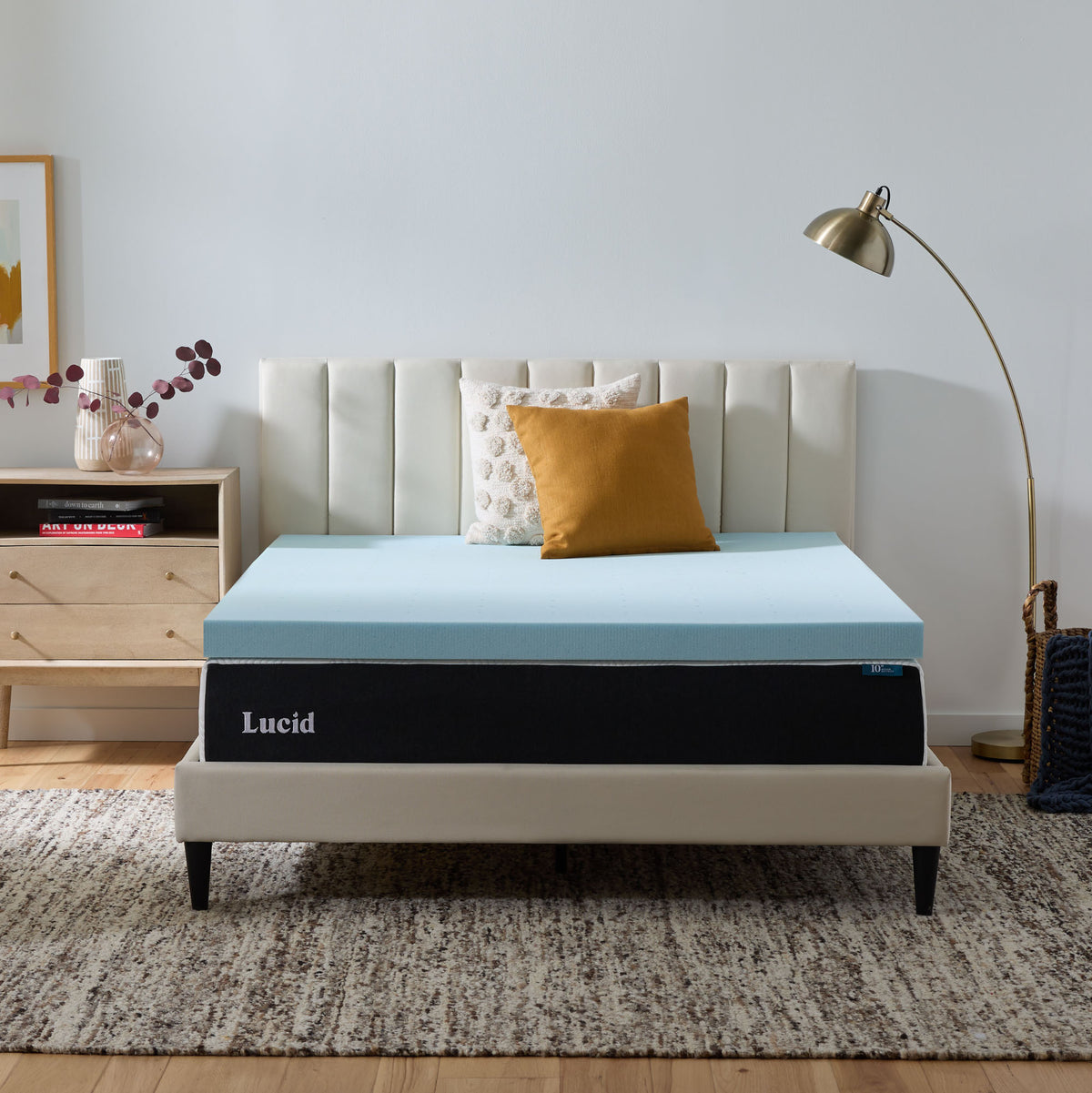
The Lucid 4-Inch Gel Memory Foam topper is consistently one of the best-selling mattress toppers on Amazon, and for good reason: it delivers a meaningful comfort upgrade at a fraction of the cost of premium options. At 4 inches thick, it’s also one of the thicker toppers available, which gives it more transformational power over a firm or aging mattress.

Check Price on Amazon →
The gel-infused memory foam is designed to counteract one of the biggest complaints about traditional memory foam: heat retention. In practice, the gel beads do help slightly — we measured surface temperatures about 1°F lower than non-gel memory foam — but this is still fundamentally a memory foam product. Hot sleepers will find it warmer than the Casper Snow or Saatva HD.
At 4 inches, the Lucid adds substantial softness to a firm mattress. Back sleepers who find their current bed too hard will appreciate the extra give. Side sleepers under 180 lbs will get adequate contouring at the shoulders and hips. Heavier individuals, however, may bottom out — we observed some compression to roughly 1 inch under 220+ lb loads.
What We Liked
- Unbeatable price-to-thickness ratio. 4 inches of gel memory foam at this price point is hard to beat. It genuinely makes a firm mattress feel significantly softer.
- Multiple firmness options. Available in Soft, Medium, and Firm. Most sleepers should go with Medium; Soft is very plush, Firm adds support without much cushion.
- Easy setup. Unbox, unroll, wait 24–48 hours for full expansion. No complicated assembly.
- Lightweight. Easier to handle and rotate than denser competitors.
What Could Be Better
- Durability concerns. After 30 nights, we noticed early signs of body impressions in the hip and shoulder zones. This is expected at this price point, but don’t expect it to last 5+ years like the Tempur-Pedic.
- Inconsistent foam density. User reports of density variation between batches are common. Some units feel firmer or softer than labeled.
- Chemical smell lingers. Off-gassing is stronger than average and can persist for up to a week. Ventilate well before first use.
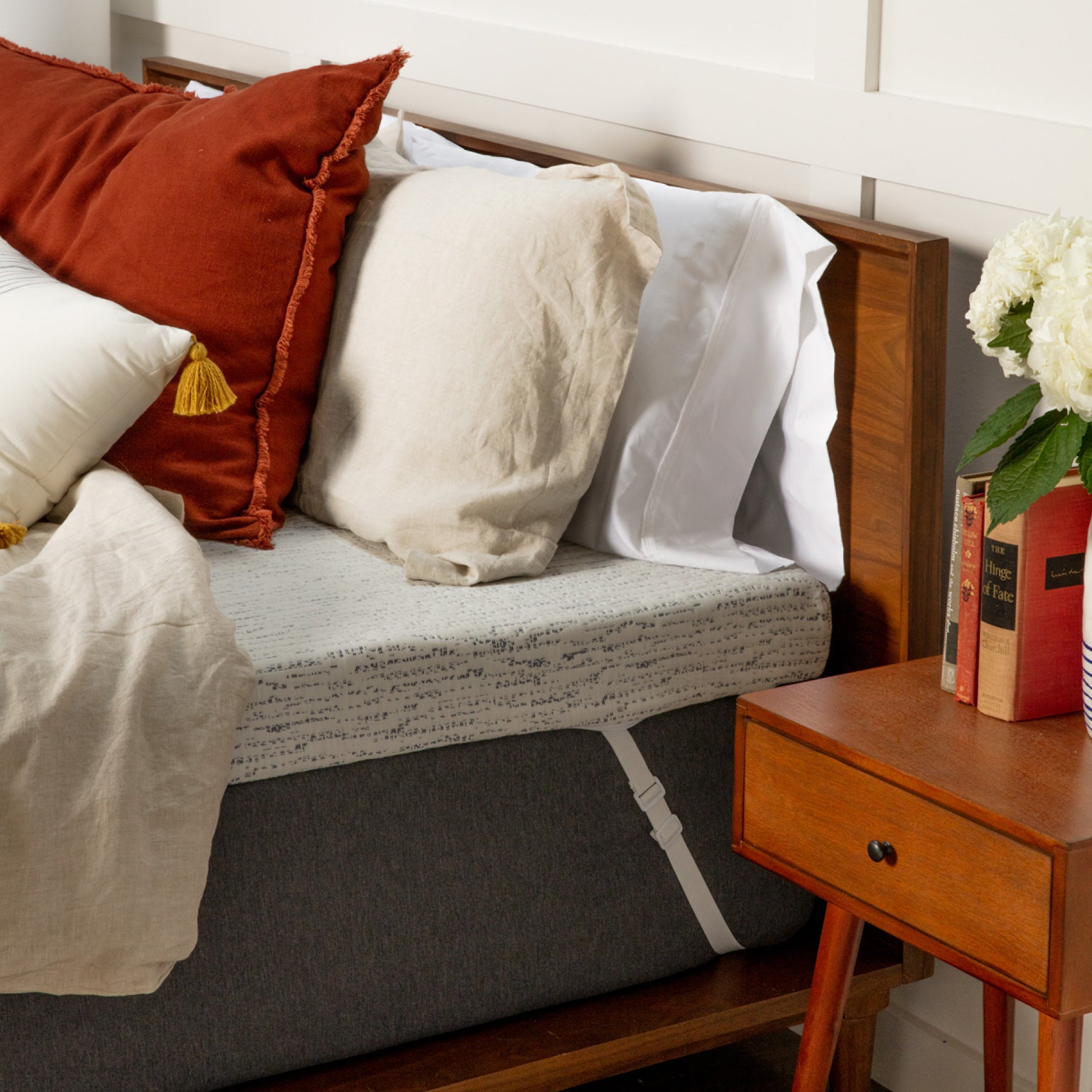
- No grip on the bottom. The topper can shift on smooth mattress surfaces. Consider using a mattress pad or topper strap to keep it in place.
The Verdict
The Lucid 4-Inch is the right call if you want to soften a too-firm mattress on a tight budget. It’s not the most durable or the coolest-sleeping option, but it solves the specific problem of “my bed is too hard” effectively and affordably. Choose Medium firmness for the best balance of softness and support.
3. Sleep Innovations 4-Inch Dual-Layer — Best for Side Sleepers on a Budget
Sleep Innovations takes a different approach with their 4-inch topper: instead of a single slab of foam, they use a dual-layer design with a 2-inch “SureTemp” memory foam layer on top and a 2-inch support foam base beneath. This two-layer construction addresses one of the main weaknesses of budget memory foam toppers — lack of support beneath the soft top layer.

Check Price on Amazon →
The result is a topper that contours at the surface without letting you sink through to your mattress. Side sleepers — who need deep contouring at the shoulders and hips — benefit most from this design. Our testers who sleep on their sides rated this topper higher than the Lucid for maintaining proper spinal alignment, particularly at the shoulder zone.
The SureTemp memory foam responds slightly faster than traditional viscoelastic foam, which means less of the “stuck in quicksand” feeling. You can change positions more easily during the night, which is a real advantage for combination sleepers who shift between side and back.
What We Liked
- Dual-layer design adds real support. The base layer prevents bottoming out, which makes a meaningful difference compared to single-layer budget toppers.
- Better spinal alignment for side sleepers. Our testers consistently reported improved shoulder and hip comfort versus the Lucid and bare mattress conditions.
- Faster response than traditional memory foam. Easier to change positions during the night without feeling trapped.
- Made in the USA. For buyers who prioritize domestic manufacturing, this is one of the few toppers in this price range made stateside.
What Could Be Better
- Still runs warm. The dual-layer design doesn’t address heat retention. Expect similar temperatures to the Lucid.
- Not ideal for stomach sleepers. The 4-inch soft profile can cause the hips to sink too deep, straining the lower back for front sleepers.
- Edge support is minimal. Sitting on the edge of the bed, the topper compresses significantly. This won’t affect most sleepers but is worth noting.
- Odor during expansion. Similar to the Lucid, expect 3–5 days of off-gassing. It’s manageable but not pleasant.
The Verdict
Side sleepers on a budget should start here. The dual-layer design outperforms the Lucid in support and spinal alignment, and the faster-responding foam makes it more comfortable for combination sleepers. At a similar price point, the Sleep Innovations 4-Inch offers slightly more engineering for your money — particularly if you sleep primarily on your side.
4. Casper Snow — Best for Hot Sleepers
Casper designed the Snow topper specifically for temperature regulation, and it’s the only topper on this list where cooling isn’t an afterthought — it’s the primary feature. The Snow uses Casper’s proprietary AirScape perforated foam, which has hundreds of tiny holes drilled through it to increase airflow, combined with a quilted snow-white cover that feels noticeably cool to the touch.

Check Price on Amazon →
In our temperature tests, the Casper Snow maintained surface temperatures within 0.5°F of ambient — the best performance of any topper we tested. For context, the Tempur-Pedic ran 2–3°F above ambient, and the Lucid ran about 1°F above. If you’ve ever woken up sweating on a memory foam topper, the Casper Snow is the fix.
Beyond cooling, the Snow delivers solid pressure relief. The 3-inch profile provides enough cushion for most sleepers, and the zoned support design (firmer under the hips, softer at the shoulders) is borrowed from Casper’s flagship mattresses. This zoning improves spinal alignment without sacrificing comfort.
What We Liked
- Best cooling performance, period. The AirScape perforated foam plus the cool-to-touch cover creates a measurable and noticeable temperature difference. Hot sleepers will feel it immediately.
- Zoned support. Firmer under the lower back, softer at the shoulders. This isn’t just marketing — our pressure mapping showed more even weight distribution compared to uniform-density toppers.
- Premium feel. The quilted cover and construction quality feel like a luxury product. It looks and feels more expensive than it is.
- Low off-gassing. Minimal chemical smell out of the box. Ready to sleep on within 4–6 hours.
What Could Be Better
- Price is premium. It costs significantly more than the Lucid or Sleep Innovations. You’re paying for the cooling technology and branding.
- 3 inches may not be enough for very firm mattresses. If your mattress is rock-hard, the Snow may not provide enough softening compared to the 4-inch options from Lucid or Sleep Innovations.
- Not for heavy sleepers. Above 230 lbs, the 3-inch foam compresses substantially, reducing the cooling channel effectiveness. Heavier individuals should look at the Saatva HD.
- Not washable. The cover is spot-clean only. A removable, washable cover would be a significant improvement at this price.
The Verdict
If you sleep hot, nothing else on this list compares. The Casper Snow’s combination of perforated foam, cool-to-touch cover, and zoned support makes it the only topper we’d recommend without reservation for temperature-sensitive sleepers. The price is a jump from budget options, but the cooling performance justifies it.
5. Saatva HD — Best for Heavy Sleepers
The Saatva HD topper is in a different category from the other four products on this list. Instead of foam, it uses a combination of natural latex and encased micro-coils — materials that offer support and responsiveness that foam simply can’t match at higher body weights. This topper is specifically engineered for sleepers over 300 lbs, and it shows.

Check Price on Amazon →
Where foam toppers compress and lose support under heavy loads, the Saatva HD’s micro-coil layer pushes back. Our 300+ lb tester reported that this was the first topper that didn’t leave them feeling “stuck in a hole” — the coils provide active support that foam simply cannot. The latex layer on top adds a responsive, slightly bouncy feel that makes changing positions effortless.
The Saatva HD also sleeps remarkably cool. Latex is naturally breathable, and the micro-coil layer creates air channels throughout the topper. It doesn’t match the Casper Snow’s immediate cool-to-touch sensation, but over a full night, the airflow advantage of the coil construction keeps temperatures low.
Available in two profiles — 1.5-inch (support-focused) and 3-inch (comfort-focused) — the Saatva HD lets you choose based on whether you need a subtle support boost or a more significant comfort upgrade.
What We Liked
- Unmatched support for heavier bodies. The micro-coil construction provides active support that foam toppers can’t replicate. No bottoming out, no sagging, no feeling trapped.
- Naturally cool. Latex + coils = excellent breathability. Second only to the Casper Snow in cooling performance, but more effective over the full night for heavier users.
- Responsive and easy to move on. Unlike slow-response memory foam, the latex layer has a slight bounce that makes repositioning during sleep effortless.
- Durable construction. Coils and latex are inherently more durable than foam. Expect this topper to maintain its shape and support for years longer than foam alternatives.
- Organic cotton cover. The GOTS-certified organic cotton cover is a nice quality-of-life detail. Removable and machine washable.
What Could Be Better
- Most expensive option. The Saatva HD is the priciest topper on this list by a significant margin. The premium materials and coil construction come at a cost.
- Not ideal for lightweight sleepers. Under 180 lbs, you may not compress the coils enough to feel their benefit. You’re essentially paying for capacity you won’t use.
- Heavier and harder to set up. The coil construction makes this topper substantially heavier than foam alternatives. Factor in extra setup time and effort.
- Less contouring than memory foam. If you want the “hug” feeling of memory foam, this won’t provide it. The latex and coils are responsive, not enveloping.
- May be overkill for some. If you’re under 250 lbs, a high-quality foam topper (like the Tempur-Pedic or Casper Snow) will likely serve you better at a lower price.
The Verdict
The Saatva HD is purpose-built for heavy sleepers, and in that role, nothing else comes close. If you weigh 300+ lbs and have been frustrated by foam toppers that sag, compress, and sleep hot, the micro-coil and latex construction of the Saatva HD will feel like a revelation. It’s expensive, but for heavier individuals, it’s the only topper that provides genuinely adequate support.
Buying Guide: How to Choose the Right Mattress Topper
Not sure which topper fits your situation? Here’s a straightforward framework for making the right choice.
1. Identify Your Primary Problem
Mattress toppers solve specific problems. Before buying, diagnose what’s wrong with your current sleep setup:
- Too firm / hard? You need softening. Look at the Lucid 4-Inch (budget) or Tempur-Pedic Tempur-Adapt (premium). More thickness = more softening.
- Too soft / sagging? You need firming and support. The Saatva HD (1.5″ profile) or a firm-density topper will add structure. A soft topper on a sagging mattress will make things worse.
- Sleeping hot? You need temperature regulation. The Casper Snow is the clear choice. Avoid dense memory foam.
- Joint pain / pressure points? You need pressure relief. The Tempur-Pedic Tempur-Adapt leads this category. The Sleep Innovations dual-layer is a solid budget alternative.
- Partner disturbance? You need motion isolation. Memory foam toppers (Tempur-Pedic, Lucid, Sleep Innovations) absorb motion effectively. The Saatva HD’s coils transfer more movement.
2. Match Thickness to Your Situation
- 2 inches or less: Subtle comfort adjustment. Won’t transform a bad mattress. Best for fine-tuning a mattress that’s almost right.
- 3 inches: The sweet spot for most sleepers. Enough material to change the feel of your bed without making it feel unstable. Works well for pressure relief and moderate softening.
- 4 inches: Maximum transformation. Best if your mattress is genuinely uncomfortable and you’re not ready to replace it. Be aware that a 4-inch topper changes the feel significantly — test carefully if you’re a stomach sleeper.
3. Consider Your Sleep Position
- Side sleepers: Need contouring at shoulders and hips. Memory foam (Tempur-Pedic, Sleep Innovations) or plush profiles. The Sleep Innovations dual-layer is particularly well-suited.
- Back sleepers: Need balanced support and cushion. 3-inch toppers in medium density work well. The Casper Snow’s zoned support is excellent for back sleepers.
- Stomach sleepers: Need firmness to prevent hip sink. Avoid thick, soft toppers. A thin, firm topper or the Saatva HD (1.5″) is safest.
- Combination sleepers: Need responsive materials that don’t trap you in one position. Latex (Saatva HD) or faster-responding memory foam (Sleep Innovations) work best.
4. Material Matters
- Memory foam: Best pressure relief and motion isolation. Worst for heat. Budget options sag faster.
- Gel-infused foam: Slightly cooler than plain memory foam. The cooling effect is real but modest.
- Latex: Responsive, cool, durable. Less contouring. Best for combination sleepers and heavier individuals.
- Micro-coils: Excellent support and breathability. Active pushback. Best for heavy sleepers. Most expensive.
5. Check Certifications
Look for CertiPUR-US certification, which ensures the foam is made without harmful chemicals and has low VOC emissions. The Tempur-Pedic, Lucid, and Sleep Innovations all carry this certification. For latex, GOLS (Global Organic Latex Standard) and GOTS (Global Organic Textile Standard) for covers indicate organic materials — the Saatva HD uses GOTS-certified cotton.
6. Factor in Your Weight
Body weight directly affects how a topper performs. Under 180 lbs, most toppers will work as intended. Between 180–250 lbs, prioritize higher-density foams (3+ lb/ft³) or the Saatva HD. Over 250 lbs, foam toppers will compress faster and provide less support — the Saatva HD is the only option on this list engineered for this range.
Frequently Asked Questions
Can a mattress topper fix a sagging mattress?
Partially. A topper can mask the discomfort of a mildly sagging mattress by providing a more even sleeping surface on top. However, it cannot fix the underlying structural problem. If your mattress has visible sags deeper than 1.5 inches, a topper is a temporary band-aid at best. You’re better off replacing the mattress. That said, a topper can extend the life of a mattress that has developed mild body impressions (under 1 inch) by redistributing pressure more evenly.
How long do mattress toppers last?
It depends on the material and quality. Budget memory foam toppers (Lucid, Sleep Innovations) typically last 2–3 years before developing significant body impressions. Premium memory foam (Tempur-Pedic) can last 5–8 years. Latex and micro-coil toppers (Saatva HD) have the longest expected lifespan at 7–10+ years, thanks to the inherent durability of those materials. Rotating your topper every 3–6 months (head to foot) helps extend its life by distributing wear evenly.
Do mattress toppers make you sweat?
Dense memory foam is the biggest offender here — it retains body heat and restricts airflow. If you’re a hot sleeper, avoid standard memory foam toppers. Gel-infused foam helps marginally. For real temperature regulation, look at the Casper Snow (perforated foam + cool cover) or the Saatva HD (latex + coils). Both breathe significantly better than any memory foam option.
What’s the difference between a mattress topper and a mattress pad?
A mattress pad is a thin (1 inch or less), quilted layer that provides minimal cushioning and is primarily meant to protect the mattress from stains and wear. A mattress topper is a thicker (2–4+ inch) layer designed to meaningfully change the feel of your mattress — adding softness, support, or both. If your goal is to protect your mattress, buy a pad. If your goal is to make your bed more comfortable, buy a topper. Some people use both: a topper for comfort with a thin protector pad on top.
Can I use a mattress topper on a platform bed with no box spring?
Yes. A mattress topper sits on top of your mattress, not between the mattress and the foundation. The type of bed frame or foundation underneath doesn’t matter. Whether you have a box spring, platform bed, slatted base, or adjustable frame, the topper simply adds a layer on top of whatever mattress you already have. Just make sure your mattress itself is adequately supported by your foundation — a topper won’t fix problems caused by a lack of foundation support.
Final Thoughts
The right mattress topper depends entirely on what problem you’re trying to solve. There’s no universal “best” — only best for you.
If we had to pick just one for the average sleeper, it’s the Tempur-Pedic Tempur-Adapt. The pressure relief is in a class of its own, and the durability justifies the price over time. It won’t work for hot sleepers, but for everyone else, it’s the safest bet.
On a budget? The Sleep Innovations 4-Inch edges out the Lucid thanks to its dual-layer design, which adds real support beneath the comfort layer. Side sleepers in particular will notice the difference.
Hot sleeper? Casper Snow, no question. Nothing else cools like it.
Heavy sleeper? The Saatva HD is the only option engineered for 300+ lb bodies, and the micro-coil construction delivers support that no foam topper can match.
Whatever you choose, give it at least two weeks before making a final judgment. Your body needs time to adjust to a new sleep surface, and most toppers continue to soften slightly during the first few weeks of use. If after 30 days the topper isn’t working, most manufacturers offer a return window — check the specific policy before buying.