Budget Robot Vacuums: A Value Checklist Beyond the Sale Price
By The Gear Audit Team · Specification research September 9, 2026; manufacturer source and buying-advice check September 20, 2026.
Quick answer: set a ceiling for the whole bundle
Choose a maximum checkout total first, then include dock type, replacement bags, filters and brushes, shipping, tax and warranty terms. A low search-result price can belong to a robot without the dock, a renewed unit or a different Combo model. If your ceiling is $300, verify a live eligible exact-bundle offer before treating any named example here as under $300. We have not established such an offer for the Roomba 105 Vac with AutoEmpty Dock discussed below.
Consider a simpler vacuum-only robot and manual bin handling if a self-empty dock consumes money or space better used elsewhere.
An auto-empty bundle can reduce each-run bin handling, but budget its bags and check the full dock-inclusive item.
Build the complete budget, not just a sale price
| Check | What to verify | Cost or fit trap |
|---|---|---|
| Robot and dock | Full model number; charging-only, AutoEmpty or washing dock; included accessories | Similar family names can hide different bundles |
| Mapping and control | Room targeting, editable maps, zones, app and Wi-Fi requirement | “Smart navigation” does not guarantee the controls you need |
| Parts and consumables | Exact compatible brushes, filters and bags; replacement availability | Cheap kits may fit a different revision |
| Condition and seller | New, renewed or used; return terms and warranty | Search results mix conditions and sellers |
| Home fit | Robot height, dock and service clearance, thresholds, rugs and floor type | Paying for unused mop or dock functions does not improve value |
| Actual total | Checkout price, tax, shipping, first parts and recurring consumables | A headline discount may exceed your chosen ceiling |
Write the same ceiling next to each candidate. If one offer is renewed and another new, compare warranty, battery condition and returns before calculating savings. Do not rely on manufacturer suction multipliers to compare pickup across brands.
Worked example: Roomba 105 Vac with AutoEmpty Dock Q352020
Best for: A buyer who specifically wants dry vacuuming, LiDAR room controls and a self-emptying dock, if an exact Q352020 offer fits their own spending ceiling.
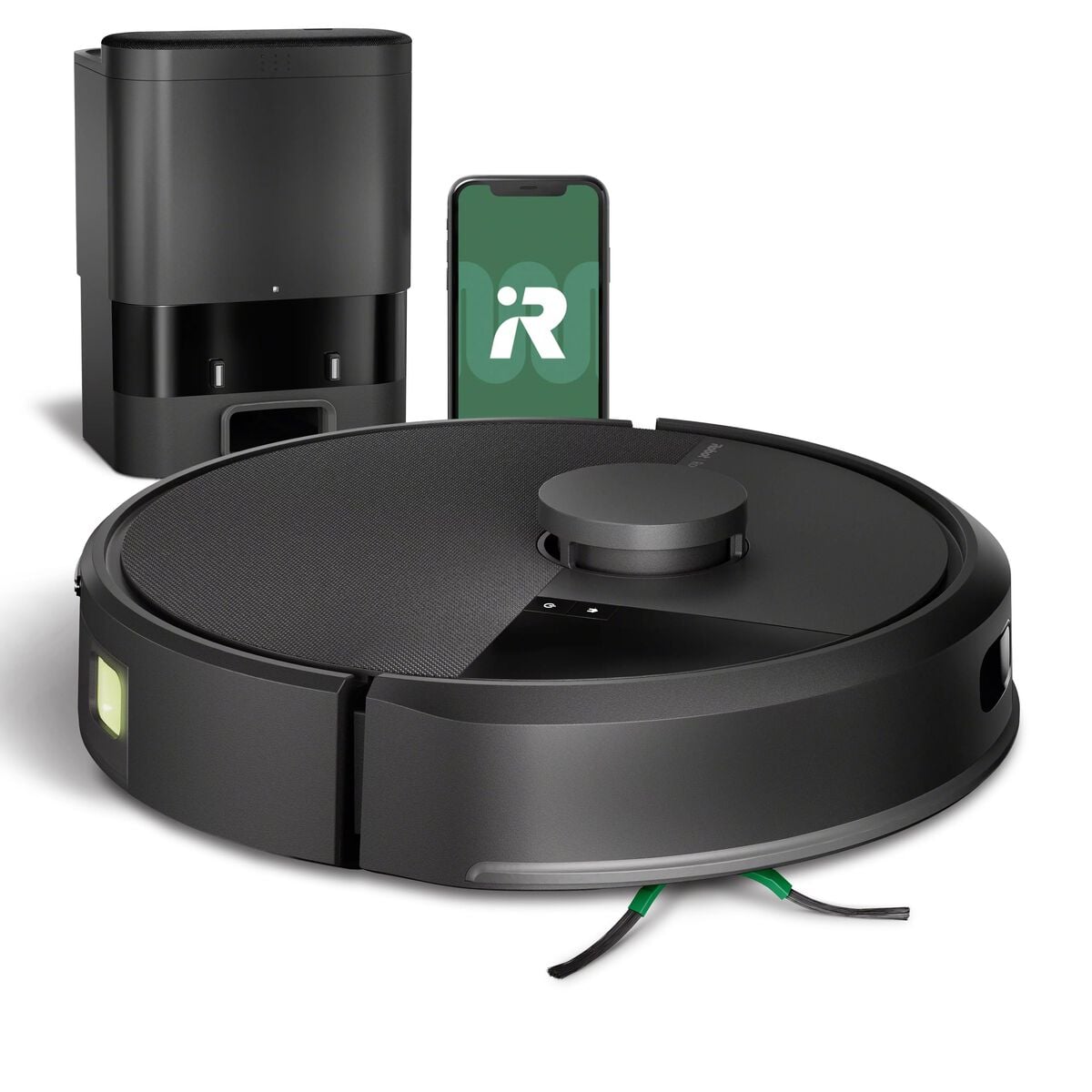
iRobot documents a multi-surface bristle brush, edge brush, ClearView LiDAR, room targeting and keep-out zones on this vacuum-only bundle. Its AutoEmpty Dock uses a bag and shifts debris disposal away from the onboard bin. The product page says a 2.4 GHz network is required for setup and operation. These features make it a useful listing-audit example, not a standing price recommendation. The product page’s own current price can move; this article makes no under-$300 claim for Q352020.
Pros
- Dock and exact item are specified together. Q352020 lets you verify the self-empty bundle rather than trusting a generic “105” listing title.
- LiDAR maps support room and zone decisions. Buyers who need targeted dry cleaning can check those concrete controls.
- Vacuum-only design avoids mop-system care. There are no wet pads or water tanks in this specific bundle.
Cons and trade-offs
- Auto-emptying adds bags and dock space. Include replacements and clearance in the total; manual-bin alternatives may fit a tighter ceiling.
- It does not mop. Choose a verified Combo bundle only if wet cleaning is worth its extra equipment and upkeep.
- Connected setup is required. Its documented 2.4 GHz Wi-Fi requirement may be inconvenient in a home without a suitable network.
Choose something else if: Q352020 exceeds your checkout ceiling or the dock’s recurring cost and space are disproportionate to your debris. Compare a simpler dry-vacuum bundle and its exact parts, or reserve budget for manual floor care.
Our recommendation
Use Q352020 as a checklist example when shopping a dock-inclusive dry vacuum: verify that the item, bag system, mapping controls and Wi-Fi requirement all fit. We recommend buying only when the current full total meets your chosen budget. Check the full current offer rather than relying on a headline price.
Price listing: iRobot Roomba 105 Vac with AutoEmpty Dock — Q352020.
Spend on the job your home creates
- Set the ceiling before browsing. Include tax, shipping and the first replacement-part cycle. Recheck the final cart, not only a search card.
- Decide whether self-emptying earns its cost. Frequent dry debris may justify bags and dock space; a small open plan may not.
- Buy controls you will actually use. Room targeting and keep-out zones matter if your floor plan has recurring obstacles; verify on the exact model.
- Check long-term parts and fit. Find the correct brushes, filters and bags, measure dock access, robot height and troublesome thresholds, and compare warranty/returns.
Our robot vacuum types guide explains what different automation levels change. For a full-service mop comparison, see Roomba Plus 505 versus Qrevo Curv; those systems serve a different, more involved wet-cleaning brief and are not presented as under-$300 picks.
Budget robot vacuum FAQ
Is Q352020 currently under $300?
We have no verified under-$300 exact-bundle offer. Check current checkout total, condition and included AutoEmpty Dock against your own ceiling.
Does “105” always include the dock?
No. Match the complete Q352020 vacuum-only AutoEmpty configuration; other 105 robots and Combo bundles are separate purchases.
Can a cheap replacement kit fit a similar 105?
Do not assume so. Check manufacturer part compatibility for the complete model and compare ongoing bag, brush and filter costs.
Should I pay for a mop to clean occasional spills?
Only if you will use and service its pads, tanks and dock. A vacuum-only robot such as Q352020 cannot wet clean; an occasional manual mop may be better value for some homes.
Amazon prices: Cards show the named US configuration and an eligible current new USD offer when available, with its check time. Unavailable or expired offers use a labelled search link. Confirm the model, included parts and final checkout price. Numerical Amazon ratings are omitted when usable review data is unavailable.
Research method, sources and limits
Specification research was September 9, 2026; we checked the cited manufacturer page and buying advice September 20, 2026. Q352020 is a worked example of checking a vacuum-only AutoEmpty bundle, not a tested or guaranteed under-$300 recommendation. We did not test pickup, mapping reliability, noise, battery life, durability or total ownership cost, and we do not publish a fixed retailer price. iRobot’s suction multiplier refers to its own baseline and is not cross-brand evidence. Budget allocation is editorial advice.
Primary source: iRobot Roomba 105 Vac + AutoEmpty Dock Q352020. Read our methodology.
The earlier unsupported tests, scores, prices and review totals were removed. This article does not promise any named model below $300.
CERTAIN CONTENT THAT APPEARS ON THIS SITE COMES FROM AMAZON. THIS CONTENT IS PROVIDED “AS IS” AND IS SUBJECT TO CHANGE OR REMOVAL AT ANY TIME.
Affiliate disclosure
As an Amazon Associate, The Gear Audit earns from qualifying purchases. We may earn an affiliate commission when you buy through our links, at no extra cost to you. Read our full affiliate disclosure.