How to Choose a Cordless Vacuum: Complete Buying Guide (2026)
Walk the route you vacuum most often. A kitchen and hallway call for a different setup than two carpeted floors, a staircase and a sofa covered in pet hair. Use that route to decide which floorhead, battery and bin you need.
Quick answer
Choose the floorhead for your hardest surface to clean, then check runtime with that head attached. For mostly hard floors, start with a soft roller or a brush you can switch off. For carpet and pet hair, look for a powered head approved for your carpet and a brushroll you can reach to clear tangles.
For short cleanups, prioritize a vacuum you can carry, park and recharge easily. For long sessions, look for a spare battery you can swap in. If you often stop to empty the bin, compare larger bins and self-emptying docks before paying for more suction.
1. Match the floorhead to the floor
- Hard floors: A dedicated soft roller is one option. A head that works with its brush switched off is another. Check your flooring maker’s care instructions and consider whether you mostly pick up dust and hair or larger debris that has to fit under the nozzle.
- Carpet and rugs: A powered roller can help lift embedded debris on compatible carpet. Check the carpet maker’s guidance for wool, high pile, loops and fringe before using a spinning brush. The Carpet and Rug Institute, for example, recommends suction-only cleaning for wool carpets.
- Stairs, sofas and car seats: Check which tools fit directly onto the handheld body. A crevice tool reaches seat rails and stair corners. If fur clings to upholstery, look for an included compact powered upholstery brush or check the price and fit of the optional tool.
What do air watts and kPa tell you?
Kilopascals (kPa) measure pressure difference. Air watts (AW) express air power, which depends on pressure and airflow. You cannot convert a kPa figure to AW without airflow at the same operating point. Even a comparable air-power figure does not tell you how much debris the floorhead picks up on a rug. ASTM’s vacuum air-performance standard distinguishes its bench measurements from operation with actual tools and surfaces.
2. Check runtime and weight in the configuration you’ll use
Find the footnote below the biggest runtime number. A maximum measured with a handheld in Eco mode does not tell you how long a powered floorhead will run on carpet. Look for figures that specify the head, power mode and battery. If the manufacturer only supplies a maximum, plan for a shorter run and avoid comparing brands on that number alone.
For longer cleaning sessions, check whether you can swap the battery without tools, what the box includes and whether a compatible spare can charge while you use the first pack. Look up the replacement battery before committing. A removable pack helps only if you can obtain and charge a compatible replacement.
Compare the weight with the battery, wand and floorhead installed. If stairs or overhead cleaning matter, also check the handheld weight. If you can try the vacuum in a store, lift the handheld with the tool you’ll use and see whether you can steer it comfortably. Check whether the power switch stays on or requires holding a trigger.
3. Decide how you’ll empty, store and maintain it
Bin: If pet hair fills your current bin halfway through a clean, prioritize a larger onboard cup or a station you can return to between rooms. A big dock collector does not increase the capacity of the cup on the vacuum. You’ll still need to empty the dock and clean its filters as directed.
Filtration: If keeping fine dust contained matters to you, look for documentation on how the complete vacuum controls exhaust dust. A HEPA filter is one component; check whether the maker also documents a sealed system or whole-machine filtration. Consider what happens when you empty the bin as well. If you want to avoid tipping loose debris into a trash can, compare a bagged vacuum.
Storage and upkeep: Measure the space beside an outlet and leave room to lift the vacuum off its mount or dock. Check how you’ll remove hair from the brush ends, whether the filter is washable, how it must dry, and whether you can order a replacement by part number.
4. Compare two US models by the chores they simplify
These examples show how the buying process changes when your priority is sharing batteries or emptying the vacuum less often by hand.
| What to check | RYOBI PCL720K | Shark IP3251 |
|---|---|---|
| Floorhead | Powered roller with a separate brush shutoff | DuoClean Detect head with two rollers and a folding MultiFlex wand |
| Battery and charging | Kit includes one removable 18V ONE+ 4 Ah battery and a separate charger | One included battery; the base charges the vacuum. Shark lists up to 70 minutes in handheld Eco mode. |
| Emptying | Manually remove and empty the dust bowl | Dock transfers debris from the onboard cup to a separate 2 L collector |
| Best fit | Quick dry cleanups, especially if you already use compatible ONE+ packs | Frequent mixed-floor cleaning when manual cup emptying is a nuisance |
Shared battery example: RYOBI 18V ONE+ Stick Vacuum Kit PCL720K

Pros
- The kit includes a charger and a 4 Ah pack you can swap with compatible 18V ONE+ tools.
- The floorhead’s brush can be switched off and removed for cleaning.
- The included crevice tool and dust brush give you options for corners and shelves without the floorhead.
Trade-offs
- You empty the bowl by hand and take the battery out to charge it separately.
- The brush defaults to on each time you restart, so you must switch it off again on surfaces that require suction only.
- RYOBI specifies this vacuum for light dry household cleanup. It’s a poor fit for wet messes or as a workshop debris vacuum.
Our recommendation: Choose this kit for quick floor cleanups if you want a battery you can share with other ONE+ tools. If you already own a compatible pack and charger, compare the tool-only PCL720B before buying another kit. If you want the vacuum to recharge and empty automatically when you put it away, choose a dock-equipped model instead.
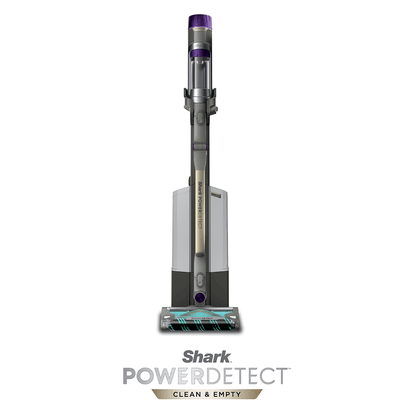
Self-emptying dock example: Shark PowerDetect Clean & Empty IP3251
Pros
- The 2 L base empties the handheld dust cup when docked and charges the vacuum in the same spot.
- One dual-roller head covers routine changes between hard floors and compatible carpets.
- The wand bends for access under furniture. The package also includes a duster crevice tool and a Pet Multi-Tool.
Trade-offs
- The base needs a dedicated spot near an outlet. Allow room to lift off the vacuum and remove the collector.
- You still empty the larger collector yourself and maintain the base’s filter.
- The package lists one battery. If you need a second pack for a long powered-floorhead session, budget for it separately and confirm compatibility.
Our recommendation: Shortlist the IP3251 if you clean mixed floors often and regularly find yourself stopping to empty a small cup. Skip the dock if you mostly clean crumbs in one room or lack a place to plug it in. Check the model number: the similarly named IP1251 does not include the self-emptying base.
Before you order: check the exact box contents
- List the surfaces and tools you’ll use most. Confirm the model’s included floorhead and any special rug care instructions.
- Time your usual route with your current vacuum. Check for a published runtime with the head and mode you need, and plan where a spare would charge.
- Measure your storage spot and the gap beneath the furniture you most often clean. Confirm how the dust cup and dock open before placing either against a wall.
- Match the listing to the full model number. Find the compatible battery, filter and brushroll before counting on them as replaceable parts.
Ready to compare more models? See our cordless vacuum comparison for three other designs. If you want daily floor cleaning while you’re doing something else, compare robot vacuum and dock types. You’ll still need a separate tool for stairs and upholstery.
Frequently asked questions
Can a cordless vacuum replace my corded upright?
It can if the head suits your floors and you can finish your usual route on one charge or a practical battery swap. If you often clean extensive carpet in one session, keep the corded machine until you can verify the cordless model’s runtime and pickup with its carpet head.
Do I need a soft roller for hardwood?
No. Start with your flooring maker’s instructions. If it calls for suction only, look for a suitable unpowered head or a compatible floorhead with a brush shutoff. A dedicated soft roller is an option when the flooring maker permits it.
Does a self-emptying dock eliminate manual emptying?
It transfers debris into a larger collector. You still have to empty that collector or replace its bag, depending on the model, and maintain any dock filters.
Can a longer runtime mean a better vacuum?
Compare runtime only under similar conditions. A long handheld Eco figure tells you little about vacuuming carpet with a powered head. The right battery is the one that gets you through the route and mode you’ll actually use.
Method and sources
We checked US model pages and the RYOBI operator’s manual for package contents, brush controls, batteries and emptying. Recommendations apply those documented details to common cleaning routines. We did not run hands-on pickup, runtime, noise or filtration tests or use customer ratings to rank the products. The Amazon button is a search; confirm the exact model and box contents before buying.
- RYOBI PCL720K US product page and RYOBI PCL720/PCL720BB operator’s manual, distributed by Home Depot. Used for the kit, brush shutoff, battery removal and maintenance instructions.
- SharkNinja IP3251 US product page and SharkNinja US cordless comparison. Used for the dock collector, included tools, runtime conditions and the difference from IP1251.
- ASTM F558 air-performance method and Carpet and Rug Institute guidance on high-pile carpet. Used to interpret air-power figures and floorhead fit.