Air Purifier Room Sizing: CADR, Ceiling Height and Unit Conversions
Quick answer
For a chosen particle air-change target, calculate required CADR in CFM = room area in square feet × ceiling height in feet × target changes per hour ÷ 60. A 300 sq ft room with a 10 ft ceiling needs 240 CFM for a 4.8-change comparison; the same floor area with an 8 ft ceiling needs 192 CFM. Compare that result with the exact model’s documented particle CADR at the speed you plan to use. If that speed’s CADR is unknown, its room-sizing result is unknown too.
This worksheet is for checking a purifier against a measured room. It covers ceiling height, metric units and missing specifications. For filters, controls and ownership costs, use our complete air-purifier buying guide. The calculations below are estimates from published data, not measurements in your home.
1. Measure the room you expect the purifier to serve
Write down length, width and ceiling height in the same unit system. Multiply length by width for floor area, then multiply by height for room volume. A 15 ft × 20 ft room is 300 sq ft; with a 10 ft ceiling its volume is 3,000 cubic feet.
For an open living and dining area, measure both areas if one purifier is intended to serve them. For a bedroom that normally has its door closed, start with that enclosed room. Adding the entire home’s floor area does not show how air will move between rooms. A single floor-area figure also cannot describe a sloped ceiling: divide the space into measurable sections and estimate their combined volume, recording that approximation.
Decision: If you cannot define the space or estimate its volume, finish those measurements before choosing capacity. Furniture and an attractive placement photograph are not evidence that a purifier circulates air throughout your layout.
2. Calculate the particle clean-air rate
CADR means clean air delivery rate. Here, “changes per hour” refers to the equivalent room volume of particle-filtered air supplied by the purifier. It is separate from outdoor ventilation. Recirculating a room’s air through a filter does not replace that air with fresh outdoor air.
Required CADR (CFM)
Floor area (sq ft) × ceiling height (ft) × target changes per hour ÷ 60
Estimated purifier contribution (changes per hour)
Documented CADR (CFM) × 60 ÷ room volume (cubic feet)
The factor 60 converts minutes to hours. These are dimensional calculations: clean-air volume per hour divided by room volume. They assume the published CADR applies to the operating setting and that room air mixes adequately. They do not predict the time when every particle is removed or certify a room as safe.
We use 4.8 changes per hour as a consistent comparison scenario because manufacturers publish room areas at that rate. It is not a universal health requirement or an individual treatment recommendation. EPA’s home air-cleaner guide provides an approximate minimum particle-CADR table based on 8 ft ceilings: 195 CFM for 300 sq ft. Our exact 4.8-change arithmetic gives 192 CFM for that room; the rounded EPA estimate and the calculation are different reference methods. Keep one method consistent when comparing candidates.
3. Worked example: the same floor, two ceiling heights
| Measured room | Volume | CADR for the 4.8-change scenario | What changes |
|---|---|---|---|
| 15 × 20 ft; 8 ft ceiling | 2,400 cubic feet | 2,400 × 4.8 ÷ 60 = 192 CFM | Baseline example |
| 15 × 20 ft; 10 ft ceiling | 3,000 cubic feet | 3,000 × 4.8 ÷ 60 = 240 CFM | 25% more volume and required CADR |
| 15 × 20 ft; 12 ft ceiling | 3,600 cubic feet | 3,600 × 4.8 ÷ 60 = 288 CFM | 50% more volume and required CADR |
The buying consequence is concrete: a published 250 CFM figure exceeds the 240 CFM calculation for the 10 ft room, but falls below 288 CFM for the 12 ft room. This says nothing about that model’s quieter fan settings unless the manufacturer supplies their CADR. Do not pair its lowest noise figure with its highest clean-air rate.
If you already have a capacity figure based on an 8 ft ceiling, multiplying that required CADR by your ceiling height ÷ 8 provides a volume adjustment for the same floor area and target. Using actual room volume is clearer when the ceiling has several heights.
4. Metric worksheet: m², m³/h and CFM
When area is in square metres and height is in metres, volume is in cubic metres. The hourly formula then needs no division by 60:
Required CADR (m³/h)
Floor area (m²) × ceiling height (m) × target changes per hour
Conversions
1 CFM ≈ 1.699 m³/h
CFM to m³/h: multiply by 1.699
m³/h to CFM: divide by 1.699
For a 5 m × 4 m room with a 2.7 m ceiling, volume is 54 m³. At the same 4.8-change scenario, required CADR is 54 × 4.8 = 259.2 m³/h, or about 153 CFM. The conversion derives from one foot equalling 0.3048 metres and 60 minutes in an hour.
Keep the distinction between area and volume: m² is floor area; m³/h is a flow rate. “300 m³/h” cannot be compared directly with “300 CFM.” Check that both figures are CADR, rather than comparing filtered clean-air delivery with a fan’s raw airflow.
5. Apply the calculation to exact models
These two examples show how published data can pass or fail a size calculation. They are not a product ranking. Specifications are manufacturer claims checked on November 6, 2026; our calculated values are rounded.
Coway Airmega 150: keep the particle ratings separate
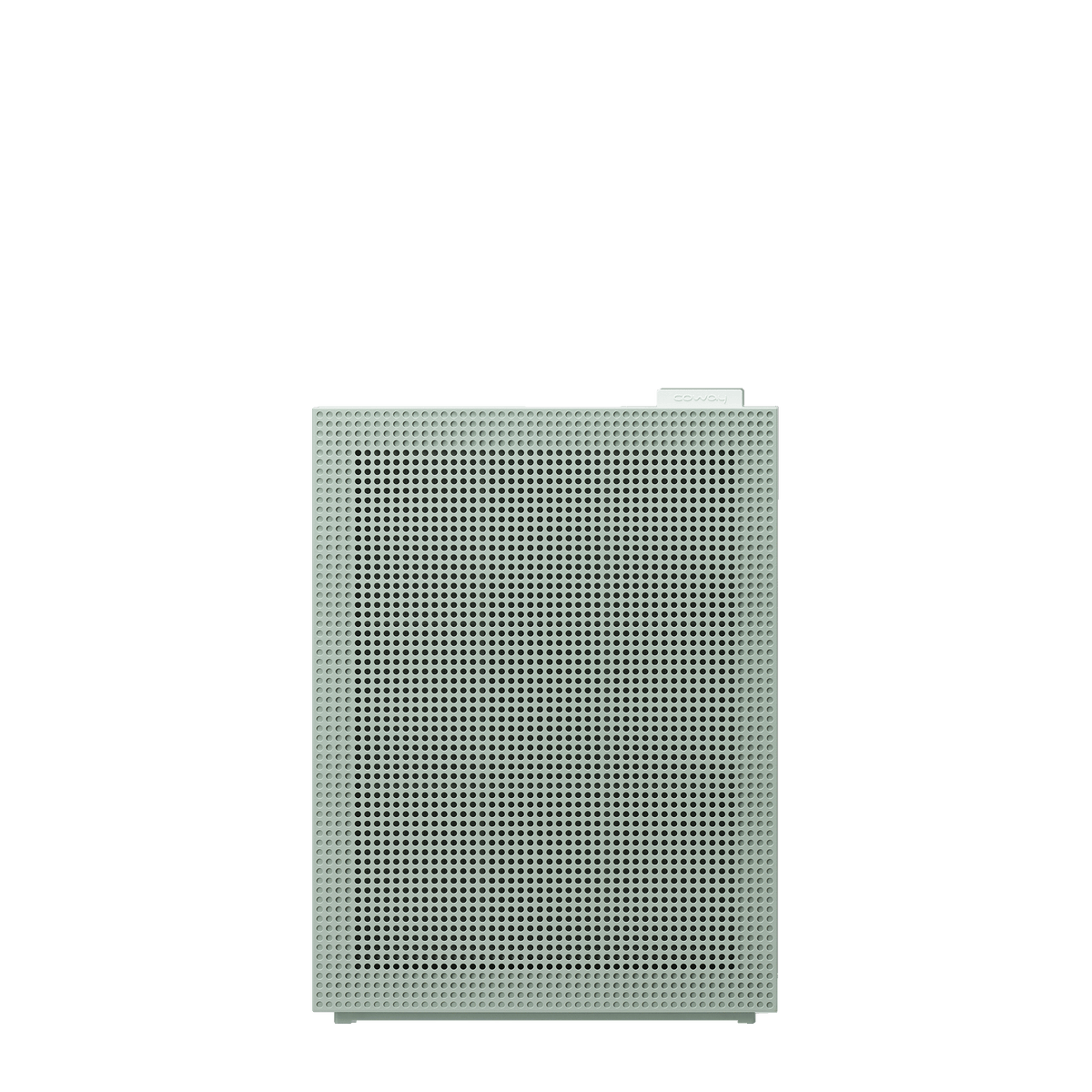
Coway lists CADR of 153 smoke, 161 dust and 220 pollen, plus room areas of 1,035 sq ft at one change per hour and 214 sq ft at 4.8. For the 300 sq ft, 10 ft example, using its 153 smoke figure gives 153 × 60 ÷ 3,000 = 3.06 equivalent changes per hour. That falls below our chosen 4.8 scenario.
Choose it for this calculation only if: The room and chosen particle-CADR basis fit. Do not substitute the higher pollen value to make a smoke-particle sizing calculation pass. Its published one-change coverage is not a 4.8-change capacity.
Search Coway Airmega 150 on Amazon
Levoit Core 600S-P: check the speed behind the specification
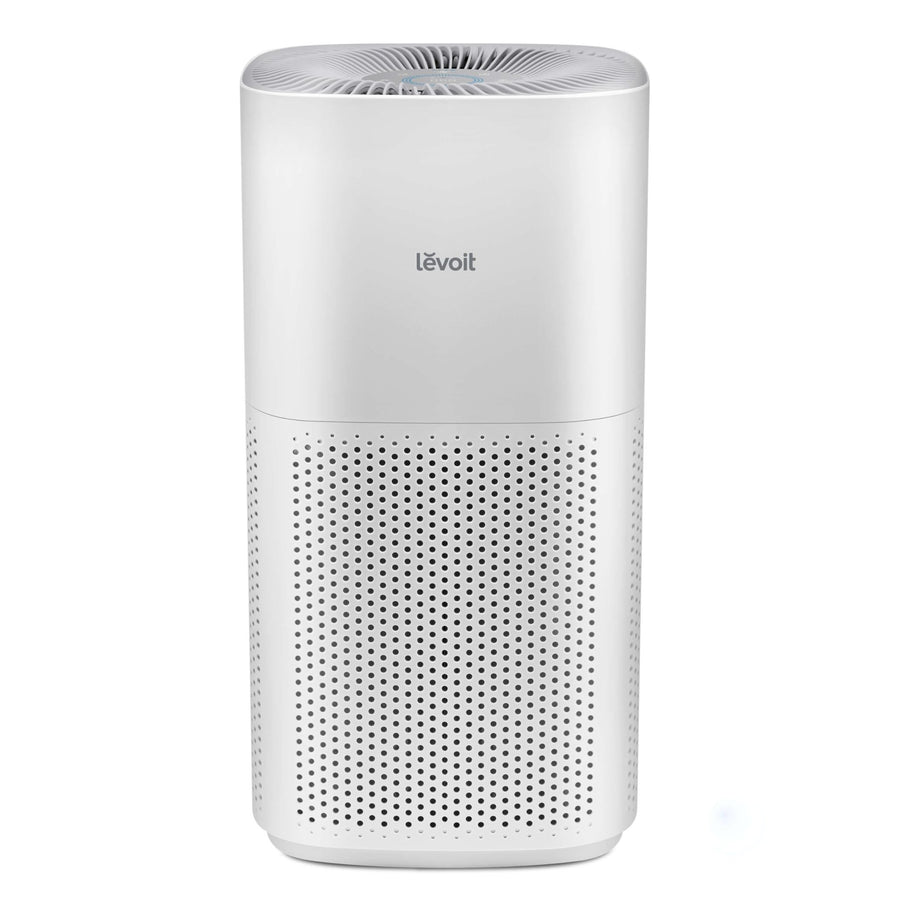
Levoit’s specification section lists 391 CFM and US model LAP-C601S-WUS. That rate produces a calculated 391 × 60 ÷ 3,000 = 7.82 equivalent changes per hour in the 300 sq ft, 10 ft example. It therefore exceeds the example’s 240 CFM requirement on paper. The specification section lists 606 sq ft at 4.8 ACH; we use its CADR directly for our measured volume rather than treating that floor-area number as universal.
Choose it for this calculation only if: You verify the exact model and can use a setting that supplies the required rate. The page lists a 26–55 dB noise range but does not pair 391 CFM with the quietest setting. A sleep-mode size calculation cannot be completed from that range alone.
Search Levoit Core 600S-P on Amazon
Both Amazon links open searches, not verified individual offers. Check model, seller, plug and voltage, condition, included filter and warranty. We have not verified current Amazon price, inventory or a specific listing.
6. When the specifications cannot answer the question
| What you have | What remains unknown | Useful next step |
|---|---|---|
| Only “covers 1,000 sq ft” | Air-change rate, ceiling assumption and operating setting | Find the exact-model technical sheet and its CADR or explicit coverage conditions |
| Only fan airflow in CFM | Clean-air delivery after filtration | Look for particle CADR; do not relabel raw airflow |
| Maximum CADR plus minimum noise | CADR at the quiet setting you intend to use | Seek CADR by speed; retain an unknown result if none is published |
| Different smoke, dust and pollen values | Whether the comparison uses the same particle basis | Keep the chosen particle basis consistent across models |
| A one-ACH room figure with stated ceiling height | Whether it represents measured particle CADR | Use it only as an attributed coverage claim; it is not a substitute for verified CADR |
Do not invent a sleep-mode multiplier, subtract assumed outdoor ventilation or count an unmeasured HVAC contribution. Those additions can make an inadequate unit appear sufficient. If a listing is ambiguous, choose a model with clearer documentation or preserve the unknown until it is resolved.
Before buying: turn the number into a shortlist
- Record the inputs. Room dimensions, connected area, ceiling height, chosen comparison target and units.
- Record the source. Exact model, particle-CADR value, test-particle basis and any documented operating setting.
- Compare capacity. A published value below the calculation fails that scenario. A value above it remains conditional on setting and placement.
- Check everyday use. Clear intake and outlet space, tolerable sound, exact replacement filter, current filter availability and operating cost.
- Keep the limit visible. A particle calculation does not rate gas removal or guarantee a health outcome.
Our editorial recommendation is to finish the room calculation before selecting features. If a model only fits at a setting you will not use, consider a model with more documented capacity or separate units for separate occupied rooms. See our general model comparison or large-room options after establishing the required clean-air rate.
Questions about the calculation
Does 4.8 changes per hour mean every particle disappears in 12.5 minutes?
No. It describes an equivalent volume rate. Room air mixes, new particles can enter, and filtered air can pass through the unit again. It is not a countdown to complete particle removal.
Can I add two purifiers’ CADR values?
As a planning estimate for the same connected room, you can add documented CADR values on a consistent particle basis at the intended settings. The sum does not prove even distribution. Do not use a total across closed rooms as evidence that each room receives enough filtration.
Can I use this number for odors, gases or mold cleanup?
Particle CADR does not rate gas removal. EPA distinguishes particle filters from gas-targeted media and says filtration cannot solve a moisture or mold-growth problem. Start with pollution-source control and appropriate ventilation. Avoid cleaners intentionally designed to generate ozone.
Should I round down to match a nearby model?
Keep the calculated requirement and choose published capacity that meets it, with practical room and speed limits considered. A slightly lower catalog number remains below the chosen scenario; an unknown quiet-speed rate remains unknown.
Research method and primary sources
We reviewed exact-model manufacturer documentation and public air-cleaner guidance on November 6, 2026. We have no original hands-on CADR, noise, room-distribution or health-outcome test records. Arithmetic examples are our calculations from the stated inputs. Product specifications are attributed claims, and selection advice is editorial judgment.
- EPA: Guide to Air Cleaners in the Home — approximate room sizing, higher ceilings and filtration limits.
- Harvard Healthy Buildings: Portable Air Cleaner Sizing Tool — a separate tool using room size, ceiling height and a chosen clean-air target. Its dust-CADR instruction and ventilation options differ from our smoke-based Coway example; do not mix inputs between methods.
- Coway Airmega 150 — separate particle CADR values and coverage rates.
- Levoit Core 600S-P — specification-section CADR and US model identity.
Read our research methodology. EPA does not endorse the example brands.
Affiliate disclosure
As an Amazon Associate, The Gear Audit earns from qualifying purchases. We may earn an affiliate commission when you buy through our links, at no extra cost to you. Full affiliate disclosure.