How to Choose a Robot Vacuum — Complete Buying Guide 2026
Quick answer
Measure the route first, then pick brush and bin upkeep, wet-cleaning needs and dock footprint. A vacuum-only auto-empty robot and a water-handling mop dock serve different routines; maker suction figures do not prove which cleans your home better.
Four decisions that narrow the field
1. Route and navigation
Measure thresholds, furniture clearance and the path between rooms. Mapping and no-go zones are more useful when the robot can physically reach each target area. LiDAR and camera systems have different behavior, but neither is a blanket guarantee against cables or pet waste.
2. Brush and debris handling
For shedding pets, inspect the main brush, ends and side brush, plus how the robot empties. A high suction number is not a cross-brand pickup score. If cat litter or long hair is decisive, look for credible exact-model independent pickup evidence.
3. Wet cleaning
Choose vacuum-only if you mop separately. For a mixed-floor route, ask how far pads lift, whether no-mop zones are available, and how the dock washes and dries pads. A service dock reduces some daily tasks and adds water, tray and pad care.
4. Dock footprint and ongoing care
Measure width, depth and vertical space with lids open, then check bag or tank access. Confirm consumables are available for the exact model in your region.
Match the system to your home
| Choice | Best for | Check before ordering |
|---|---|---|
| Vacuum-only auto-empty | Pet hair on mostly carpet or a separate mopping routine | Bags, brush ends, dry-only limitation |
| Mop-and-vacuum service dock | Predominantly hard floor with regular wet cleaning | Water, pads, rug contact and placement |
| Simple manual-empty robot | Small area with low debris load | How often the onboard bin needs attention |
Two systems with distinct upkeep
Roomba Plus 505 Combo N185020
Best for: A mixed-floor home that values automatic pad washing and drying.
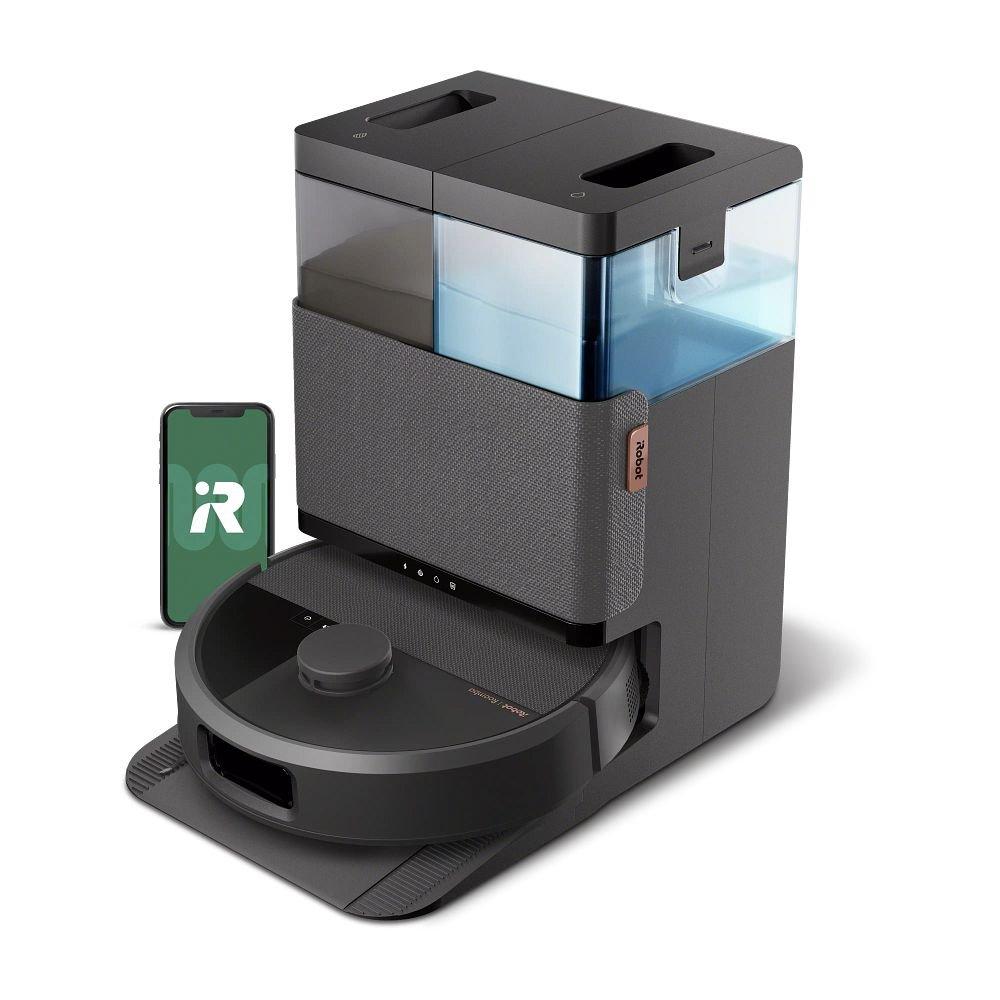
iRobot documents spinning mop pads, carpet-triggered pad lift, an extending edge pad, LiDAR and vision features, and its AutoWash dock. These are product features, not measured stain or obstacle-avoidance results from us.
Pros
- Automatic wash/dry cycle addresses routine pad handling.
- Carpet-triggered lift and edge extension target common mixed-floor needs.
Cons and trade-offs
- Water tanks, pad tray and debris bags remain recurring chores.
- A thick or fringed rug still needs its own no-mop route check.
Choose another if: You want a vacuum-only system or lack room for the wet dock.
Our recommendation
Shortlist N185020 when mixed-floor mopping is worth the larger care workflow. Check rug routes and dock placement before ordering.
Product details: manufacturer documentation. The recommendation is editorial.
Roborock Qrevo Curv
Best for: A home with thresholds, long hair and a desire for docked mop care.
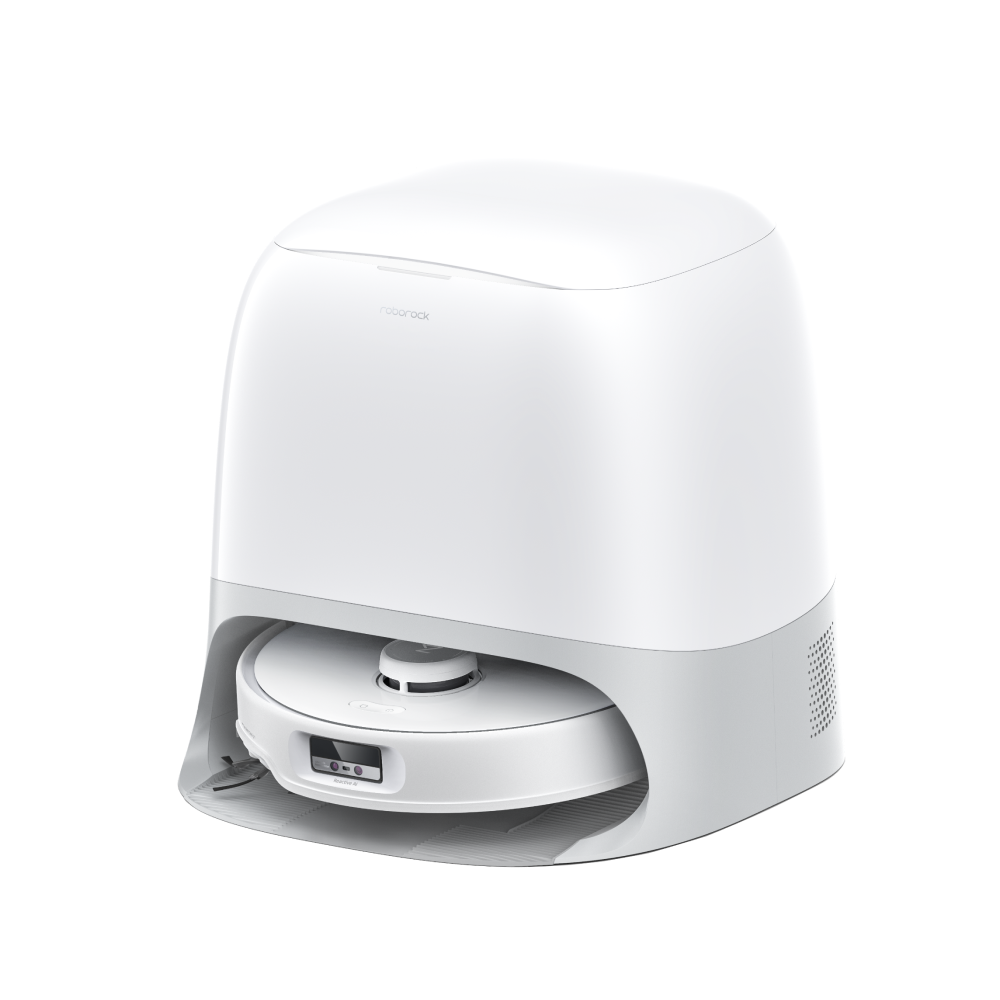
Roborock identifies AdaptiLift chassis, DuoDivide brush, FlexiArm parts and Multifunctional Dock 3.0 for the Curv. Check exact Curv figures rather than other variants on the same page.
Pros
- Chassis-lift and brush design address two specific route and hair-care questions.
- Full-service dock can reduce hand washing and emptying.
Cons and trade-offs
- The large water-handling dock needs placement and cleaning space.
- Brush ends and side brush still need inspection during heavy shedding.
Choose another if: Your measured threshold exceeds the exact Curv limit or wet cleaning is unnecessary.
Our recommendation
Choose Curv only if the threshold and hair-care features solve a real constraint. Measure your route and verify the exact regional package.
Product details: manufacturer documentation. The recommendation is editorial.
Before and after buying
Before ordering, measure the most difficult transition and lowest furniture gap; inspect rugs and locate the dock. Check the current manual for network, cleaning solution and maintenance requirements. After installation, watch the first run, draw no-go/no-mop zones where needed, and check whether the actual hair load changes your brush-cleaning schedule. See our Roomba versus Roborock comparison for a broader brand-level context.
Frequently asked questions
Should everyone buy LiDAR and a self-emptying base?
No. Those features help particular routes and maintenance preferences. A small, simple home may not justify the dock footprint.
Do anti-tangle brushes eliminate hair removal?
No. Inspect ends and side-brush hubs regularly, especially during shedding.
Does a mop-lift claim protect all carpets?
No. Check pile and fringe against exact clearance, then use no-mop zones where contact is possible.
Exact-model searches
Search results can include other generations, bundles, refurbished units and sellers. Confirm the exact offer before purchase.
Research method and primary sources
Feature descriptions are manufacturer statements; the buyer checklist and recommendations are editorial. We have no original cleaning-cycle or pickup measurements and do not assign measured rankings.
Primary sources: iRobot Roomba Plus 505 Combo N185020; Roborock Qrevo Curv, exact Curv section. Read our methodology.
Affiliate disclosure
As an Amazon Associate, The Gear Audit earns from qualifying purchases. We may earn an affiliate commission when you buy through our links, at no extra cost to you. Read our full affiliate disclosure.