Robot Vacuum Dock Placement: Space, Access and Maintenance Checklist
By The Gear Audit Team · Manufacturer sources checked November 10, 2026
Quick answer
Choose the dock location before you choose the robot. Measure the dock body, its specified approach space and the room needed to remove tanks or a dust bag. Favor a hard, level position against a wall with a reachable outlet and a clear route into the rooms you want cleaned.
A station that fits beneath a shelf may still be awkward to service. The two manufacturer examples below show why a dock’s outside dimensions and its installation space are different measurements.
Check the location in this order
- Choose a useful floor. List the rooms you want the robot to reach without being carried. A convenient dock beside the kitchen is less useful if a closed door regularly separates it from the living room.
- Measure three directions. Record available width, depth and height. Include protruding skirting boards, door swings and the shelf above. Use the exact manual’s diagram to distinguish a total reserved area from an extra gap around the dock.
- Plan the power route. Put the outlet within reach of the supplied cord, with its plug accessible. Avoid a cord crossing the robot’s approach path. Confirm the purchased version’s electrical requirements before importing a unit.
- Make servicing comfortable. Rehearse standing or kneeling at the proposed location. Can you remove the cover, lift a tank without striking a shelf and carry it to the sink? Leave a place to set a tank down while opening its lid.
- Check the everyday route. Look at dining chairs, pet bowls, loose cables and rugs around the station. The location must work when the room is occupied, rather than only after moving everything for installation.
- Confirm the floor and connection. Check the model’s instructions for dock support, moisture precautions and WiFi. Roborock’s model manuals below specify hard, flat floors; a soft mat is not their recommended base.
Our recommendation: give a water station an open, accessible position near your normal water carrying route. Choose a dust emptying dock when vacuuming is the main job and a simpler servicing routine suits you. Neither choice eliminates brush, filter or sensor care.
Compare body size with installation space
| Check | Roborock Q5 Pro+ | Roborock Qrevo S Pro |
|---|---|---|
| Dock body, width × depth × height | 305 × 440 × 448 mm | 340 × 487 × 519 mm |
| Installation wording | At least 0.3 m on each side; 1 m in front and above. | Reserve at least 0.4 m wide × 1.2 m deep × 0.9 m high overall. |
| What to tape out | Body plus the separate clearances. | The stated overall installation space; do not add 1.2 m again as a front gap. |
| Ownership task to rehearse | Open dustbin cover and replace bag. | Lift clean/dirty water tanks, access bag and remove cleaning tray. |
| Best starting scenario | Vacuuming first, with manual mop care acceptable. | Regular hard floor mopping, with water carrying acceptable. |
The size entries come from the Q5 Pro series specifications and Qrevo S Pro specifications. Installation entries follow each linked manual below. Do not transfer these numbers to Q5+, Qrevo S or another similarly named model.
Worked example: Roborock Q5 Pro+

This is the vacuum first example. Roborock specifies two rubber main brushes, a 770 ml robot bin and a removable mopping attachment. The Plus package adds automatic dust emptying; its dock does not provide the mop washing routine of the Qrevo example.
Reasons to choose it
- A dust bag routine avoids managing separate clean and dirty water tanks at the station.
- The listed body is narrower and shorter than the Qrevo S Pro dock, useful when comparing visible bulk.
- Removing the mop attachment lets a household treat this primarily as a vacuum.
Placement tradeoffs
- The generous separate clearance requirement can rule out a narrow alcove despite the smaller body.
- A shelf immediately overhead conflicts with the manual’s above clearance.
- Mopping adds manual attachment and cloth care; the station is not a substitute for those jobs.
Choose or avoid: shortlist it for an open wall position when vacuuming is the priority. Avoid choosing it for a cupboard based only on its body width. Our editorial preference is this simpler dock arrangement when you would rarely use a mop washing station.
Search Amazon for Roborock Q5 Pro+ Black
Worked example: Roborock Qrevo S Pro
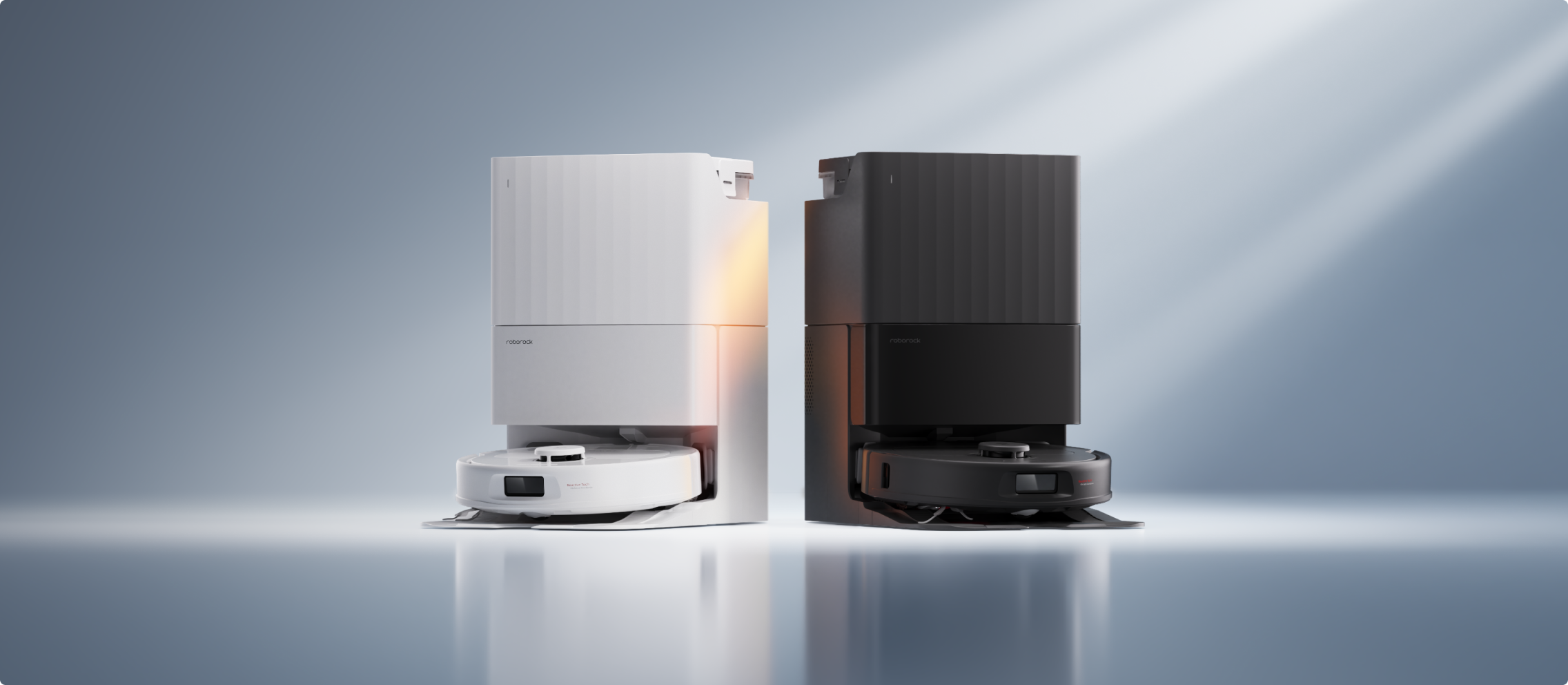
This is the hard floor mopping example. Roborock lists spinning mop pads and a dock that washes and dries them, refills the robot’s water tank and empties dust. Those functions make the station’s accessibility part of the buying decision.
Reasons to choose it
- Automatic mop washing reduces the need to remove the pads after each routine wash.
- Water refilling at the dock supports repeated mopping without filling the robot by hand.
- The detachable dock base provides access for cleaning, provided you can reach and remove it.
Placement tradeoffs
- Clean and dirty water tanks make a low overhead shelf inconvenient.
- The larger dock body takes more visible floor space than the Q5 Pro+ body.
- A washable tray still needs attention; hiding the station where you cannot reach it undermines the convenience.
Choose or avoid: favor this arrangement for frequent mopping if you can comfortably reach the tanks and sink. Choose a simpler dock if carrying water or bending to clean the tray is the chore you most want to avoid. Our recommendation depends on that routine, rather than the suction number.
Search Amazon for Roborock Qrevo S Pro
These links open model searches. Results can include other versions, accessories and different sellers; no exact retail listing, current price or availability is verified here.
Try the location before committing
Use removable paper markers to represent the body and the required installation area. Label which boundary means which. Then open nearby doors and move a dining chair as you normally would. If the space works only with the chair permanently tucked away, decide whether that is a habit your household will keep.
For example, a 60 cm wide recess looks generous beside a 30.5 cm wide Q5 Pro+ dock. However, adding the specified 30 cm gap on both sides gives a calculated 90.5 cm width. That recess fails the stated side requirement before considering height or depth. This is arithmetic from the published dimensions, not a docking test.
Next, rehearse the maintenance trip with a household container. Can you carry water without squeezing past furniture? Could another person use the hallway while you service the station? These are comfort checks, not manufacturer clearance specifications.
After delivery, confirm the exact supplied manual, assemble the base and supervise an initial cleaning and return. Do not build permanent furniture around the dock until you are satisfied with both access and operation. Keep the retailer’s actual return conditions in mind.
Dock placement FAQs
Can I put a robot vacuum dock inside a cabinet?
Only consider a location that meets the exact manual’s space and operating requirements. A door, overhang or shelf can obstruct approach or maintenance even when the dock body fits. An open wall position is our easier starting point.
Are clearance numbers the same for every Roborock?
No. These examples use different wording: separate gaps for the Q5 Pro+ and an overall reserved space for the Qrevo S Pro. Read the supplied model’s diagram rather than applying a generic brand rule.
Should the dock be next to the sink?
A short carrying route can help with a water station. Balance that convenience against the manual’s location restrictions, splashes, foot traffic and access to an outlet. Near the sink does not mean on a wet floor.
Does a mop washing dock mean no maintenance?
No. Choose a location where you are willing to inspect and service the station. Our robot mop maintenance guide explains the ownership tasks; the model manual governs the actual procedure.
Research method and primary sources
We checked manufacturer specifications, photos and the U.S./FCC manuals on November 10, 2026. This is placement advice based on documents, without hands on docking, cleaning or durability tests. Recommendations and household rehearsals are editorial judgments. The examples explain two station routines, not a market ranking. Confirm the exact model, region and manual shipped with your purchase.
- Roborock Q5 Pro series: dimensions, features and Plus package photo
- Roborock Q5 Pro+ manual: printed page 8 installation
- Roborock Qrevo S Pro: dimensions, station functions and color photo
- Roborock Qrevo S Pro FCC manual: printed pages 8–9 dock overview and installation
For the broader purchase decision, see our robot vacuum buying guide. For the difference between station routines, see robot vacuum types explained.